

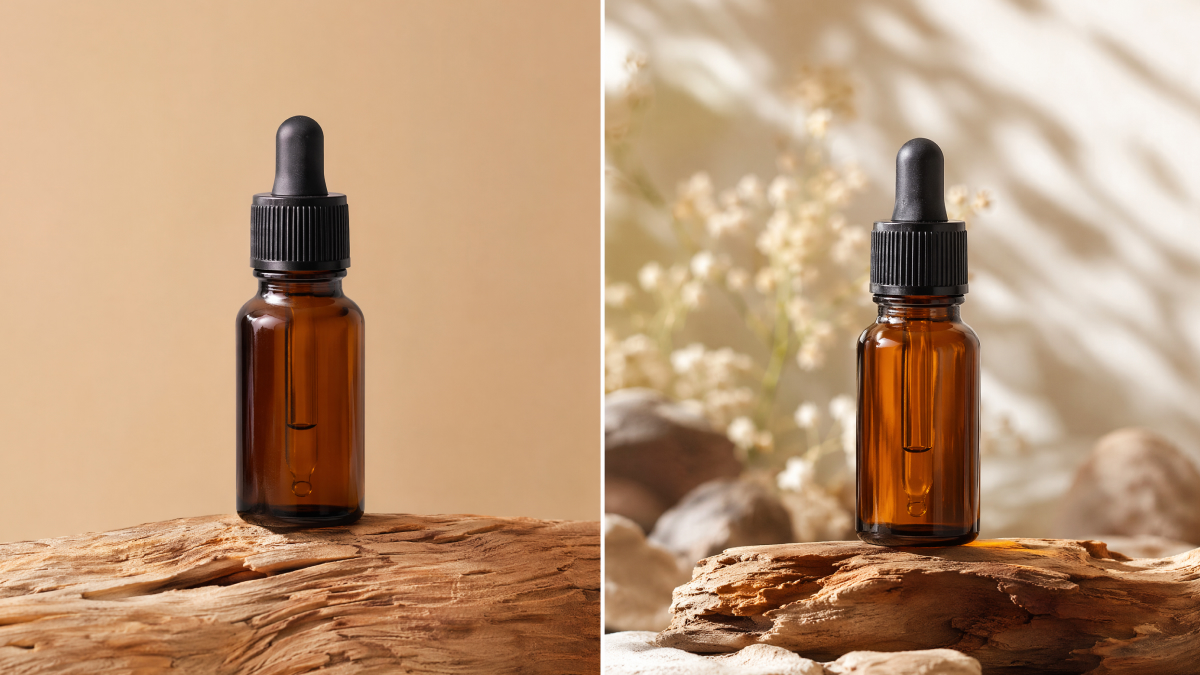
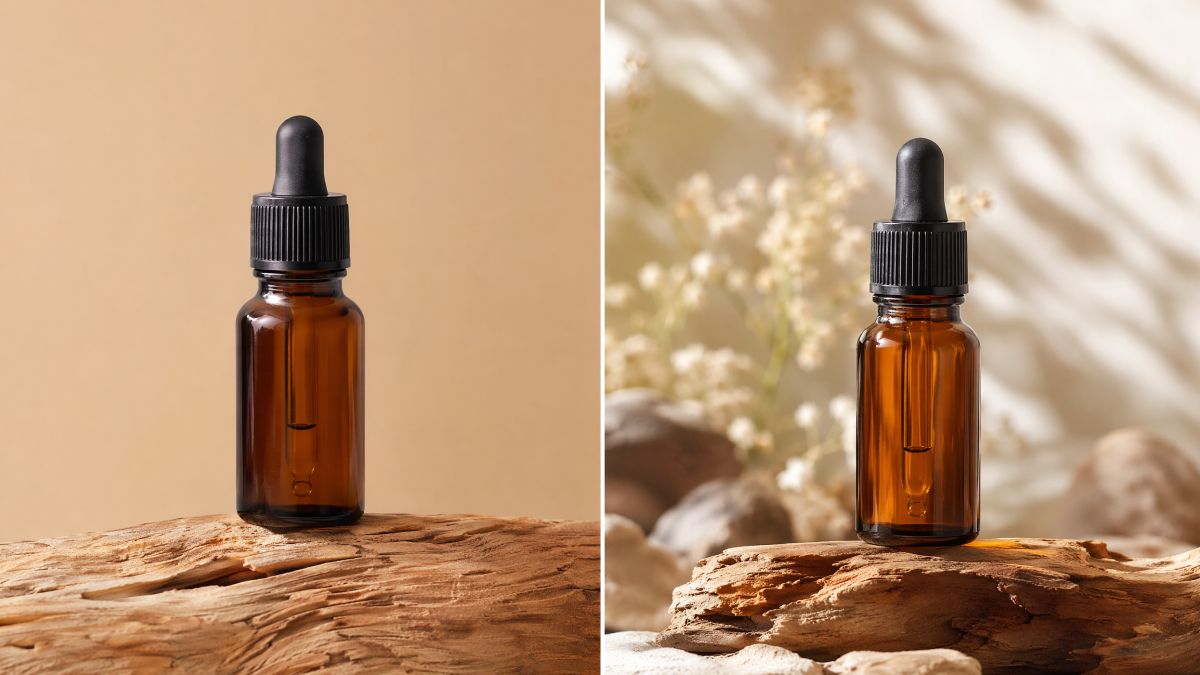
Every online seller in 2026 faces a difficult choice between studio or AI. Therefore, choosing the right visual strategy is essential for your long-term business growth. Both approaches offer distinct advantages for Amazon, Shopify, and Etsy listings. Traditional studio product photography offers unmatched quality and very high creative artistic control.
At the same time, AI product photography tools continue improving rapidly across multiple use cases. Recent statistics revealed by 360 Research Reports indicate that 60% online shoppers make their decision on the basis of visual quality. This guide gives a comparative analysis based on data to help you make your decision. Apart from that, we will objectively evaluate both approaches to find the best fit for you.
Part 1. The Real Cost of Studio Product Photography in 2026
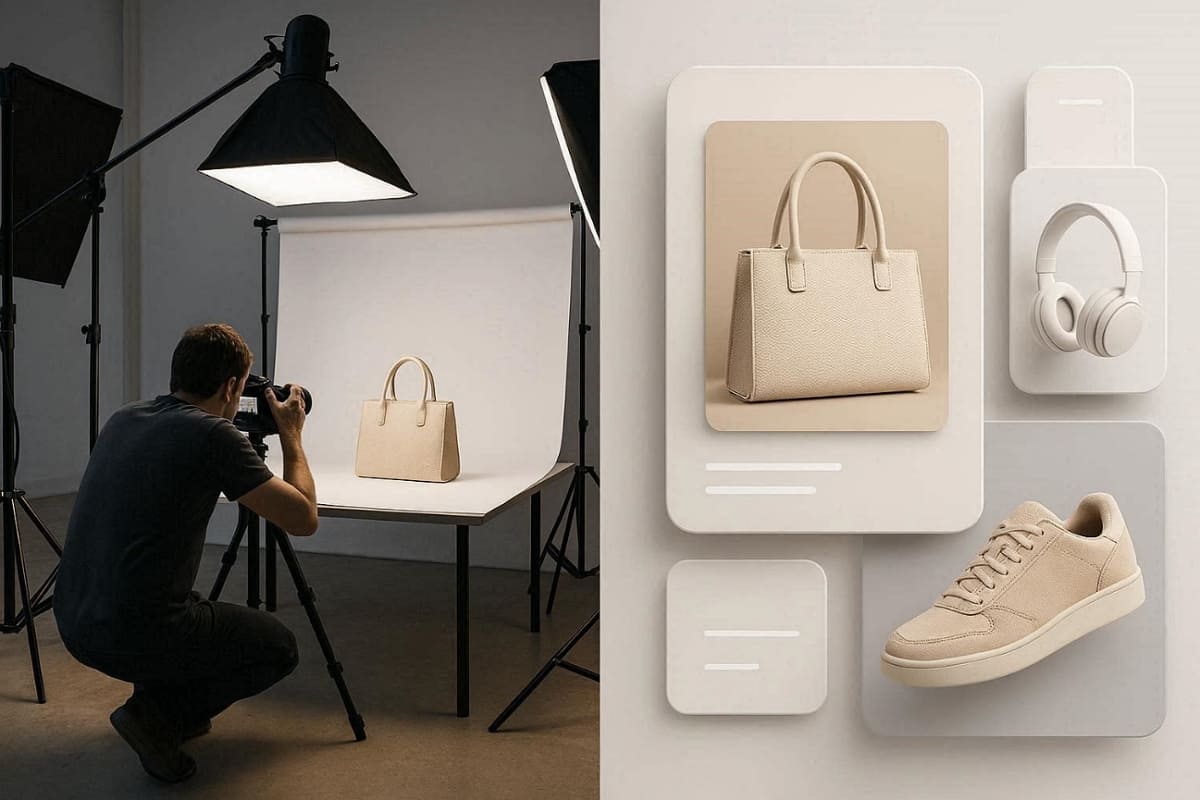
Traditional studio product photography remains a significant investment for any growing ecommerce brand. You must objectively evaluate these expenses to manage your marketing budget effectively. High-quality studio work provides a premium look that builds immense customer trust. However, the financial commitment required for this approach can be quite surprising. Before diving into the specific numbers, let us examine the initial setup requirements:
1.1. DIY Studio Product Photography Setup Costs
A functional home studio requires a high initial investment in special equipment. You need to buy a good-quality camera and different lenses. The overall price of product photography equipment typically runs between 2K and 5K dollars. Thus, the table below will give a clear outline of the items you will need:
|
Equipment Item |
Estimated Budget Range |
Purpose in Workflow |
|---|---|---|
|
DSLR Camera Body |
$800 to $1,500 |
Captures high-resolution raw images for editing. |
|
Macro/Prime Lens |
$400 to $900 |
Ensures sharp focus and accurate product detail reproduction. |
|
Lighting Kit |
$300 to $700 |
Eliminates harsh shadows and provides consistent white balance. |
|
Editing Software |
$20 to $50/month |
Necessary for color correction and background removal tasks. |
In addition to physical equipment, the studio product photography setup has a steep learning curve. Average novices invest 40-100 hours in learning the fundamentals of lighting and composition. Therefore, your time is a hidden cost that adds up during the initial phase. Once you understand the equipment, consider the alternative of hiring professionals.
1.2. Professional Studio Hire and Per-Image Pricing
By employing a professional team, the highest results without the individual learning curve are guaranteed. However, professional product photography pricing varies based on your specific project requirements. Alongside this, expect to pay higher studio photography rates for complex, styled lifestyle image sets. Here are the typical market rates you can expect to pay for professional services:
1. White Background Shots: Basic images on a white background typically cost between $30 and $70 per final edited image.
2. Styled Hero Images: Complex lifestyle shots with professional props typically range from $100 to $300 per unique shot.
3. Day Rate Hire: Hiring a professional photographer for a full day typically costs between $1,000 and $3,000, plus expenses.
4. Volume Discounts: Many professional studios offer lower per-image rates when you submit a very large catalog batch order for processing.
In addition to the above, turnaround times for professional studios generally range from 1 to 3 full weeks. This traditional model requires careful planning to meet your tight product launch deadlines.
Part 2. How AI Product Photography Works and Where It Stands Today
Modern AI product photography has evolved into a powerful solution for scaling your catalog. This technology uses complex machine learning models to generate quality commercial visual assets. However, you must understand both the strengths and weaknesses of these advanced digital tools. Let us examine the specific capabilities and boundaries of modern artificial intelligence:
2.1. What AI Product Photography Can Do Today
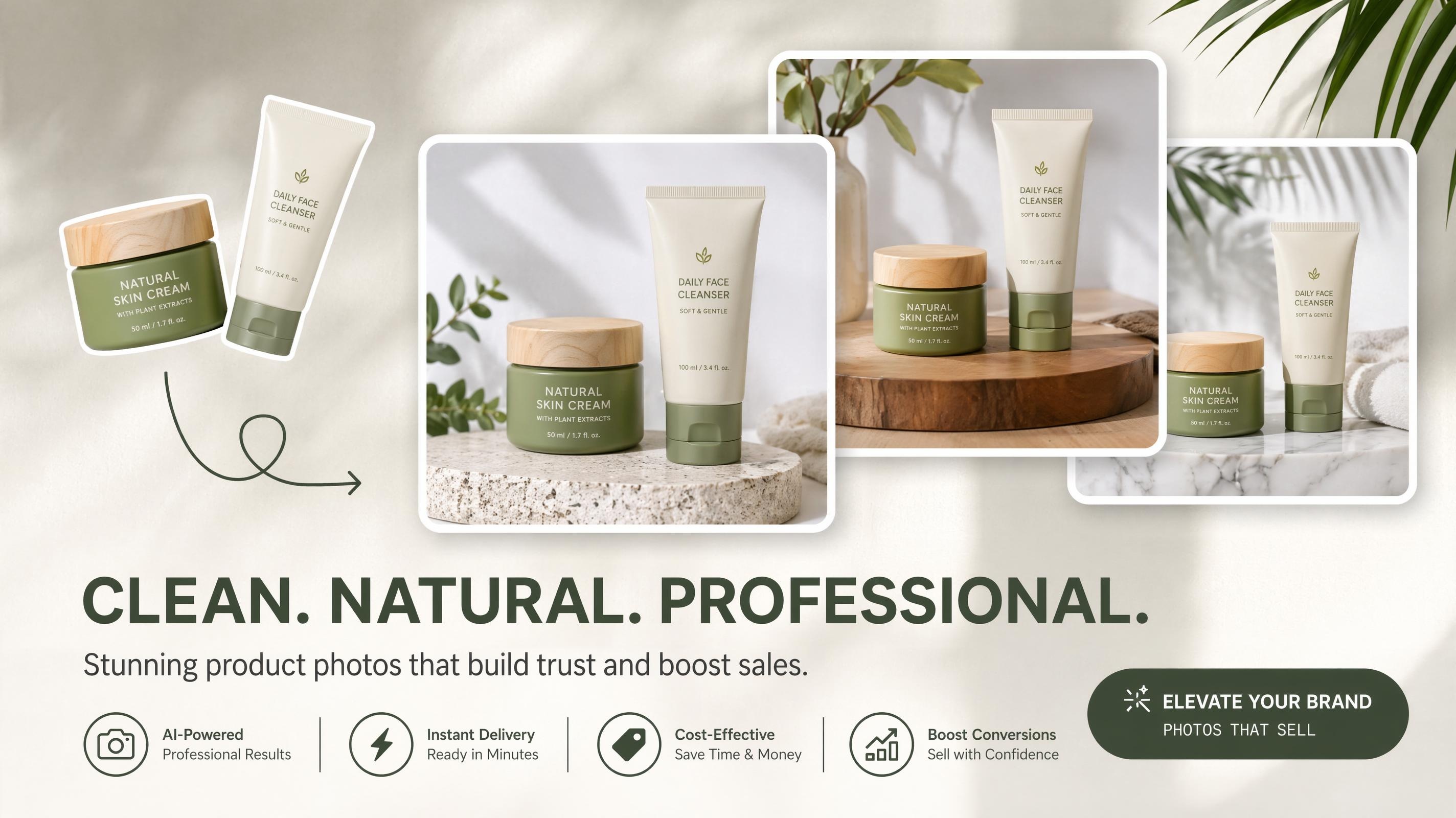
Current technology allows sellers to transform simple snapshots into professional marketing gallery images. The most common features include instant background removal and the generation of lifestyle scenes. A 2MC 24/7 research study also shows that small businesses using artificial intelligence in 2026 significantly reduced production costs. Moreover, AI product photo generation can normalize lighting across your entire digital catalog.

These tools effectively handle platform-specific crops for Amazon, Shopify, and various other marketplaces. Another option is to insert one photo into a scene with the Designkit Product Photography Generator, which allows you to do it instantly. Such automation saves a lot of time that would be used in manual post-production. So, here are the primary tasks AI product photography handles effectively for modern businesses:
1. Instant Scene Creation: Automatically place your items into realistic indoor or outdoor environments.
2. Batch Color Correction: Ensure all your product variants have consistent and accurate color representation.
3. Automated Shadow Generation: Add realistic depth and shadows to make floating products look natural.
4. Resolution Enhancement: Scale up lower-quality images to meet the high standards of marketplaces.
2.2. Where AI Product Photography Still Falls Short
Despite rapid progress, AI product photography limitations still affect certain use cases significantly. Artificial intelligence provides incredible efficiency but cannot yet fully replace the human eye. You must objectively evaluate these gaps to avoid misrepresenting your items to customers. Hence, the given points highlight the specific areas where traditional studios still hold the lead:
1. No Original Capture: AI cannot create accurate visuals without at least one real product image.
2. Texture Accuracy: AI product photography limitations appear in extreme close-up texture reproduction scenarios.
3. Brand Styling: Complex brand-specific lighting and artistic direction remain difficult for AI systems.
4. Policy Compliance: Some marketplaces restrict misleading visuals under strict product representation guidelines.
Additionally, AI outputs may sometimes look slightly artificial under detailed professional inspection. Therefore, AI product photography limitations require careful review before publishing images across listings. As a result, AI works best as a supportive tool rather than a complete replacement solution.

Part 3. Studio vs AI Product Photography Across Six Key Factors
Deciding between these two methods requires a careful look at your specific operational goals. Choosing studio product photography often depends on your current budget and desired visual quality. We have identified 6 essential pillars to help you evaluate each approach objectively.
Each of the two options has its distinctive advantages that will make your online store successful in 2026. The comparison of the performance of each strategy along vital business performance indicators is as follows:
3.1. Comparing Cost, Speed, Quality, Scalability, Flexibility, and Consistency
In comparing studio vs AI product photography, you need to balance efficiency with creative needs. The old techniques are great in terms of artistic detail, whereas the digital solutions provide incomparable speed and quantity. So, use this comprehensive product photography cost comparison table to guide your final decision:
|
Factor |
Traditional Studio Photography |
AI-Generated Product Images |
|---|---|---|
|
Total Cost |
High investment per image set |
Low cost per generated visual |
|
Output Speed |
Multiple days or several weeks |
Instant results within a few minutes |
|
Visual Quality |
Highest ceiling for premium realism |
Excellent for catalog and lifestyle |
|
Scalability |
Difficult to scale for large catalogs |
Effortlessly handles thousands of product SKUs |
|
Flexibility |
Full control over physical styling |
Limited by the available digital scenes |
|
Consistency |
Hard to maintain across different shoots |
Perfect lighting and background uniformity always |
While the table highlights technical differences, your choice depends on your current growth phase. You must consider how much time you can realistically dedicate to manual image production. Traditional shoots are perfect for luxury items that require very specific and complex artistic lighting. Additionally, brands that upgraded their product images reported a 40% increase in total conversion rates, according to Dreamshot.
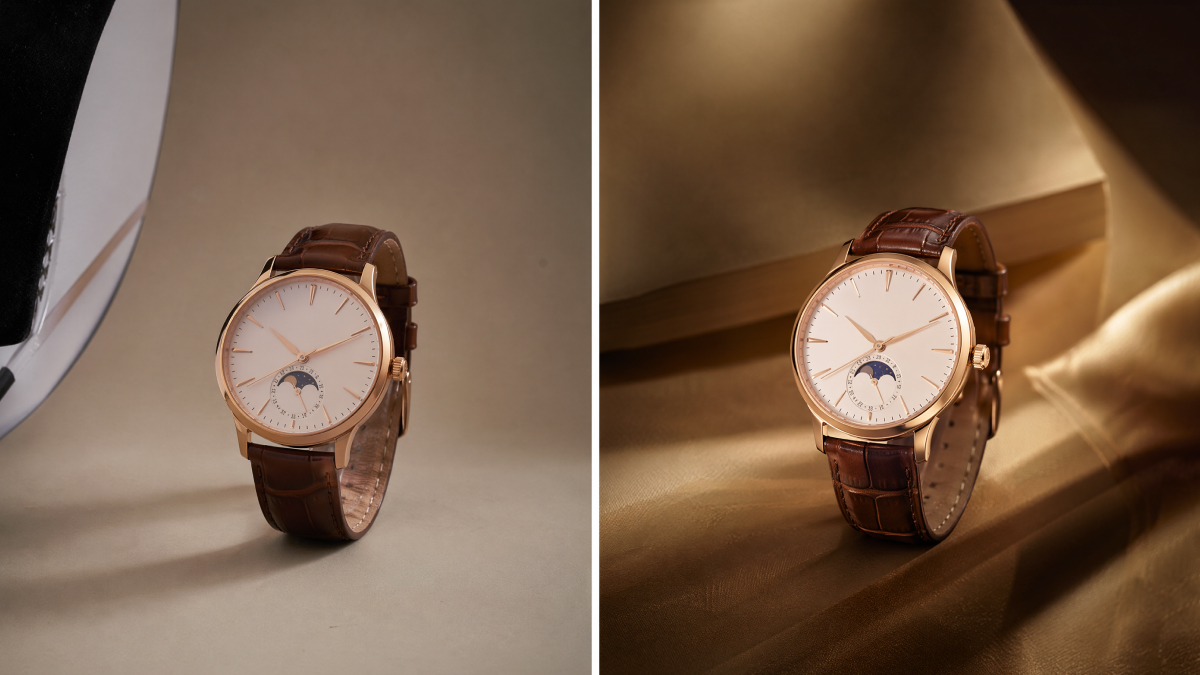
3.2. Which Approach Fits Different Business Stages
In addition to the above, your ideal product photography strategy should evolve as your ecommerce brand continues to grow. A solo seller managing a small catalog often requires a different setup than enterprises. Thus, consider these recommendations to find the right product photography for small business success:
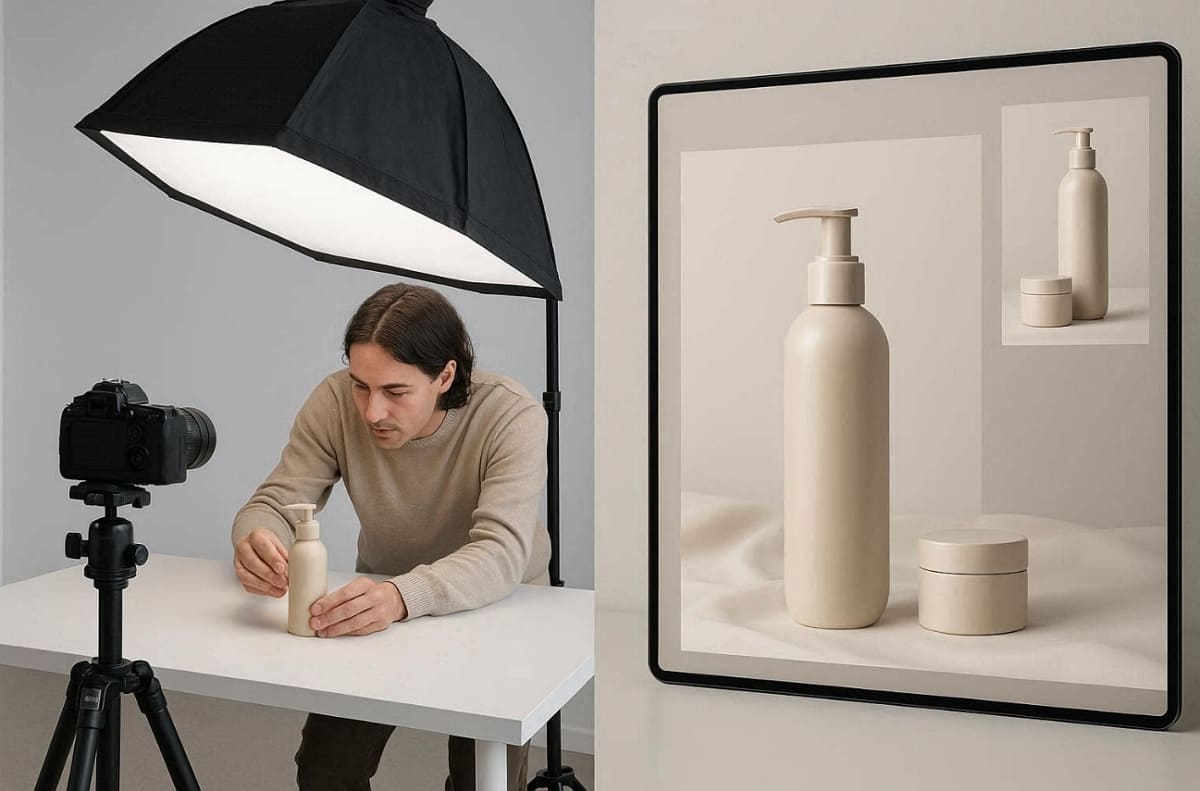
1. Solo Sellers (0–50 SKUs): An AI-first approach is best for keeping initial startup costs as low as possible.
2. Growing Brands (50–500 SKUs): A hybrid model combining studio hero shots with AI works perfectly.
3. Enterprise Brands (500+ SKUs): Use professional studios for flagships and AI for massive catalog scaling.
At this point, you can utilize Designkit to handle background swaps and batch editing during these stages. Furthermore, using a Product Listing Generator helps you create optimized descriptions and assets for your store.
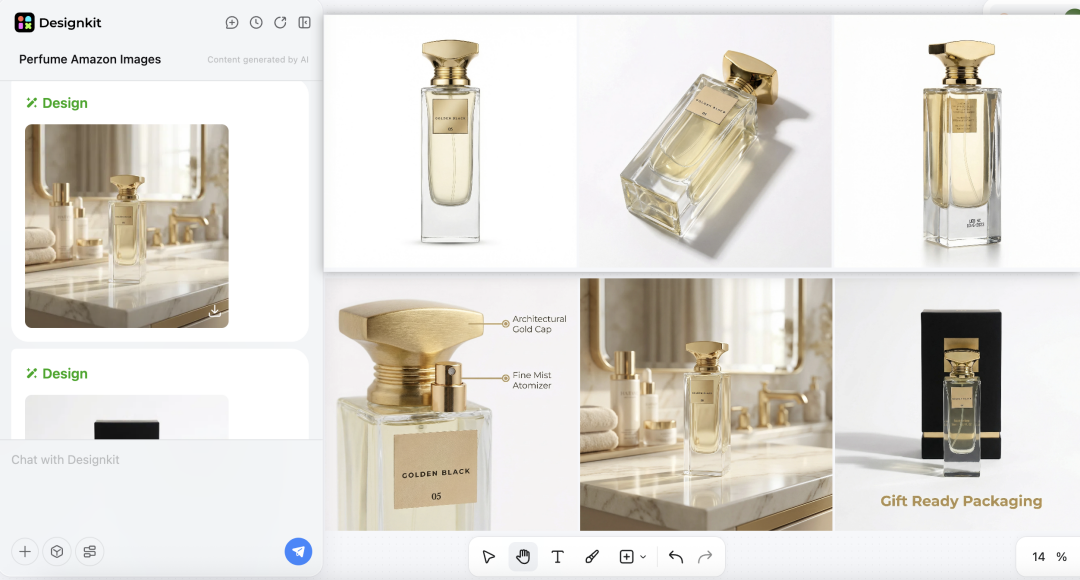
In addition, having a hybrid workflow enables you to keep quality and maximize your budget. It is a dynamic path that will ensure your visual content is up-to-date and competitive in any market. Other than that, you need to focus on quality as your key hero pictures and rely on AI to make variations.
Conclusion
To summarize, the trick to ecommerce success lies in achieving the right balance between technology and tradition. Whereas in traditional studio product photography, quality is guaranteed, but AI offers the necessary speed and scale. So, the selection of the two approaches will fully rely on your business objectives and financial means.
Most successful modern sellers now find the greatest success by adopting a hybrid workflow. One Photoroom blog also notes that retail companies spent nearly $20 billion globally on advanced artificial intelligence tools. Furthermore, integrating AI product photography allows you to update your catalog without spending a fortune.
Frequently Asked Questions
Is AI-Generated product photography allowed on Amazon?
Can AI completely replace a product photography studio?
Most small or mid-sized sellers now find that AI covers 80%. However, luxury brands still require a professional setup for their high-end hero shots. The modern industry trend is moving toward hybrid workflows rather than full studio replacement. As a result, many companies utilize AI product photography for scaling their digital catalogs.
Q3. How do I get started with AI Product Photography?
First, take a simple and well-lit photo using your modern mobile smartphone device. Later, you can upload that source image into a professional AI product photography tool. Finally, select your favorite lifestyle scenes or branded backgrounds and then download your files.
What camera do I need if I use AI for post-production?
Any modern smartphone is sufficient for capturing quality source photos for your listings. Therefore, proper lighting and sharp focus are much more important than your total camera megapixels. Even a simple home setup can produce professional results for studio product photography work.
You May Also Like

7 Best Remove.bg Alternatives in 2026: Free & Paid Tools
Amazon A+ Content Dimensions: Module Image Sizes
Print-On-Demand Designs: Create, Prepare, and Preview Your Work
T-Shirt Design Size Guide: Placement, Dimensions, & DPI

Amazon A+ Content: What It Is and What to Build First
Is Print on Demand Profitable in 2026? Products and Niches

Amazon Brand Registry Application: How to Submit and Pass Review
How to Ship to Amazon FBA: Your First Shipment

What Is Amazon FBA? Should Beginners Use It in 2026

GPT Image 2 Prompts for Product Photos (Copy-Paste Examples)

How to List a Product on Amazon: Materials Checklist for First Listings

How to Get Ungated on Amazon: Restricted Category Approval Steps

Kling vs Veo for Product Video & UGC Ads (2026)

Nano Banana vs Midjourney for Product Photos and Campaign Visuals (2026)

Amazon Backend Keywords: Title, Bullets & Search Terms

How to Sell on Poshmark: A Complete Beginner's Guide

Zeely Reviews 2026: Features, Pricing, Pros, Cons & Alternatives

Instagram Carousel: What It Is, How to Post & Create One

What Is A/B Testing? A Practical Guide to Running Better Experiments

Best Time to Post on Instagram in 2026: Data & Tips

How to Get Verified on Instagram: Complete Guide

TikTok Monetization in 2026: Requirements & Ways to Earn

Instagram Desktop Posting Guide: Upload Posts, Stories & Reels
Nano Banana Prompts: 20+ Examples for Better AI Images

YouTube Shorts Monetization Requirements & Rules 2026

Hair Color Ideas 2026: Trending Shades & Virtual Try On

How to Write an Instagram Bio: Examples, Tips & Ideas

How Much Does YouTube Pay Per View? 1K, 100K & 1M Views

How to Make Money on Snapchat: 7 Ways to Earn

How to Get More Followers on Instagram in 2026

Best Time to Post on TikTok in 2026 for More Views
How to Repost on Instagram in 2026: A Simple Guide

Ideogram AI Review 2026: Features, Pricing & Alternatives

PixVerse AI Review 2026: Is It Worth Using for AI Videos?
Free Mac Photo Editor: 5 Tools Compared for Mac Users
How to Crop a Photo Into a Circle Online (Keep Quality)
Create TikTok Ads From One Photo: An AI Product Launch Kit
How to Make an Image Transparent Online (AI Guide)
Pixlr Background Remover Review 2026: Features, Pricing & Alternatives

How to Fix Overexposed Photos: Recover Highlights Fast

How to Animate a Picture with AI: Easy Step-by-Step Guide
OpenArt AI Review 2026: Features, Pricing & Alternatives

Best AI Headshot Generator: 9 Tools Compared for 2026
Best Stencil Maker Tools 2026: Turn Photos Into Stencils
Pixelbin Watermark Remover Review: Image & Video Results Tested
How to Make a Sticker on iPhone: Easy Step by Step Guide

Best AI Logo Generator in 2026: 10 Tools Compared
How to Turn a Photo Into a Cartoon: A Beginner-Friendly Guide

How to Write a Video Script: Structure, Tips & Examples
Depop vs Poshmark: Which Is Better for Selling in 2026?
Landscape vs Portrait: Key Differences & Best Uses in 2026

How to Create an Amazon Storefront: 4-Step Guide for New Sellers

How to Remove Watermark From Photo: AI, Photoshop & More

How to Sell Books on Amazon in 2026: Beginner Guide
How to Fix Pixelated Photos: Photoshop, AI Tools & Tips
Bing Image Creator: How It Works, Features, Uses & Alternatives

Best Products to Sell on Amazon: 10 Ideas for Beginners
How to Remove People from Photos with AI: A Step-by-Step Guide

What Is B-Roll? Meaning, Examples, and How to Use It

How to Increase Image Resolution: AI, Photoshop & PPI
How to Add Text to a Photo: 8 Tips for Better Results

How to Sell on Amazon in 2026: A Complete Seller Guide
How to Fix Grainy Photos: Easy Ways to Clear Images

How to Make a TikTok Video: A Step-by-Step Guide 2026

How to Make an Instagram Post: Step by Step Creation Guide

Social Media Copywriting: Tips, Examples & Best Practices

Creative Profile Picture Ideas for Every Style and Platform
Evoto AI Review 2026: Features, Pricing, Pros & Cons
Pixlr Photo Editor Review: Features, Pricing & Alternatives
Best AI Image Extender Tools in 2026: Expand Photos with AI
How to Make a Collage on iPhone: Easy Guide for 2026

What Are AI Fruits? The Trend, the Formats, and How to Make One
How to Sharpen an Image in Photoshop (Smart Sharpen and Unsharp Mask)

Seedance 2.5 Review: What Changed in ByteDance's New Model
Best Image Background Remover Tools in 2026: AI Tools Compared
How to Make Transparent Background in Paint: Step-by-Step Guide
How to Resize an Image: Best Methods, Tools & Quality Tips

LTX Studio Review: Features, Pricing & AI Filmmaking Guide
Best AI Image Generator Tools in 2026: Top AI Platforms Compared

Remove.bg Review 2026: Features, Pricing & Is It Worth It?

MiniMax H3: Features, Benchmarks, Pricing, and How to Use It

Luminar Neo Photo Editor Review 2026: AI Features, Price & Pros

How to Post Multiple Photos on Instagram (2026 Guide)

25 Facebook Cover Photo Ideas for Personal & Business Pages

What Is a PFP? Meaning, Examples & How to Create One

Multichannel Marketing Guide: Strategy, Tools & Examples
How to Create Digital Products That Sell in 2026

How to Make a Slideshow for Facebook: Photos, Music & Tips 2026

HeyGen vs Arcads: Which AI Video Tool Wins in 2026?
AI Product Photography: 7 Best Tools for Ecommerce in 2026
Can You Edit an Instagram Post After Posting?

Cyber Monday Marketing Ideas & Strategies (2026 Guide)
Black Friday Marketing Ideas for Ecommerce Brands (2026)
11 Best Canva Alternatives in 2026 for AI Design & Marketing
Instagram Marketing Guide: Strategies, Tips & AI Tools in 2026

8 Best Midjourney Alternatives in 2026: Features, Pricing & Comparison
Influencer Marketing Guide: Strategy, Campaigns & Creator Tips
How to Restore Old Photos: AI Tools, Tips & Best Methods

Arcads AI Review 2026: Features, Pricing, Pros, Cons & Alternatives

Pixelcut AI Review 2026: Features, Pricing, Pros, Cons & Alternatives

What Is a Hero Image? Definition, Examples & Design Tips
How to Apply Watermark to Photos: Methods, Tips & AI Tools
How to Remove a Background in Illustrator: 4 Easy Methods
How to Change Background Color on Instagram Story (Easy Guide)

Pippit AI Review 2026: Features, Pricing, Pros & Cons
8 Best AI Poster Generators in 2026: Create Posters Faster with AI
10 Best AI Image Enhancers in 2026: Tested & Compared
10 Best AI Image Editors in 2026: Features, Pricing & Comparison

7 Best AI Background Changer in 2026: Remove & Replace Photo Backgrounds
Luminar Neo vs Lightroom: Features, Pricing & Comparison 2026
Kittl Review 2026: Is It Worth It? Features & Pricing

15 Best Things to Sell on Etsy in 2026 (Listing Tips Included)

WooCommerce vs Shopify 2026: Pricing, Features & Which Is Better

How to Sell on Facebook Marketplace: Beginner Guide (2026)

How to Use Pinterest for Business: Strategy, Tips & Growth Guide

How to Sell on Etsy in 2026: Setup, Listings & Growth Tips

What Is a Target Audience? Types, Examples & How to Find Yours
How to Make a Blurry Image Clear: 5 AI & Manual Ways

TikTok Marketing Guide 2026: Strategies, Ideas & AI Tools
How to Remove Background on iPhone: 5 Easy Methods (2026)
Photoroom Background Remover Review 2026: Features & Alternatives
How to Remove Background in Canva: A Step-by-Step Guide
How to Remove Background in GIMP: Beginner-Friendly Guide

How to Celebrate National Dog Day 2026: Date & Easy Ideas

Funny Dog Memes to Try: Doge Meaning and 10 Original Ideas
Back to School Checklist 2026: Supplies, Timeline, and Planning
Recraft AI Review 2026: Features, Pricing, Pros, Cons & Alternatives
How to Make an Image Transparent in Google Slides: Opacity & Background Removal

VanceAI Photo Enhancer Review: Features, Pricing & Alternatives in 2026
Vibe Marketing Explained: Strategy, Examples & AI Tools

How to Sell on Depop: Beginner Guide to Getting Your First Sale
What Does Emojify Mean? Text, Photos, & Emoji Art Explained
Back to School Ad: 7 Creative Ideas for Better Campaign Results

Top 7 Back-to-School Sales Ideas to Boost Retail Sales (2026)
Top 8 Online Background Removers for Ecommerce Photos (2026)
How to Remove Background in Photoshop: 7 Easy Methods
6 Best AI Image Upscalers 2026: Tools Tested & Compared

Luma vs Seedance (2026): Ray 3.2 or Seedance 2.0?

15 Simple Self-Care Ideas for Busy Schedules and Daily Life

Celebrate International Cat Day 2026: Date & 10 Fun Ideas
Project Indigo Review: Is It Better Than iPhone Camera?
How to Match Makeup by Undertone: Virtual Lipstick and Foundation Try-On

Chic Outfit Ideas for Every Occasion: 15 Stylish Looks & Tips
How Big Is an 8x10 Photo? Size, Pixels & Frame Guide
How Big Is a 4x6 Photo? Dimensions, Pixels & Printing Tips
Picsart AI Review: Features, Pricing, Pros, Cons & Alternatives
Lovart AI Review: AI Design Agent Features, Pricing & Alternatives
Fotor AI Image Generator Review: Features, Pricing & Alternatives

How to Add Emoji to Photo Online for Free

Online Advertising Guide: Types, Costs & Examples (2026)

Facebook Advertising Guide: Costs, Strategy & Tools 2026

What Are E-commerce Ads? Examples, Strategy & Tools (2026)
Where to Sell Handmade Items Online (2026): Etsy, Amazon, or Shopify?

Shopify vs Amazon (2026): Brand Store or Marketplace FBA?
Amazon Handmade vs Etsy (2026): Which Is Better for Makers?
Etsy vs eBay (2026): Handmade, Vintage, or Secondhand?

Selling on Amazon vs eBay (2026): Fees, Profit & Where to Sell

What Is Brand Awareness? Examples, Strategies & Tools 2026

10 Best Online Selling Platforms (2026): Pick by What You Sell

Shopify vs Etsy (2026): Which Is Better for Handmade Sellers?
Wedding Dress Styles for Every Body Type: A Practical Guide for 2026

Emoji Wallpaper Ideas & How to Make One Online (2026)

YouTube Automation Step-by-Step AI Guide for Beginners
What Is Brand Identity? Examples, Elements & Strategy

Creatify AI Reviews: Features, Pricing & Alternatives (2026)
Minimalist Poster Design: How to Make a Clean Poster (2026)
What Are Satisfying Videos? Types, Tips & How to Make (2026)

How to Find a Product by Image: 7 Methods That Work (2026)

How to Make a Custom Poster That Is Ready to Print

Gemini Omni Review: Real Tests, Pros & Limitations for Video Generation

How to Generate Product Videos from Images with AI (2026 Guide)
Instagram Image Size Guide 2026: Post, Reel, Story & Carousel Specs

AI Marketing Agent: How It Works, Benefits & E-Commerce Examples

Aesthetic Poster Ideas: Find Your Style and Create Printable Art
How to Create a Product Launch Video with AI: A Step-by-Step Guide
LinkedIn Image Size Guide: Profile, Post & Banner Dimensions
YouTube Profile Image Size: Best Dimensions & Safe Area 2026
What Is Personalized Advertising? Examples & How It Works

How to Build a Shopify Store That Actually Converts Visitors
What Is a Brand Video? Types, Examples & How to Create One
How to Create a Complete World Cup Product Listing Image Set

20 FIFA World Cup Merchandise Ideas That Fans Actually Buy
AI Product Demo vs Live Demo: Which Gets More SaaS Sign-Ups?

How to Create Amazon Summer Sale Posters and Banners with AI
Amazon Summer Sale 2026: Listing Design Trends & Product Image Ideas
How to Create AI Product Promotion Videos in Minutes (Step-by-Step)

Best AI Product Video Ad Generators for Ecommerce in 2026

Father's Day Gift Ideas: Personalized Card, Poster and Video

Father's Day Card Ideas: Messages, Printable and Personalized Cards

Amazon Marketing Guide 2026: Strategies, Tips & Tools
Local Advertising: Strategies, Examples & Tools (2026)

What Is Branded Content? Examples, Strategy & Tools 2026

What Is Performance Marketing? Strategies & Examples 2026

Inbound Marketing: Strategies, Examples & Tools (2026)

How to Boost Ecommerce Sales: Proven Strategies That Work
How to Add Video to eBay Listing: Step-by-Step Seller Guide
Ecommerce Video Ads: 7 Strategies That Drive Higher Conversions
7 Best AI Virtual Makeup Try-On Tools for Realistic Results in 2026
AI Virtual Makeup Try-On: Boost Beauty E-Commerce Sales in 2026
Free Online Glasses Try-On Tools: See Yourself in Glasses Instantly
Top Virtual Ring Try-On Tools for Engagement and Wedding Rings in 2026
How to Try Shoes On Virtually: A Step-by-Step Guide
Best Virtual Shoe Try-On Tools for Ecommerce: 2026 Guide
How to Try On Wigs and Bangs Virtually to Find Your Perfect Style
How to Photograph Shoes for Your Ecommerce Store in 2026
Short Form Video Marketing for E-commerce: AI Video Guide

What Is Video Marketing? E-commerce Guide & Strategies 2026
Create Model Outfit Photos Instantly With AI Outfit Generator
Best AI Virtual Try-On Clothes Tools for Any Body Type
How to Edit Amazon Product Photos That Boost Sales Fast

Product Photography Ideas: Creative Tips & Techniques for Better Shots
Product Photography Pricing 2026: Full Cost Guide by Type
Google Veo 4 Explained: Features, AI Video Creation & What’s New
How to Try On Clothes Online with AI for Better Fit & Style
Virtual Nose Ring Try On Online Before Your Piercing
White Background Product Photography Guide & Tips 2026
Product Photography Starter Package: Gear Checklist 2026
How to Try Makeup Online with AI and Virtual Makeup Try-On Apps (2026)
How to Use Virtual Earring Try-On for a Flattering Look in 2026
How to Try On Engagement Rings Online with AI in 2026
Scale Your Jewelry Brand with Virtual Jewelry Try-On Solutions
How to Try Hairstyles on Your Face Online (Step-by-Step Guide)
Best Virtual Hairstyle Try-On Tools Online for Realistic Previews 2026
How to Use a Free AI Hairstyle Generator to Find Your Perfect Look
Virtual Hair Color Try-On Guide for Every Skin Tone (2026)
Virtual Wedding Dress Try-On Online for Brides in 2026
How to Choose the Right Sunglasses for Your Face Shape Online
How Accurate Is Virtual Glasses Try-On? AI vs AR Compared

Best Virtual Try-On Glasses Apps in 2026 (Free & Paid Tools)
How AI Virtual Try-On Is Transforming Eyewear Ecommerce
5 Best Virtual Try-On Glasses Tools for Ecommerce and Consumers 2026
How to Try On Glasses Online with AI in 2026 (Easy Guide)

How to Create Jewelry Photos with AI Models That Drive Sales in 2026
Shopify Product Photography Guide with Tips & Setup
AI-Generated Fashion Models: Technology, Brand Adoption & Trends
How to Batch Generate 100+ AI Clothing Model Photos Fast
7 Best AI Fashion Model Generators for Ecommerce in 2026
Amazon Main Image Requirements: Size, Guidelines & Tips

Shopify Image Size 2026: Complete Guide and Tips for Better Product Display
Studio Product Photography vs AI Product Photography in 2026

7 Product Photography Mistakes That Hurt Ecommerce Sales
AI Clothing Model Photos for E-Commerce: Platform Rules & Best Practices
How AI Virtual Try-On Helps Fashion Brands Boost Sales & Reduce Returns
AI Fashion Models vs Real Models: Which Is Better for Brands?
Best Free AI Fashion Model Generators for Real Product Photos
Virtual Outfit Try-On Guide: Plan Outfits Before You Buy

GPT Image 2 Review: Features, Prompts & E-commerce Use Cases

What Is an AI Clothing Model Generator? Full Guide for Sellers
Change Outfit Colors Online for Outfit Preview with AI Clothes Color Changer
Virtual Try-On Technology in 2026: How It Works & Key Trends

How to Create Amazon Infographics: Boost Sales with Compelling Visuals
10 Best Virtual Try-On Apps & Tools for Online Shopping in 2026
How to Create AI Fashion Models: Complete Step-by-Step Guide
How to Use AI Fashion Models for E-Commerce Product Photos: A Complete 2026 Guide
How to Virtually Try On Clothes Online: A Complete Guide
How to Create Outdoor Product Scenes Without a Photoshoot Using AI
GPT-Image-2 for Ecommerce Product Images: What It Means for Online Stores

Optimize Etsy Images for Mobile: Listing Photos That Convert

Amazon 7-Image Listing Strategy: Boost Sales by Optimizing Every Image

Happy Horse 1.0: The AI Video Model E-Commerce Sellers Need to Know About
Etsy Thumbnail Optimization: Keep Your Product Fully Visible
AI UGC for Ecommerce in 2026: Text-to-Video, Image-to-Video & Reference Replication Guide
The Etsy Thumbnail Formula That Drives More Clicks and Sales

HappyHorse AI Review: Features, Benchmarks & How to Use It

How to Create Pro Amazon Listing Photos Without a Studio

10 High-Converting Lifestyle Product Images for Amazon Listings

How to Automate Your E-commerce Visuals with OpenClaw Workflow

Top 5 AI Tools to Generate Amazon Product Listing Images in 2026

How to Turn One Photo into 10 Etsy Listing Images Fast: Batch Workflow
Etsy Listing Photo Size Guide (2026): Mobile, Desktop & Shop View Specs
Turn White Background Images into Lifestyle Amazon Listings

Fix Etsy Image Cropping: Optimize Listing Photos for Every Device
Amazon Listing Images: Essential Shot List & Optimization Guide
How to Create Lifestyle Product Images Without a Studio

Seedance 3.0 Predictions: Will AI Video Enter the Feature Film Era?
Grok AI vs ChatGPT: Features, Pricing & Best Choice (2026)

How to Use Grok AI: Features, Tips & Best Prompts (2026 Guide)
Sora Is Shutting Down? Best AI Video Alternatives for Creators in 2026
Lifestyle Product Photography Trends 2026: Authentic Looks at Scale
How to Master Lifestyle Product Photography in 2026

Amazon Listing Images Guide 2026: 7-Slot Strategy & Requirements
360 Product Photography Guide 2026: Setup, Shoot and Workflow
Beginner's Guide to Generate Product Photos from Different Angles
AI Product Photography: Create Ecommerce Images Without a Photoshoot

How to Create Realistic AI Product Photos: Step-by-Step Pro Guide
Keep AI Product Images Consistent Across SKUs: Lighting, Color, Background
Seedance 2.0 for Ecommerce: Create AI Product Videos in Minutes
Seedance 2.0 Review: Features, Improvements, Pricing & How It Works (2026)

How to Scale E-commerce with a Product Image Generator
How to Use AI for Spring Product Photography: 2026 Amazon Guide
How to Create a Budget Home Product Photography Setup with AI
How to Achieve Professional Product Photography Standards in 2026

How to Take Product Photos with Phone: Pro Guide for Amazon & AI

Best AI Product Image Generator 2026: Top Tools for Amazon Sales
Amazon Photography Service vs. AI Generator: Best Choice for Sales
What Is Product Photography? Angles, Lighting & Editing Guide
Amazon Spring Sale 2026: Create High-Converting Listing Images (Guide)

AI Agents Transform Amazon Product Photography in 2026
Amazon Photoshoot in 2026: Do You Still Need a Studio?
11 Must-Have Tools for Amazon Product Photography in 2026

2026 Amazon Image Trends Shaping Seller Success and Conversions
Amazon Product Photography Requirements & Best Practices 2026
Make every product image ready to sell
Designkit is an all-in-one AI platform for ecommerce visuals. Create product photos, AI videos, virtual try-ons, and Amazon listing images in seconds. Generate HD backgrounds, batch edit photos, and scale your brand with studio-quality content.