
What Is Performance Marketing? Strategies, Examples & Tools
Performance marketing ties every dollar to a measurable result — clicks, leads, and sales. Learn how it works, the strategies that scale, and how AI tools speed up the creative that drives ROI.


Performance marketing has become one of the most effective ways to drive measurable business growth because every click, lead, and sale can be tracked. Instead of relying on visibility alone, brands focus on campaigns that deliver real results and measurable ROI. This approach allows marketers to optimize budgets, improve conversions, and scale successful campaigns with confidence.
In this guide, you'll learn what performance marketing is, how it works across different channels, key performance marketing strategies, common challenges, and practical ways to improve campaign performance. You'll also discover how AI-powered tools are helping brands create content faster and optimize results more efficiently.
What is performance marketing? Benefits and examples
Performance marketing is a results-based form of digital advertising where businesses pay only when a specific action happens—such as a click, lead, or sale—rather than paying for visibility alone. Instead of spending on impressions and hoping for results, advertisers tie their budget directly to measurable outcomes. This makes performance marketing one of the most accountable and ROI-focused approaches in modern digital performance marketing, since every dollar spent can be traced to a concrete result.
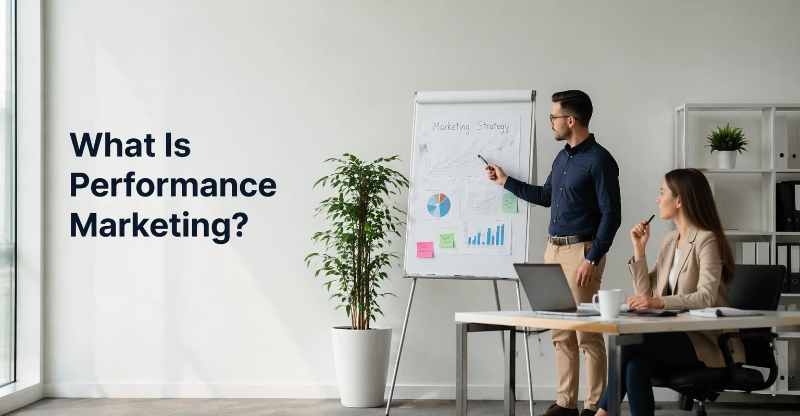
Key benefits of performance marketing
-
Measurable ROI: Track clicks, leads, conversions, and revenue in real time.
-
Lower risk: Pay for actual results instead of estimated exposure.
-
Better budget control: Allocate spending to campaigns that generate the highest returns.
-
Scalable growth: Increase investment in high-performing channels and audiences.
-
Data-driven decisions: Use performance insights to continuously improve campaigns.
-
Improved conversion rates: Optimize targeting, creatives, and landing pages based on real user behavior.
Performance marketing examples
-
A DTC brand running TikTok ads that only counts success when a viewer purchases—optimizing creatives around cost per sale.
-
An affiliate partnership where a blog earns commission for every customer it refers through a tracked link.
-
A retargeting campaign that shows ads to cart-abandoners and measures recovered revenue per dollar spent.
Each example ties spend to a trackable outcome, which is what separates performance marketing from awareness-only advertising.
How performance marketing works: key channels and models
Performance marketing runs across multiple channels, each billed by measurable action rather than flat ad spend.
|
Channel |
What it covers |
Common pricing model |
|---|---|---|
|
Paid search (PPC) |
Search ads on Google, Bing |
CPC (cost per click) |
|
Paid social |
Meta, TikTok, LinkedIn ads |
CPC / CPM / CPA |
|
Affiliate marketing |
Partners promote for commission |
CPA (cost per acquisition) |
|
Native & display |
Sponsored content, banners |
CPC / CPM |
|
Influencer / UGC |
Creator-driven promotion |
CPA / flat + performance |
The shared principle: you pay for performance—clicks, leads, installs, or sales—so spend scales with results, not guesswork.
How to measure and optimize performance marketing ROI
Because every action is tracked, performance marketing lives or dies by its metrics. The core ones are CPC (cost per click), CPA (cost per acquisition), ROAS (return on ad spend), and conversion rate. Together, these metrics show whether your marketing spend is generating profitable results.
Key metrics to track
-
CPC (Cost Per Click): The amount paid for each ad click.
-
CPA (Cost Per Acquisition): The cost of acquiring a customer or lead.
-
ROAS (Return on Ad Spend): Revenue generated for every dollar spent on advertising.
-
Conversion Rate: The percentage of visitors who complete a desired action.
How to improve ROI
-
Pause underperforming ads and audiences.
-
Increase the budget for high-performing campaigns.
-
Test new creatives, messaging, and landing pages.
-
Use audience segmentation for more precise targeting.
-
Continuously analyze data and optimize based on results.
Common performance marketing tools, including analytics platforms, ad managers, attribution software, and AI creative tools, make this optimization process faster by helping marketers identify winning strategies and scale them efficiently.
Common performance marketing challenges
Even with a solid budget and a good product, performance marketing keeps getting harder. The bottleneck usually isn't ad spend—it's creative.
Creative fatigue kills campaigns quietly
Ads often perform well at the start but slowly lose effectiveness as audiences see the same creativity repeatedly. This leads to lower engagement, rising CPMs, and reduced return on ad spend. Without continuous creative refreshes, even strong campaigns start to decline over time.
Teams can't produce creatives fast enough
Most marketing teams struggle to generate enough ad variations to keep up with testing demands. Because of this, it takes longer to identify winning concepts, and many potential high-performing ideas are never tested properly. This slows down overall campaign optimization.
Video production takes too long
Traditional video production requires planning, shooting, editing, and approvals, which makes the process slow and expensive. Meanwhile, platforms increasingly prioritize video content, so brands that cannot produce videos quickly often fall behind in reach and performance.
Scaling across platforms feels chaotic
Each platform, such as Meta, TikTok, or Google, requires different formats, ratios, and creative styles. This multiplies production effort every time you scale campaigns. Without a streamlined system, managing all variations becomes time-consuming and difficult to maintain consistently.
What high-performing campaigns usually have in common
Strong hooks in the first few seconds
High-performing ads win attention in the first 2–3 seconds with a bold visual, an emotional trigger, or a clearly stated problem. That opening decides whether a user keeps watching or scrolls past—so a strong hook directly lifts click-through rates and cuts spend wasted on people who never engage.

UGC-style content that feels native, not like an ad
UGC-style content blends into the feed and reads as authentic rather than advertised. Because it looks like a real person's recommendation, audiences trust it faster and engage more than they do with polished, obviously-branded ads.
Multiple creative variations running at once
Top campaigns run several creative variations at once, different hooks, visuals, and formats, instead of betting on one idea. Testing in parallel surfaces the winners faster and lets you kill underperformers before they drain budget.
Faster content production cycles
Speed is its own advantage: brands that produce, test, and replace creatives quickly stay ahead of fatigue and competitors. Faster cycles mean more experiments per month, and more experiments mean more winning ads found.
How Designkit solves real performance marketing bottlenecks
The biggest constraint in performance marketing today isn't strategy — it's creative output. Designkit addresses this directly: it uses AI to produce marketing videos, UGC-style content, and multiple creative variations in minutes instead of days, without a production crew or hired creators. For performance teams, that means more ads to test, faster refreshes to beat creative fatigue, and the volume needed to scale across every channel—turning the creative bottleneck into a competitive advantage.
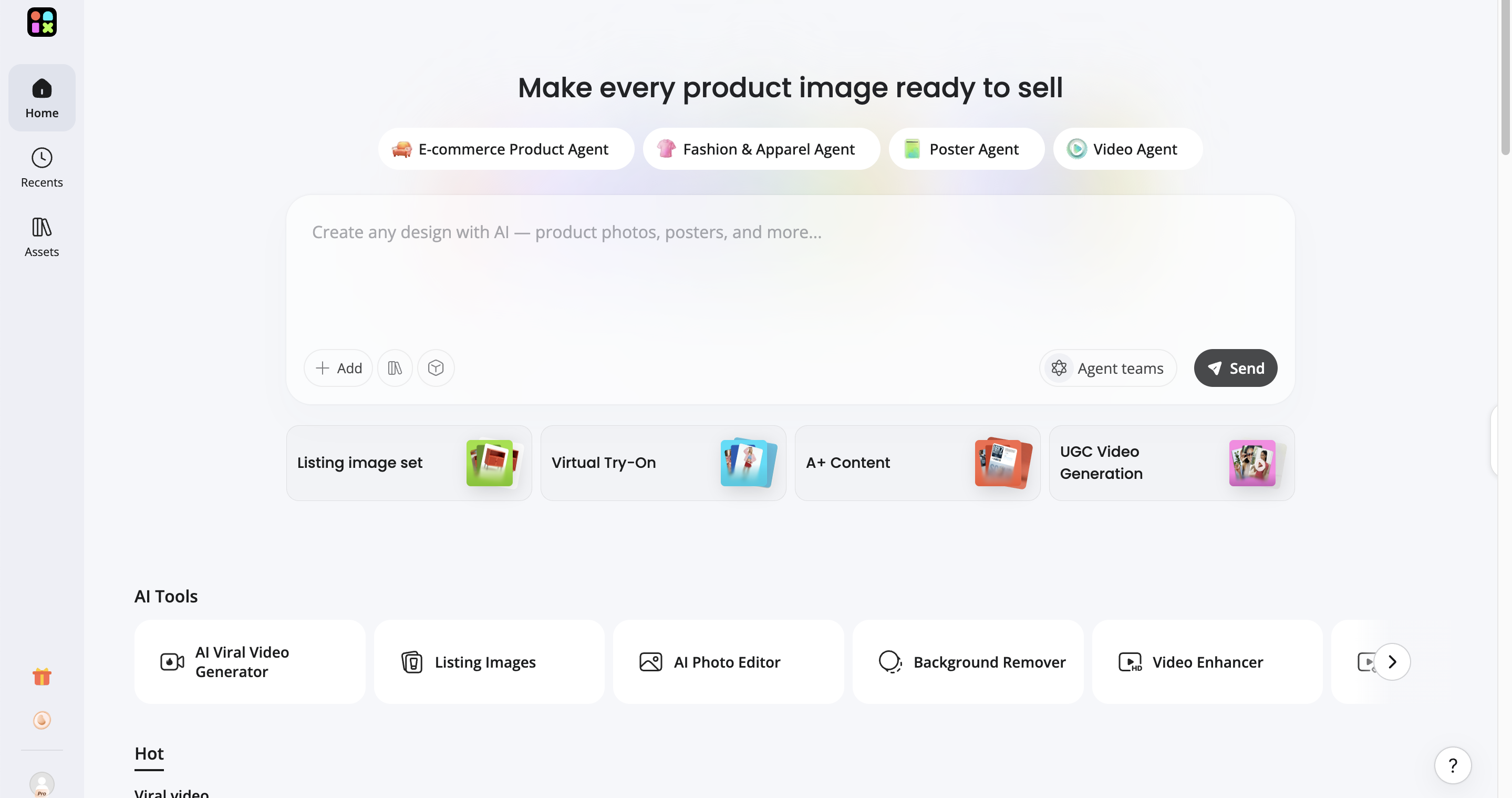
Key features of Designkit for performance marketing content
Create marketing videos without production delays
This feature removes the slow traditional production cycle and helps teams move faster in performance marketing. Instead of waiting for shoots and edits, brands can instantly generate marketing videos for testing and scaling. This is especially useful for digital performance marketing, where speed directly impacts campaign success and ROI.
Generate multiple creative variations faster
Performance campaigns depend on constant testing, and this feature makes it easy to create many versions of the same idea. Marketers can quickly experiment with hooks, visuals, and messaging to find winning ads faster. It supports performance marketing optimization by reducing guesswork and improving test efficiency.
Produce UGC-style content without hiring creators
This feature helps brands create authentic-looking content that blends naturally into social feeds. UGC-style ads are widely used in performance content marketing because they feel more trustworthy and less like ads. It improves engagement and helps brands connect with audiences in a more relatable way.
Scale campaign content across multiple channels
Different platforms require different formats, and this feature simplifies that entire process. It automatically adjusts creatives for Meta, TikTok, Google, and other channels without manual editing. This makes scaling easier and supports performance marketing strategies by ensuring consistency and efficiency across all campaigns.
How to create performance marketing content with Designkit in 3 steps
Step 1: Upload your product or campaign assets
Upload your product images, creator photos, or existing campaign visuals into the Designkit workspace—no shoots, props, or design files needed, just your raw assets.
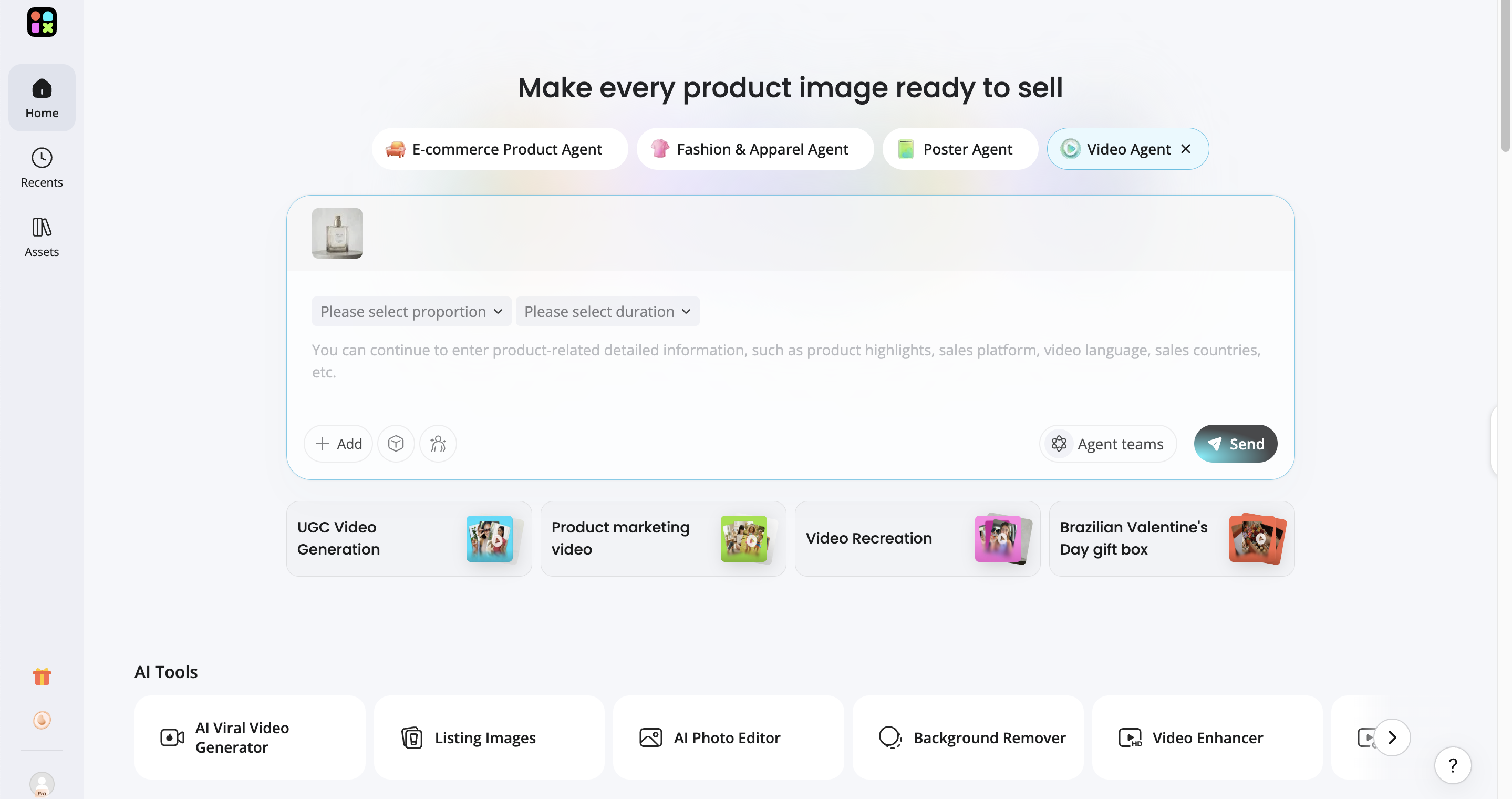
Step 2: Generate AI marketing creatives
Choose your format and add your key selling points, then let Designkit's AI generate multiple ad variations and UGC-style videos—giving you a full batch of test-ready creatives instead of a single asset.
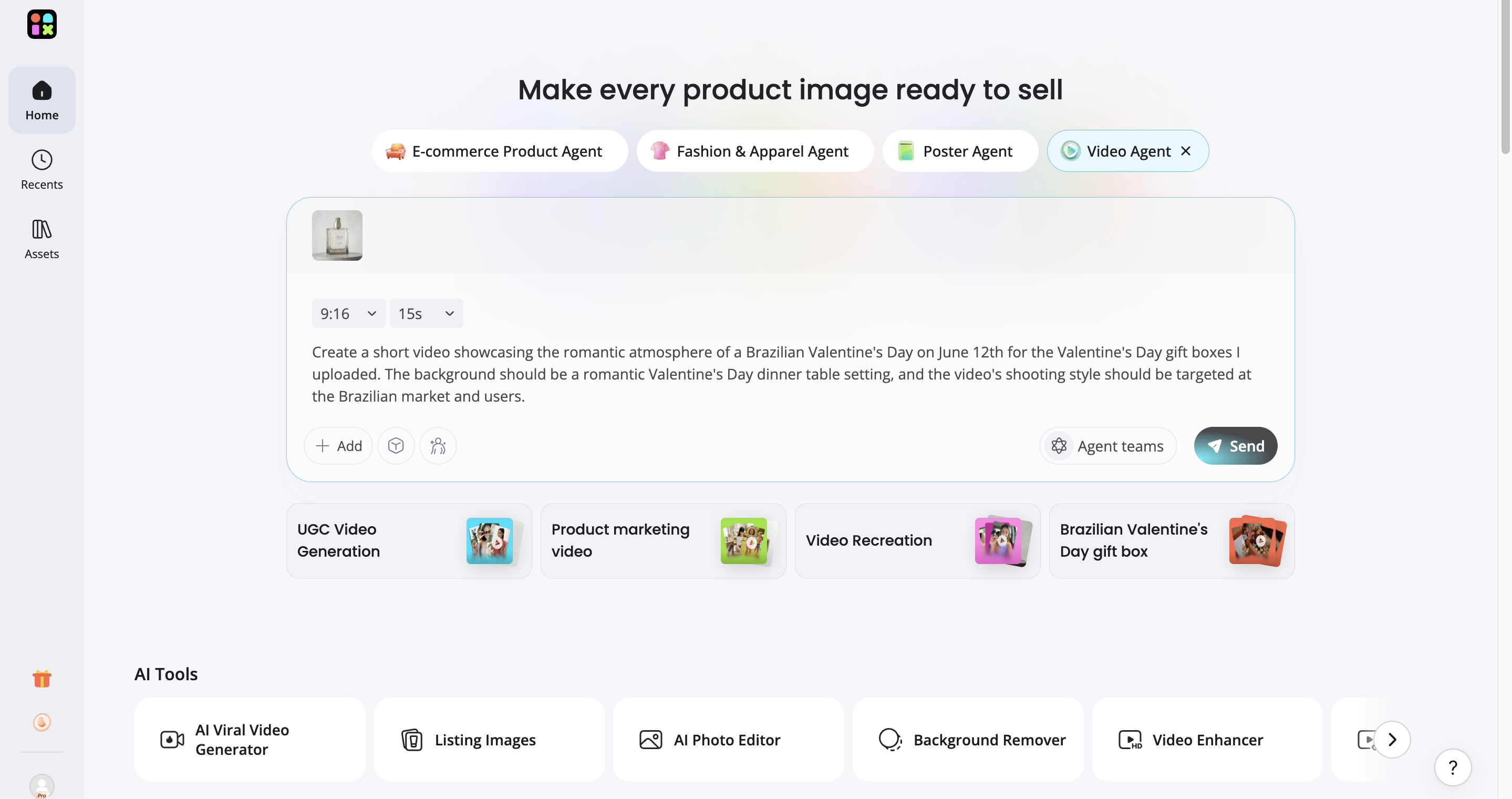
Step 3: Export and launch faster
Preview your creatives, make quick adjustments, then export platform-ready files sized for each channel so you can launch and start testing the same day.
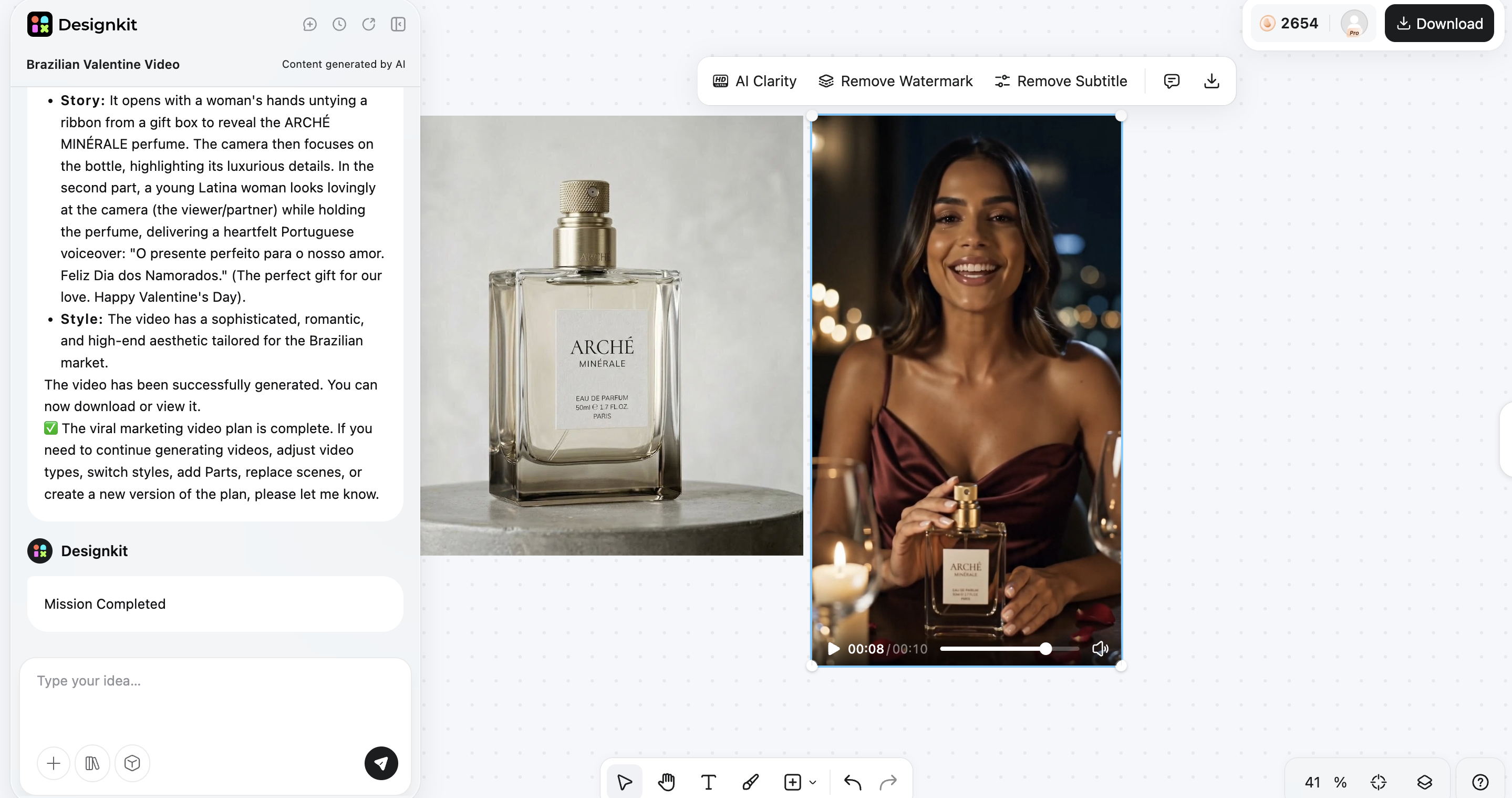
Create performance marketing content Free
The future of performance marketing
Creative speed will become a competitive advantage
In the coming years, brands that can produce ads and test new ideas faster will consistently outperform slower competitors. Platforms are rewarding fresh, frequent content, which means speed in launching creatives will directly impact reach and ROI. This makes rapid execution a key part of modern performance marketing strategies, especially for teams running continuous testing cycles.
AI will make small teams more powerful
AI is removing many manual tasks that used to require large marketing teams. From generating ad variations to analyzing performance data, automation tools will handle much of the heavy lifting. This shift allows small businesses and lean teams to execute advanced AI performance marketing workflows that once required full agencies, making competition more balanced across all business sizes.
Performance will depend on creative quality more than ever
As targeting becomes more automated, the real differentiator will be the quality of creativity itself. Strong visuals, clear messaging, and emotionally engaging content will drive better results. In this environment, video performance marketing will play a major role because video storytelling consistently improves attention, engagement, and conversions across platforms.
Conclusion
Performance marketing wins because every click, lead, and sale is measurable—so you can scale what works and cut what doesn't. But as targeting gets automated, creative quality and creative speed become the real differentiators. Brands that test more ideas faster will pull ahead, and tools like Designkit make that volume possible by turning days of production into minutes.
Frequently Asked Questions
How do I know if performance marketing is right for my business?
What is the easiest way to start digital performance marketing as a beginner?
Start with one platform (like Meta or Google), launch a few simple campaigns, and test different creatives against each other. Keep budgets small until you find what converts, then scale the winners. Most beginners struggle more with producing enough creative than with the ad settings themselves.
How do brands actually measure results in performance marketing?
Brands track clicks, conversions, cost per result, and return on ad spend (ROAS). Together, these show whether a campaign is actually profitable; high traffic with a poor ROAS still means the campaign is losing money.
Can small businesses also use performance marketing or is it only for big brands?
Small businesses can absolutely use it, because success depends more on testing and creativity than on budget size. In fact, smaller brands often benefit more when they move fast and target niche audiences that bigger advertisers overlook.
How does AI help improve performance marketing results?
AI speeds up creative production, generates multiple ad variations, and spots patterns in performance data so marketers can test faster and scale winners. AI tools like Designkit handle the video and image generation side, keeping the testing pipeline full without extra production cost.
Why do some performance marketing campaigns fail even with high traffic?
Traffic alone doesn't convert if the creative or offer is weak. Users drop off no matter how many arrive. Unclear messaging, low trust, and stale visuals are the usual culprits. Tools like Designkit help here by making it cheap to produce fresh, native-style creatives that lift engagement and conversion from the same traffic.
What type of content works best for performance marketing campaigns?
Short videos, UGC-style ads, and clear product-focused visuals perform best because they communicate value fast and feel native to the feed. Video tools like Designkit make it easier to generate and adapt these formats across platforms, so you can test which one converts best.
How do companies optimize performance marketing to get better ROI?
Companies improve ROI by continuously testing creatives, refining messaging, and scaling only what performs. Optimization moves only as fast as new creativity can be produced, so tools like Designkit generate multiple variations quickly, let teams run more tests, cut wasted spend, and improve efficiency.
You May Also Like
Inbound Marketing: Strategies, Examples & Tools (2026)
What Is Video Marketing? E-commerce Guide & Strategies 2026

Short Form Video Marketing for E-commerce: AI Video Guide
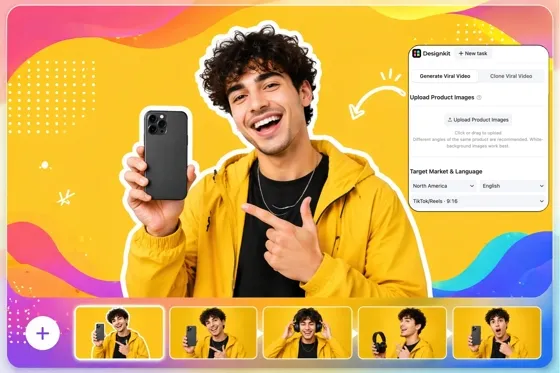
Ecommerce Video Ads: 7 Strategies That Drive Higher Conversions

How to Add Video to eBay Listing: Step-by-Step Seller Guide

How to Boost Ecommerce Sales: Proven Strategies That Work
Boost Your Growth with Powerful Performance Marketing Today
Performance marketing focuses on real results like clicks, leads, and sales. With smart strategies and tools like Designkit, businesses can optimize creativity, improve ROI, and scale faster.