
AI Product Demo vs Live Demo: Which Drives More SaaS Trial Sign-Ups
AI demos scale. Live demos close. Here's how to use both to turn more visitors into trial sign-ups.


A few years ago, booking a demo was one of the first steps in evaluating a SaaS product. Today, many buyers take a different approach. They watch product videos, browse documentation, compare alternatives, and explore free trials long before they ever speak with a sales team.
That change has created a new challenge for SaaS companies. Buyers still want to understand how a product works, but they increasingly expect to do it on their own schedule. As a result, AI-generated product demos have become a popular way to explain features, showcase workflows, and support self-serve evaluation at scale.
At the same time, live demos continue to play an important role. For enterprise buyers, complex workflows, and high-stakes purchasing decisions, direct interaction still helps build confidence and answer questions that pre-recorded content cannot address.
So which format drives more SaaS trial sign-ups? To answer that, we'll compare AI product demos and live sales demos across scalability, personalization, conversion impact, cost, and content maintenance.
What’s the Difference Between an AI Product Demo and a Live Demo?
Although both formats help buyers understand a product, they serve different purposes.
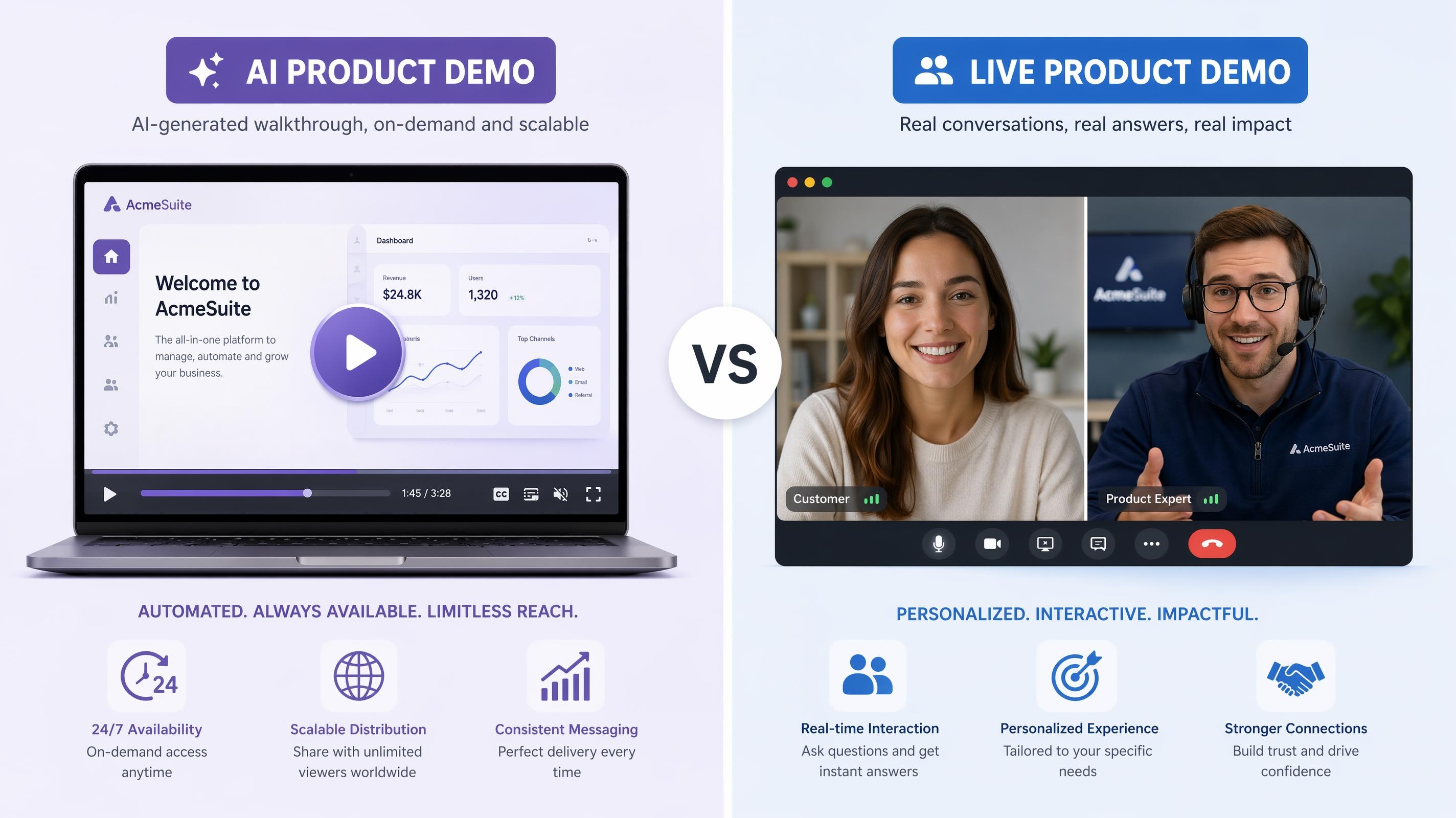
An AI product demo is a pre-recorded or AI-generated walkthrough designed to explain features, workflows, and use cases at scale. It can be reused across landing pages, help centers, email campaigns, and other channels, making it a practical option for self-serve product education.
A live demo is a real-time conversation between a buyer and a sales representative or product expert. Unlike a pre-recorded demo, it allows questions, personalized explanations, and discussions tailored to a buyer's specific needs.
The key difference comes down to scale versus interaction. AI demos help companies educate large audiences efficiently, while live demos provide deeper guidance when buyers need context, clarification, or reassurance before making a decision.
Why Product Demos Matter in the SaaS Buying Journey
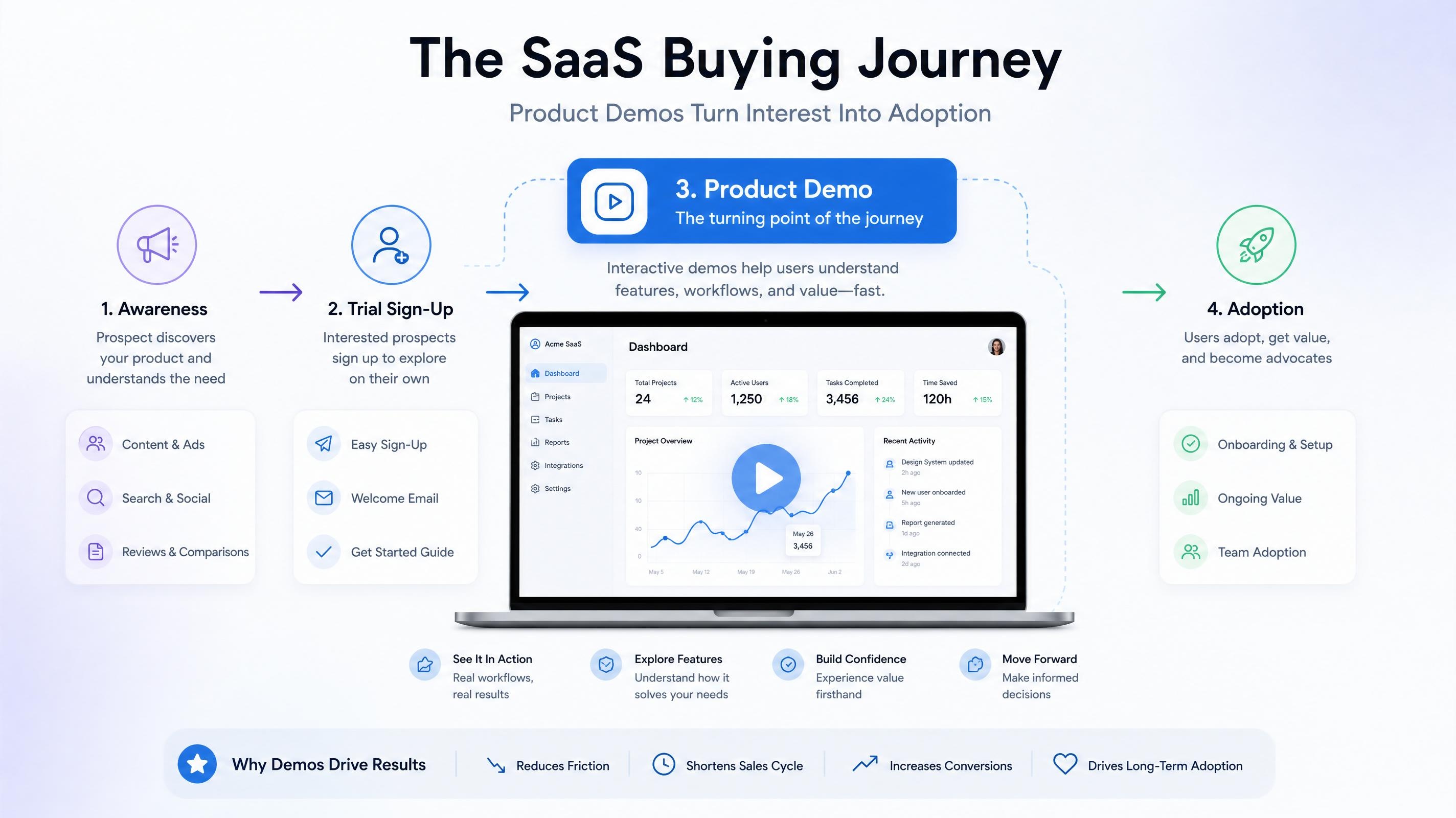
Product demos help bridge the gap between product awareness and product adoption. For many SaaS buyers, seeing the product in action provides a clearer understanding of workflows, features, and potential use cases than a landing page alone.
A well-designed demo reduces uncertainty by showing how the product works and what value it delivers. As a result, demos often play an important role in encouraging trial sign-ups and supporting purchase decisions.
The impact of a demo depends not only on the quality of the presentation but also on the format used. AI demos and live demos each support different stages of the buying journey, which is why understanding their strengths and limitations is important when building a SaaS growth strategy.
Comparing AI Product Demo Videos and Live Sales Demos
AI demos and live demos each have strengths, but those strengths become more apparent in different situations. The comparison below looks at how both formats perform across scalability, personalization, conversion impact, cost, and content maintenance to show where each approach fits best.
Here, we will conduct a feature-by-feature AI vs live video product demonstrations comparison based on the major factors important to SaaS marketing teams for growth.
AI Product Demo Videos vs Live Demos for Scaling Product Education
-
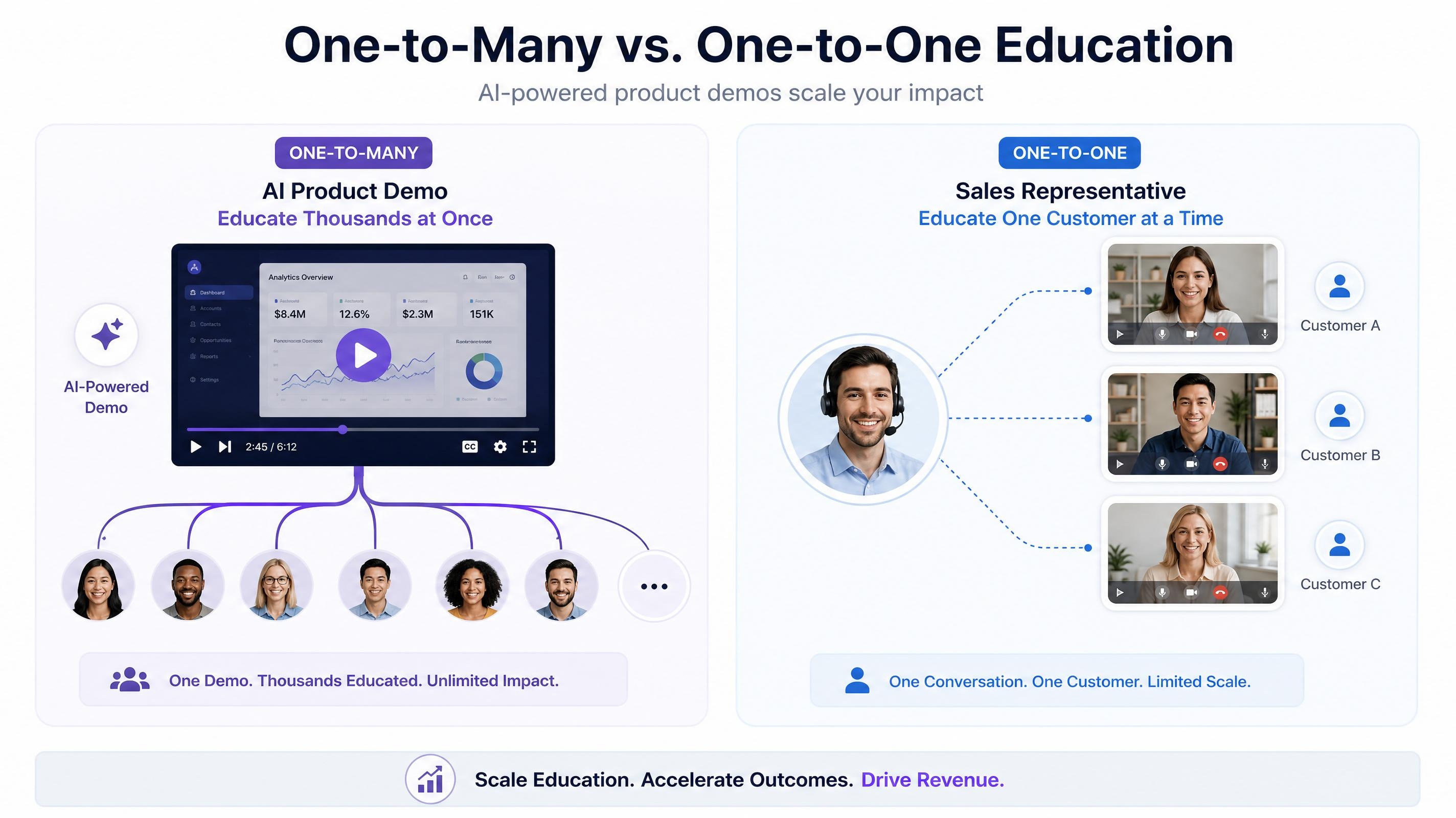
AI product demo videos: AI demos are easy to scale. Once created, the same video can be used across landing pages, email campaigns, help centers, and other channels without requiring additional sales resources. It's the most efficient tool for SaaS companies relying on high-volume traffic or self-serve funnels. After the initial setup, the tool can facilitate thousands of users at the same time with no scheduling hassles.
-
Live sales demos: On the contrary, live sales demos depend on human capacity. A sales session needs a sales representative, coordination, and time. As the demand increases, companies will have to hire more sales reps to keep the coverage, which means the costs of scaling will go up and become operationally more complicated.
Can AI Demo Videos Deliver Personalized Product Experiences
-
AI product demo videos: AI demos perform a degree of personalization. They can change the dialogue, the industry context, or the use cases to fit user segments defined beforehand. Though this will make the user's experience more appropriate than a single video for all, it is still performing on preset rules and flows.
-
Live sales demos: Live demos, on the other hand, offer a richer and more versatile level of personalization. Sales teams can improvise the dialogue based on the customer's questions, complaints, or even the unique features of the product or the customer's workflow.
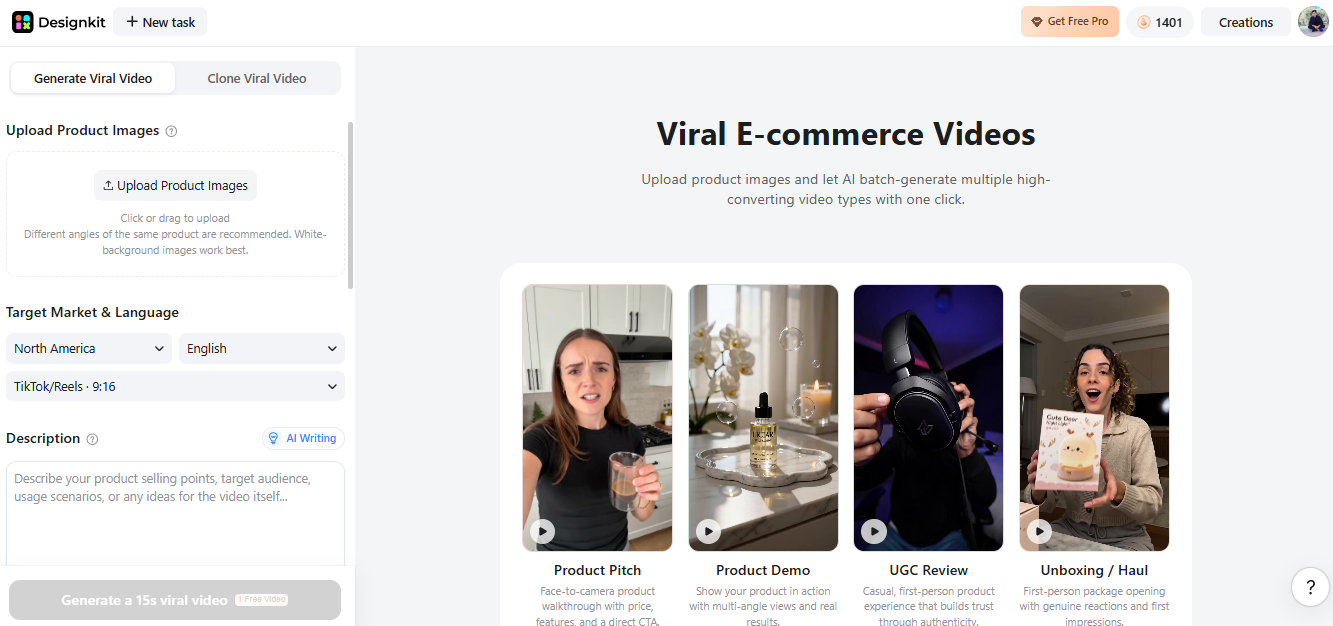
That said, AI demos are swiftly overcoming this limitation by simplifying the scale of personalization. For example, SaaS teams can use Designkit Image to Video Generation to create several demo variations from one single workflow. The same product demo can be adapted for different audiences, countries, or languages without separate production efforts. This makes it easier to adapt the same demo for different markets without creating separate versions from scratch.
Generate Demo Videos with AI Free
Which Drives More Trial Sign-Ups: AI Demo Videos or Live Sales Demos
The answer depends largely on buyer intent and product complexity.
AI demos tend to perform well earlier in the funnel because they allow prospects to explore the product immediately. Removing scheduling requirements lowers friction and helps users reach the trial stage more quickly, particularly for self-serve SaaS products.
Live demos often become more influential later in the buying journey. When prospects are actively evaluating solutions, direct interaction can help address concerns, demonstrate specific workflows, and build confidence before a purchasing decision is made.
For many SaaS companies, AI demos generate initial interest while live demos help convert high-intent prospects.
Cost Comparison Between AI Product Demo Videos and Live Demos
-
AI product demo videos: AI demos typically become more cost-efficient over time. The same content can be reused across landing pages, email campaigns, help centers, and other channels, allowing SaaS teams to reach more prospects without increasing delivery costs. This makes AI demos a practical option for ongoing lead generation and self-serve growth strategies.
-
Live sales demos: On the contrary, live demos need human beings for interactions. It means that the sales team must spend a lot of time, and every engagement can be more costly. At the same time, it permits them to do a very involved kind of sale, which can be used only when necessary.
How Fast Can You Update AI Product Demo Videos vs Live Demo Scripts
-
AI product demo videos: With AI demos, the content needs to be refreshed from time to time to keep pace with the changes in the product, especially if the workflows or UI elements have been changed. However, if it is developed on a scalable platform, such changes can be made centrally and used for all the channels.
-
Live sales demos: Live demos, on the other hand, always show the latest version of the product because the demo is done live. On the other hand, this leaves the possibility of a lack of consistency; different sales representatives may show different features, which can be detrimental to the buyer's experience.
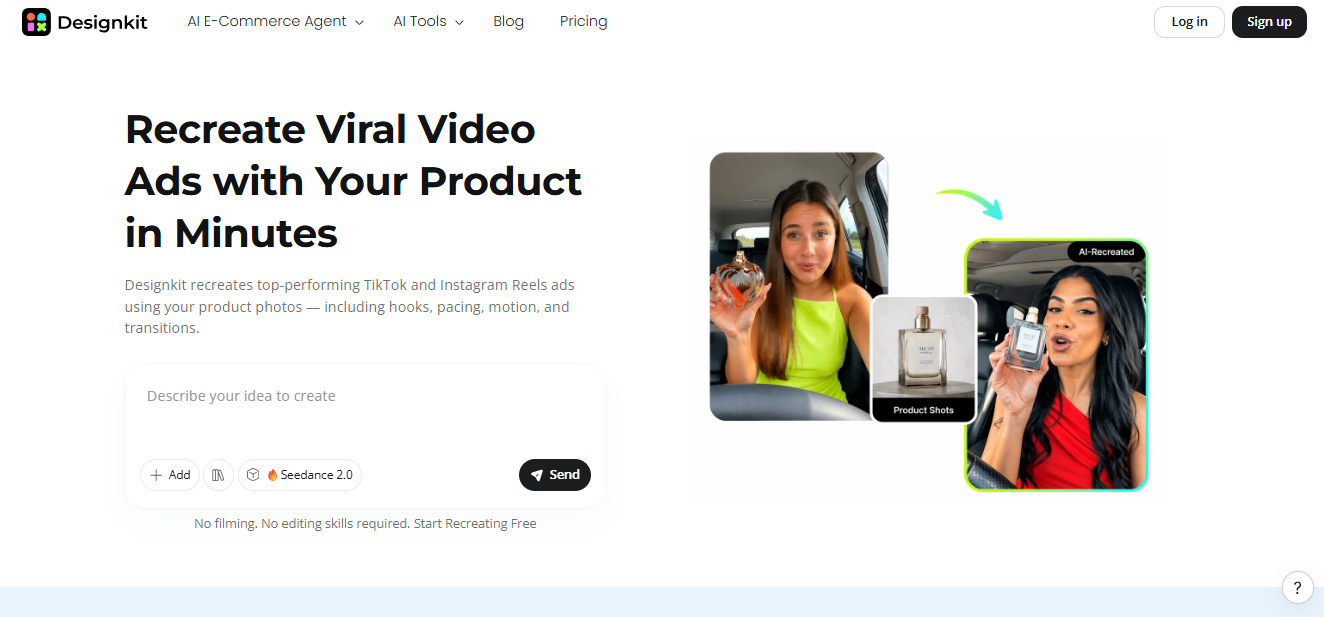
This means that live demos can be immediately changed to reflect the new situation since the reps can just add the features to their demos. On the other hand, not all changes may be made in the same way by the whole team, which can result in differences in how the product is shown. Tools such as Designkit AI Video Ad Recreation help teams update demo content when interfaces, screenshots, or workflows change, making it easier to keep messaging consistent across channels.
Clone Demo Videos with AI Free
Summary table
|
Factor |
AI Product Demo Video |
Live Sales Demo |
|---|---|---|
|
Scalability |
Highly scalable, works across channels and audiences |
Limited by sales capacity and scheduling |
|
Personalization |
Segment-based and automated |
Fully dynamic and real-time |
|
Conversion impact |
Strong for early-stage trial sign-ups |
Strong for high-intent and enterprise deals |
|
Cost efficiency |
Low long-term cost per viewer |
High ongoing human cost |
|
Content maintenance |
Centralized updates required |
Always current but inconsistent delivery |
How SaaS Teams Should Combine AI Demo Videos and Live Sales Demos
For most SaaS companies, the choice is not between AI demos and live demos. Each format serves a different purpose within the buyer journey.
AI demos are well suited to product education at scale, helping prospects understand the product before speaking with sales. Live demos provide deeper guidance when buyers need personalized answers, technical validation, or stakeholder alignment.
Used together, the two formats create a more complete demo strategy that supports both self-serve discovery and sales-assisted evaluation.
When AI Product Demo Videos Convert Better Than Live Demos
An AI product demo video is a good fit in a self-serve and product-led setting where users tend to explore things on their own before reaching out to sales. PLG SaaS products, SMB audiences, and even globally distributed users are prime examples of such users who not only appreciate but also expect quick and effortless access without the hassle of scheduling. An AI product demo for SaaS in these cases essentially helps minimize drop-offs, as it demonstrates value at first sight.
AI demos work best when:
-
Quick decision making is key: Users are looking to comprehend the product in just a few minutes instead of having meetings
-
SMB or PLG motion: Buyers favor a self-serve onboarding over a sales-assisted one
-
Global audiences: Different regions demand scalable, always-on product education
-
Simple-to-moderately complex products: Less necessity for a thorough live explanation
When Live Sales Demos Still Drive Higher SaaS Conversion
Live demos continue to be the best option in complex and high-value SaaS deals where factors such as trust, context, and the ability to solve problems on the spot really weigh.
In the case of the enterprises, there are several people involved, and the buyers are likely to require clarifications on the spot regarding the security, integrations, and workflows. It is exactly the live interaction that can obtain very great results when comparing outcomes of a demo video vs live demo.
Live demos can bring about great results for:
-
Enterprise buying cycles: Any time you have a large team of decision makers who need to be on the same page immediately
-
High ACV deals: Trust and reassurance are key factors when you are looking at larger contracts
-
Security and compliance-heavy products: In such cases, buyers will want the technical details, and it is best to give them straight away
-
Complex or customizable solutions: Ideally, you will want to have a live session, so that you can go through the product with the prospective client and see what works best for each one.
Build a Hybrid Demo Strategy That Increases SaaS Trial Sign-Ups
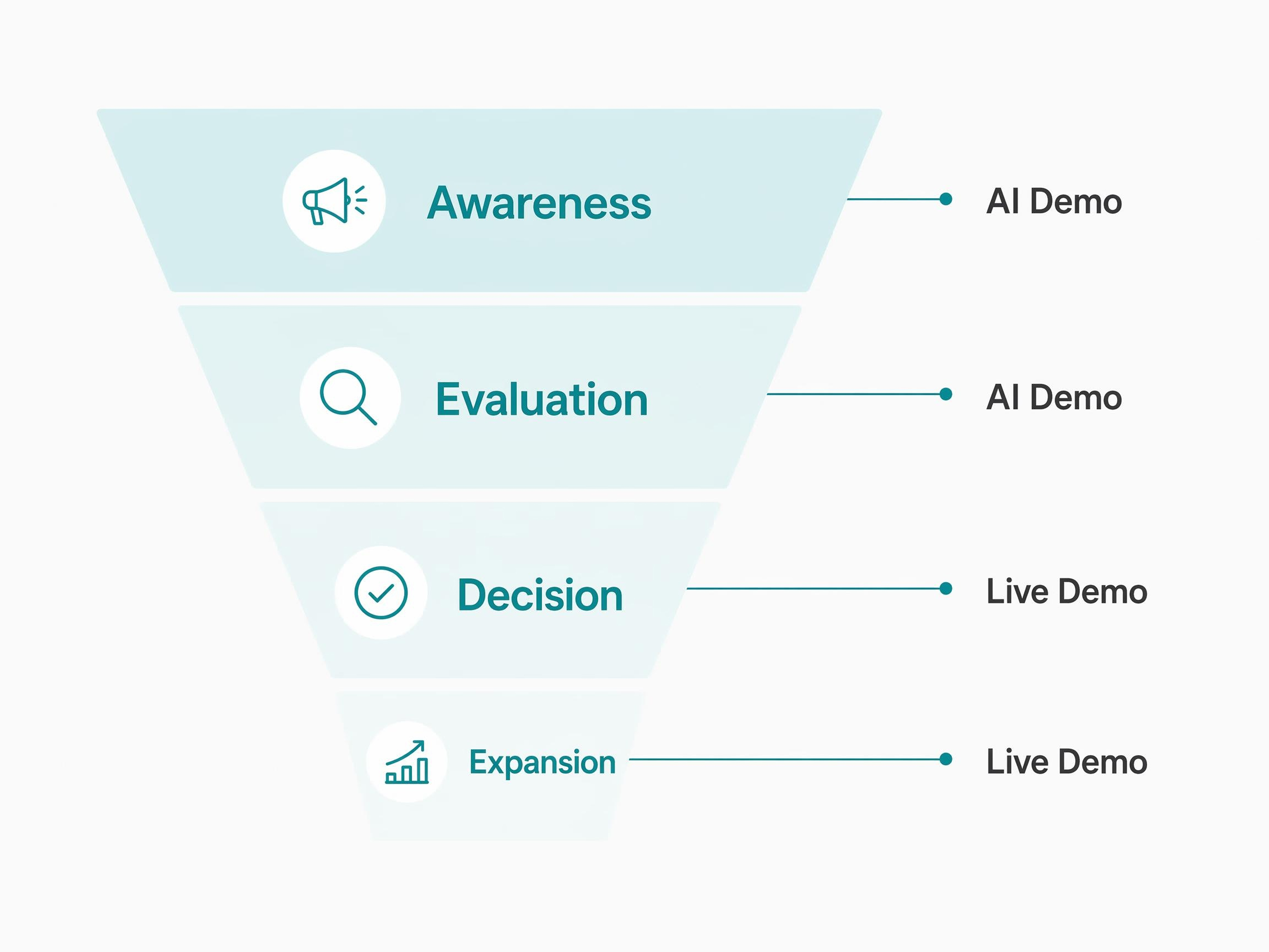
A powerful SaaS demo strategy doesn't have to be a choice between AI and live demos. It's possible to combine them throughout the funnel. The aim is to use AI demo video generator workflows for scale and awareness, while live demos can be relied on for deeper evaluation and final decision-making.
One such simple framework can be:
-
Awareness stage: Using AI demos to efficiently communicate product benefits and encourage users to sign up for trials
-
Evaluation stage: AI product demo video content giving users a self-serve option for exploring the product features and understanding them better
-
Decision stage: Live demos for performing validation, handling objections, and aligning with stakeholders
-
Expansion stage: Live sessions for presenting upselling and advanced use cases
At the same time, to make things scalable, SaaS teams shouldn't strive to invent several new assets at every variation but rather create one core demo and reuse it across variations. Product demo video software tools, such as Designkit Product Video Generator and Designkit AI Video Ad Recreation, make it easier for teams to produce demo videos from screenshots and prompts, localize them for different markets, and update versions as fast as the product changes.
Conclusion
If the goal is generating more trial sign-ups, AI demos usually have the edge. They allow buyers to explore a product immediately, remove the need to schedule a call, and scale far beyond what a sales team can handle manually.
That doesn't make live demos less important. As products become more complex and buying decisions involve more stakeholders, direct conversations still play a critical role in building trust and answering questions.
The strongest SaaS teams don't choose between AI demos and live demos. They use each where it performs best, allowing buyers to move from self-serve exploration to informed decision-making with less friction along the way.
Frequently Asked Questions
Do AI demo videos reduce trust?
Which demo format increases free trial sign-ups?
It depends on the stage of the funnel. AI demos usually drive more early-stage sign-ups because they remove friction and allow instant product understanding. Live demos tend to improve demo video vs live demo conversion at later stages where buyers already show high intent and need reassurance.
What is the ideal demo length?
Shorter is usually better for AI demos—around 1–3 minutes for quick value understanding. Live demos can be longer, typically 20–45 minutes, depending on product complexity and stakeholder involvement.
Should demos include human presenters?
AI demos generally do not require presenters and work best as self-serve assets. Live demos benefit from human presenters because real-time interaction helps answer objections and build trust during evaluation.
How should teams measure demo effectiveness?
Teams should track metrics like watch-to-trial conversion rate, trial activation rate, drop-off points, and influenced pipeline. Comparing these metrics across AI and live demos helps identify which format contributes more to conversions at each funnel stage.
You May Also Like

PixVerse AI Review 2026: Is It Worth Using for AI Videos?

How to Animate a Picture with AI: Easy Step-by-Step Guide

How to Write a Video Script: Structure, Tips & Examples

What Is B-Roll? Meaning, Examples, and How to Use It

How to Make a TikTok Video: A Step-by-Step Guide 2026

How to Make an Instagram Post: Step by Step Creation Guide

Social Media Copywriting: Tips, Examples & Best Practices

What Are AI Fruits? The Trend, the Formats, and How to Make One

LTX Studio Review: Features, Pricing & AI Filmmaking Guide

HeyGen vs Arcads: Which AI Video Tool Wins in 2026?
Arcads AI Review 2026: Features, Pricing, Pros, Cons & Alternatives
Creatify AI Reviews: Features, Pricing & Alternatives (2026)

What Are Satisfying Videos? Types, Tips & How to Make (2026)

How to Generate Product Videos from Images with AI (2026 Guide)
How to Create a Product Launch Video with AI: A Step-by-Step Guide
What Is a Brand Video? Types, Examples & How to Create One
AI Product Demo vs Live Demo: Which Gets More SaaS Sign-Ups?
How to Create AI Product Promotion Videos in Minutes (Step-by-Step)
Best AI Product Video Ad Generators for Ecommerce in 2026

How to Boost Ecommerce Sales: Proven Strategies That Work
How to Add Video to eBay Listing: Step-by-Step Seller Guide
Short Form Video Marketing for E-commerce: AI Video Guide
What Is Video Marketing? E-commerce Guide & Strategies 2026
Turn Product Visuals Into a Demo That Sells Itself
Create AI product demo videos from screenshots and prompts, localize them for global markets, and update them as fast as your product changes. No production team needed.