
What Is Video Marketing? A Complete Guide for E-commerce
Video marketing helps e-commerce brands show products in action, build buyer trust, and drive more sales—without needing a studio or production team. With AI tools like Designkit, creating platform-ready marketing videos takes minutes, not days.


Video marketing has become one of the most effective ways for e-commerce brands to reach customers, explain products, and drive sales. Unlike static images or text descriptions, videos let buyers see products in action—building clarity and trust before they ever click "add to cart." This guide breaks down what video marketing is, how it works across platforms like TikTok, Instagram, and YouTube, and which strategies and tools help brands scale content without a production team.
What is Video Marketing?
Video marketing is a form of digital marketing that uses videos to promote products, services, or brands. It helps businesses deliver messages in a more engaging and visual way compared to text or static images. This approach makes it easier for audiences to understand and connect with the content. It is widely used across digital platforms to increase awareness, engagement, and conversions. Today, it's a core part of how brands attract, educate, and convert customers across digital channels.

Video marketing works across the full customer journey: brands create videos to showcase products and tell their story, distribute them across social media, ads, and websites, and use engagement signals—likes, shares, comments—to measure what's connecting with their audience. Over time, consistent video content builds brand familiarity and trust, which guides viewers toward actions like clicking through, adding to cart, or making a purchase.
Types of Video Marketing Content
| Video Type | Best For | Common Platforms |
|---|---|---|
| Product Videos | Showcasing how a product looks, works, and benefits the user; driving purchase decisions | Amazon, Shopify, YouTube |
| Explainer Videos | Breaking down complex ideas or services using animation or voiceover; educating new customers | YouTube, website landing pages |
| Tutorial / How-to Videos | Guiding users step-by-step through product use; reducing confusion and support requests | YouTube, TikTok, Instagram Reels |
| Testimonial Videos | Building trust and credibility through real customer experiences and feedback | Website, Facebook Ads, Instagram |
| Brand Story Videos | Creating emotional connection with the audience; building long-term brand identity and loyalty | YouTube, Instagram, TikTok |
The most common formats include product videos (showcasing features and usage), explainer videos (breaking down complex ideas with animation or voiceover), tutorial videos (step-by-step how-to guides that reduce confusion and support requests), testimonial videos (real customers sharing results to build credibility), and brand story videos (connecting audiences to a brand's mission and values). Each format serves a different stage of the buyer journey—from first awareness to final purchase decision.
Benefits of Video Marketing for E-commerce
How Video Improves Customer Understanding
Online video marketing helps customers understand products faster by showing real usage, features, and benefits visually. Instead of reading long descriptions, users can clearly see how something works. This improves clarity and reduces confusion during the buying process.
How Video Builds Trust and Increases Conversions
Product demo videos, for example, reduce return rates—customers arrive with accurate expectations of what they're buying. UGC-style clips add another layer of trust: real people using real products tend to convert better than polished brand ads because they feel unscripted and relatable. Platforms like TikTok and Instagram have made this format the default for discovery-stage content.
Video Marketing Use Cases in E-commerce
Video marketing is used across every stage of the e-commerce funnel. On product pages, demo videos increase time-on-page and reduce purchase hesitation. In ads, UGC-style clips drive lower CPMs and higher click-through rates on platforms like TikTok and Meta. Post-purchase, tutorial videos reduce support tickets and improve repeat purchase rates by helping customers get more value from what they bought.

Social Media, Ads, and Website Applications
Each platform has its own video format requirements and audience behavior. TikTok and Instagram Reels reward vertical short-form videos (9:16) with fast hooks in the first two seconds. YouTube works better for longer product reviews and tutorials. Website product pages benefit most from autoplay silent videos showing the product in use. Running the same content across all channels without adapting format and pacing typically underperforms.
Video Marketing Strategies That Work
Short-Form Video Strategies
Short form video marketing focuses on creating quick, engaging videos designed to capture attention within seconds. These videos work best on platforms like TikTok, Instagram Reels, and YouTube Shorts. The goal is to deliver a clear message fast and keep viewers hooked until the end.
Storytelling and Product Demonstration
Strong video marketing strategies often combine storytelling with product demonstrations. Storytelling helps create an emotional connection, while demos show how the product actually works. Together, they make content more relatable and persuasive for potential customers.
Repurposing Videos Across Channels
A key video marketing strategy is repurposing content across multiple platforms. One video can be adapted for social media, ads, websites, and email campaigns. This approach increases reach, saves production time, and improves overall marketing efficiency.
Traditional vs AI Video Production
| Aspect | Traditional Video Production | Modern Video Tools Approach |
|---|---|---|
| Cost | High (studio, models, equipment) | Low (no physical setup required) |
| Time | Slow (days or weeks per video) | Fast (minutes to hours) |
| Scalability | Limited (manual creation per product) | High (bulk content generation) |
| Skills Required | Professional editing & production | Beginner-friendly |
| Consistency | Varies across shoots | Standardized output |
| E-commerce Suitability | Hard to maintain at scale | Built for product catalogs |
AI-powered tools have changed this equation significantly—automating the production process so brands can generate platform-ready videos from product images alone, without technical skills or editing software.
How to Create Video Marketing Content with Designkit
Traditional video production is slow, expensive, and hard to scale, especially when brands need constant content for ads, social media, and campaigns. Designkit solves this by simplifying the entire process into a fast and structured workflow. Instead of relying on studios, editing teams, or complex tools, businesses can turn simple ideas and visuals into complete marketing videos in minutes. The result: more video variations, consistent cross-platform presence, and a video marketing workflow that actually scales.
How to Create Video Marketing Content Step By Step with Designkit
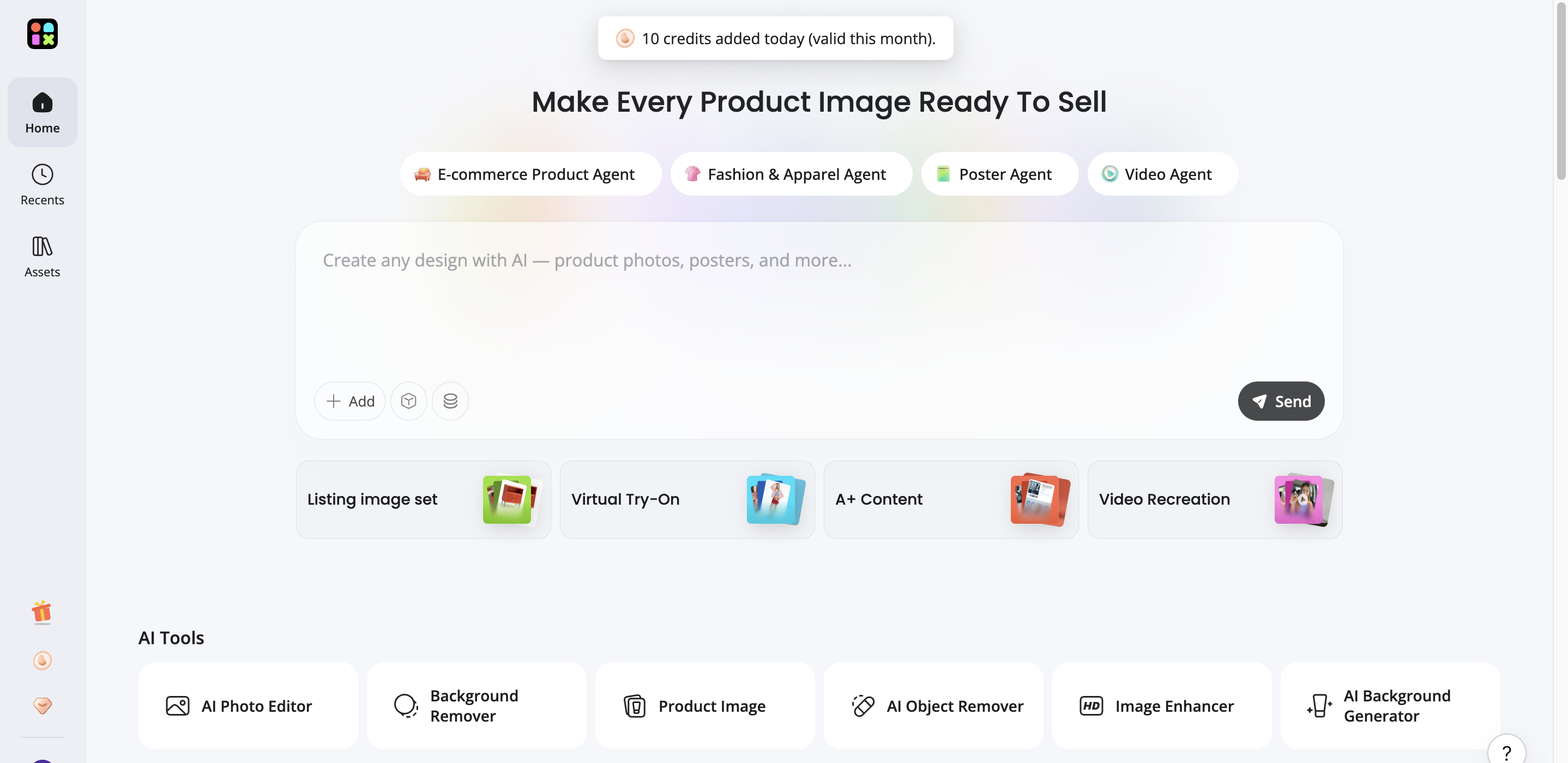
Step 1: Upload Your Product Images
Open the AI Viral Video Generator in Designkit. Upload multiple product images from different angles—clear, high-quality shots give the AI more to work with and produce stronger results.
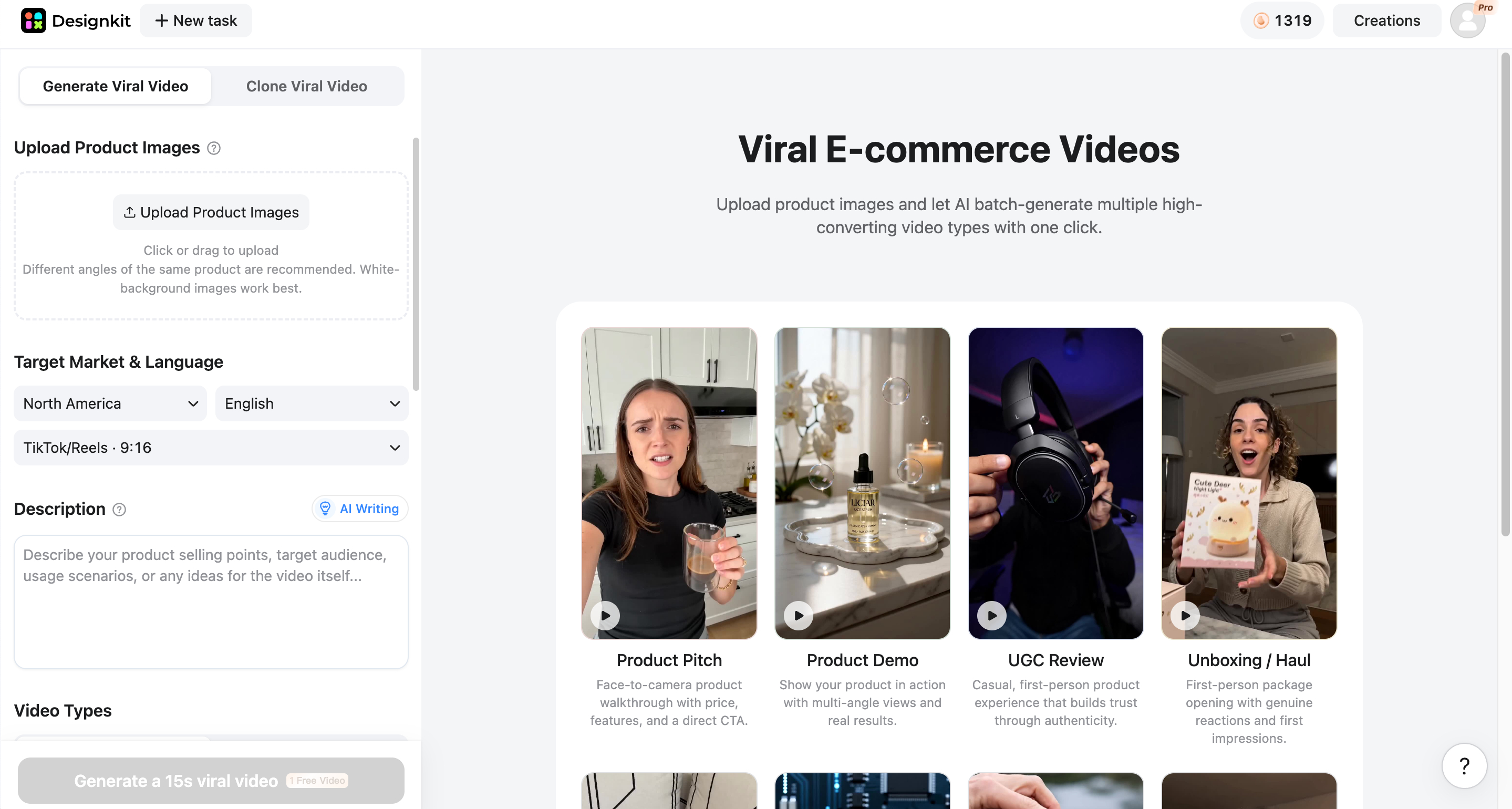
Step 2: Set Your Campaign Parameters
Choose your target market, language, and video format. Add key details like selling points, target audience, and campaign message. Designkit's AI uses this input to generate conversion-focused scripts and video structures automatically, no manual writing needed.
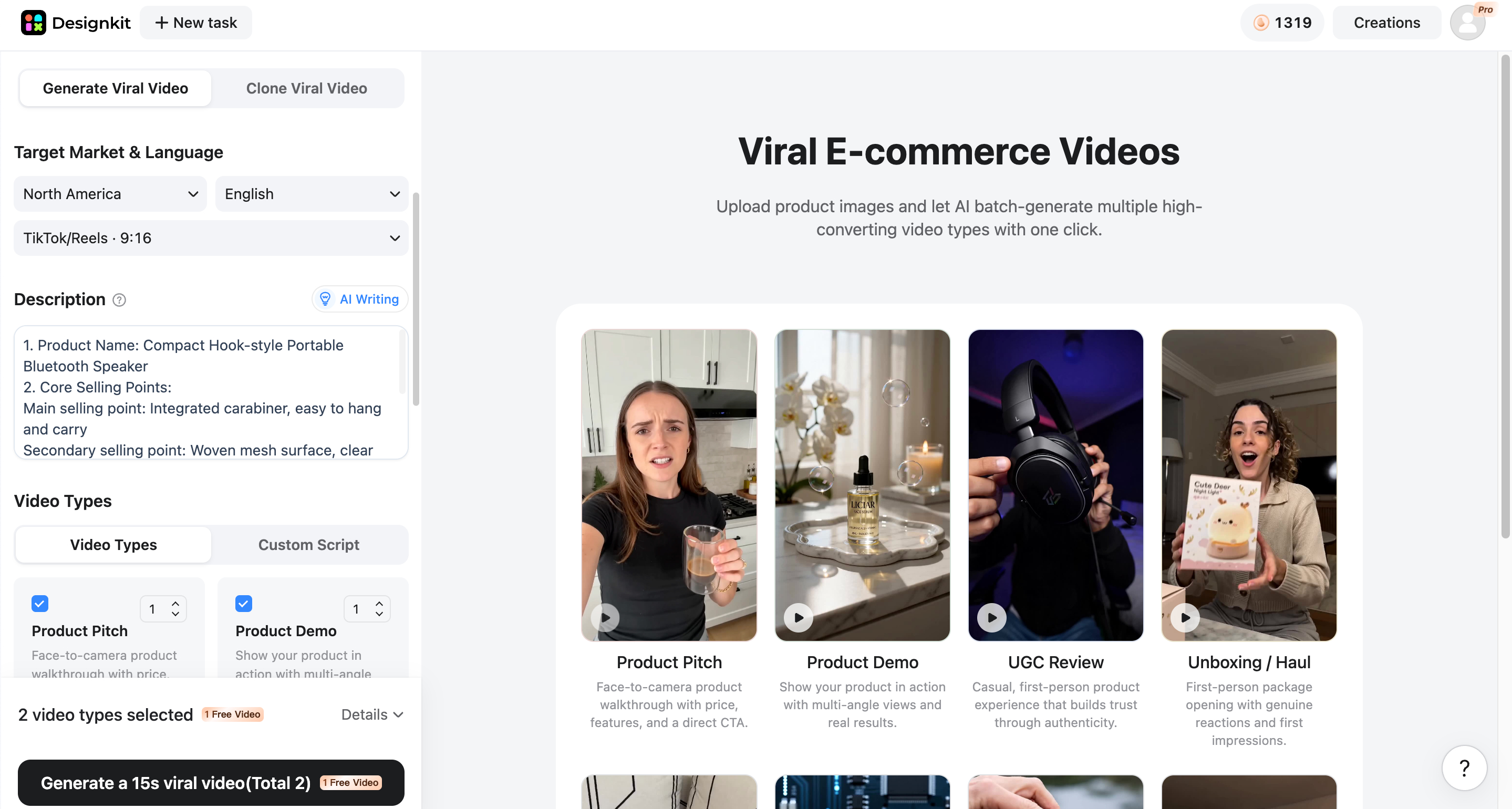
Step 3: Preview, Test, and Export
Review your generated videos and create multiple variations for A/B testing. Once you've identified the best-performing version, export in the format optimized for your target platform: TikTok, Instagram Reels, or Facebook Ads.
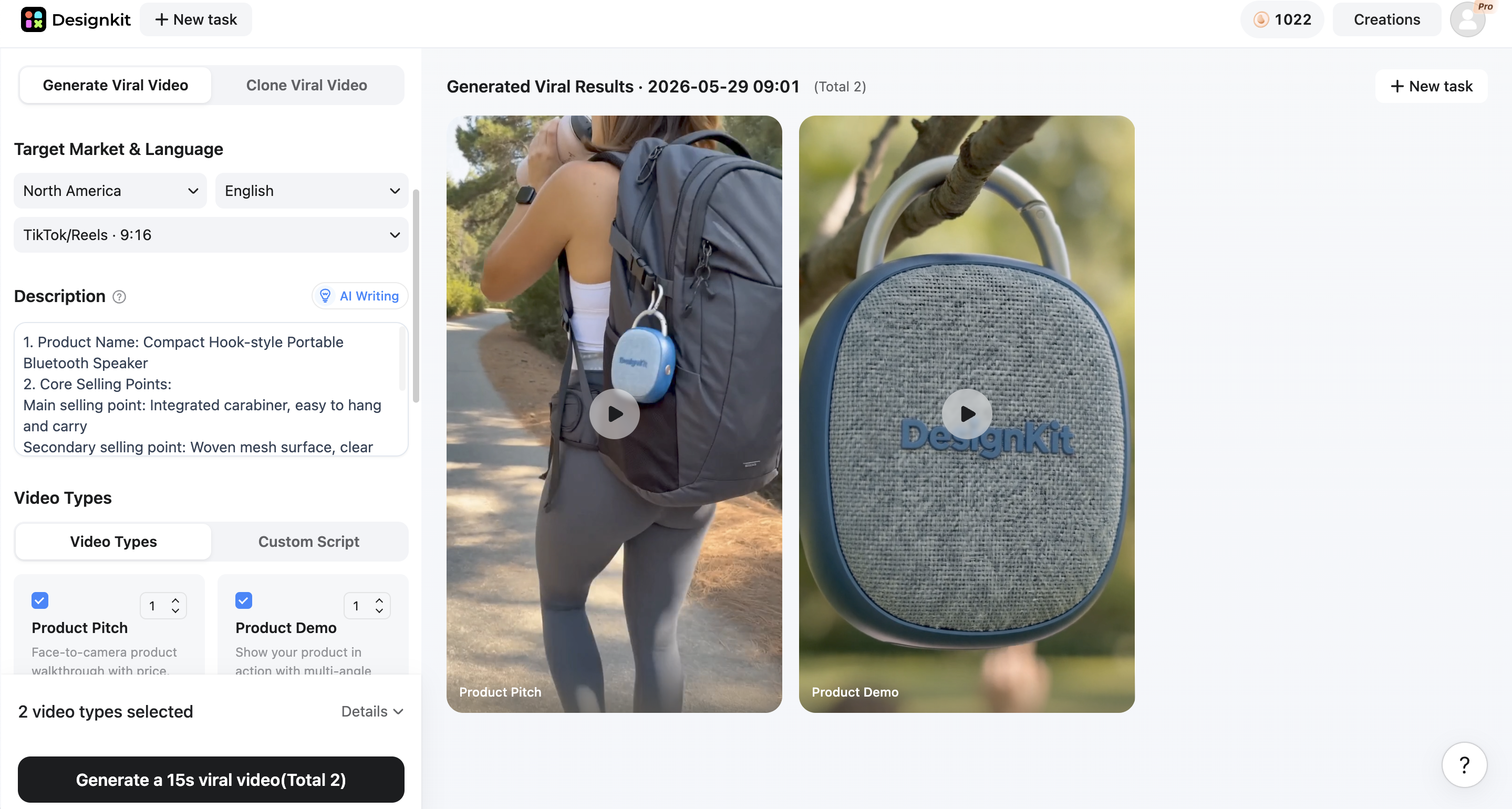
Key Features That Drive E-commerce Growth
Turn Product Images into High-Converting Video Ads
Designkit turns static product images into engaging video ads automatically—no filming team or studio required. From a single product image, you can generate multiple video variations with different visuals, hooks, and styles, then run A/B tests to quickly identify which version drives the best clicks and conversions. This means less time guessing what works and more time scaling what does.
Multi Platform Video Adaptation for Reach
The tool optimizes videos for different platforms like TikTok, Instagram, Facebook, and YouTube Shorts. Each format is adjusted in size, pacing, and style, so your content looks native everywhere, helping you reach more audiences without extra editing work.
AI Script and Creative Automation for Ads
Designkit generates ad scripts, hooks, and creative directions using AI. Instead of manually writing ad copy or planning scenes, it builds ready-to-use marketing narratives that match your product and target audience, saving time and improving ad quality.
Conclusion
Video marketing is simply using videos to show and promote your products in a way that feels clear, engaging, and easy to connect with. Instead of just looking at images or reading descriptions, customers can actually see how a product works, which helps them understand it faster and trust it more. With tools like Designkit, creating these videos becomes quick and effortless. You can turn product photos into eye-catching videos, automatically generate ad scripts, and even make different versions of the same video for testing on platforms like TikTok, Instagram, or Facebook.
In short, video marketing helps brands grab attention, explain products better, and increase sales—and AI tools like Designkit make the whole process faster, simpler, and more scalable.
Frequently Asked Questions
What makes video marketing important for business growth?
Which video marketing formats deliver the best results?
Short-form videos, product demos, UGC-style clips, and storytelling ads consistently outperform other formats because they grab attention quickly and feel platform-native. The best-performing format depends on the stage of the buyer journey—UGC works well for discovery, product demos for consideration. AI tools like Designkit let brands generate multiple format variations from one product image, making it straightforward to test which performs best.
Which platforms work best for video marketing campaigns?
Instagram, TikTok, YouTube Shorts, and Facebook are the strongest platforms for e-commerce video because of their reach and purchase-intent audiences. Each requires different aspect ratios and pacing—vertical short-form for TikTok and Reels, slightly longer horizontal for YouTube. Designkit automatically adapts video output for each platform, so brands don't need to re-edit the same clip multiple times.
What does video marketing usually cost for brands?
Traditional video production costs vary widely—professional shoots can run from a few hundred to several thousand dollars per video, depending on crew, location, and editing. For e-commerce brands producing content at scale, this adds up quickly. AI-powered tools have significantly lowered this barrier: platforms like Designkit let brands generate multiple video formats directly from product images, reducing per-video cost to a fraction of traditional production.
Which tools help create effective marketing videos?
The most effective video marketing tools combine content generation, platform optimization, and creative variation in one workflow—so brands aren't stitching together multiple apps. Key features to look for include AI script generation, multi-platform format adaptation, and the ability to produce multiple video versions from a single input. Designkit covers all three, making it a practical option for e-commerce brands that need consistent output without a dedicated production team.
How often should businesses post video content?
Consistency matters more than volume. For most e-commerce brands, 3–5 short-form videos per week on platforms like TikTok or Instagram Reels is a sustainable starting point. The key is maintaining a regular publishing schedule so the algorithm keeps surfacing your content to new audiences—tools that let you generate multiple videos from a single product image make this cadence easier to sustain.
How does video marketing boost sales and return on investment?
Video boosts sales by giving customers a clearer picture of what they're buying—reducing hesitation and return rates. Brands that test multiple video formats (product demos, UGC-style clips, storytelling ads) typically find that different formats perform differently by platform and audience. Running A/B tests across variations is the most reliable way to improve ROI over time. Tools like Designkit make this easier by generating multiple video versions from one product image, so testing doesn't require additional production budget.
You May Also Like

PixVerse AI Review 2026: Is It Worth Using for AI Videos?

How to Animate a Picture with AI: Easy Step-by-Step Guide

How to Write a Video Script: Structure, Tips & Examples

What Is B-Roll? Meaning, Examples, and How to Use It

How to Make a TikTok Video: A Step-by-Step Guide 2026

How to Make an Instagram Post: Step by Step Creation Guide

Social Media Copywriting: Tips, Examples & Best Practices

What Are AI Fruits? The Trend, the Formats, and How to Make One

LTX Studio Review: Features, Pricing & AI Filmmaking Guide

HeyGen vs Arcads: Which AI Video Tool Wins in 2026?

Arcads AI Review 2026: Features, Pricing, Pros, Cons & Alternatives
Creatify AI Reviews: Features, Pricing & Alternatives (2026)

What Are Satisfying Videos? Types, Tips & How to Make (2026)

How to Generate Product Videos from Images with AI (2026 Guide)

How to Create a Product Launch Video with AI: A Step-by-Step Guide
What Is a Brand Video? Types, Examples & How to Create One
AI Product Demo vs Live Demo: Which Gets More SaaS Sign-Ups?
How to Create AI Product Promotion Videos in Minutes (Step-by-Step)

Best AI Product Video Ad Generators for Ecommerce in 2026

How to Boost Ecommerce Sales: Proven Strategies That Work
How to Add Video to eBay Listing: Step-by-Step Seller Guide
Short Form Video Marketing for E-commerce: AI Video Guide
What Is Video Marketing? E-commerce Guide & Strategies 2026
Improve Clarity, Trust, and Engagement with Marketing Videos Now
See how brands are creating more video content in less time, without studios, editors, or complex tools.