
Wedding Dress Styles for Every Body Type: How to Find the Right Fit Before You Shop
Find the best wedding dress for your body type: hourglass, pear, apple, petite & more. Learn which silhouettes flatter you and preview styles online before your first fitting.


Choosing a wedding dress for your body type is less about following strict styling rules and more about understanding how different silhouettes create balance and proportion. The same gown can look completely different depending on its cut, fabric, and construction, which is why finding the right silhouette often matters more than following the latest bridal trend.
If you're searching for how to choose a wedding dress for your body type, you're probably trying to answer a few practical questions:
- Which dress silhouette will flatter my figure?
- Which necklines and fabrics should I look for?
- What styles should I try first at a bridal boutique?
- Can I compare different looks before scheduling appointments?
This guide answers those questions with practical styling advice based on common body shapes, explains how each silhouette changes your proportions, and shares ways to narrow your choices before trying on dresses in person.
Keep in mind: Body type guides are starting points, not rules. Professional bridal stylists generally recommend trying several silhouettes because fit, construction, and fabric vary between designers. A dress that works on paper may not be your favorite once you see it in person, while an unexpected style can become the one you love.
How Body Shape Can Help You Choose a Wedding Dress
There isn't one "perfect" wedding dress for every bride. Instead, different silhouettes create different visual effects. Understanding those effects can help you build a more focused shortlist before visiting bridal boutiques.
Most styling recommendations are based on three principles:
- Balance proportions by creating visual harmony between the shoulders, waist, and hips.
- Highlight your favorite features rather than trying to disguise your body.
- Choose structure that complements your shape, whether that's soft draping, a defined waist, or a fuller skirt.
Many people don't fit neatly into one category. You may share characteristics of two body types, and that's completely normal. Use the closest match as a guide rather than a strict rule.
Quick Body Shape Guide
| Body Type | Typical Characteristics | Styling Goal |
|---|---|---|
| Hourglass | Bust and hips are similar in width with a defined waist | Highlight natural curves |
| Pear | Hips are wider than shoulders | Balance the upper and lower body |
| Apple | Fuller through the midsection with slimmer legs | Create definition around the waist |
| Petite | Generally under 5'4" with a smaller frame | Create the illusion of height |
| Athletic / Inverted Triangle | Broader shoulders with straighter hips | Add softness and balance below the waist |
| Plus Size | Fuller proportions across multiple areas | Prioritize support, structure, and comfort |
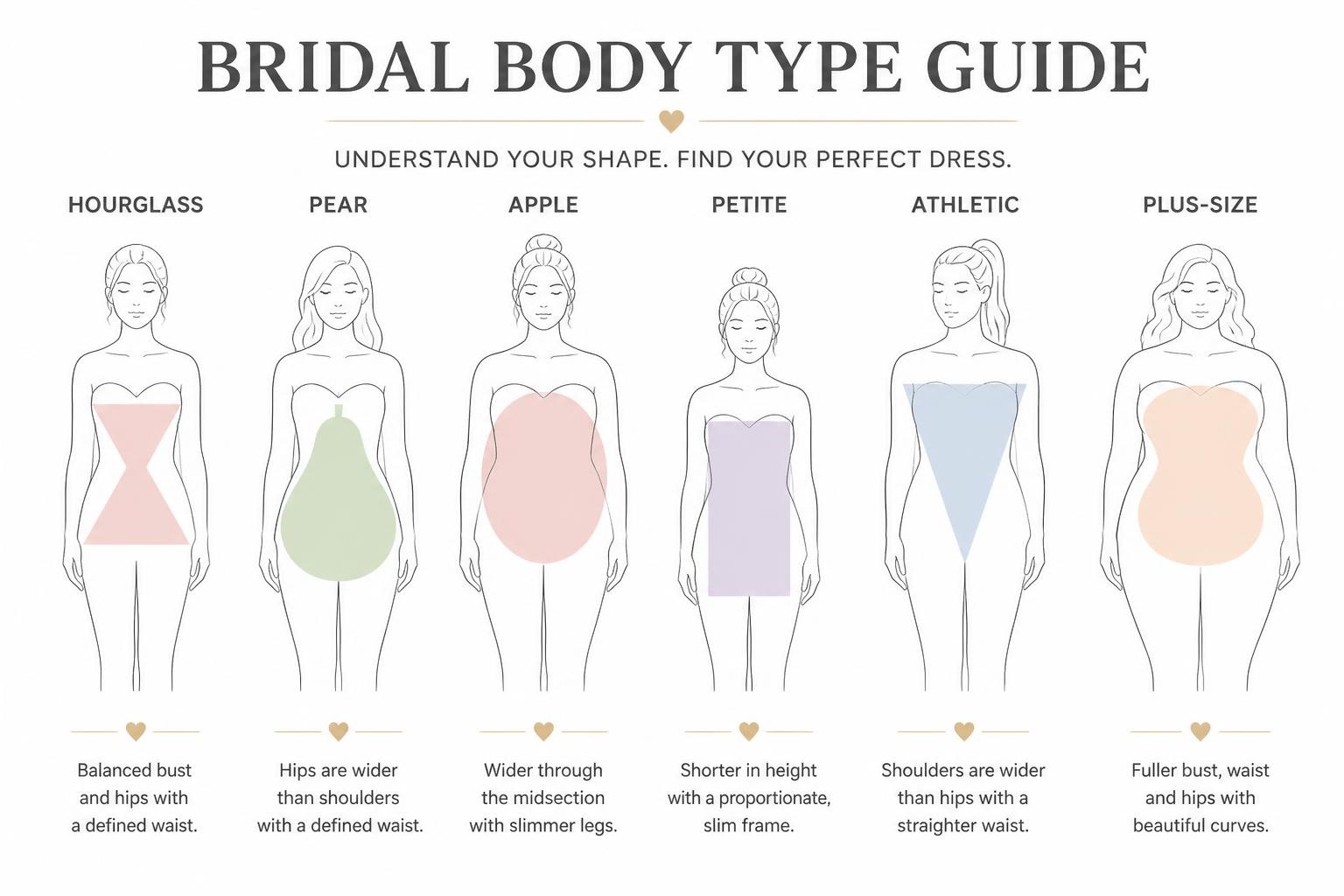
Not Sure Which Body Type You Have?
Instead of relying on clothing size, look at your proportions.
Stand in front of a mirror wearing fitted clothing or take a full-length photo. Compare the width of your shoulders, bust, waist, and hips.
Ask yourself:
- Are my shoulders and hips roughly the same width?
- Is my waist noticeably smaller?
- Where do I naturally carry more volume?
- Which feature would I like my dress to highlight?
These observations usually provide more useful guidance than dress size alone.
Expert tip: Bridal sizing often differs from everyday clothing sizes. Choose silhouettes based on your proportions rather than the number on the label. Alterations are expected for almost every wedding dress.
Wedding Dress Silhouette Guide
Before choosing a dress for your body type, it's helpful to understand what each silhouette is designed to do. Think of the silhouette as the foundation of the dress—it shapes your overall proportions long before details like lace, sleeves, or embellishments come into play.
According to bridal styling guidance from established bridal retailers and publications such as Brides and David's Bridal, silhouette is usually the first element brides should narrow down before comparing fabrics or decorative details.
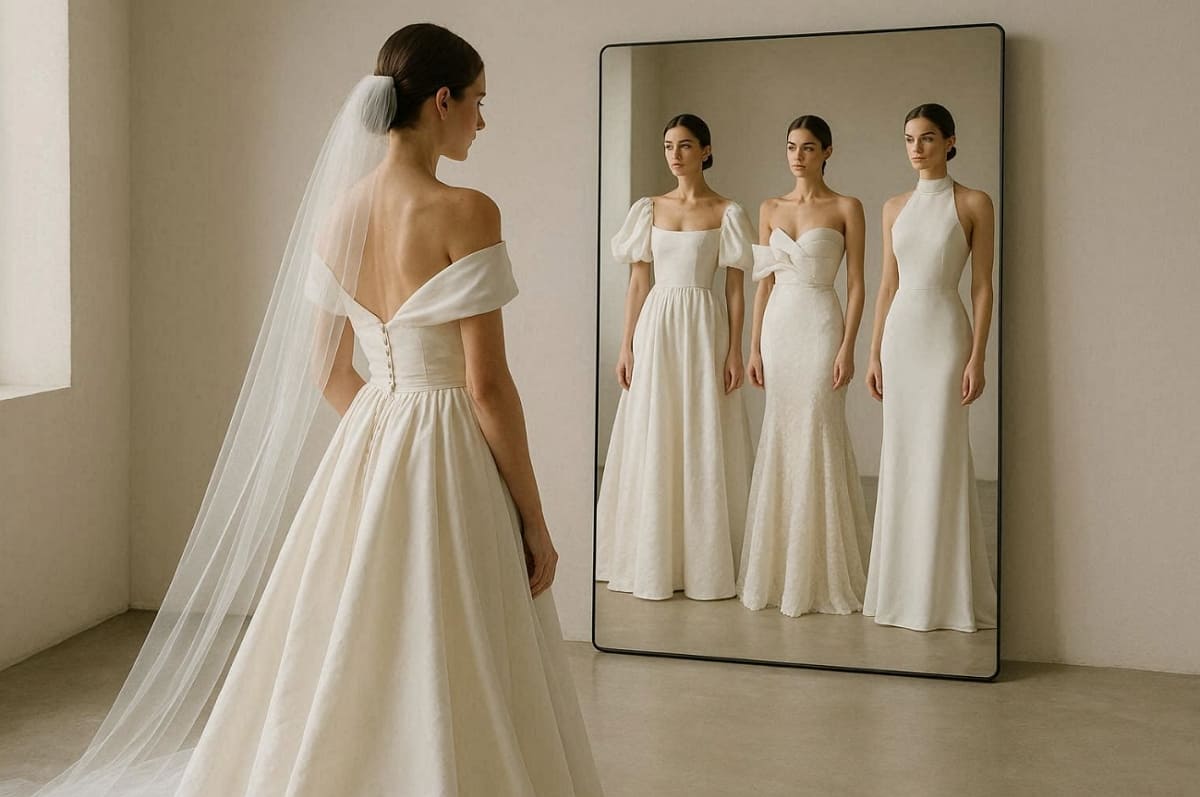
A-Line
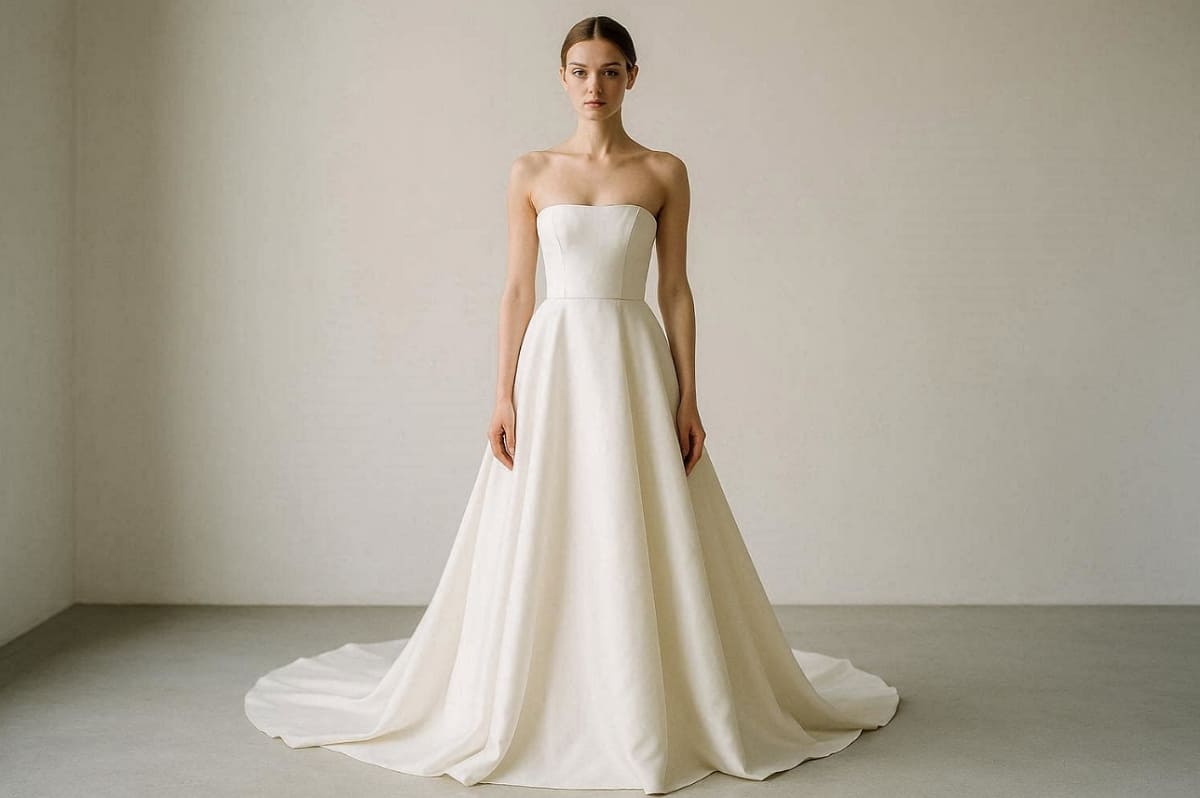
An A-line dress fits through the bodice before gradually flaring from the waist into a soft triangular shape.
Best for
- Pear-shaped figures
- Petite brides
- Apple shapes
- Plus-size brides
- Brides looking for a classic silhouette
Why it works
An A-line creates balanced proportions without adding excessive volume. It defines the waist while allowing the skirt to skim naturally over the hips, making it one of the most versatile wedding dress styles.
Good to know: If you're unsure where to begin, bridal stylists often recommend starting with an A-line because it works well on a wide range of body shapes.
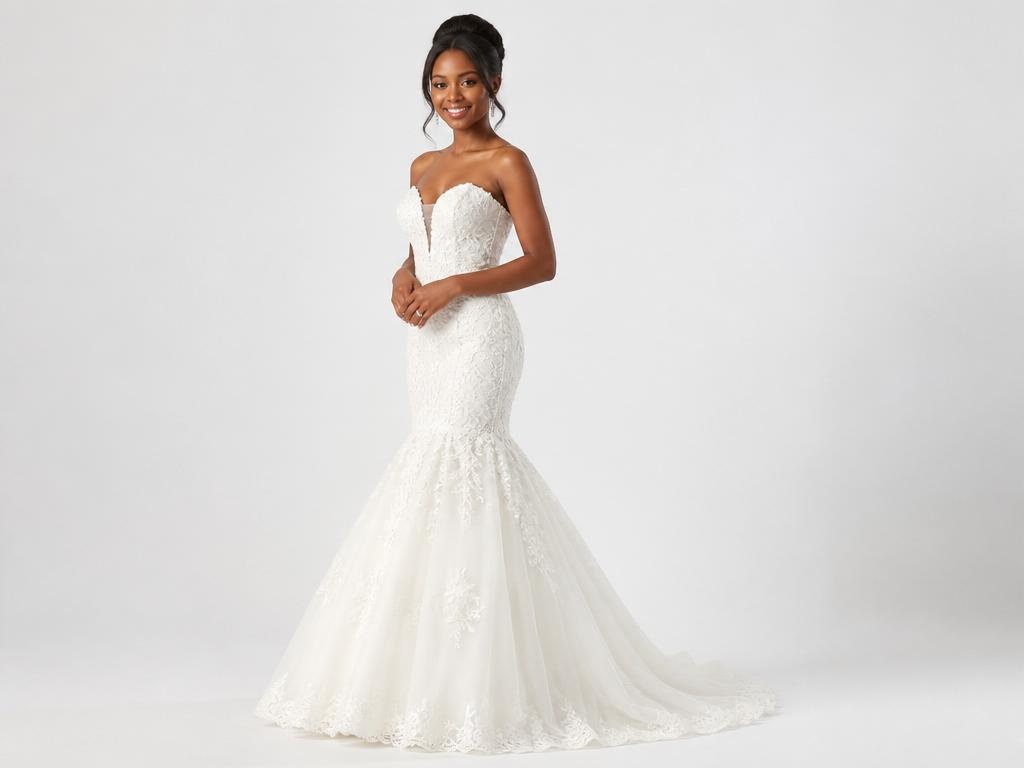
Mermaid
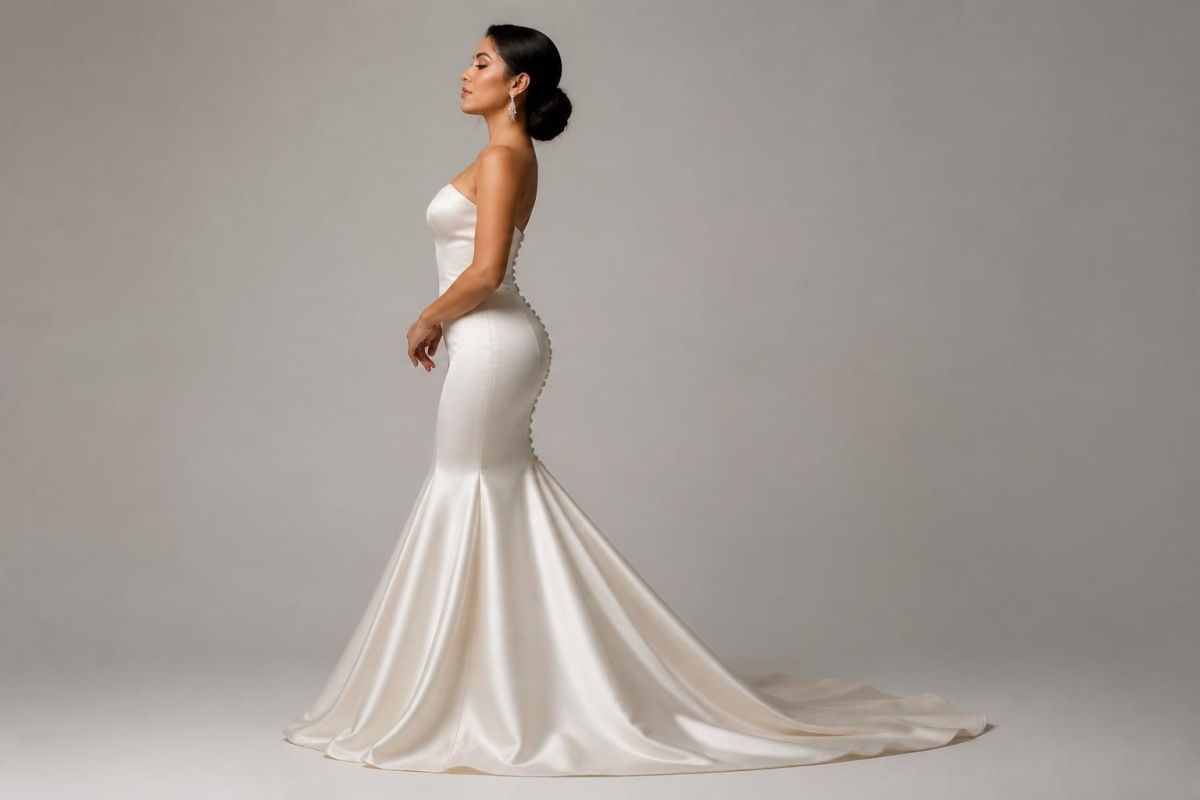
A mermaid gown follows the body's natural curves before flaring dramatically below the knees.
Best for
- Hourglass figures
- Curvy body shapes
- Brides who want a fitted look
Why it works
Because the dress stays close to the body through the hips, it emphasizes natural curves and creates a dramatic silhouette. However, it also offers less freedom of movement than other styles.
Consider it if: Highlighting your waist and curves is your top priority.
Trumpet
Trumpet dresses resemble mermaid gowns but begin flaring around the mid-thigh instead of below the knee.
Best for
- Hourglass figures
- Athletic builds with some waist definition
Why it works
Trumpet silhouettes provide many of the same flattering lines as mermaid dresses while allowing slightly easier movement throughout the day.
Try On Wedding Dress Online Free
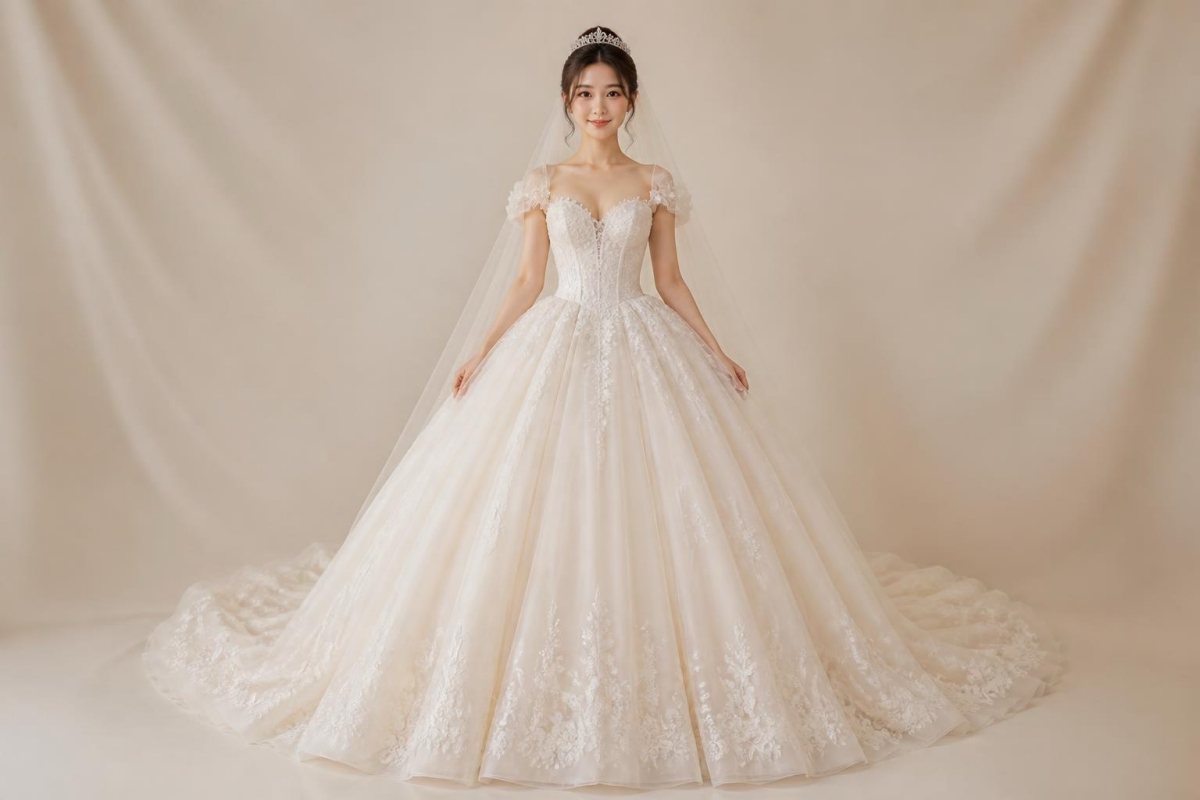
Ball Gown
A ball gown features a structured bodice paired with a full skirt.
Best for
- Pear-shaped brides
- Athletic body types
- Brides planning formal or traditional weddings
Why it works
The full skirt balances wider hips or broader shoulders while creating strong waist definition. For petite brides, proportion is especially important—a lighter skirt often works better than extremely voluminous layers.
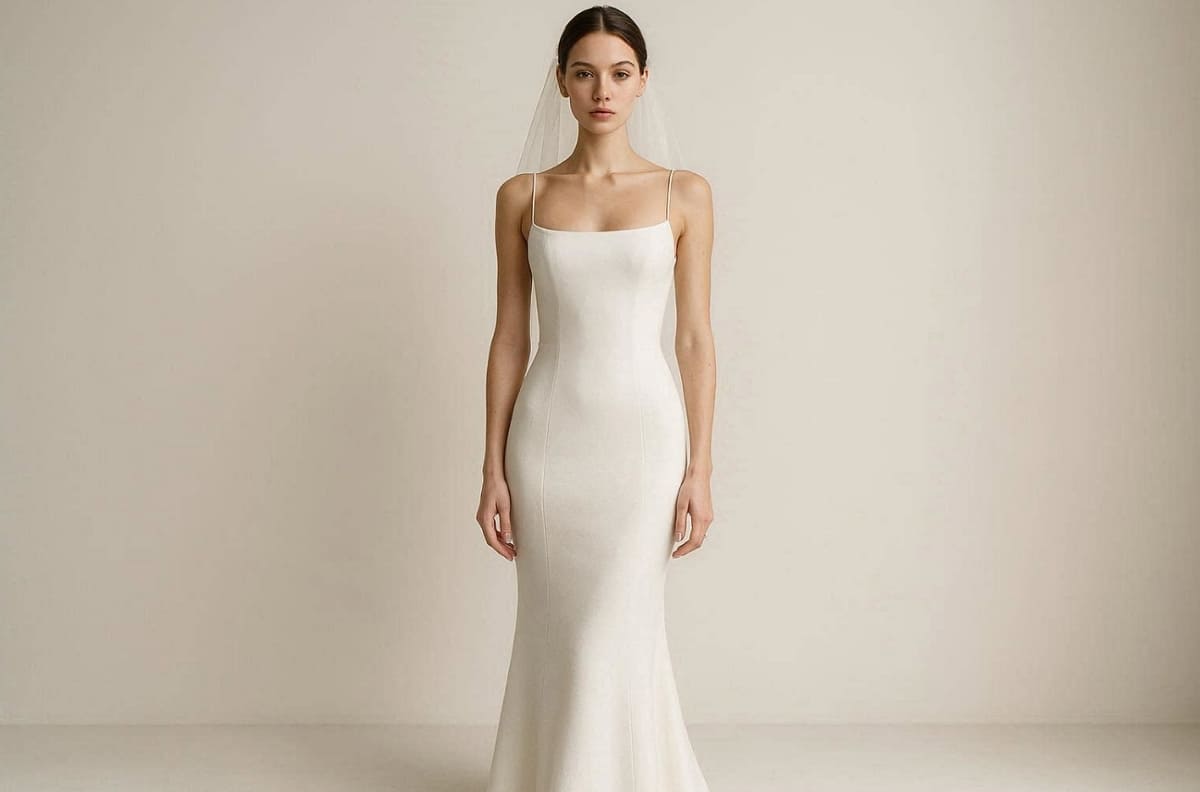
Sheath (Column)
A sheath dress follows the body's natural line with minimal flare.
Best for
- Tall brides
- Slim frames
- Modern or minimalist wedding styles
Why it works
This silhouette creates clean vertical lines and a contemporary look. Because it adds very little structure, it works best when you already like your natural proportions.
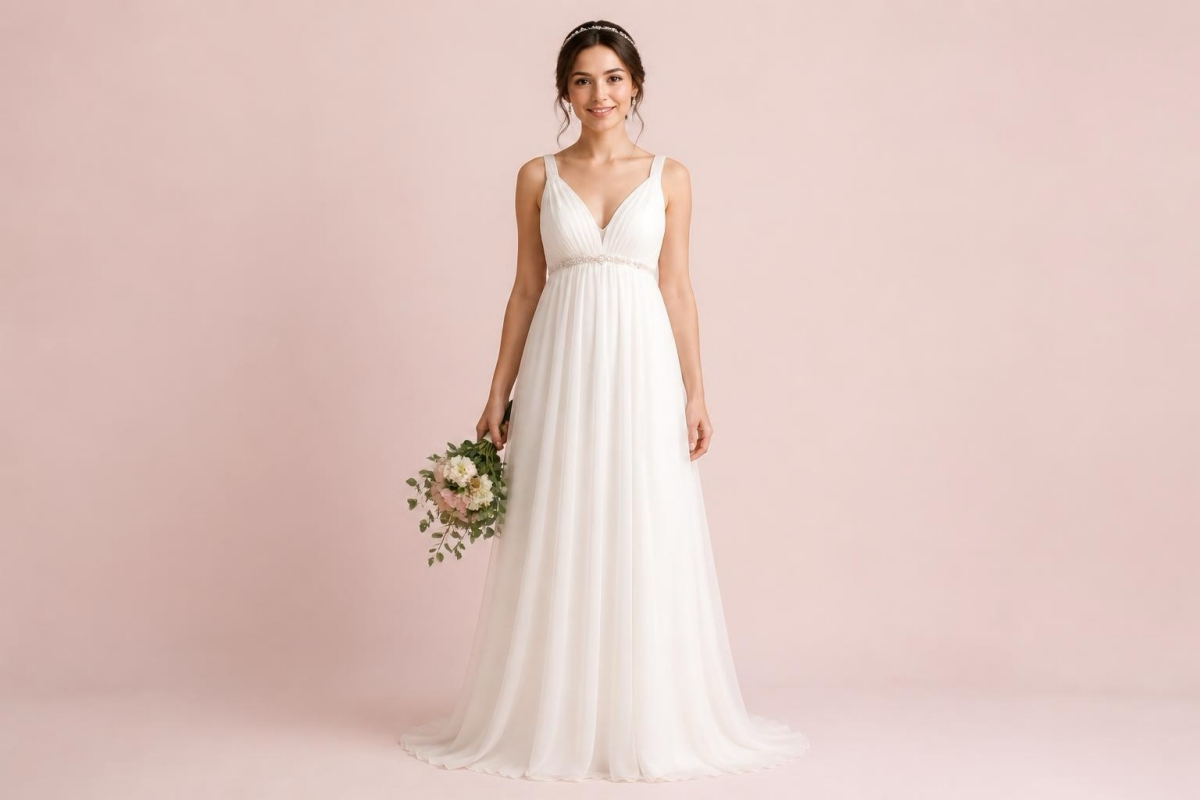
Empire Waist
Empire waist dresses place the seam just below the bust, allowing the skirt to fall softly from there.
Best for
- Apple body shapes
- Petite brides
- Maternity wedding dresses
- Brides prioritizing comfort
Why it works
The raised waistline visually lengthens the lower body while creating a softer fit around the midsection.
Try On Wedding Dress Online Free
Which Wedding Dress Silhouette Should You Try First?
If you're overwhelmed by choices, start with the silhouette that matches your styling goal rather than your body type alone.
| If you want to... | Start with... |
|---|---|
| Define your waist | Mermaid or Trumpet |
| Balance wider hips | A-Line |
| Create a longer silhouette | Empire Waist |
| Add curves | Ball Gown |
| Keep the look clean and modern | Sheath |
| Prioritize comfort and versatility | A-Line |
Remember that silhouette is only one part of the decision. Necklines, sleeve styles, fabric weight, and tailoring can significantly change how the same dress looks on your body. That's why many brides discover their favorite gown after trying several silhouettes instead of focusing on just one.
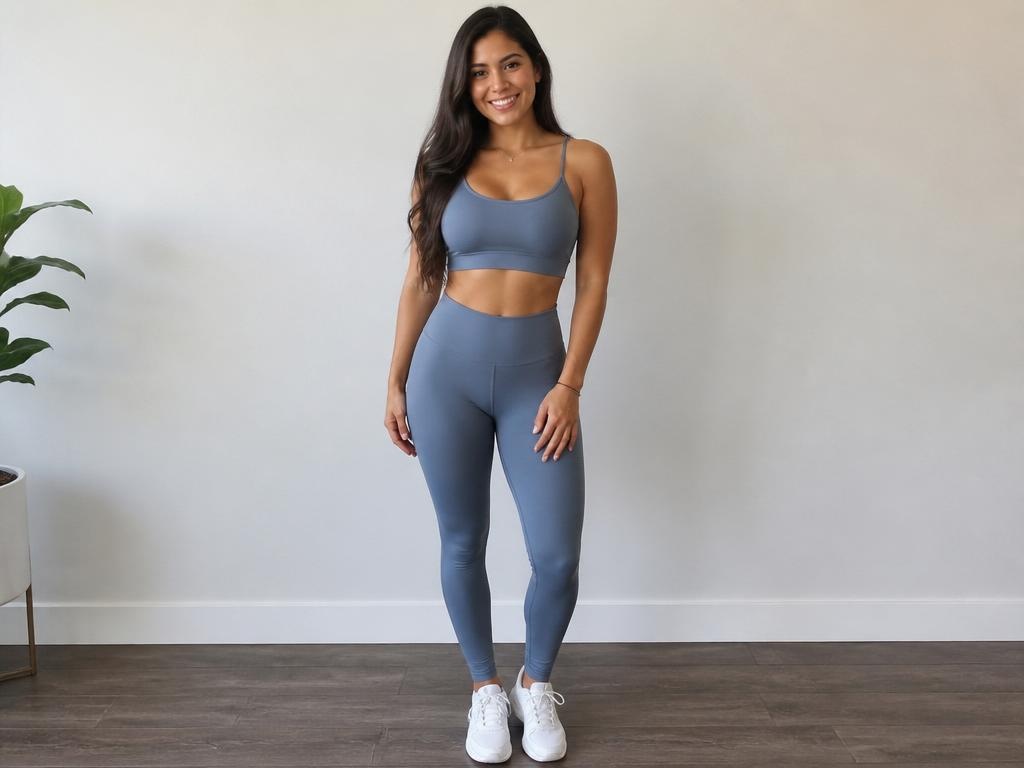
Best Wedding Dress Styles for Every Body Type
Once you understand the main wedding dress silhouettes, the next step is matching them to your proportions. These recommendations aren't strict rules—they're practical starting points based on how different cuts, necklines, and fabrics influence visual balance.
Many bridal stylists encourage brides to try at least one silhouette outside their comfort zone. Dress construction, fabric weight, and tailoring often make a bigger difference than the silhouette name alone.
Hourglass Figure
Typical proportions
- Bust and hips are similar in width
- Clearly defined waist
- Naturally balanced curves
Styling goal
Rather than creating shape, focus on highlighting your natural waist while maintaining balanced proportions.
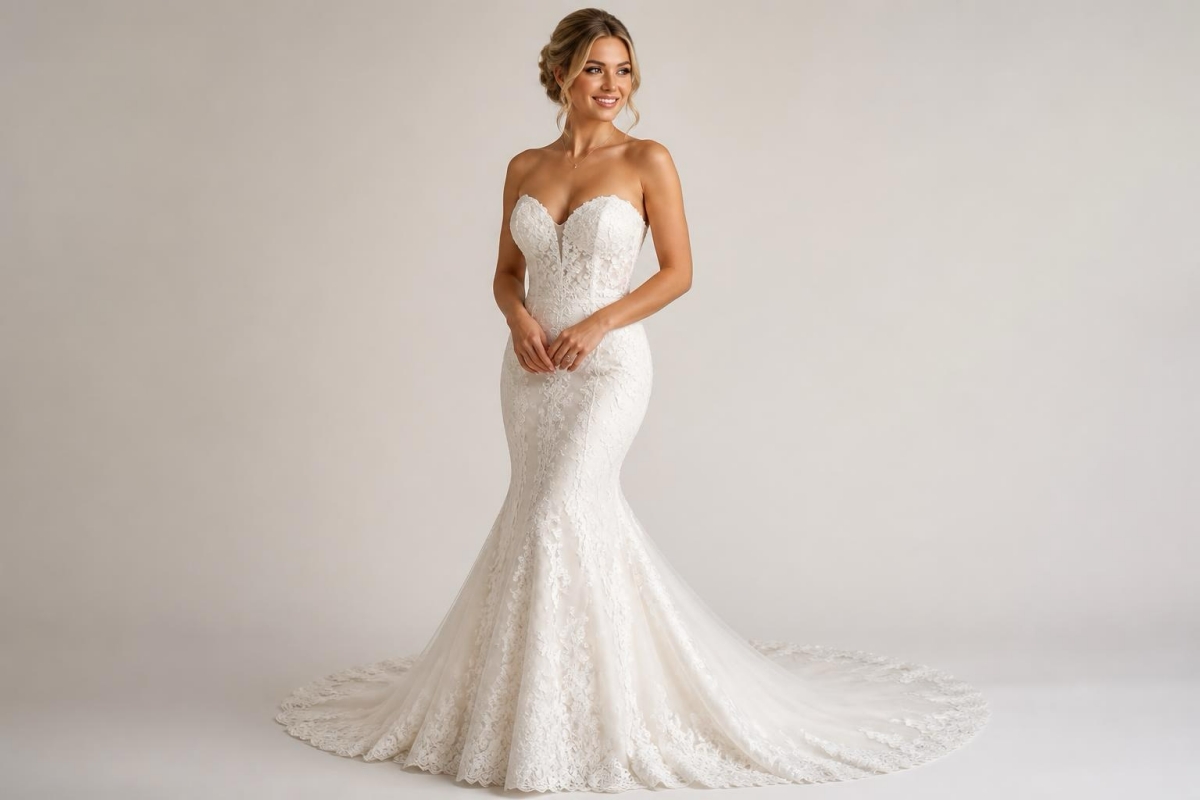
Wedding dress styles to try
Mermaid for a classic curve-enhancing silhouette
Trumpet for similar definition with slightly more movement
Fit-and-flare A-line for a softer, more versatile look
These silhouettes follow your natural lines instead of hiding them beneath excess fabric.
Necklines that work well
Sweetheart
Off-the-shoulder
Portrait neckline
V-neck
These styles frame the shoulders and neckline while complementing an already balanced figure.
Fabrics to consider
Structured fabrics generally showcase curves better than very soft materials.
Good choices include:
- Mikado
- Satin
- Crepe
- Structured lace
Light chiffon can also work beautifully, although gowns without enough internal structure may hide waist definition.
Shop with these priorities
When trying on dresses, pay attention to:
- Whether the waist seam sits at your natural waist
- How comfortably the bodice supports your bust
- Whether the skirt begins flaring at the right point
Small construction details often make a fitted gown look significantly better.
Be cautious with
- Straight shift dresses that lack waist definition
- Oversized ball gowns with very bulky skirts
- Boxy silhouettes that hide your proportions
These styles aren't off limits—they simply change the balanced shape that many hourglass brides prefer to emphasize.
Pear-Shaped Figure
Typical proportions
- Hips wider than shoulders
- Defined waist
- Smaller bust or narrower upper body
Styling goal
Create visual balance by drawing attention upward while allowing the skirt to skim naturally over the hips.
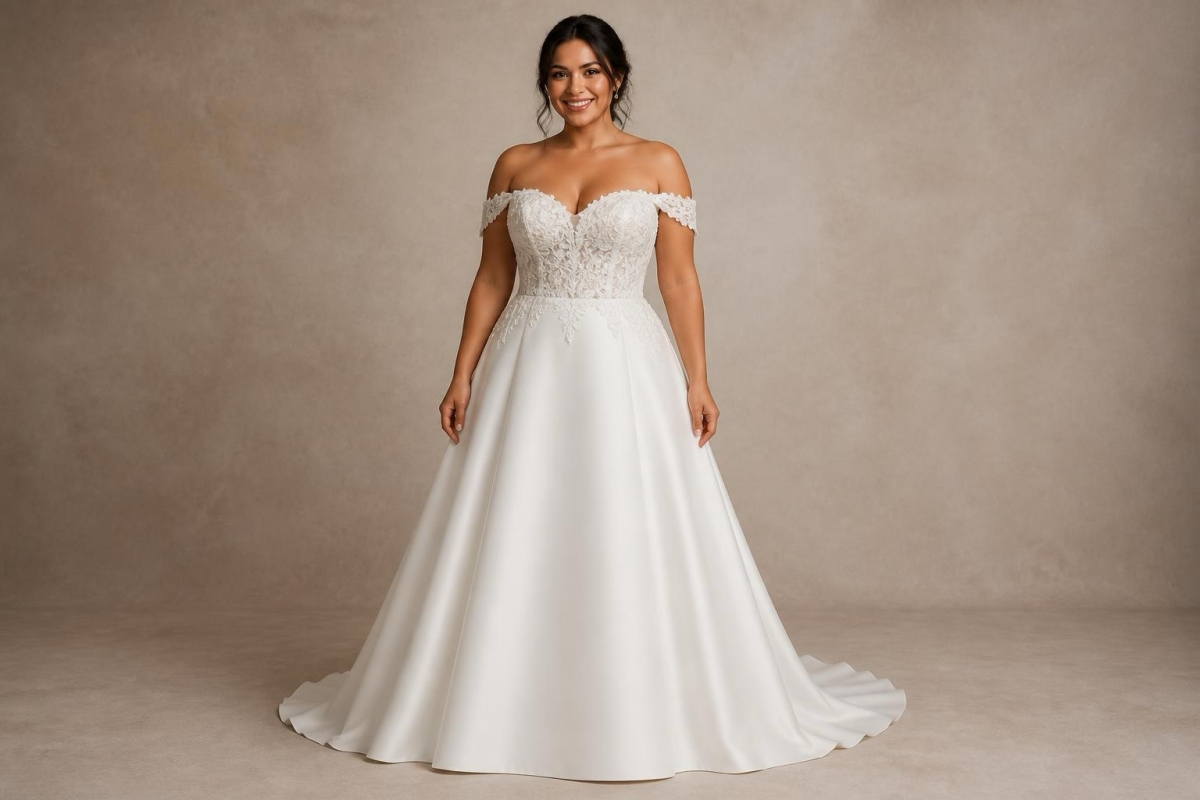
Wedding dress styles to try
A-Line
Often considered the safest starting point for a pear-shaped figure.
The fitted bodice highlights the waist, while the gradual flare prevents the skirt from clinging to the hips.
Ball Gown
A structured bodice combined with a fuller skirt creates balanced proportions from top to bottom.
This silhouette is especially popular for formal weddings.
Empire Waist
If comfort is a priority, an empire waist creates a longer vertical line and reduces emphasis around the hips.
Necklines that complement pear shapes
Look for styles that visually broaden the shoulders.
Good options include:
- Off-the-shoulder
- Boat neckline
- Wide scoop neck
- Sweetheart neckline
- Statement sleeves
Adding detail above the waist naturally balances fuller hips.
Fabrics and details
Choose dresses that create interest around the bodice rather than the skirt.
Examples include:
- Lace bodices
- Embroidery around the neckline
- Illusion sleeves
- Three-dimensional floral appliqués
- Light shoulder detailing
Meanwhile, skirts with clean lines often look more balanced than heavily embellished hips.
Boutique fitting advice
If you're deciding between two dresses, compare how the upper body looks first.
Many brides focus immediately on the hips, but experienced bridal stylists often evaluate shoulder balance before anything else because it changes the overall proportion of the dress.
Be cautious with
- Tight mermaid dresses that stay fitted through the hips
- Heavy embellishment around the hip area
- Horizontal draping across the thighs
These features naturally draw attention to the widest part of the body.
That doesn't mean pear-shaped brides can't wear mermaid gowns—choosing a softer trumpet silhouette or a dress that begins flaring slightly earlier often creates a more balanced result.
Apple-Shaped Figure
Typical proportions
- Fuller midsection
- Slimmer legs
- Less defined waist
- Fuller bust is common
Styling goal
Create a longer vertical line while introducing gentle waist definition without adding unnecessary bulk around the torso.
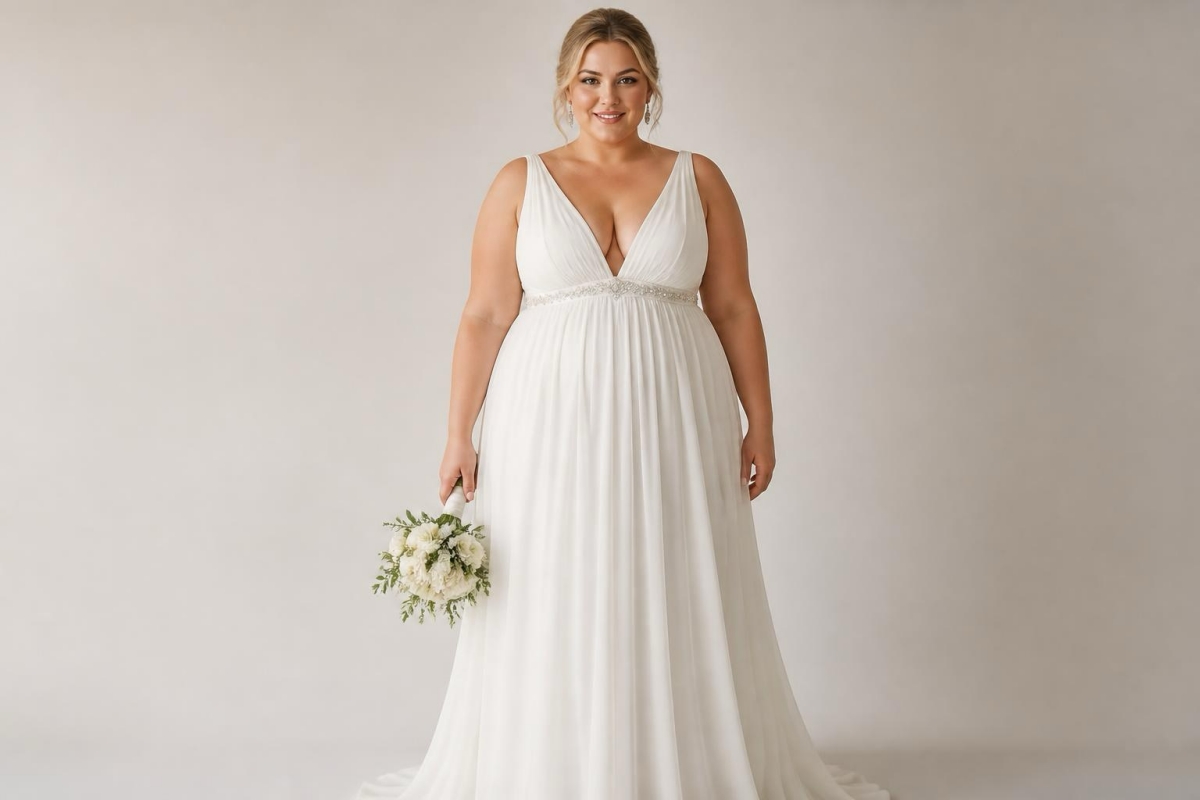
Wedding dress styles to try
Empire Waist
One of the most recommended choices for apple-shaped brides.
Because the waistline begins just below the bust, the fabric falls naturally over the midsection while creating an elongated silhouette.
A-Line
A structured A-line with a supportive bodice provides waist definition without feeling restrictive.
Many brides find this silhouette offers an ideal balance between shape and comfort.
Ball Gown
With proper tailoring, a ball gown can define the upper body while allowing the skirt to flow naturally from the waist.
The key is choosing a well-fitted bodice rather than relying solely on volume.
Necklines that flatter apple body types
Consider styles that create vertical movement.
Recommended options include:
- V-neck
- Deep scoop neckline
- Sweetheart neckline
- Plunging illusion neckline
These necklines naturally lengthen the upper body and draw attention toward the face.
Fabrics that provide structure
Look for dresses with:
- Internal corsetry
- Structured satin
- Mikado
- Crepe with supportive lining
Very thin fabrics without internal support may cling to the midsection more than expected.
Practical fitting tips
Support matters as much as silhouette.
Before your bridal appointment:
- Wear supportive undergarments similar to what you'll use on your wedding day.
Ask whether the gown includes built-in cups or internal boning.
Focus on how the bodice feels after standing, sitting, and walking—not just while looking in the mirror.
Comfort becomes increasingly important during a ceremony and reception that may last several hours.
Be cautious with
- Thick waist belts
- Heavy ruching across the stomach
- Unstructured sheath dresses
- Excess fabric gathered around the waist
These details can add visual weight instead of creating definition.
Choosing Between Several Styles
If you're deciding between multiple silhouettes, compare them based on your priorities rather than fashion trends.
| Your priority | Recommended silhouette |
|---|---|
| Show natural curves | Mermaid or Trumpet |
| Create balanced proportions | A-Line |
| Minimize emphasis on the midsection | Empire Waist |
| Add dramatic volume | Ball Gown |
| Keep the dress lightweight | Modified A-Line |
Rather than trying on every style available, begin with two or three silhouettes that match your goals. Most bridal consultants recommend narrowing your options early, which makes appointments less overwhelming and helps you compare dresses more objectively.
Try On Wedding Dress Online Free
Petite Brides
Typical proportions
- Generally under 5'4" (163 cm)
- Smaller frame and shorter torso or legs
- Standard bridal gowns often require alterations
Styling goal
Create clean vertical lines and maintain balanced proportions. The right dress should complement your frame rather than overwhelm it with excess volume.
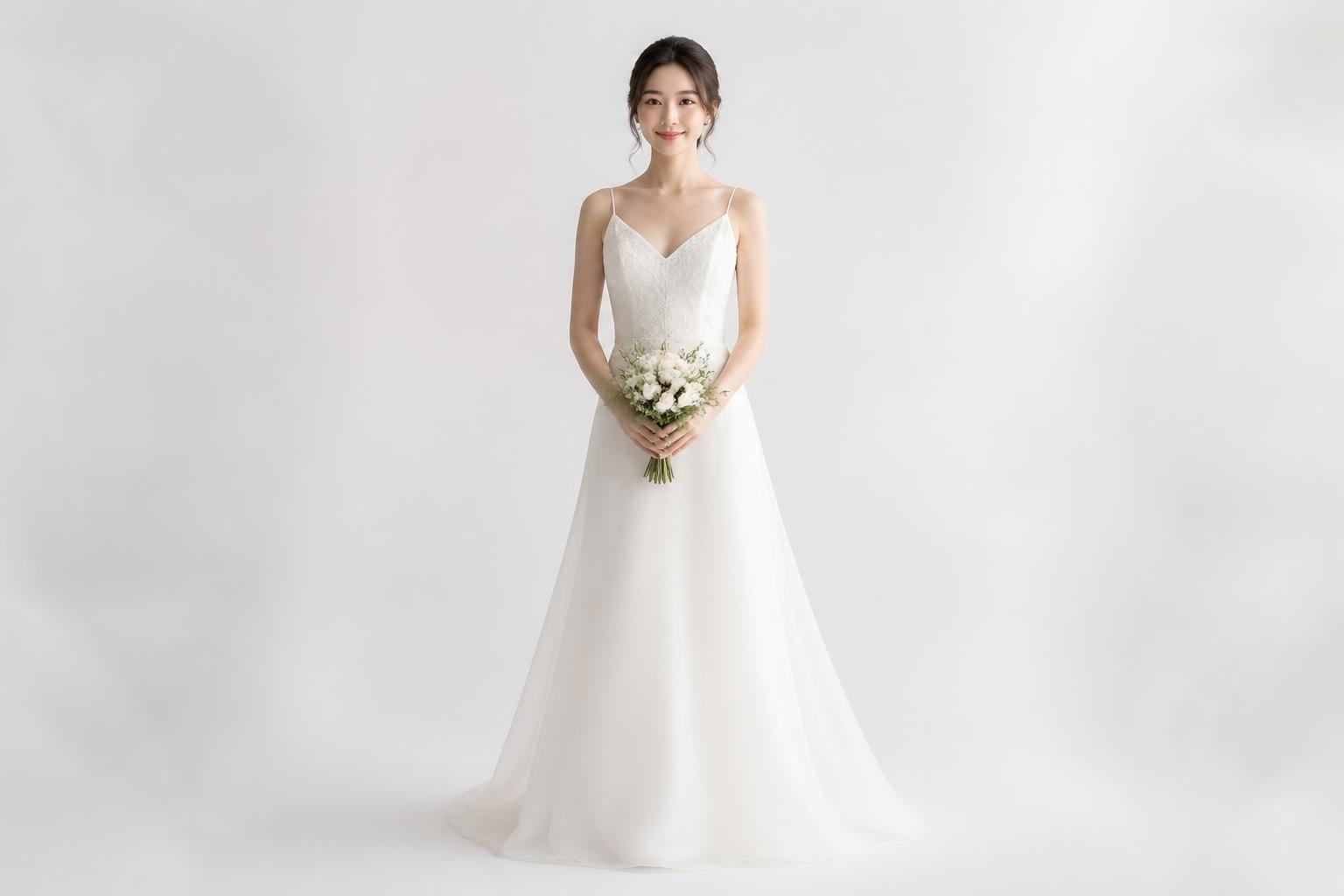
Wedding dress styles to try
Modified A-Line
A softer A-line creates elegant movement without adding unnecessary bulk. It's one of the easiest silhouettes to tailor for petite brides.
Sheath
A sheath dress follows the body's natural line, creating the illusion of extra height. Minimal seams and clean fabrics help maintain that uninterrupted vertical effect.
Fit-and-Flare
For brides who want more shape than a sheath offers, a fit-and-flare silhouette defines the waist while keeping the skirt proportional to a smaller frame.
Necklines that lengthen the silhouette
These styles naturally draw the eye upward:
- V-neck
- Scoop neckline
- Sweetheart neckline
- Portrait neckline
Lower or open necklines often make the upper body appear longer, while very high necklines can visually shorten the torso if not balanced with clean tailoring.
Fabrics that work well
Lighter fabrics generally suit petite proportions better.
Consider:
- Crepe
- Chiffon
- Lightweight satin
- Organza
Heavy layered tulle or thick embroidery from head to toe can make a smaller frame appear overwhelmed.
Boutique fitting advice
For petite brides, alterations are often just as important as the original design.
Ask your bridal consultant whether the gown can be adjusted without changing its proportions. Raising the waistline slightly or shortening the skirt from the correct seam often creates a more balanced final result than simply hemming the dress.
Be cautious with
- Extremely full ball gowns
- Long cathedral trains for smaller venues
- Oversized bows or dramatic waist embellishments
- Multiple layers of heavy tulle
These features aren't wrong—they simply require careful proportioning to avoid overpowering your frame.
Athletic or Inverted Triangle Figures
Typical proportions
- Broader shoulders
- Straighter waist
- Narrower hips
- Lean or toned physique
Styling goal
Introduce softness through the lower half of the dress while maintaining balance across the shoulders.
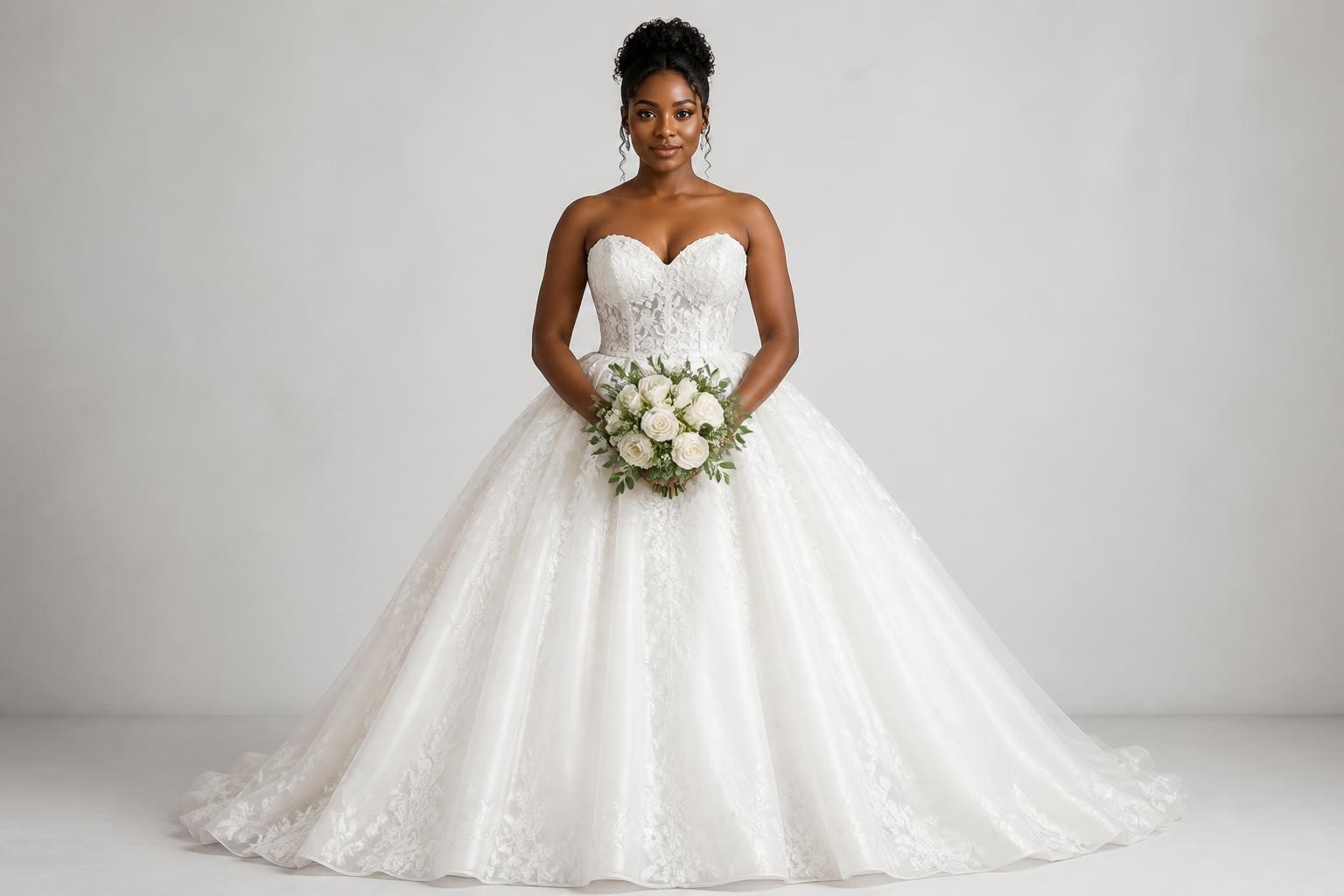
Wedding dress styles to try
A-Line
The gentle flare creates more visual width below the waist, balancing broader shoulders without looking overly dramatic.
Ball Gown
A structured bodice paired with a fuller skirt shifts attention downward and creates a more defined waist.
Soft Trumpet
If you'd like a fitted silhouette, a trumpet dress often creates a smoother transition than a dramatic mermaid style.
Necklines to consider
Look for necklines that soften the shoulder line instead of emphasizing width.
Recommended choices include:
- Sweetheart
- Scoop neck
- Thin straps
- V-neck
Sleeves and details
Delicate sleeves or lace straps often create a softer appearance than heavily structured shoulder designs.
Details that add volume below the waist—such as layered skirts, floral appliqués, or flowing fabrics—can also create better balance.
Fabrics
Soft fabrics work particularly well, including:
- Tulle
- Chiffon
- Organza
- Soft lace
These materials add movement without making the upper body feel heavier.
Be cautious with
- Boat necklines
- High halter necks
- Large shoulder embellishments
- Strong shoulder padding
These elements naturally emphasize shoulder width, which may not align with your styling goals.
Plus-Size Brides
Typical proportions
- Every plus-size bride has a unique body shape, so silhouette recommendations should focus on support and comfort rather than size alone.
Styling goal
Choose a dress that provides structure where needed while allowing comfortable movement throughout the day.
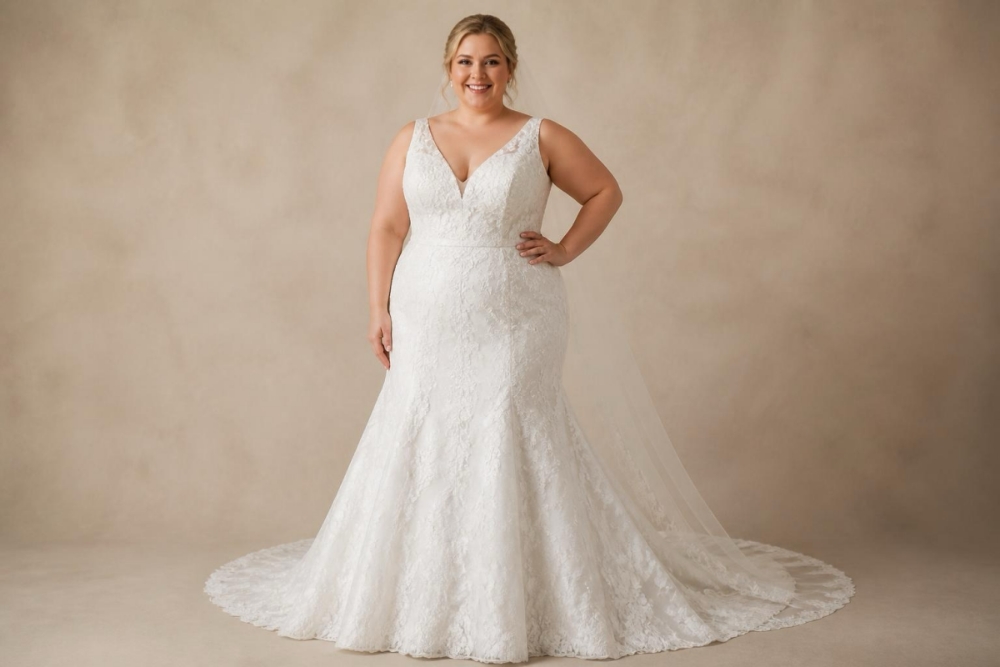
Wedding dress styles to try
Structured A-Line
One of the most consistently recommended options because it defines the waist while creating balanced proportions.
Fit-and-Flare
A supportive fit-and-flare silhouette highlights natural curves without feeling restrictive.
Ball Gown
When paired with a properly fitted bodice, a ball gown offers both support and dramatic elegance.
Necklines
Many brides find these styles especially flattering:
- Sweetheart
- V-neck
- Soft scoop
- Illusion neckline with supportive lining
These necklines frame the face while creating an open, balanced appearance.
Fabrics that provide support
Consider dresses made with:
- Mikado
- Structured satin
- Crepe with lining
- Lace over supportive construction
Internal boning, corsetry, and quality tailoring generally have a greater impact on comfort than silhouette alone.
What to prioritize during fittings
Instead of focusing only on appearance, ask yourself:
- Can I sit comfortably?
- Can I raise my arms?
- Does the bodice stay secure while walking?
- Does the dress feel supportive after wearing it for several minutes?
Wedding dresses are worn for many hours, so comfort matters alongside appearance.
Be cautious with
- Unstructured oversized gowns
- Very thin fabrics without lining
- Bodices that rely solely on stretch fabric for support
A well-constructed gown often creates a smoother silhouette than adding more fabric.
Wedding Dress Necklines, Sleeves, and Fabrics
Once you've narrowed down your silhouette, smaller design details can dramatically change the final look.
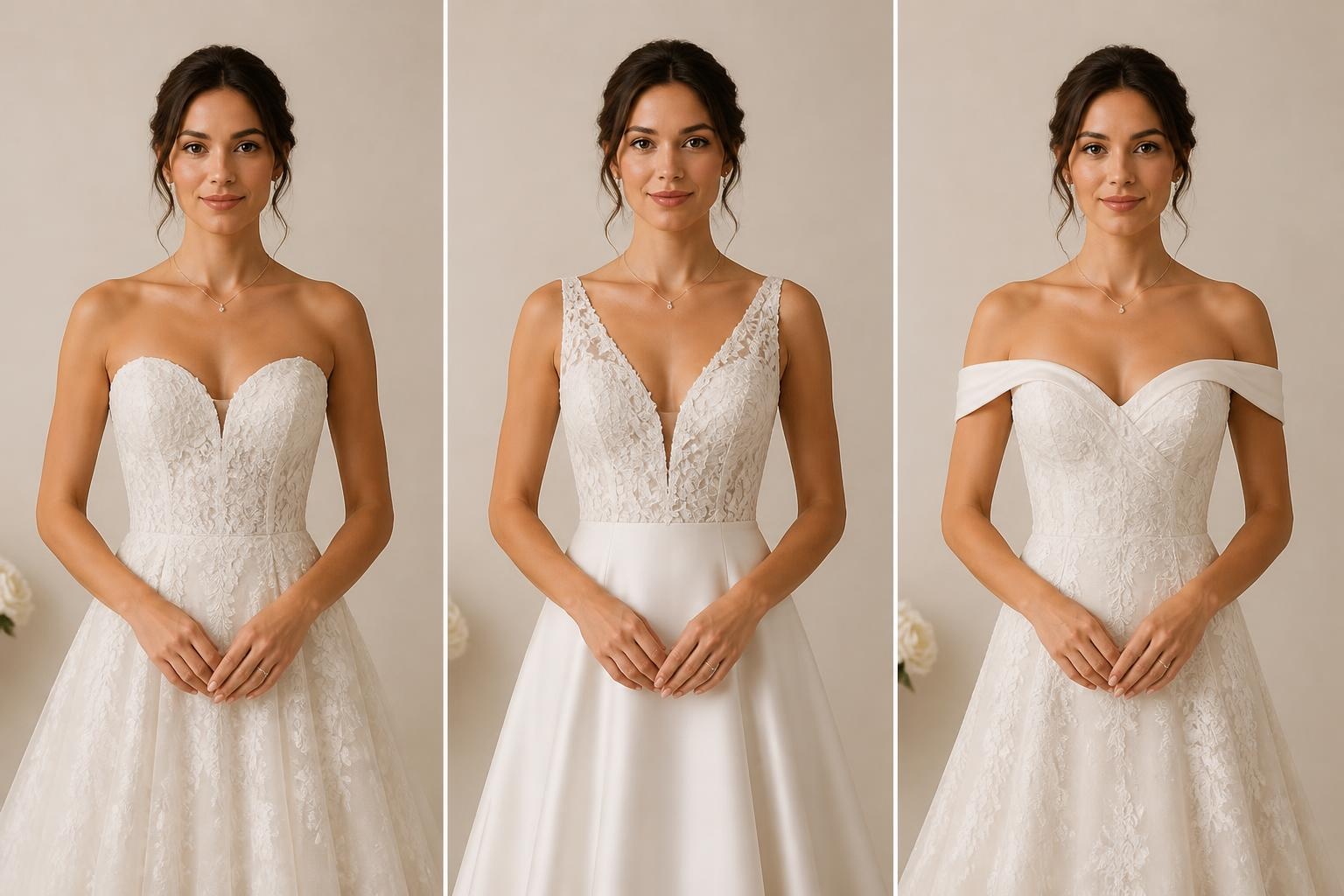
Popular necklines
| Neckline | Best suited for | Styling effect |
|---|---|---|
| Sweetheart | Hourglass, Pear, Plus Size | Highlights the neckline and softens the bust |
| V-neck | Apple, Petite, Plus Size | Creates a longer, leaner appearance |
| Scoop Neck | Athletic, Petite | Softens the upper body |
| Off-the-Shoulder | Pear, Hourglass | Balances wider hips by adding visual width to the shoulders |
| Boat Neck | Slim or Tall Frames | Creates elegant horizontal balance |
| High Neck | Tall or Athletic Brides | Offers a modern, sophisticated appearance |
Remember that neckline preferences are personal. The most flattering option is often the one that makes you feel confident when you see yourself from every angle.
Choosing the Right Fabric
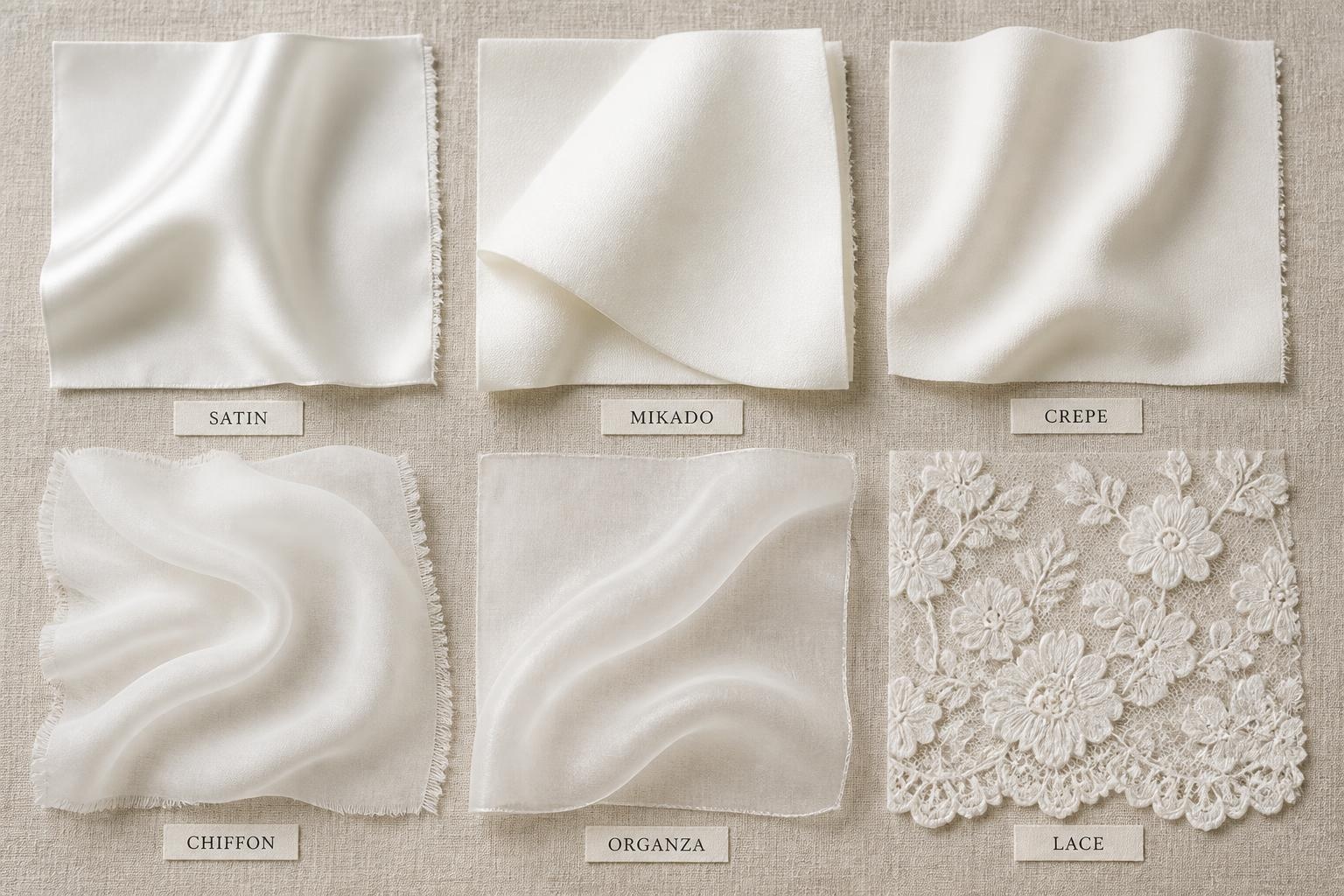
Fabric influences how a silhouette behaves just as much as the pattern itself.
| Fabric | Best for | Characteristics |
|---|---|---|
| Satin | Structured silhouettes | Smooth, elegant, supportive |
| Mikado | Ball gowns, A-line | Holds shape exceptionally well |
| Crepe | Modern styles | Clean lines with gentle drape |
| Chiffon | Empire waist, outdoor weddings | Soft, lightweight movement |
| Organza | Romantic volume | Adds shape without excessive weight |
| Lace | Most silhouettes | Texture and decorative detail |
When shopping, don't judge a silhouette based on a single fabric. An A-line in satin can look completely different from an A-line in chiffon.
Quick Decision Guide
If you're still unsure where to begin, this table can help narrow your first few dresses.
| Your priority | Recommended starting point |
|---|---|
| Highlight curves | Mermaid or Fit-and-Flare |
| Balance wider hips | A-Line |
| Create a longer silhouette | Empire Waist or Sheath |
| Add volume below the waist | Ball Gown |
| Prioritize comfort | A-Line or Empire Waist |
| Create a clean, modern look | Sheath |
Rather than trying on ten different silhouettes, start with three that match your goals. Most bridal consultants recommend comparing a small number of distinct styles before exploring variations.
Common Mistakes When Choosing a Wedding Dress
Even after identifying your body type, it's easy to become overwhelmed by hundreds of dress options. Avoiding a few common mistakes can make shopping much more productive.
1. Choosing a dress based only on trends
Popular styles change every season, but the right silhouette should complement your proportions and personal style. A timeless dress you feel comfortable in will usually age better than a trend-driven design.
2. Focusing on size instead of fit
Bridal sizing varies significantly between designers. Ignore the number on the label and pay attention to how the bodice, waist, and skirt fit your body. Nearly every wedding dress requires alterations.
3. Trying too many similar dresses
After six or seven gowns, many brides experience decision fatigue. Begin with a shortlist based on silhouette, then compare details such as fabric, sleeves, or neckline.
4. Ignoring comfort
A dress should look beautiful, but it also needs to support several hours of walking, sitting, dancing, and celebrating. Move around during every fitting rather than standing still in front of the mirror.
5. Shopping without a plan
Researching silhouettes before your appointment helps you communicate more clearly with your bridal consultant and makes it easier to compare styles objectively.
How to Preview Wedding Dress Styles Before Visiting a Bridal Boutique
Once you've narrowed your shortlist, the next challenge is deciding which styles are worth trying on first. Bridal appointments are often limited to 60–90 minutes, so arriving with a clear direction can make the experience more productive.
Many brides now use virtual wedding dress try-on tools to compare silhouettes before booking appointments. While these tools can't replace an in-person fitting or professional alterations, they can help you understand how different cuts, necklines, and skirt shapes might look on your own body.
This approach is especially useful if you're choosing between styles such as an A-line and a mermaid gown, or if you're unsure which silhouette best suits your proportions.
Step 1: Start with a Clear Full-Body Photo
For the most realistic preview:
- Wear fitted clothing that shows your natural shape.
Stand facing the camera with a relaxed posture.
Use even lighting and a simple background.
Keep your arms slightly away from your body.
A clear photo makes it easier to evaluate how different silhouettes change your proportions.
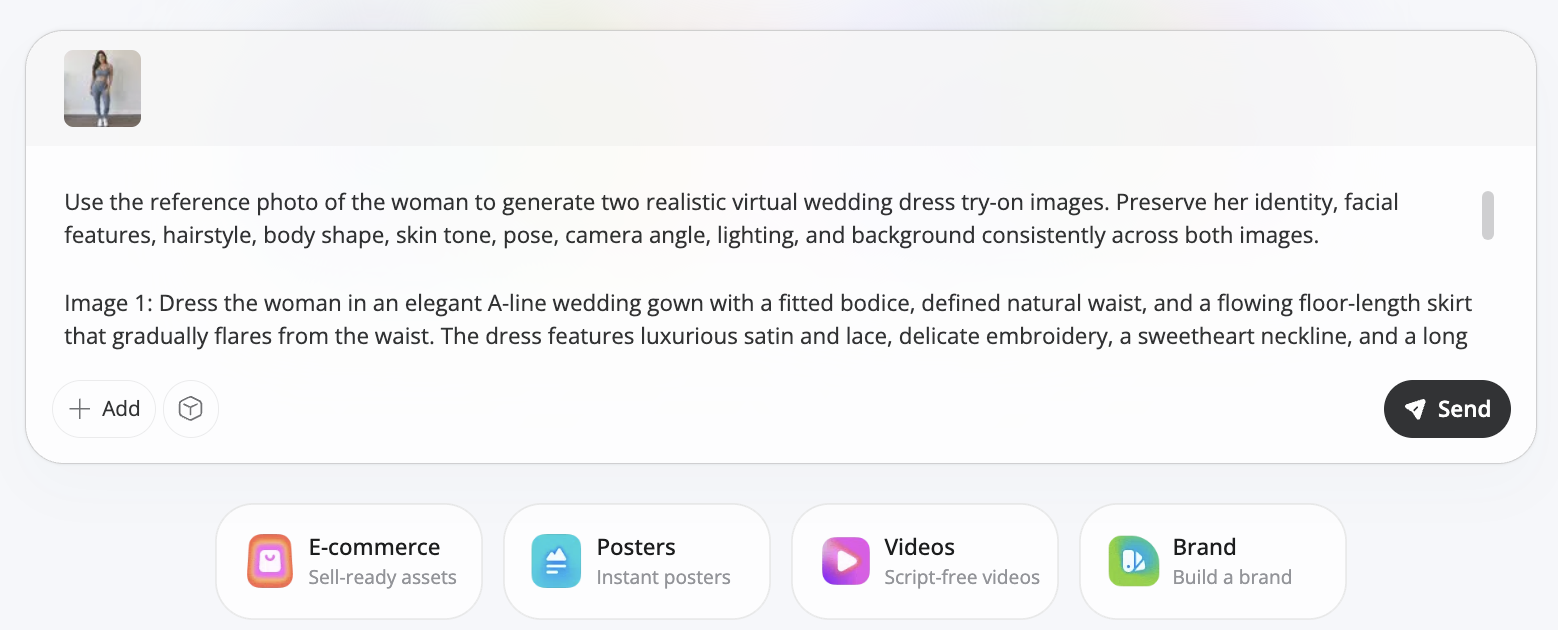
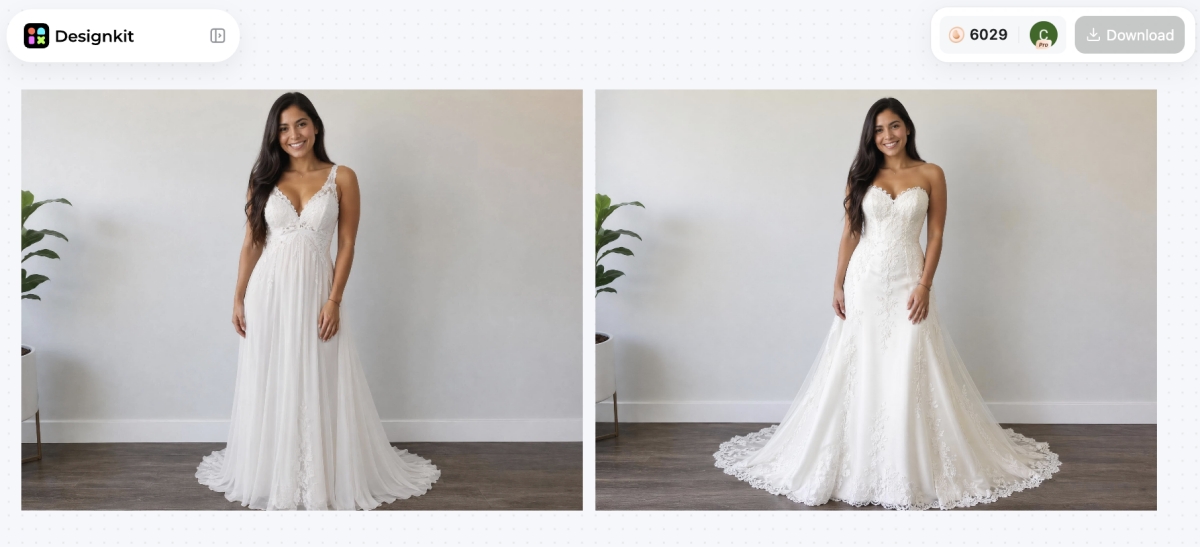
Step 2: Compare Two or Three Silhouettes
Instead of generating dozens of dresses, begin with the silhouettes that best match your body type.
For example:
| Body Type | Silhouettes to Compare |
|---|---|
| Hourglass | Mermaid, Trumpet, Fit-and-Flare |
| Pear | A-Line, Ball Gown |
| Apple | Empire Waist, Structured A-Line |
| Petite | Sheath, Modified A-Line |
| Athletic | A-Line, Ball Gown |
| Plus Size | Structured A-Line, Fit-and-Flare |
Comparing only a few options makes differences easier to notice and reduces decision fatigue.
Try On Wedding Dress Online Free
Step 3: Look Beyond the Dress
When reviewing previews, don't focus only on whether you like the dress.
Instead, ask yourself:
- Does the waist sit in the right place?
- Do my shoulders and hips look balanced?
- Does the neckline frame my face well?
- Does the skirt create the shape I'm looking for?
- Can I imagine wearing this style all day?
These questions often lead to better decisions than judging appearance alone.
Step 4: Bring Your Favorites to Your Appointment
Save two or three styles that you like most and share them with your bridal consultant.
Rather than starting with a completely open search, your consultant can use those examples to recommend similar gowns with different fabrics, necklines, or construction. This usually leads to a more focused and efficient fitting.
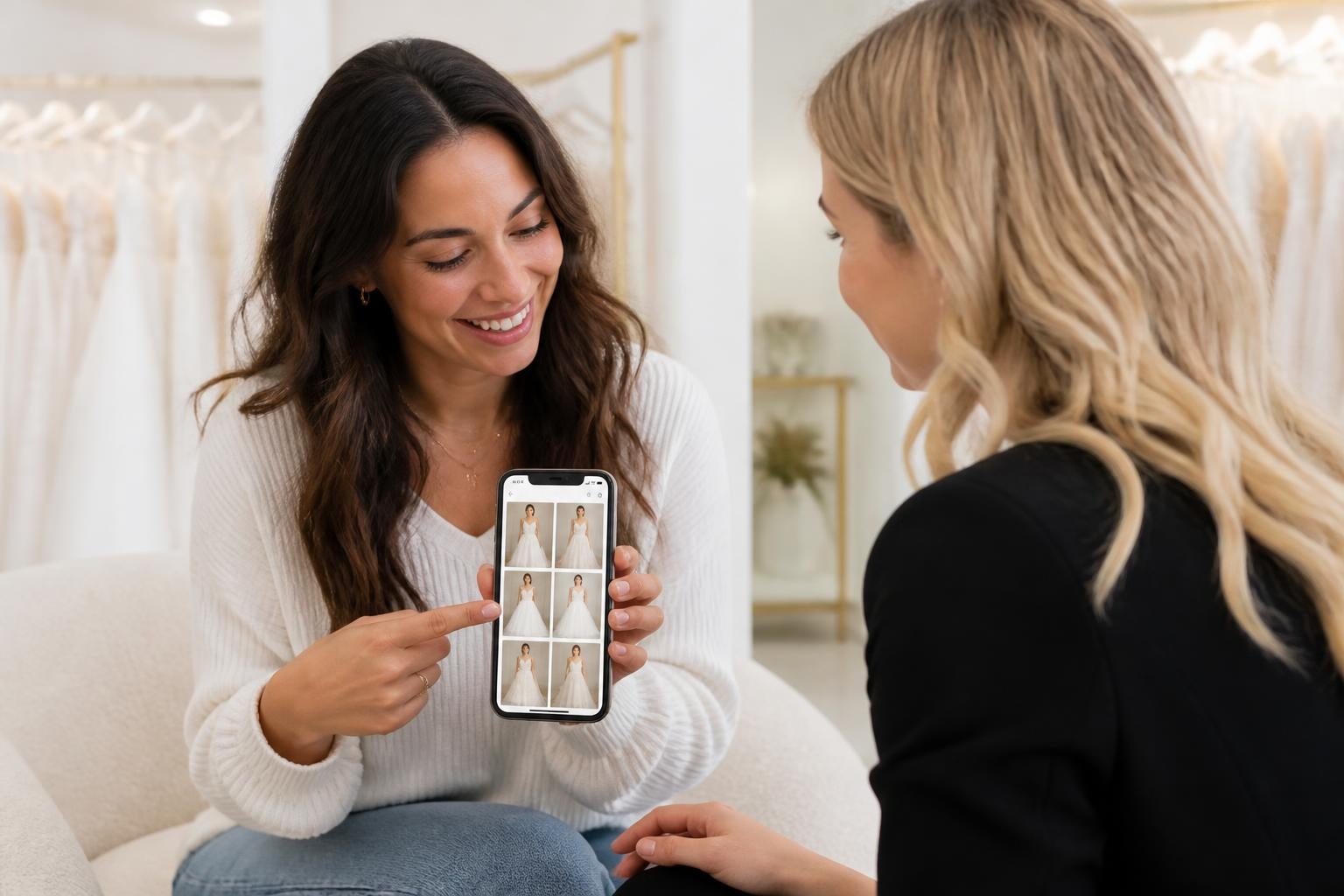
If you'd like to compare dresses digitally before shopping, photo-based tools such as Designkit's Virtual Try-On can generate different bridal styles from a full-body image. Think of these previews as a planning tool—they help narrow your shortlist, while the final decision should always come after trying dresses on in person.
Final Thoughts
Choosing a wedding dress for your body type isn't about finding a perfect set of rules—it's about understanding how different silhouettes, necklines, and fabrics work together to create balance and highlight your personal style.
Start with your proportions, not your dress size. Identify two or three silhouettes that align with your styling goals, then compare them before visiting a bridal boutique. Arriving with a focused shortlist can make fittings less overwhelming and help you spend more time evaluating the details that matter most, from construction and comfort to fabric and movement.
Most importantly, remember that body type guides are designed to simplify the search—not limit your choices. If a silhouette outside the "recommended" list makes you feel confident, comfortable, and like yourself, that's worth trusting.
Frequently Asked Questions
How do I know which wedding dress suits my body type?
What is the most universally flattering wedding dress silhouette?
An A-line wedding dress is widely considered the most versatile silhouette because it defines the waist while gently skimming over the hips. It suits many different body types and works well for both formal and casual weddings.
Can I wear a mermaid wedding dress if I don't have an hourglass figure?
Yes. While mermaid dresses are commonly recommended for hourglass figures, brides with athletic, pear-shaped, or curvier body types may also find them flattering depending on the dress's construction and where the skirt begins to flare. The overall fit is more important than body type labels.
Does fabric matter as much as the silhouette?
Absolutely. Fabric changes how a dress hangs, stretches, and supports the body. For example, an A-line gown made from structured Mikado satin will create a very different look from one made with lightweight chiffon, even though the silhouette is the same.
Which neckline makes you look taller?
V-neck and scoop neck designs generally create a longer vertical line, making them popular choices for petite brides. However, the overall effect also depends on the waist placement, sleeve design, and the dress's proportions.
How many dresses should I try on during my first bridal appointment?
Many bridal consultants recommend trying between five and eight dresses during your first appointment. This provides enough variety to compare silhouettes without making the process overwhelming.
Should I buy the first wedding dress I love?
There's no rule against saying yes to the first dress. If you've tried several silhouettes, feel comfortable moving in it, and can genuinely imagine wearing it on your wedding day, there's little benefit in continuing to shop simply for comparison.
Can virtual try-on replace an in-store fitting?
No. Virtual previews are useful for comparing silhouettes and narrowing your options, but they cannot accurately reproduce fabric texture, internal construction, tailoring, or overall comfort. A professional fitting remains an essential part of choosing your wedding dress.
You May Also Like
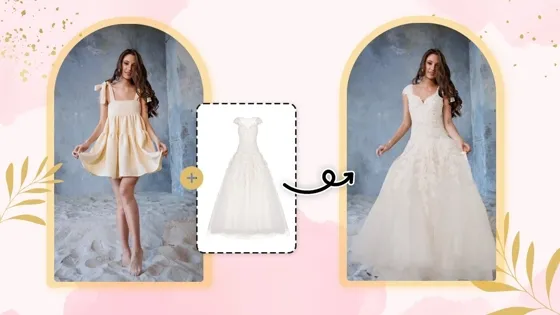
Virtual Wedding Dress Try-On Online for Brides in 2026
Top Virtual Ring Try-On Tools for Engagement and Wedding Rings in 2026
10 Best Virtual Try-On Apps & Tools for Online Shopping in 2026
Virtual Hair Color Try-On Guide for Every Skin Tone (2026)
Best AI Virtual Try-On Clothes Tools for Any Body Type
How to Try Makeup Online with AI and Virtual Makeup Try-On Apps (2026)
Find Your Most Flattering Wedding Dress Style Online
Upload your photo and preview different wedding dress silhouettes on your body type instantly. Compare A-line, mermaid, ball gown, and more before your first bridal appointment.