
Print on Demand in 2026: Is It Profitable and What Should You Sell?
Still weighing print on demand in 2026? Learn how POD works, how to calculate profit per sale, and how to pick a product and niche worth testing before you launch.

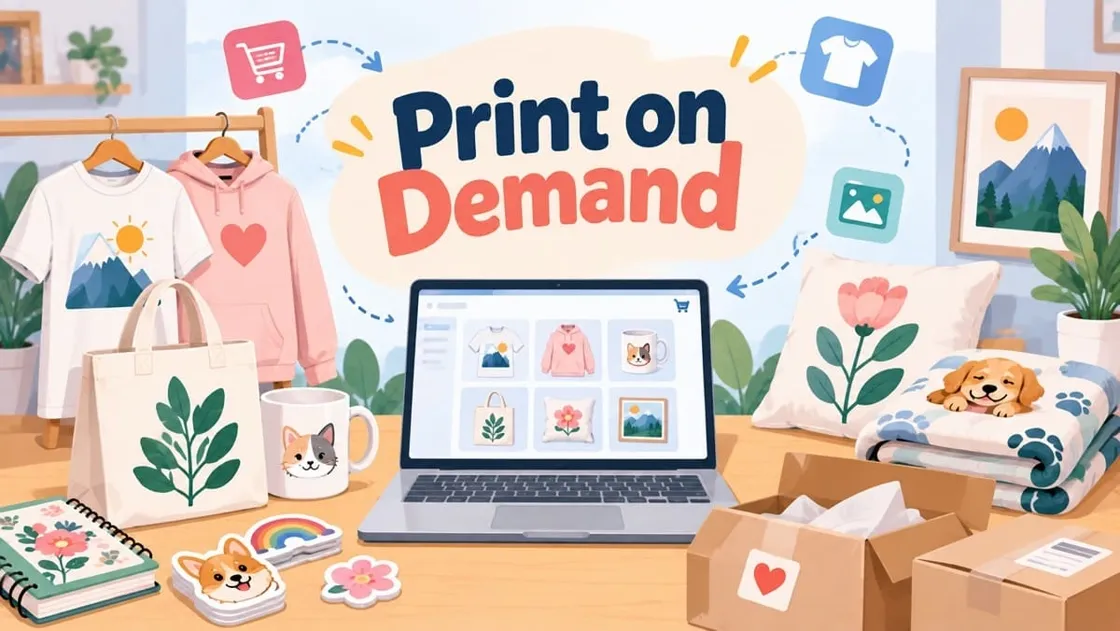
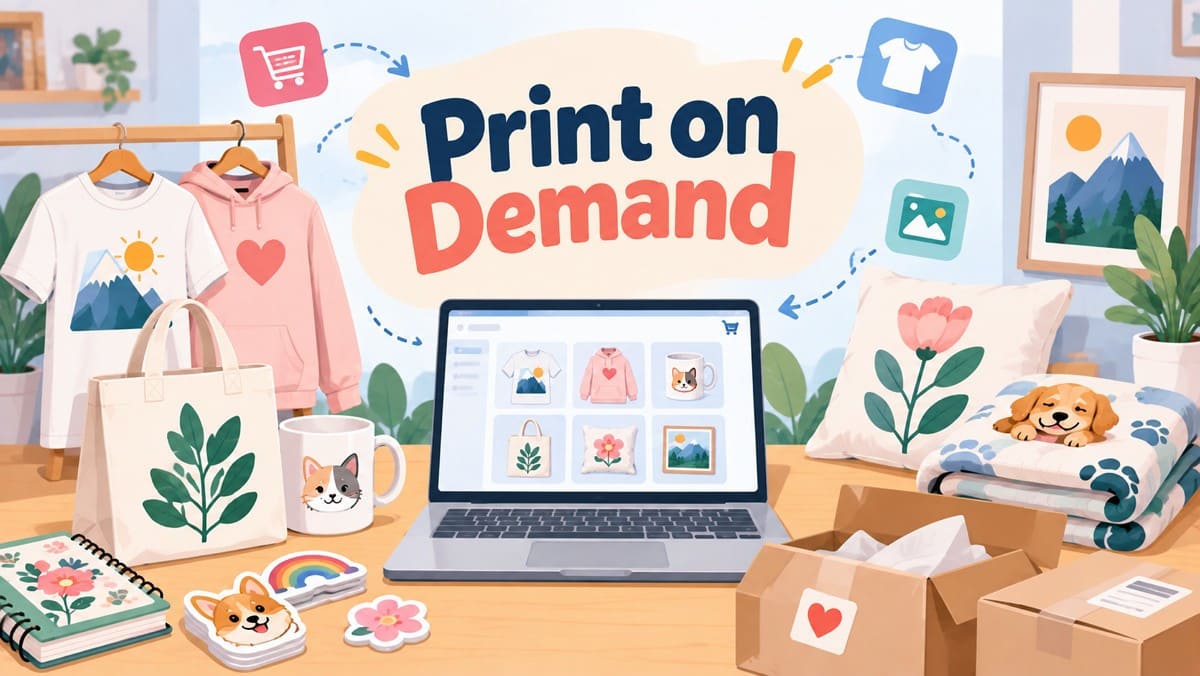
Print on demand , or POD, is a fulfillment model in which a product is made only after a customer places an order. The seller creates the design, lists the product, and markets it, while a third-party provider handles printing and shipping. The model removes the need to buy inventory upfront and makes POD more accessible for beginners.
Still, print on demand for beginners is not automatically profitable. Profit depends on total costs, pricing, buyer demand, and how well the product fits its niche. The guide explains how the POD business model works, how to calculate potential profit from one sale, and how to choose a product and niche worth testing.
What Is Print on Demand and How Does It Work?
Once you know what print on demand is, the business model is straightforward. The seller chooses the product and audience, creates the design and listing, sets the price, and markets the offer. The storefront processes the customer's purchase, while the fulfillment provider prints, packs, and ships the product after an order is placed.
This means sellers generally do not buy inventory before making a sale. Instead, the provider charges for the product and fulfillment when an order comes in.
How Does a Print-On-Demand Order Work?
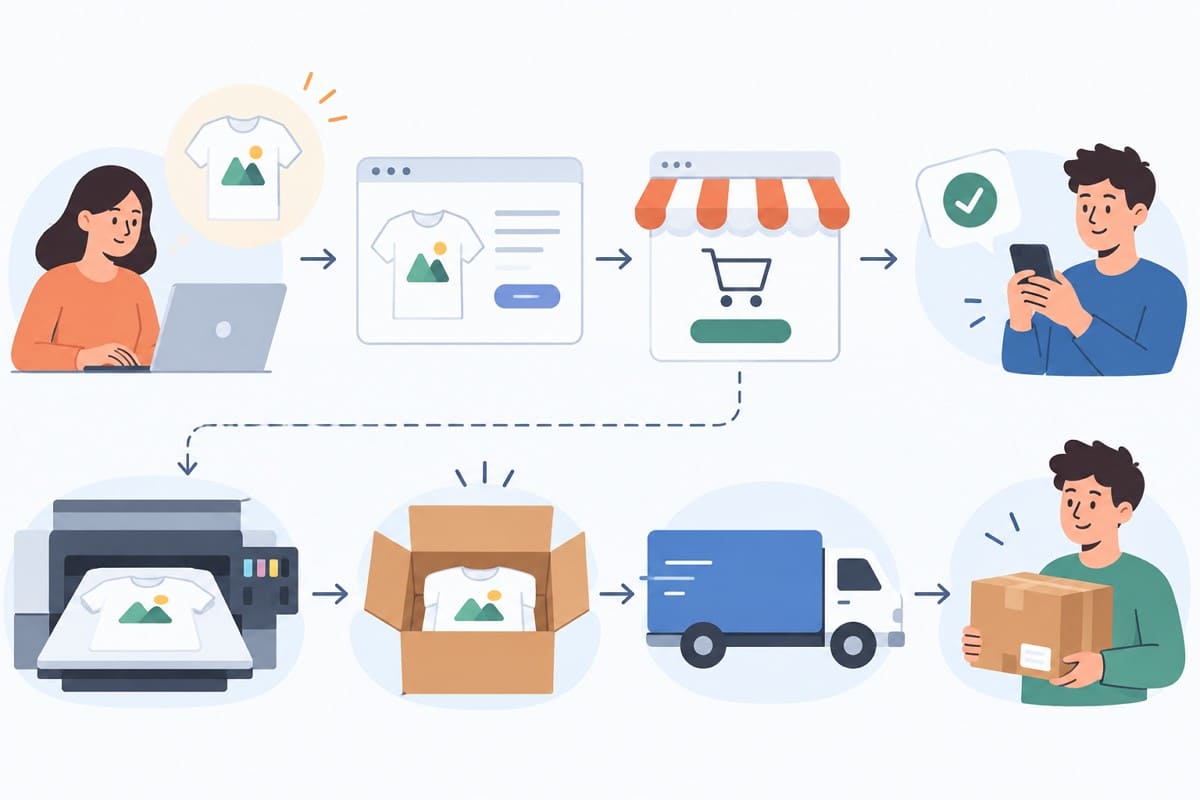
The order flow is simple. Sellers create the artwork, place it on a product, and publish the listing. After a customer makes a purchase, the order moves to the fulfillment provider for production and shipping. Its exact handoff varies by storefront and provider, but the overall process follows the same basic workflow.
How a Print-On-Demand Order Moves from Store to Customer
From listing the product to delivering it to the customer, each POD order follows a simple process. These 6 steps explain how print-on-demand works from start to finish:
- The seller creates the artwork.
- The artwork is placed on a suitable product.
- The seller publishes the completed product listing.
- A customer places an order through the storefront.
- The storefront sends the order to the fulfillment provider.
- The provider prints, packs, and ships the product.
Note: How the order reaches the provider varies depending on the storefront and its integration with the fulfillment service.
Is Print on Demand Profitable in 2026?
Yes, print on demand can be profitable, but profitability needs to be calculated for each product. Industry growth or total sales figures do not reveal how much an individual seller keeps from an order.
Start with the full print-on-demand costs behind each sale. Product and printing costs come first, followed by seller-paid shipping. Payment and transaction fees also reduce earnings. Stripe explains how these charges can affect revenue, pricing, and profit margins.
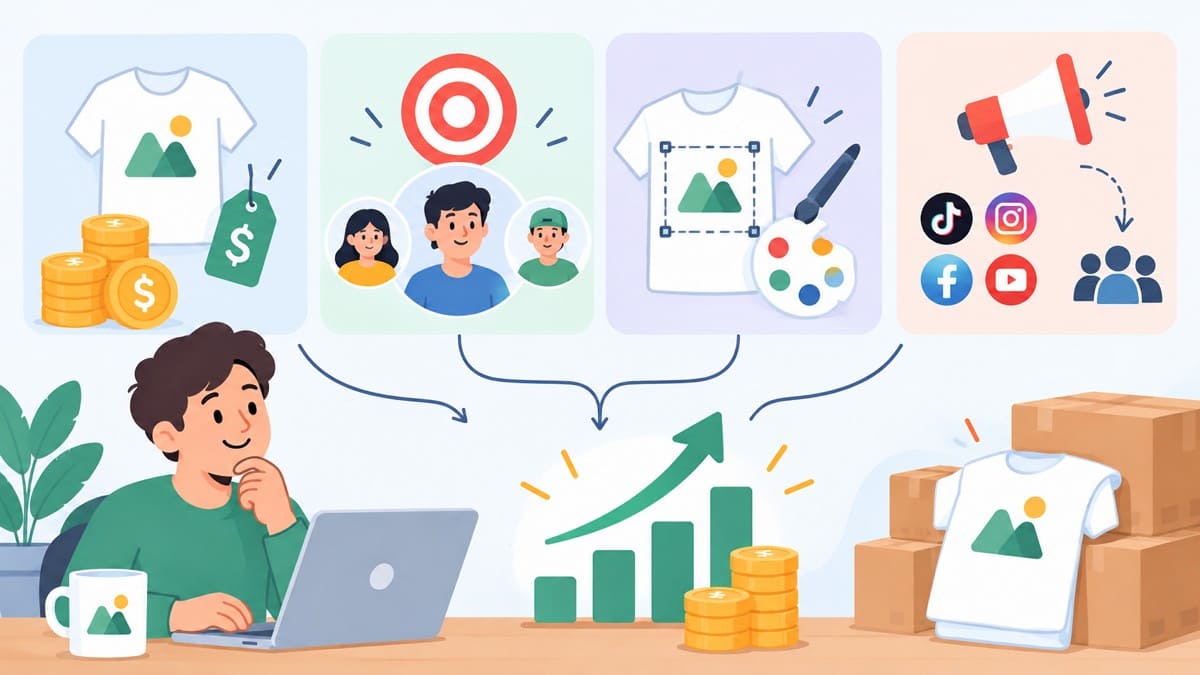
Other expenses can reduce earnings further. Advertising adds customer acquisition costs, while discounts and refunds affect the amount retained from each sale. Designs, mockups, and product samples may also add costs that sellers should consider when evaluating profitability.
POD avoids the need to purchase a batch of products before knowing whether they will sell. Lower inventory risk is an advantage, although higher per-unit production costs can limit the available margin. For that reason, “is print on demand worth it” has no universal answer. Your print-on-demand profit margins ultimately depend on the selling price and total cost behind each sale.
How to Calculate Your Print-On-Demand Profit Margin?
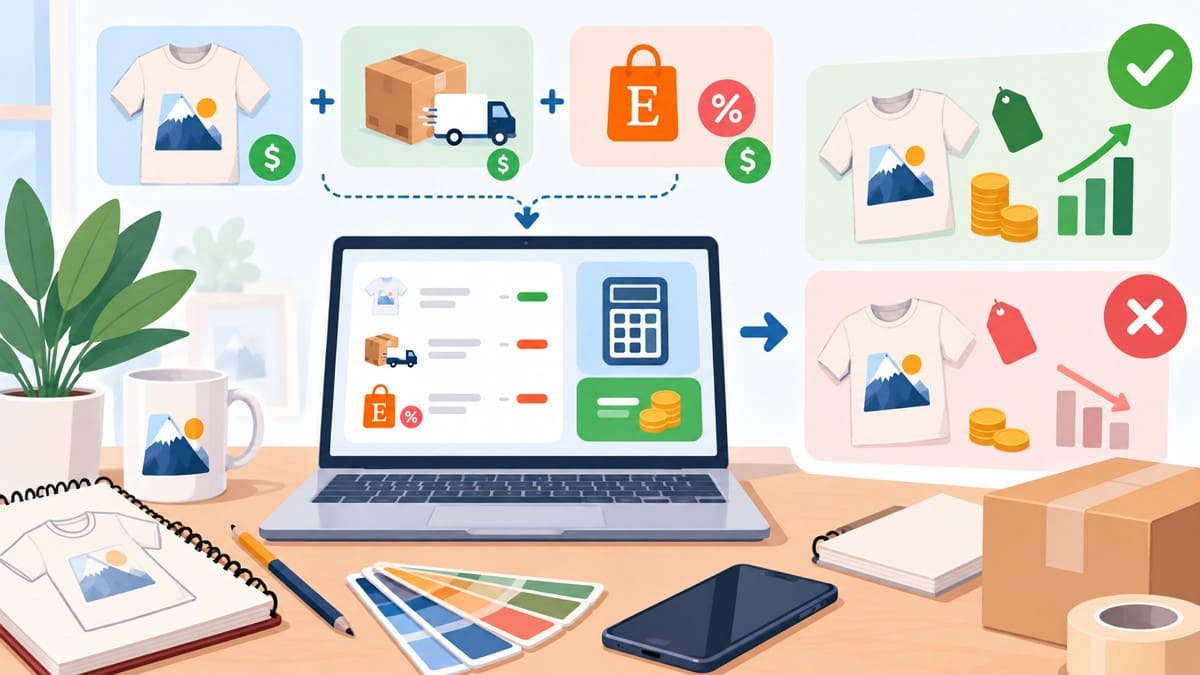
Profit per sale = retail price − product and printing cost − seller-paid shipping − platform and payment fees − advertising − discounts, refunds, and other applicable costs
Start with the amount the customer pays and subtract every applicable cost tied to the sale. The U.S. Small Business Administration explains that the difference between a product's selling price and variable costs determines its contribution margin. Advertising, refunds, and discounts should also be included whenever they apply.
For example, consider a POD product sold for $28. Breaking down the revenue and expenses shows how each cost affects the final profit:
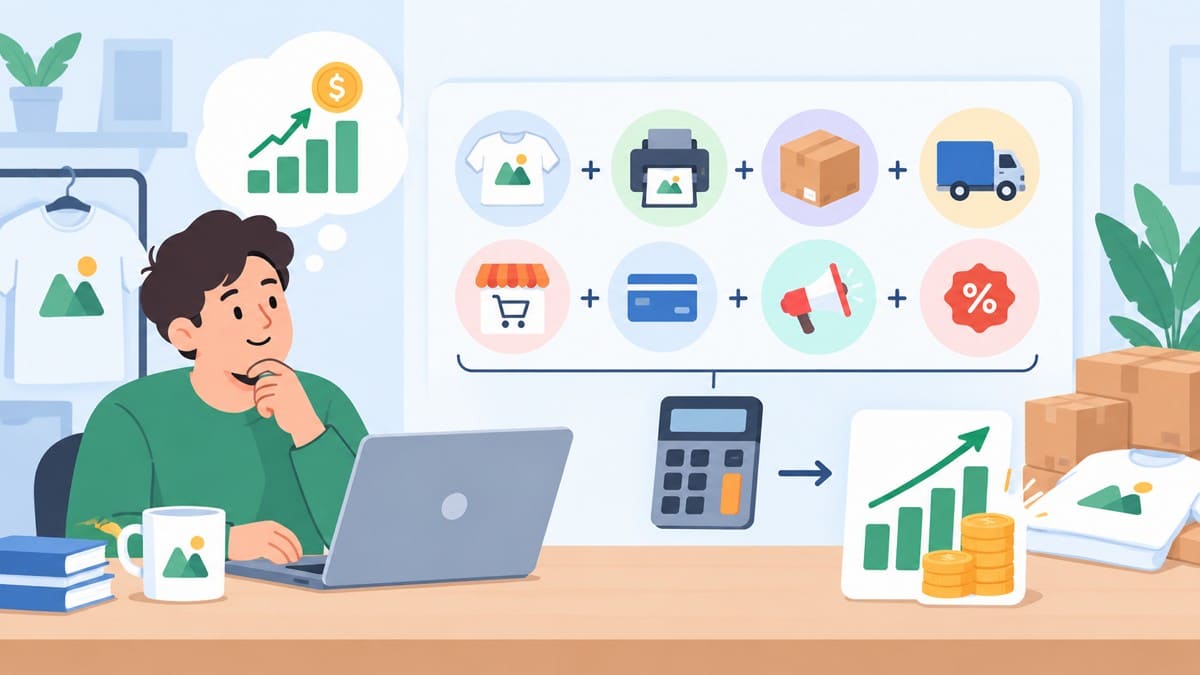
- Revenue: $28, the total amount paid by the buyer.
- Gross Profit: $28 minus $13 for product and printing and $5 for shipping leaves $10.
- Platform Fees: $0.20 listing, $1.82 transaction, and $1.09 processing in this illustrative U.S. Etsy example.
- Net Profit: $10 minus $3.11 in platform fees and $2 in advertising leaves $4.89.
- Profit Margin: $4.89 divided by $28 in revenue gives a net profit margin of roughly 17%.
These numbers are illustrative. Your own costs and selling price will produce different results, so print-on-demand profit margins quoted elsewhere should not be treated as universal benchmarks.
What Makes Some POD Offers More Profitable?
That calculation shows whether a single offer can cover its costs. However, profitability also depends on how the product, audience, design, and customer acquisition strategy work together. Four conditions can make a POD offer more commercially viable:
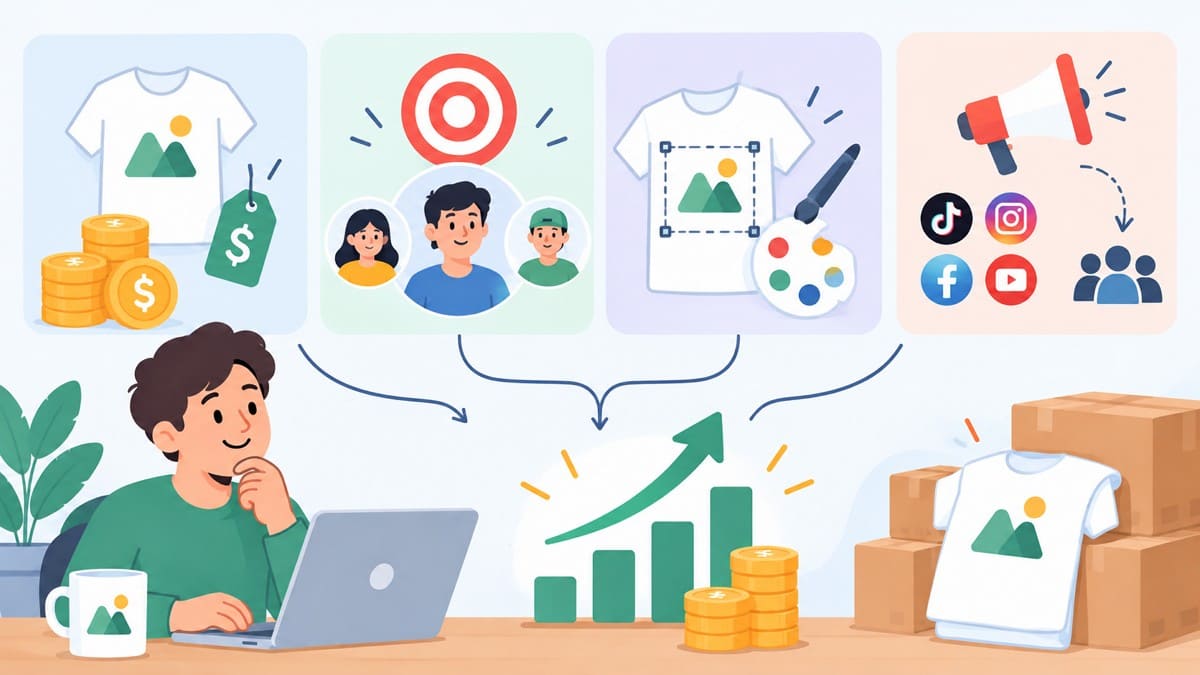
- Pricing Headroom: Enough room should exist between the total cost of each sale and the price buyers are willing to pay.
- Defined Audience: A specific audience with a clear buying reason can support stronger positioning and more effective pricing.
- Design Value: Original artwork or meaningful personalization can support a higher price when it adds genuine value for the buyer.
- Acquisition Cost: Customer acquisition must remain manageable because even the most profitable print-on-demand products can lose margin when reaching buyers becomes expensive.
Product or Niche: What Are You Actually Choosing?
Choosing a product and selecting print-on-demand niches are two separate decisions. The product is the physical item being sold, while the niche represents the audience, interest, or buying occasion the offer serves.
For example, a T-shirt is a product, while pickleball players represent a niche. Products influence practical factors such as cost, selling price, print area, shipping, returns, and buyer expectations. Niches shape the design subject, message, buying motivation, competition, and opportunities for related products.
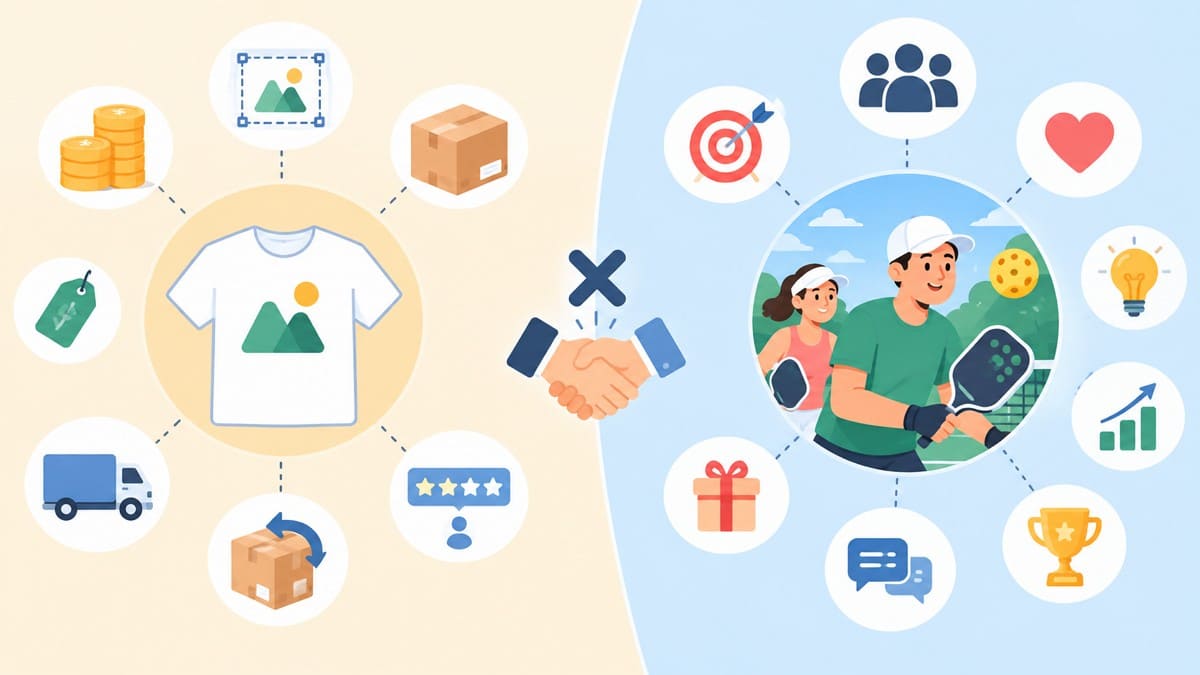
Understanding these differences makes it easier to evaluate how well a particular product and niche work together. The comparison below highlights the main factors influenced by each choice:
| The Product Decides | The Niche Decides |
|---|---|
| Cost and expected selling price | Design subject |
| Available print area | Message and tone |
| Shipping and return behavior | Buying motivation |
| Customer quality expectations | Competition and market saturation |
| Product format and practical features | Potential for related products |
A popular product without a defined buyer does not create a complete offer. Likewise, an interesting niche may be a poor match when the product’s price, format, or practical features do not suit its intended buyers. The goal is to evaluate the product and niche separately before determining whether they work well together.
Product fit also matters when exploring the best print-on-demand niches . The SBA recommends evaluating factors such as competitors, market segments, strengths, weaknesses, and potential barriers. For POD sellers, these checks can help determine whether a particular product is suitable for the niche they plan to target.
Best Print-On-Demand Products and Niches to Test in 2026
Here are 6 product-niche pairings worth testing. They serve as starting points rather than a sales ranking because the best print-on-demand products depend on the audience you can effectively reach. Each pairing highlights why the combination may work and what you should verify before choosing it.
T-Shirts and Hoodies for Identity-Based Communities
Buyers often choose apparel to express belonging to a group or interest. Occupations, hobbies, local communities, recurring events, and shared experiences can provide clear themes for relevant designs. A large print area also supports detailed artwork and coordinated collections, allowing one visual concept to extend across multiple designs. Hoodies can support higher selling prices than T-shirts, although their base costs are typically higher.
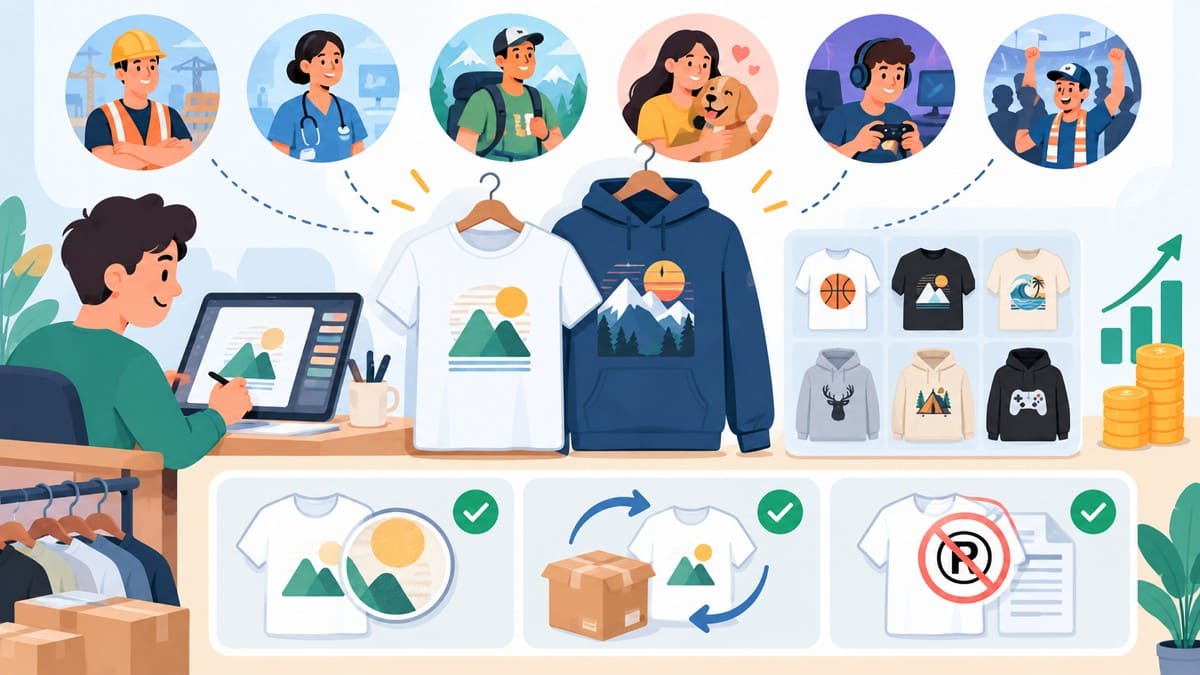
Apparel is a highly competitive POD category, making generic slogans harder to distinguish from similar listings. Sizing can create another commercial risk because POD providers may not accept returns when customers choose the wrong size. Before selecting apparel, verify these three factors:
- Confirm that the design remains readable at its actual print size.
- Check the provider's return policy for sizing issues on the chosen garment.
- Verify that the artwork contains no trademarked phrases or unauthorized fandom references.
Note: Our T-shirt design size and placement guide covers the sizing question in detail.
Posters and Wall Art for Personalized Spaces and Gifts
Posters and wall art can be the best print-on-demand products to test for home décor, personal memories, milestones, and gifts. Artwork provides most of the product value, so original or personalized designs can stand out better than generic options. One challenge is adapting the same design to different print sizes and aspect ratios.
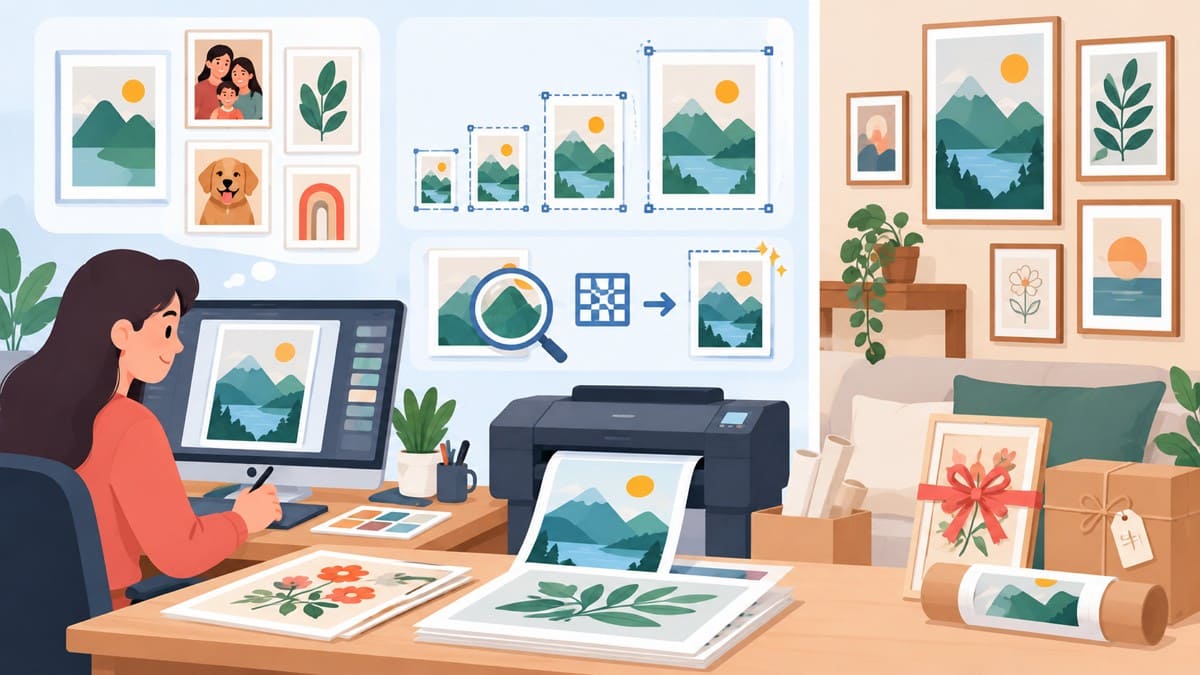
Check the provider's dimensions and templates before publishing each size. Different formats may require specific aspect ratios, so one design may not fit every option correctly. Resolution also becomes increasingly important for larger prints. Generic-looking artwork can make the product harder to distinguish, making originality and proper sizing important before listing it.
Mugs and Drinkware for Personal Gifts and Shared Interests
Mugs and drinkware are best-selling print-on-demand products worth testing for gift occasions, workplace roles, hobbies, and shared interests. Personalization can make these familiar products more meaningful by adding a name, date, message, or other detail relevant to the buyer.
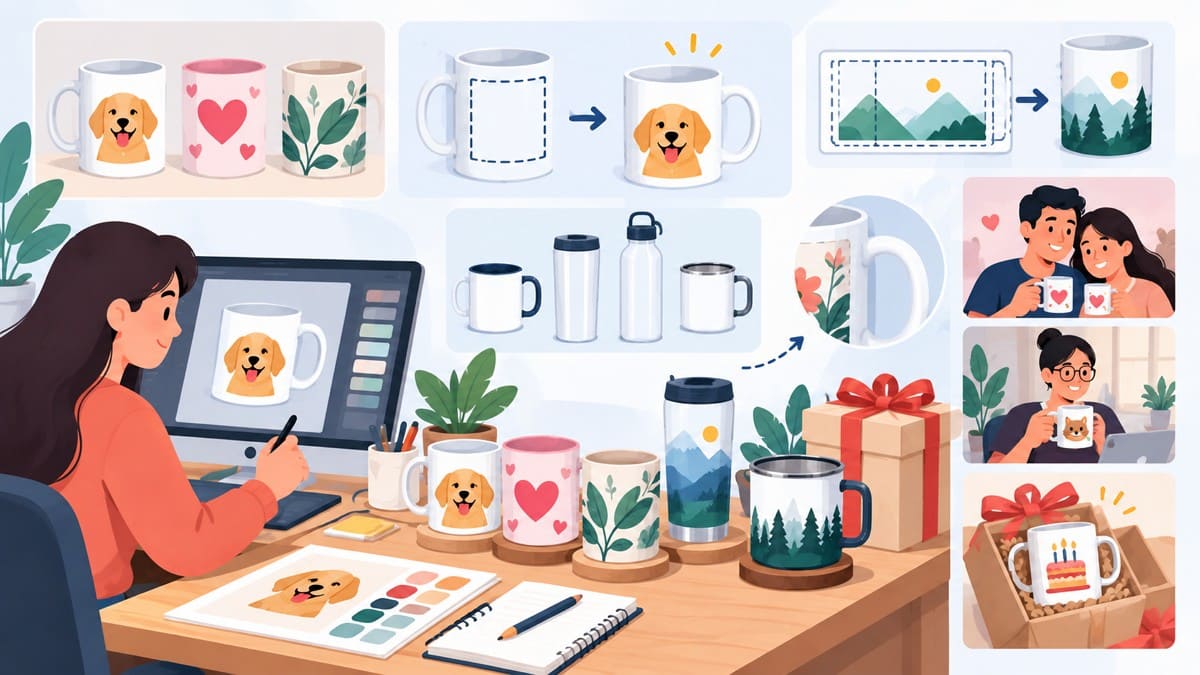
Limited print space is one of the main constraints. Mug artwork must fit within a relatively narrow area, while wraparound designs need careful placement around the handle. Since mugs are already familiar products, the design or personalization should provide a clear point of differentiation. Always follow the provider's product-specific template and dimensions rather than assuming one layout will fit every mug.
Tote Bags and Accessories for Hobbies and Everyday Use
Tote bags and accessories can fit some of the best print-on-demand niches, particularly those built around hobbies, communities, occupations, and everyday interests. Their practical everyday use can complement designs that clearly connect with a specific audience. Simple, readable artwork also tends to suit the available print area better than overly detailed graphics.
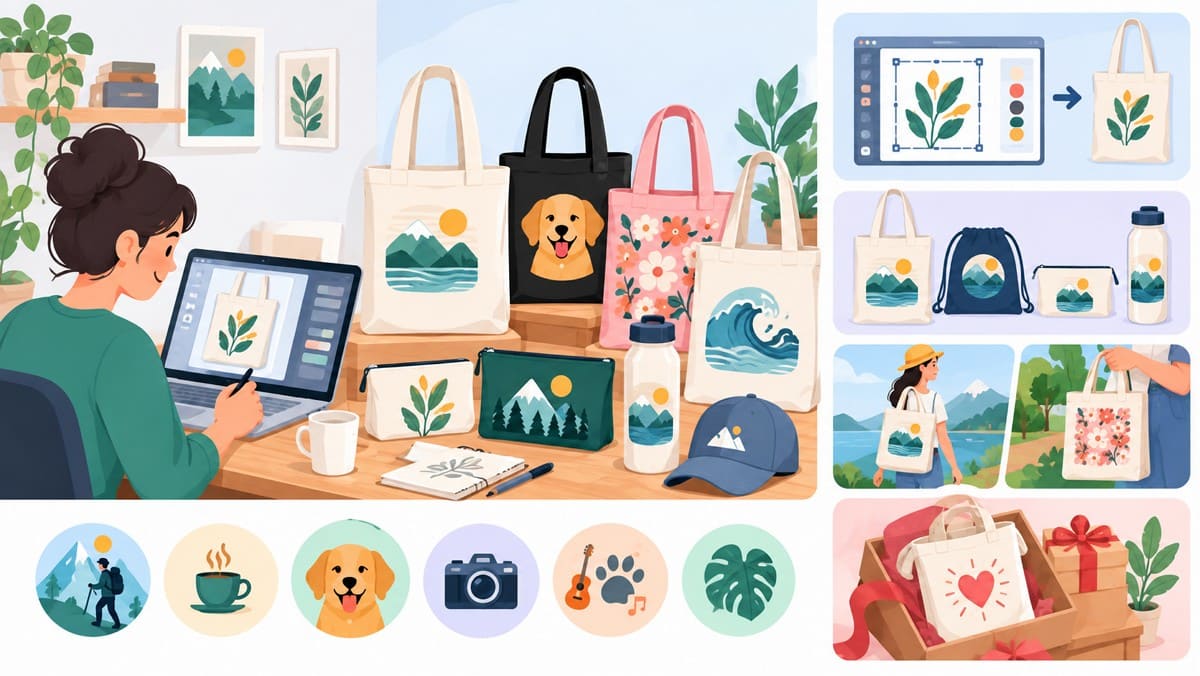
Generic slogans can make these products harder to distinguish from competing offers. Reusing the same artwork across different accessories without adjusting its scale or placement can also weaken the overall collection. Before choosing a product, verify its printable area and placement requirements to ensure the design works properly on the final item.
Stickers and Stationery for Collectible Themes
Stickers and stationery can suit profitable print-on-demand niches built around clubs, creators, planners, and specific interests. Coordinated designs can work particularly well as collections, giving buyers several related products instead of disconnected items. The main constraint is the relatively low order value, as production costs, selling fees, and shipping can consume a larger share of each purchase.
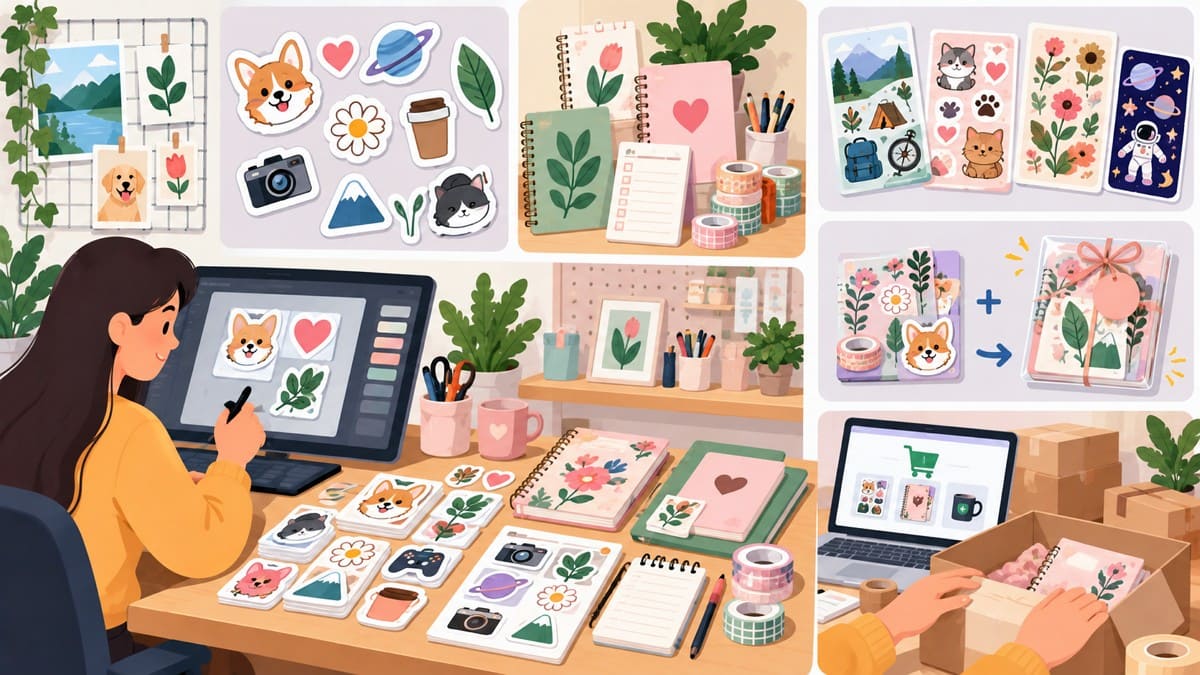
Check these costs carefully before listing the products. Coordinated sets can encourage buyers to purchase multiple related designs and may improve the overall order value. Still, bundling should be treated as a pricing and merchandising strategy rather than a guarantee of higher profit.
Blankets and Pillows for Personalized Gifts
Personalized home products can fit some of the best print-on-demand niches, especially for family gifts, pets, anniversaries, milestones, and other meaningful occasions. Adding names, photos, dates, or custom artwork can increase perceived value by making each item more personal to the recipient.
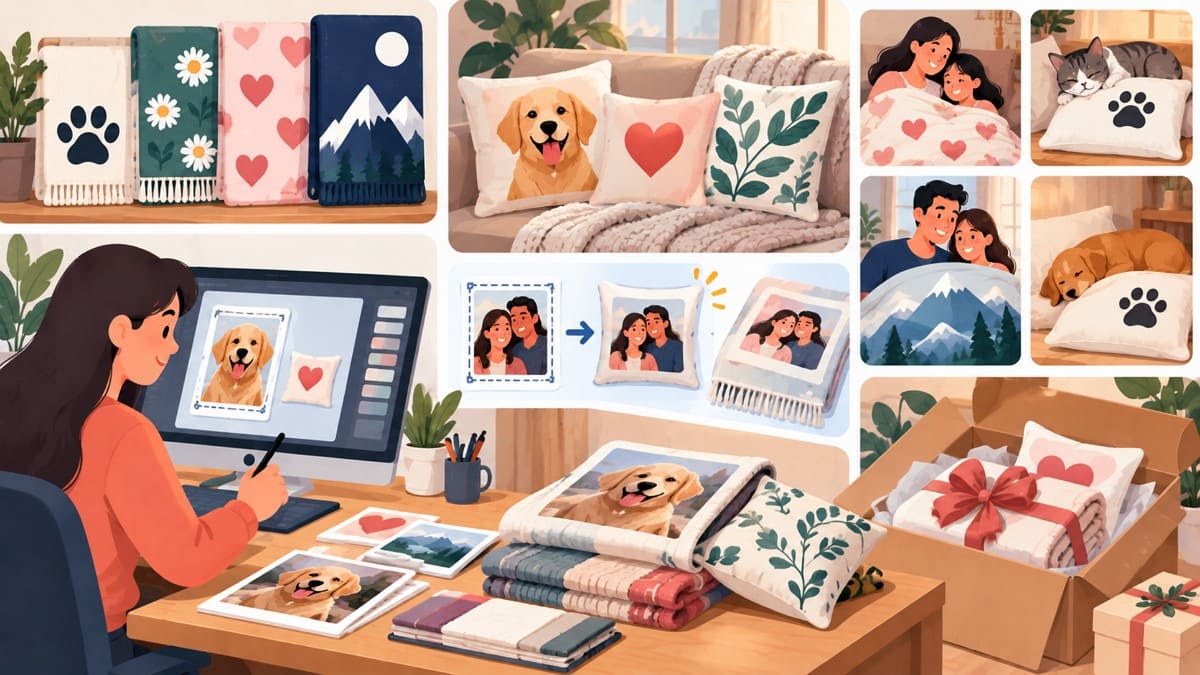
Still, higher product and fulfillment costs mean these items are not automatically among the most profitable POD products. Accurate product previews are especially important for personalized items. Buyers should be able to see how names, photos, and artwork will appear at the correct scale and placement before placing an order.
How to Validate a Product-Niche Idea Before You Launch?
Once you have a few print-on-demand niche ideas, validate one product-niche pairing before building a full collection. The following five checks help assess buyer intent, costs, competition, and product fit while limiting unnecessary upfront work. A strong validation process can reduce wasted effort, but it cannot guarantee sales.
1. Define the Buyer and Buying Reason
Start by identifying the specific buyer and whether the purchase is for personal use or a gift. Each buying reason can involve different pricing expectations and design needs. Broad demographics alone do not define a useful niche. For example, “women aged 25 to 40” offers little design direction, while “people who just finished their first marathon” gives you a much clearer theme.

2. Check Demand, Competition and Legal Risk
Once you know how to find a print-on-demand niche, check whether buyers are already spending money in that market and what they prefer. Review relevant marketplace listings, prices, customer reviews, and commonly used search terms. Strong competition may indicate demand, but it can also make generic offers harder to distinguish.
Before using a phrase or name, search the USPTO trademark database for identical and confusingly similar marks. Use original or properly licensed artwork as well, since visual works can receive copyright protection from the time they are created.
3. Calculate a Viable Price Before Designing
Check the provider’s current product cost, shipping options, and selling platform fees before creating the design. Use the earlier profit formula to see whether the expected selling price leaves enough room for discounts, returns, and promotional costs. A pairing with little or no margin may not be commercially viable.
4. Create One Design Direction for the Product
After you know how to choose a print-on-demand niche, create one design direction that matches the buyer, product, and available print area. Test the concept before spending time building a full collection. Use Designkit to create or adapt the artwork, while our How to Create Print-On-Demand Designs and Product Mockups guide covers the full preparation process.
5. Review the Product as a Buyer Would See It
A design file becomes easier to evaluate once you see how it looks on the actual product. Place the artwork on a realistic mockup and review it from a shopper’s perspective. Check its scale, placement, cropping, and whether any text remains readable at listing-thumbnail size.
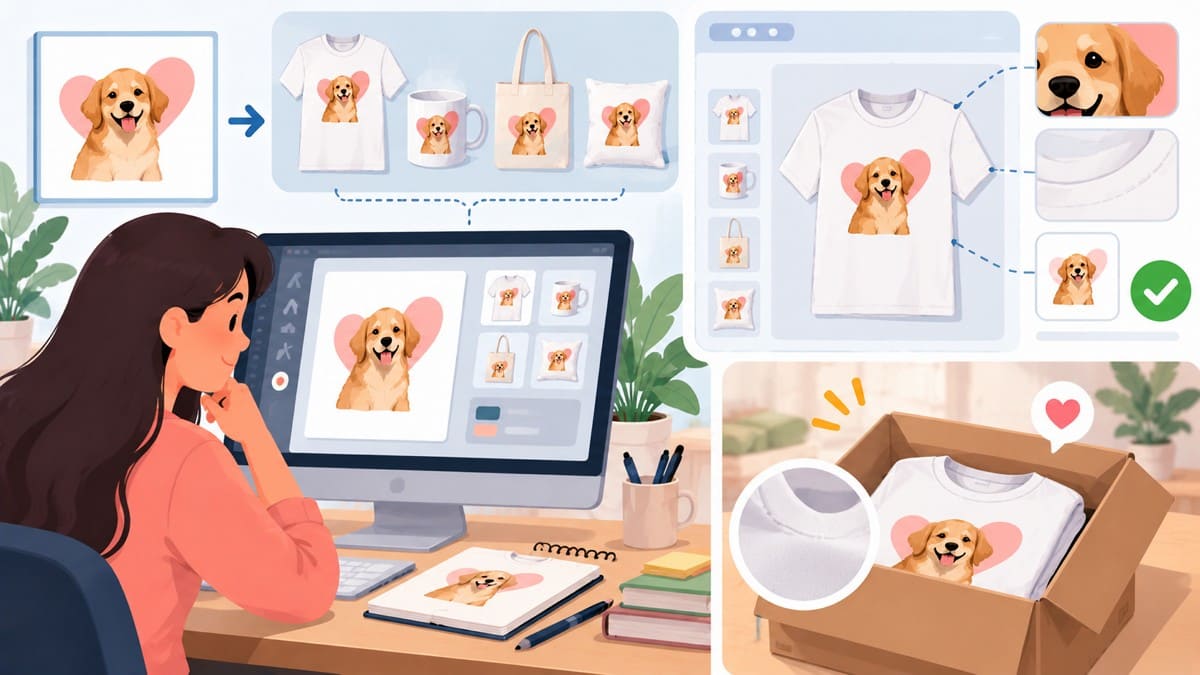
Use the Designkit’s Mockup Generator to create the product preview. Consider ordering a physical sample when material, color, or print quality plays an important role in the buying experience. Designkit supports design and visual preparation rather than product manufacturing or fulfillment.
Conclusion: Choose One POD Idea to Test First
Print on demand can be worth testing when the product, audience, and pricing work together. Success depends on understanding the full cost of each sale, choosing a defined niche, and creating an offer that gives buyers a clear reason to purchase.
Start with one product-niche pairing and validate its demand, competition, costs, and design potential before expanding. Once the idea makes commercial sense, create a realistic preview and assess it from the buyer’s perspective. Our guide to creating print-on-demand designs and mockups covers the next stage in detail.
Frequently Asked Questions
How much does it cost to start print on demand?
Is print on demand saturated in 2026?
Some POD categories, such as generic slogan T-shirts, are highly competitive. Saturation varies by audience, product, and offer, so research your specific niche instead of judging the entire market.
What is a good profit margin for print on demand?
Gross margin shows the percentage left after direct production costs, while net margin also accounts for fees, advertising, discounts, returns, and other applicable expenses. Calculate both using your actual costs instead of relying on general benchmarks.
How many POD products should a beginner start with?
Beginners should start with a small selection of products aimed at one audience rather than offering many unrelated items. Expand the collection once a product-niche pairing shows evidence of working.
Should you order POD samples before selling?
Print-on-demand samples are useful when material, color, sizing, or print placement affects buyer satisfaction. Apparel and higher-priced home products often benefit more from sample checks than simpler items.
Can you start POD without professional design skills?
Many beginners can start POD without professional design skills. Accessible design tools can handle basic design needs, but the final artwork must still meet the provider’s print requirements. Our design and mockup guide covers both areas in detail.
You May Also Like
Amazon A+ Content Dimensions: Module Image Sizes
Print-On-Demand Designs: Create, Prepare, and Preview Your Work

Amazon A+ Content: What It Is and What to Build First
Is Print on Demand Profitable in 2026? Products and Niches
Amazon Brand Registry Application: How to Submit and Pass Review
How to Ship to Amazon FBA: Your First Shipment
What Is Amazon FBA? Should Beginners Use It in 2026

How to Get Ungated on Amazon: Restricted Category Approval Steps
Amazon Backend Keywords: Title, Bullets & Search Terms
What Is A/B Testing? A Practical Guide to Running Better Experiments

Best Time to Post on Instagram in 2026: Data & Tips
How to Get Verified on Instagram: Complete Guide

TikTok Monetization in 2026: Requirements & Ways to Earn

Instagram Desktop Posting Guide: Upload Posts, Stories & Reels

YouTube Shorts Monetization Requirements & Rules 2026
How Much Does YouTube Pay Per View? 1K, 100K & 1M Views

How to Make Money on Snapchat: 7 Ways to Earn

How to Get More Followers on Instagram in 2026

Best Time to Post on TikTok in 2026 for More Views
How to Repost on Instagram in 2026: A Simple Guide
Multichannel Marketing Guide: Strategy, Tools & Examples
How to Create Digital Products That Sell in 2026
Cyber Monday Marketing Ideas & Strategies (2026 Guide)
Black Friday Marketing Ideas for Ecommerce Brands (2026)
Instagram Marketing Guide: Strategies, Tips & AI Tools in 2026

Influencer Marketing Guide: Strategy, Campaigns & Creator Tips
15 Best Things to Sell on Etsy in 2026 (Listing Tips Included)
WooCommerce vs Shopify 2026: Pricing, Features & Which Is Better
How to Sell on Facebook Marketplace: Beginner Guide (2026)
How to Use Pinterest for Business: Strategy, Tips & Growth Guide
How to Sell on Etsy in 2026: Setup, Listings & Growth Tips

What Is a Target Audience? Types, Examples & How to Find Yours

TikTok Marketing Guide 2026: Strategies, Ideas & AI Tools

Vibe Marketing Explained: Strategy, Examples & AI Tools
How to Sell on Depop: Beginner Guide to Getting Your First Sale
Online Advertising Guide: Types, Costs & Examples (2026)

Facebook Advertising Guide: Costs, Strategy & Tools 2026

What Are E-commerce Ads? Examples, Strategy & Tools (2026)
Where to Sell Handmade Items Online (2026): Etsy, Amazon, or Shopify?
Shopify vs Amazon (2026): Brand Store or Marketplace FBA?
Amazon Handmade vs Etsy (2026): Which Is Better for Makers?
Etsy vs eBay (2026): Handmade, Vintage, or Secondhand?
Selling on Amazon vs eBay (2026): Fees, Profit & Where to Sell

What Is Brand Awareness? Examples, Strategies & Tools 2026

10 Best Online Selling Platforms (2026): Pick by What You Sell
Shopify vs Etsy (2026): Which Is Better for Handmade Sellers?
YouTube Automation Step-by-Step AI Guide for Beginners
What Is Brand Identity? Examples, Elements & Strategy

AI Marketing Agent: How It Works, Benefits & E-Commerce Examples

What Is Personalized Advertising? Examples & How It Works
How to Build a Shopify Store That Actually Converts Visitors

Amazon Marketing Guide 2026: Strategies, Tips & Tools
Local Advertising: Strategies, Examples & Tools (2026)

What Is Branded Content? Examples, Strategy & Tools 2026

What Is Performance Marketing? Strategies & Examples 2026
Inbound Marketing: Strategies, Examples & Tools (2026)
Design and Preview Your POD Offer
Once you choose a product-niche pairing, create the artwork in Designkit, place it on a realistic mockup, and review scale, placement, and readability before you list.