
Amazon Marketing Guide 2026: Strategies, Tips & Tools
In 2026, Amazon success isn't about ad spend alone—it's about turning clicks into conversions. Learn how SEO, PPC, content, and AI-powered creative work together to boost visibility and sales.


Amazon has become one of the most competitive marketplaces in the world, where success depends on more than just listing products. In 2026, sellers must focus on visibility, relevance, and conversion to stay ahead. Traditional approaches, like running ads alone, are no longer enough to guarantee sales growth.
Instead, a combination of SEO, PPC, and strong creative content is required to win customer attention. This guide explains how modern Amazon marketing works and what strategies help turn clicks into conversions in today's competitive environment.
What is Amazon marketing?
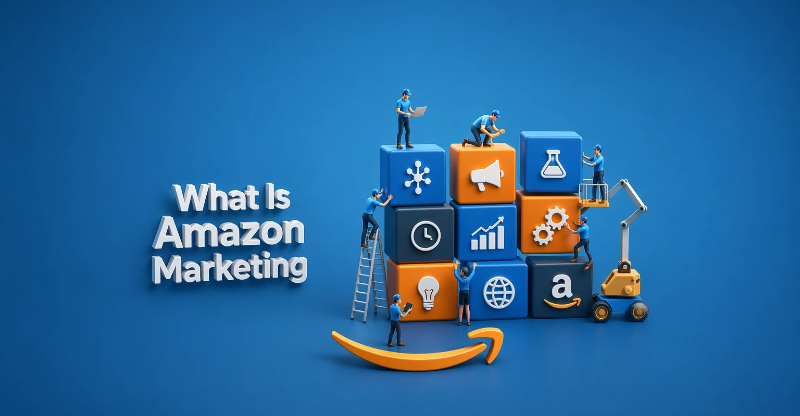
Amazon marketing is the process of promoting products on Amazon to improve visibility, clicks, and sales. It uses a combination of ads, SEO, and optimized product listings to help sellers compete in a crowded marketplace.
-
Core idea: Improve product visibility and conversions on Amazon
-
Main focus: Search rankings, ads, and listing optimization
-
Goal: Turn product views into actual purchases
Key components of Amazon marketing
-
Product listing optimization (titles, descriptions, keywords, images)
-
Sponsored ads (to target high-intent shoppers)
-
Amazon SEO (improving organic search rankings)
-
Promotions & discounts (to increase conversions)
-
Customer reviews (to build trust and credibility)
Benefits of Amazon marketing
-
Increases product visibility in search results
-
Drives more qualified traffic and sales
-
Improves conversion rates with optimized listings
-
Helps brands compete in a saturated marketplace
-
Supports long-term growth on Amazon
Key Amazon marketing strategies & channels
Amazon marketing works best when multiple channels work together in a structured strategy that improves visibility, traffic, and conversions. A strong approach combines advertising, SEO, content, and promotions to build long-term growth instead of relying on a single tactic.
Amazon PPC advertising
Sponsored Products, Sponsored Brands, and Sponsored Display ads put you in front of shoppers already searching for similar products. They're the fastest way to gain visibility, and because every click and sale is tracked, performance is easy to measure and optimize.
Amazon SEO & keywords
Amazon SEO optimizes product titles, bullet points, and backend search terms so your listings surface in relevant searches. Better ranking earns consistent organic traffic without additional ad spend, making it one of the highest-leverage areas to invest in.
Listing content & A+ Content
High-quality images, detailed descriptions, and A+ Content communicate product value quickly and clearly. Strong content builds trust and lifts conversions, turning visitors who land on your page into buyers.

Promotions & deals
Coupons, Lightning Deals, and discounts create urgency and drive short-term sales spikes. They're often used to boost visibility and strengthen ranking signals during competitive periods like Prime Day or holiday seasons.
Brand building
Amazon Stores, Posts, and external traffic sources build long-term brand identity and customer loyalty. A consistent brand presence supports sustainable growth and makes repeat purchases more likely.
Why Many Amazon Listings Get Clicks But Don't Convert
Many sellers assume low conversions are caused by competition or high CPCs, but in reality, most shoppers leave because the listing fails to communicate value quickly. In Amazon marketing, small creative and content gaps often have a bigger impact on sales than pricing or ads.
Shoppers decide in seconds, before they read anything
Most purchase decisions on Amazon happen within a few seconds of seeing the product thumbnail. This is why first impressions are critical in marketing on Amazon, as users rarely scroll deep into listings if the visual hook is weak. If the main image doesn't instantly communicate value, the click is often wasted traffic.
"Good enough" product images no longer work
Basic or average-quality images are no longer enough to compete in modern Amazon digital marketing environments. Shoppers expect clear, high-contrast visuals that show product benefits immediately. Listings with outdated or unclear visuals tend to lose trust, even if the product quality is strong.
Common conversion killers
Several small issues can significantly reduce conversions even when traffic is strong. These are often overlooked in Amazon marketing strategies but directly affect buyer behavior.
-
Mobile thumbnails that don't stand out reduce click quality because most users browse on mobile devices, where visibility is limited.
-
Generic lifestyle images fail to communicate product differentiation, making listings feel similar to competitors.
-
Overcrowded infographics overwhelm users instead of simplifying the decision-making process.
-
Inconsistent branding across SKUs reduces trust and makes the store feel unorganized.
-
Ad-like videos are often ignored because they feel promotional instead of helpful.
Slow creative production quietly caps growth
Inconsistent or slow content updates limit how fast a brand can scale on Amazon. When listings are not regularly optimized, performance plateaus even if ads are running effectively. This is a common bottleneck in the Amazon online marketing business, where creative assets fail to keep up with demand or competition.
What high-converting Amazon listings do differently
High-converting listings are not just better designed; they are structured to guide fast decisions. In Amazon marketing, top-performing products focus on clarity, speed, and continuous optimization rather than relying on traffic alone.
Faster product explanation
High-converting listings immediately explain what the product is, who it is for, and why it matters within the first few seconds. This reduces hesitation and improves engagement in marketing on Amazon, where users quickly compare multiple options before deciding.
Clear visuals, simple messaging, and benefit-focused copy help shoppers understand value without needing to scroll or read long descriptions.
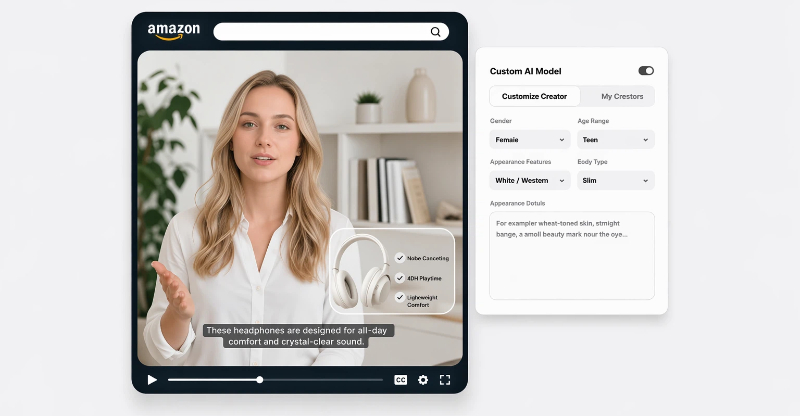
Scroll-stopping first impressions
Successful listings are designed to win attention instantly on mobile search results. Strong imagery, clear product differentiation, and visual hierarchy improve click-through rates and support better performance in Amazon digital marketing campaigns.
If the first impression fails, even well-optimized ads struggle to convert traffic into sales.
Creative A/B variation testing
Top sellers continuously test different images, titles, and content layouts to improve conversion rates over time. This is a core practice in Amazon marketing strategies, helping brands understand what actually drives customer behavior.
Small improvements in creative elements often lead to significant gains in performance, especially when scaling an Amazon online marketing business.
How Designkit helps Amazon sellers scale creative faster
As listing creative becomes a key driver of Amazon sales, sellers need faster ways to produce high-performing visuals. Designkit solves this by turning existing product photos into optimized Amazon creatives, demo videos, and multiple variation assets in minutes, no studio shoots and no design skills required. Instead of waiting on designers or expensive photoshoots, sellers can continuously test and refresh listings, removing the creative bottleneck without changing their underlying strategy.
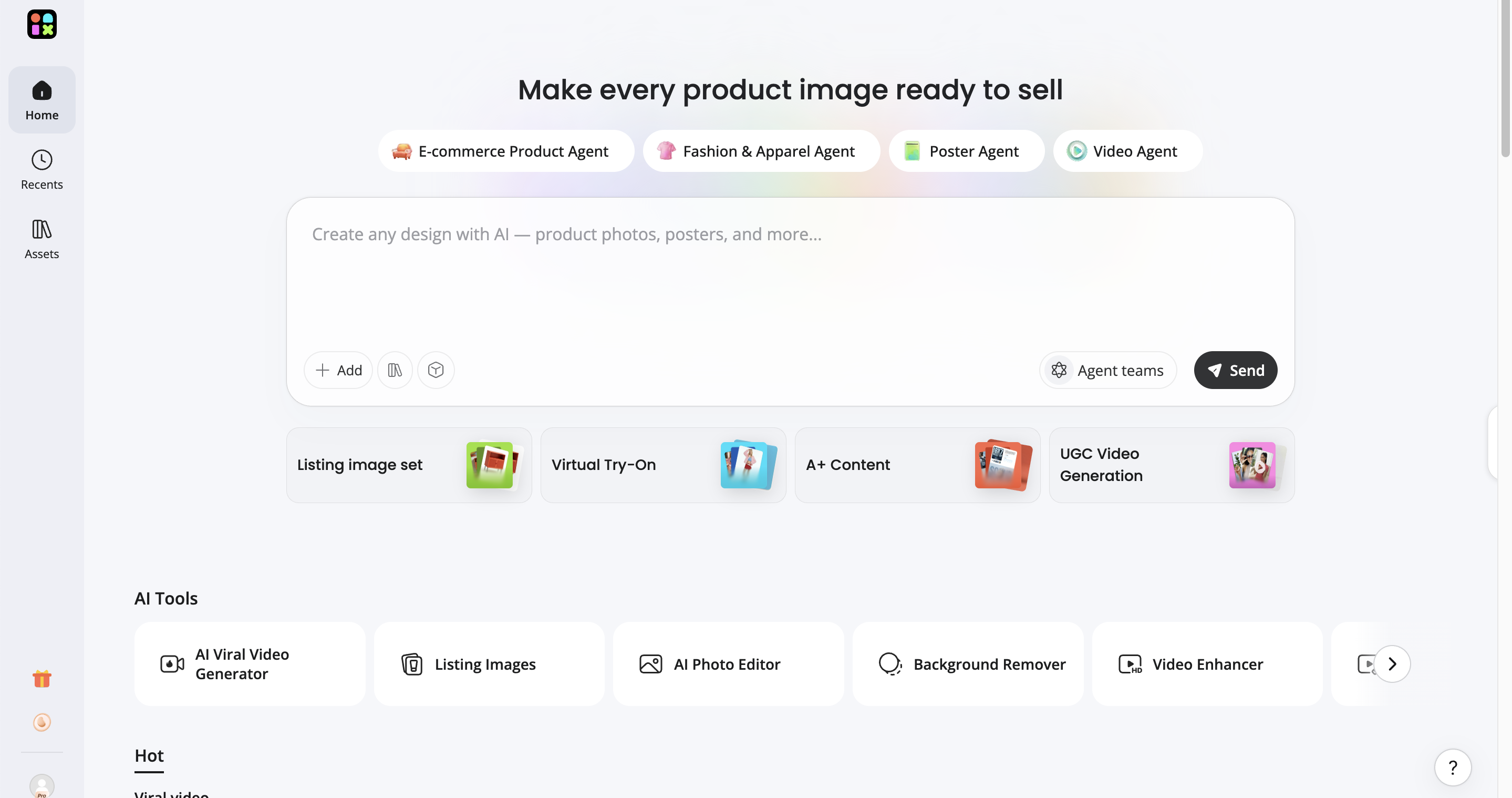
Key features of Designkit for Amazon sellers
Amazon listing image generation
Create high-quality Amazon listing images from your existing product photos in seconds. Designkit improves clarity, product focus, and visual appeal, helping you lift conversions without studio shoots or advanced design skills.
AI product demo videos
Turn static product images into short, engaging demo videos that show features and real use cases. Video helps shoppers understand your product faster, increasing engagement and purchase intent.
Bulk creative variations for A/B testing
Generate multiple creative versions at scale to test different visuals and layouts. This lets you quickly identify what converts best and optimize listings based on real performance, not guesswork.
Create assets sized for every Amazon placement
Designkit produces visuals in the formats Amazon placements call for: main listing images, gallery shots, A+ module images, and ad creatives, so you're not manually reworking one asset into five sizes. Starting from the same product source keeps your visuals cohesive across listings, ads, and your storefront.
How to create Amazon marketing assets with Designkit in 3 steps
Step 1: Upload your product photos
Upload your existing product images into Designkit. No new photoshoot or design team needed, just the photos you already have.
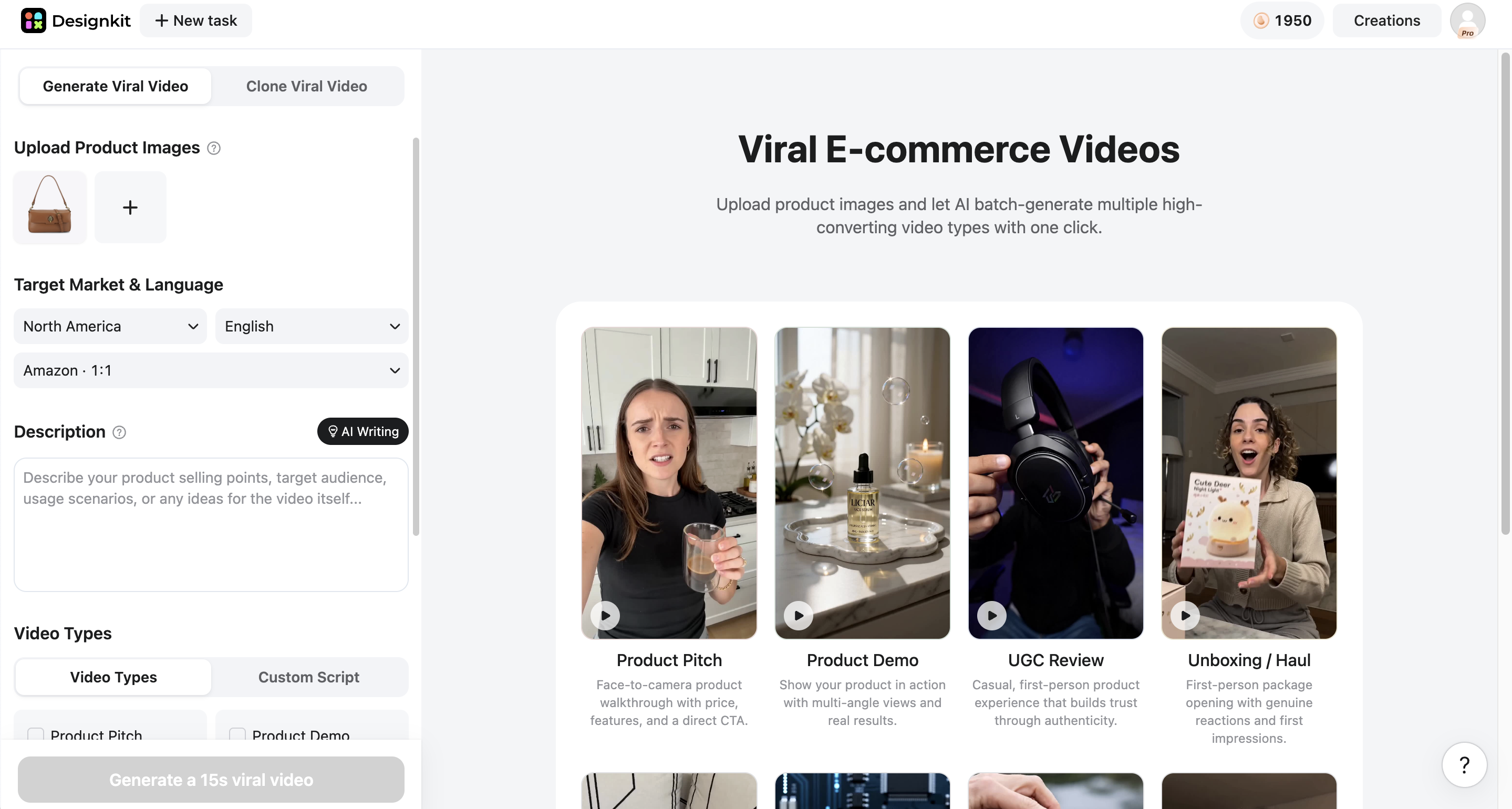
Step 2: Generate creative variations
Select your Amazon format: main image, gallery shot, A+ module visual, or demo video, and let Designkit's AI generate several versions at once, giving you a batch of test-ready creatives instead of a single asset.
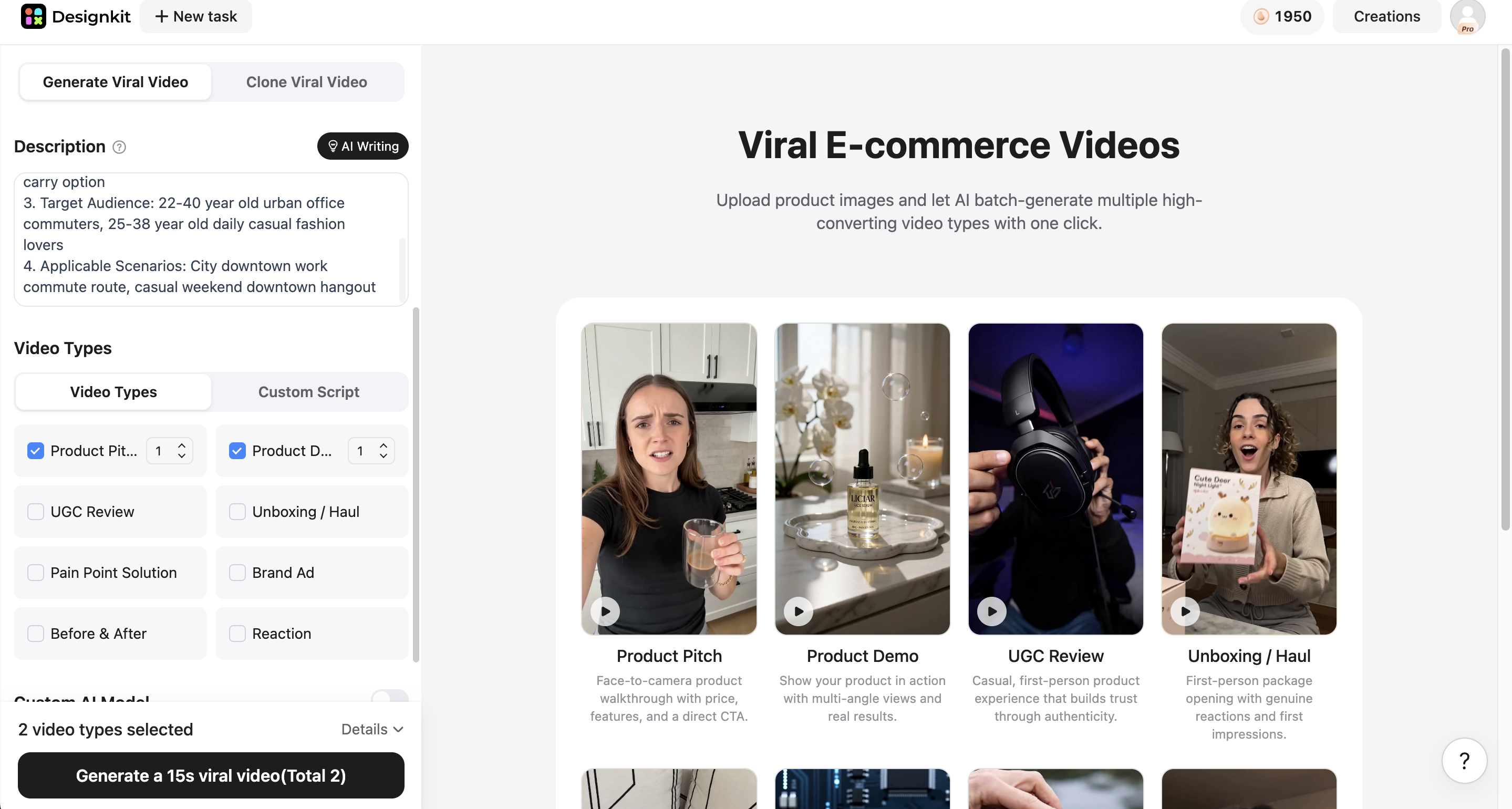
Step 3: Preview and export
Preview your generated Amazon visuals, then export optimized assets sized for Amazon listings, A+ Content, and ads. This ensures ready-to-use visuals for marketing on Amazon campaigns.

Create Amazon-Ready Visuals Free
Conclusion: Amazon's growth depends on more than traffic
Amazon's growth in 2026 isn't won by ad spend alone. It's won by how well your listings convert once shoppers arrive. The sellers who pull ahead combine PPC, SEO, and content with relentless creative testing, treating visuals as a conversion lever rather than an afterthought. Tools like Designkit make that loop faster by turning existing product photos into test-ready listing images and demo videos, so you can iterate as quickly as the marketplace moves.
Frequently Asked Questions
Why are my Amazon ads getting clicks but not conversions?
What are the main types of Amazon marketing strategies?
Amazon marketing typically includes PPC advertising, keyword optimization (SEO), listing optimization, A+ Content, promotions like coupons and deals, and broader brand building through Amazon Stores and Posts. These channels work best together: ads drive traffic, while SEO and content improve long-term organic visibility and conversion.
What tools do sellers use for Amazon marketing?
Sellers usually rely on tools for keyword research, PPC automation, competitor analysis, and listing optimization. However, creative production is often a bottleneck since images and videos still require manual work. Some AI-based tools help speed up the creation of Amazon-ready visuals and ad creatives, making it easier to test and iterate faster.
How important are product images for Amazon conversion rates?
Product images are one of the most critical factors for conversion. Shoppers often decide within seconds based on visuals alone. Clear, high-quality images that highlight benefits, usage context, and product details tend to outperform generic or overly simple visuals. Strong imagery directly impacts both click-through rate and purchase decisions.
What kind of Amazon images increase clicks the most?
Images that communicate value quickly tend to perform best, especially those optimized for mobile thumbnails, showing real-life usage, or clearly highlighting key benefits. Variations that emphasize different angles or use cases often help improve click-through rates through testing and iteration.
Why do many Amazon listings look professional but still perform poorly?
A polished design doesn't always translate into performance. Many listings fail because they don't communicate value fast enough or don't provide enough variation for optimization. Performance usually depends on continuous testing of images, copy, and layout rather than a single "perfect" design.
How often should Amazon sellers update listing creatives?
Listing creatives should be reviewed regularly, at least every quarter, or whenever performance drops, competition increases, or new seasonal campaigns launch. Refreshing visuals help prevent ad fatigue and keep listings competitive in search results.
What is creative fatigue in Amazon marketing?
Creative fatigue happens when shoppers repeatedly see the same ads or listing visuals, leading to lower engagement and declining conversion rates over time. It's especially common in PPC campaigns. The usual fix is rotating new creative variations and testing refreshed visuals periodically.
How can I test multiple Amazon creatives without hiring a large design team?
A/B testing often requires multiple design variations, which can slow down iteration if resources are limited. Using tools that speed up creative production allows sellers to generate multiple versions quickly, making it easier to test what performs best without relying on a dedicated design team.
Can AI-generated content work for Amazon listings?
Yes, as long as it's focused on clarity and conversion performance. AI-generated visuals and listing assets can help sellers scale production, create multiple variations faster, and support continuous testing. The key is ensuring outputs are optimized for Amazon's shopping behavior rather than just design aesthetics.
You May Also Like

Inbound Marketing: Strategies, Examples & Tools (2026)

What Is Performance Marketing? Strategies & Examples 2026

What Is Branded Content? Examples, Strategy & Tools 2026

How to Add Video to eBay Listing: Step-by-Step Seller Guide

What Is Video Marketing? E-commerce Guide & Strategies 2026

Short Form Video Marketing for E-commerce: AI Video Guide
Ecommerce Video Ads: 7 Strategies That Drive Higher Conversions

How to Boost Ecommerce Sales: Proven Strategies That Work
Local Advertising: Strategies, Examples & Tools (2026)
Create Stronger Amazon Marketing Creatives Faster with AI
Turn product photos into high-converting Amazon creatives, test more content variations, and scale listing production faster with Designkit AI-powered workflows built for modern sellers.