
TikTok Marketing Guide 2026: Strategies, Ideas & Growth Tips
Build a TikTok marketing strategy with proven content ideas, smarter testing, and faster short-form video production.

Build a TikTok marketing strategy with proven content formats, smarter creative testing, and faster short-form video production.
TikTok has become more than a platform for viral videos. For brands, it is now a discovery engine where customers discover products, evaluate brands, and make purchase decisions through short-form content.
Successful TikTok marketing is not about copying every trend. It requires understanding TikTok users, creating native content, testing different creative angles, and turning winning ideas into repeatable campaigns.
This guide explains how brands can use TikTok for marketing in 2026, including content strategies, campaign ideas, examples, measurement methods, and how AI tools can improve video production workflows.
What Is TikTok Marketing?
TikTok marketing is the practice of using TikTok's short-form video platform to promote a brand, build awareness, engage audiences, and drive sales. It includes organic videos, creator collaborations, paid advertising, TikTok Shop, and influencer campaigns that help businesses connect with users through entertaining and authentic content.
Unlike traditional social media advertising, marketing on TikTok is driven by creativity, storytelling, and trends rather than polished commercials. The most successful brands create videos that match the platform's style, making their content feel native instead of promotional. A strong TikTok marketing strategy focuses on delivering value, encouraging interaction, and consistently testing new content formats.
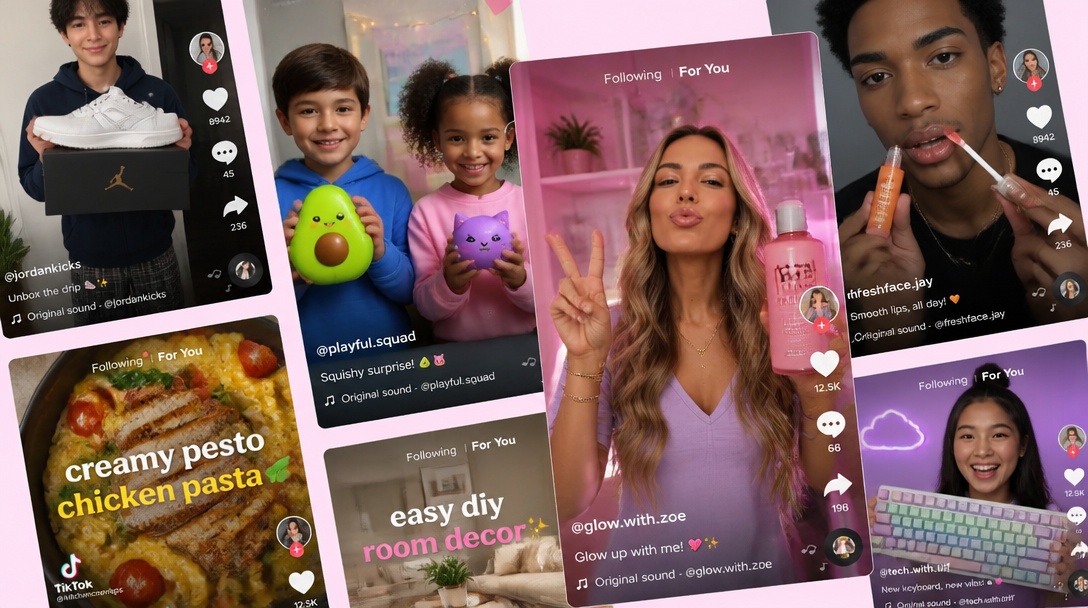
Why TikTok Marketing Matters for Brands in 2026
TikTok Has Become a Product Discovery Channel
TikTok is no longer just an entertainment platform. It's a major product discovery engine. Users regularly find new brands through their For You feed, creator recommendations, hashtags, TikTok Shop, and search results before they ever visit a search engine.
This makes TikTok video marketing especially valuable for introducing products, building awareness, and reaching potential customers early in their buying journey. For many businesses, using TikTok for marketing has become an important way to generate demand before users actively search for a product.
Short-Form Content Creates More Testing Opportunities
One of TikTok's biggest advantages is how quickly brands can test and refine content. Instead of investing heavily in a single campaign, businesses can experiment with multiple creative ideas and identify what performs best.
Brands commonly test:
-
Different opening hooks
-
Product angles and demonstrations
-
Video styles and editing formats
-
Creator collaborations
-
Customer pain points and messaging
-
Calls to action
This rapid experimentation helps businesses improve their TikTok marketing strategies while producing content that better matches audience interests.
Authentic Content Builds Stronger Connections
TikTok users tend to engage more with content that feels genuine rather than highly polished advertisements. Videos that educate, entertain, or tell a story often outperform traditional promotional content because they blend naturally into users' feeds.
Popular content formats include:
-
Behind-the-scenes videos
-
Customer stories and testimonials
-
Creator reviews and UGC
-
Educational tips and tutorials
-
Day-in-the-life and product demonstrations
Brands that prioritize authenticity often build stronger communities, higher engagement, and more trust through their TikTok content marketing efforts.

Is TikTok Good for Marketing? Who Should Use It?
For many businesses, the answer is yes. Is TikTok good for marketing? It can be one of the most effective channels for reaching new audiences, increasing brand visibility, and driving product discovery—provided the content matches the platform's style.
A successful TikTok strategy for brands works best for businesses that:
-
Sell visually demonstrable products
-
Can publish short-form videos consistently
-
Understand their target audience
-
Are willing to test creative content and new ideas
-
Want to build community through engaging storytelling
However, TikTok may be less effective for brands that rarely create new content or rely only on traditional advertising. Businesses that continuously experiment with TikTok marketing campaigns, analyze performance, and adapt to emerging TikTok marketing trends are generally more likely to achieve long-term success.
How to Build a TikTok Marketing Strategy That Works
A TikTok marketing strategy only works when content matches how people scroll, trust, and buy on the platform.
This guide breaks the process into six practical steps: from hook-first videos and UGC to creator partnerships, LIVE shopping, and paid amplification, so ecommerce brands can grow reach without sounding like an ad in every post.
1. Create Content Based on TikTok User Behavior
A successful TikTok marketing strategy starts with understanding how people consume content on the platform. Users decide within seconds whether to keep watching, so videos should capture attention immediately and deliver value quickly.
Focus on:
-
Strong hooks in the first 2–3 seconds
-
Simple, easy-to-follow storytelling
-
Vertical video (9:16) formatting
-
Clear product demonstrations or tutorials
-
Short, engaging edits
Instead of making every post feel like an advertisement, create content that educates, entertains, or solves a problem. This approach improves watch time and engagement while supporting long-term TikTok content marketing efforts.

2. Use UGC-Style Videos to Build Trust
User-generated content (UGC) continues to be one of the highest-performing content formats because it feels authentic and relatable. Rather than polished commercials, viewers often prefer videos that showcase genuine experiences.
Popular UGC-style formats include:
-
"I tested this product for 7 days"
-
Before-and-after comparisons
-
Customer reactions and testimonials
-
Problem-solving demonstrations
-
Everyday product use
For ecommerce brands, this style of TikTok video marketing can build credibility and reduce purchase hesitation by showing products in real-life situations.
3. Work With TikTok Creators
Creator partnerships are an effective way to reach established communities and produce content that feels native to the platform. The best collaborations prioritize authenticity over audience size.
When selecting creators, consider:
-
Product experience and genuine interest
-
Storytelling ability
-
Audience relevance
-
Engagement quality
For many brands, working with niche creators delivers stronger results than focusing only on high follower counts, making it an important part of a TikTok strategy for brands.
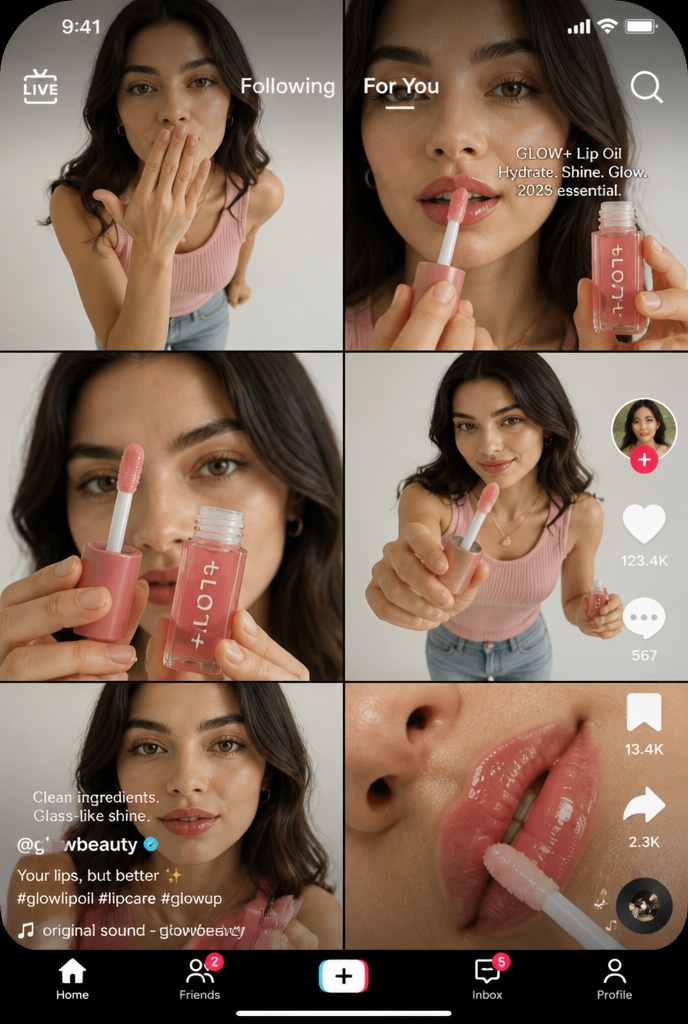
4. Turn TikTok LIVE Shopping Into a Conversion Channel
Short-form content builds discovery; TikTok LIVE shopping turns attention into real-time purchases. For TikTok Shop brands, consistent LIVE sessions often become a major share of GMV because viewers can ask questions, see demos, and buy without leaving the app.
What to focus on:
- A steady LIVE cadence (for example, 2–5 sessions per week) instead of one-off streams
- A repeatable show loop: hook → product demo → social proof → offer → CTA
- LIVE-only incentives (bundles, limited coupons, free-shipping thresholds)
- A host + moderator setup so comments get answered in real time
- Clipping winning LIVE moments into short-form posts and Spark Ads after each session
Treat LIVE as part of your TikTok marketing strategy, not a separate side experiment. Organic videos and creator content warm the audience; LIVE converts intent while the conversation is still happening.
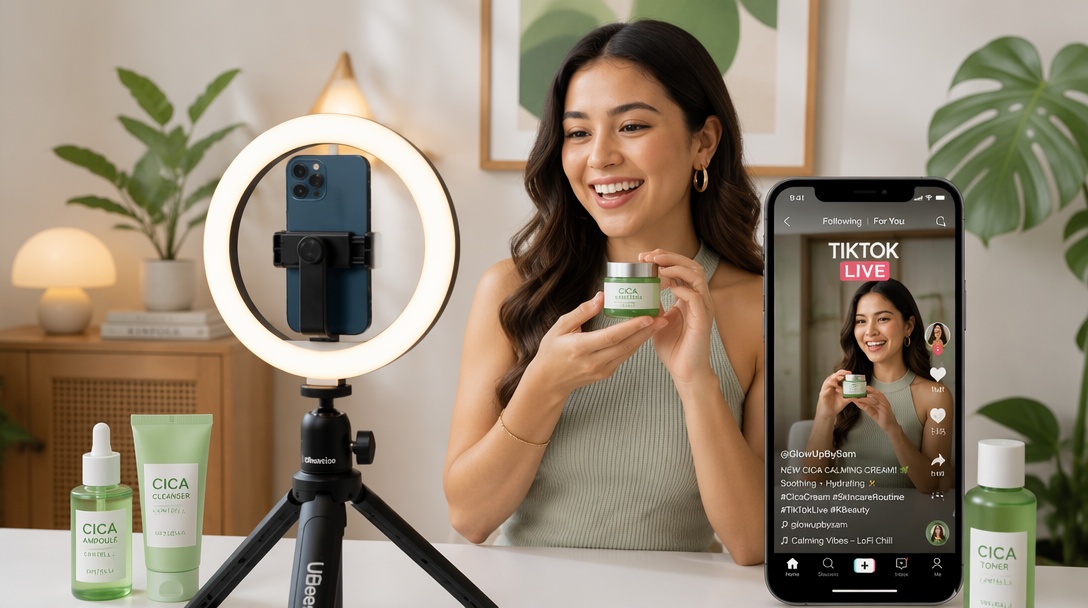
5. Follow Trends Without Losing Brand Identity
Trending sounds, formats, and challenges can expand reach, but they should support your brand instead of defining it. Rather than copying every trend, adapt popular formats to fit your products, audience, and messaging.
A balanced approach includes:
-
Using a trending format or sound
-
Adding a brand-specific message
-
Highlighting a clear customer benefit
-
Keeping visuals and tone consistent
This helps brands stay relevant while building a recognizable presence through consistent TikTok marketing campaigns.
6. Use TikTok Ads to Scale Winning Content
Paid advertising performs best after identifying content that already succeeds organically. Instead of promoting untested videos, use performance data to decide which creatives deserve an additional budget.
Common ad formats include:
-
In-Feed Ads
-
Spark Ads that amplify existing organic or creator content
-
Product-focused conversion campaigns
A practical TikTok marketing approach is to test multiple creatives, compare engagement and conversions, then scale the best-performing ads while continuing to optimize messaging and visuals.
TikTok Content Ideas and Examples
Creating a consistent mix of educational, entertaining, and product-focused videos is key to maintaining engagement. Instead of relying on one format, combine different content types to keep your audience interested and support your overall content strategy for TikTok.
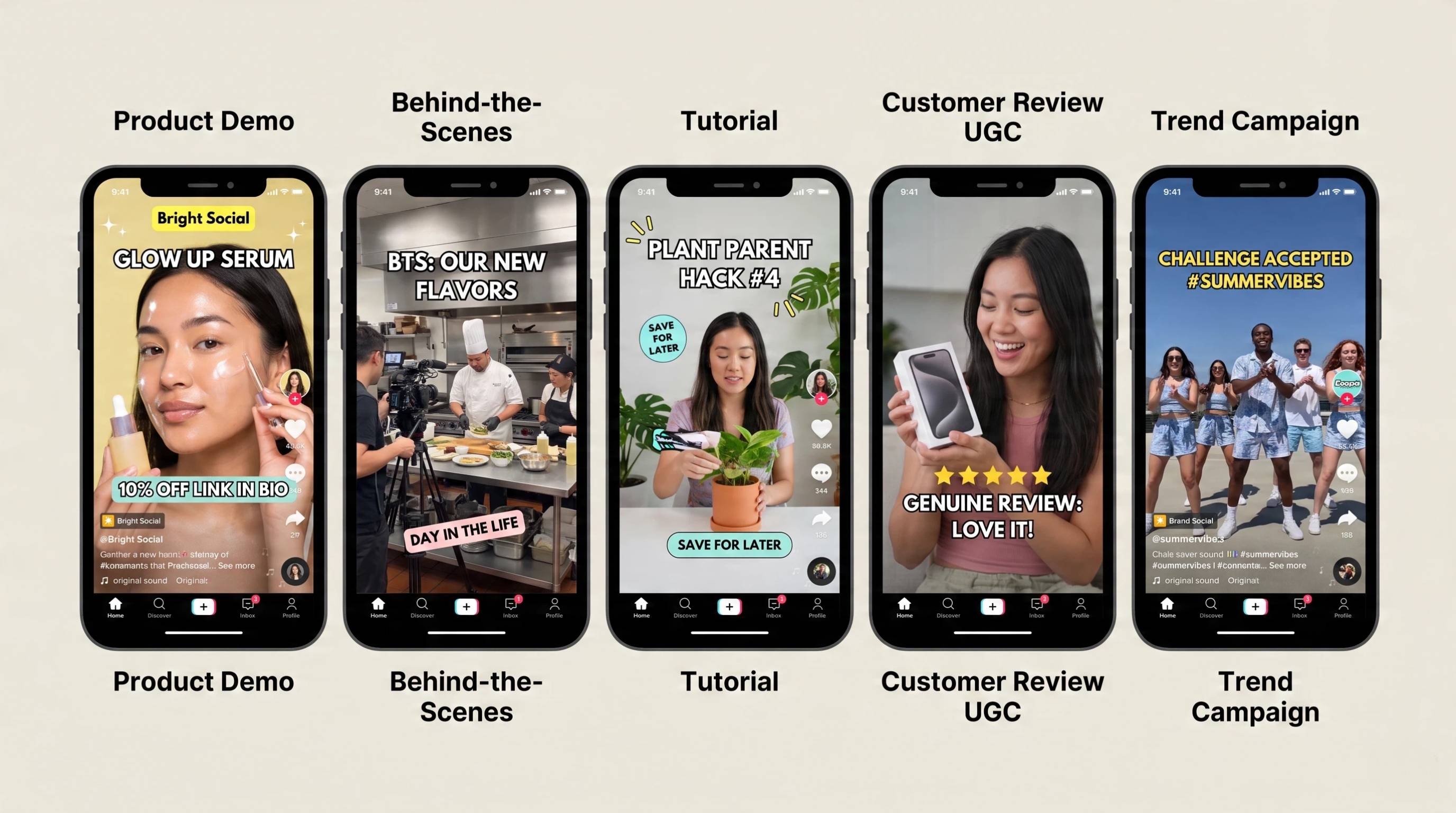
1. Product Demos, BTS, Education, UGC, and Trend Campaigns
(1) Product Demonstration Videos
Product demos help potential customers understand how a product works and why it's useful. Keep videos short, visual, and focused on solving a problem.
Popular formats include:
-
Product tutorials
-
Before-and-after comparisons
-
Feature highlights
-
Problem-solving demonstrations
-
Everyday use cases
These videos are a core part of effective TikTok video marketing because they educate while showcasing product value.
(2) Behind-the-Scenes Content
Behind-the-scenes (BTS) videos make brands feel more authentic by giving viewers a look at the people and processes behind the business.
Content ideas include:
-
Product creation or production process
-
Packaging and order fulfillment
-
Team introductions
-
Office or studio tours
-
Brand milestones and daily operations
This type of content helps build trust and strengthens your TikTok content marketing strategy.
(3) Educational Videos
Educational content provides value before asking for a sale. It positions your brand as a helpful resource while increasing watch time and shares.
Examples include:
-
Quick tips
-
How-to tutorials
-
Common mistakes to avoid
-
Industry insights
-
Product care or usage advice
Educational videos often generate long-term engagement because users search for and save useful content.
(4) Customer Reviews and UGC Content
User-generated content (UGC) builds credibility by showing real customer experiences instead of scripted advertisements.
Common formats include:
-
Customer testimonials
-
Product reviews
-
Unboxing videos
-
Before-and-after results
-
Customer reactions
These videos can increase trust and support purchase decisions by providing authentic social proof.
(5) Trend-Based Campaign Ideas
Trends can increase visibility when adapted to fit your brand instead of copied directly.
Ideas include:
-
Product launch campaigns
-
Seasonal promotions
-
Branded hashtag challenges
-
Trending audio with product demonstrations
-
Creator collaborations using popular formats
Following relevant TikTok marketing trends while maintaining a consistent brand message helps improve reach without losing authenticity.
2. TikTok Marketing Examples Brands Can Learn From
Rather than copying individual brands, study campaign formats that consistently perform well. Many successful TikTok marketing examples share common creative patterns.
(1) Native Product Demonstration
The product is introduced naturally while solving a problem, answering a question, or demonstrating a useful tip. The video feels like helpful content rather than a traditional advertisement.
(2) Trend Remix With a Brand Hook
A trending sound or format is adapted to highlight a product or brand message. Instead of following a trend exactly, the content adds a unique angle that makes it relevant to the target audience.
(3) Creator-Led Recommendations
Creators introduce products through genuine experiences, tutorials, or reviews. These collaborations often perform well because recommendations feel more authentic than branded promotions.
(4) Organic Content Boosted With Ads
Brands first identify high-performing organic videos and then promote them through paid advertising. This approach reduces creative guesswork and helps scale content that has already proven to engage the audience.
What Makes a TikTok Video Perform Well?
Creating successful TikTok content isn't about following every trend, it's about keeping viewers engaged and encouraging them to take action. The best-performing videos capture attention quickly, tell a clear story, and are continuously refined based on performance data.
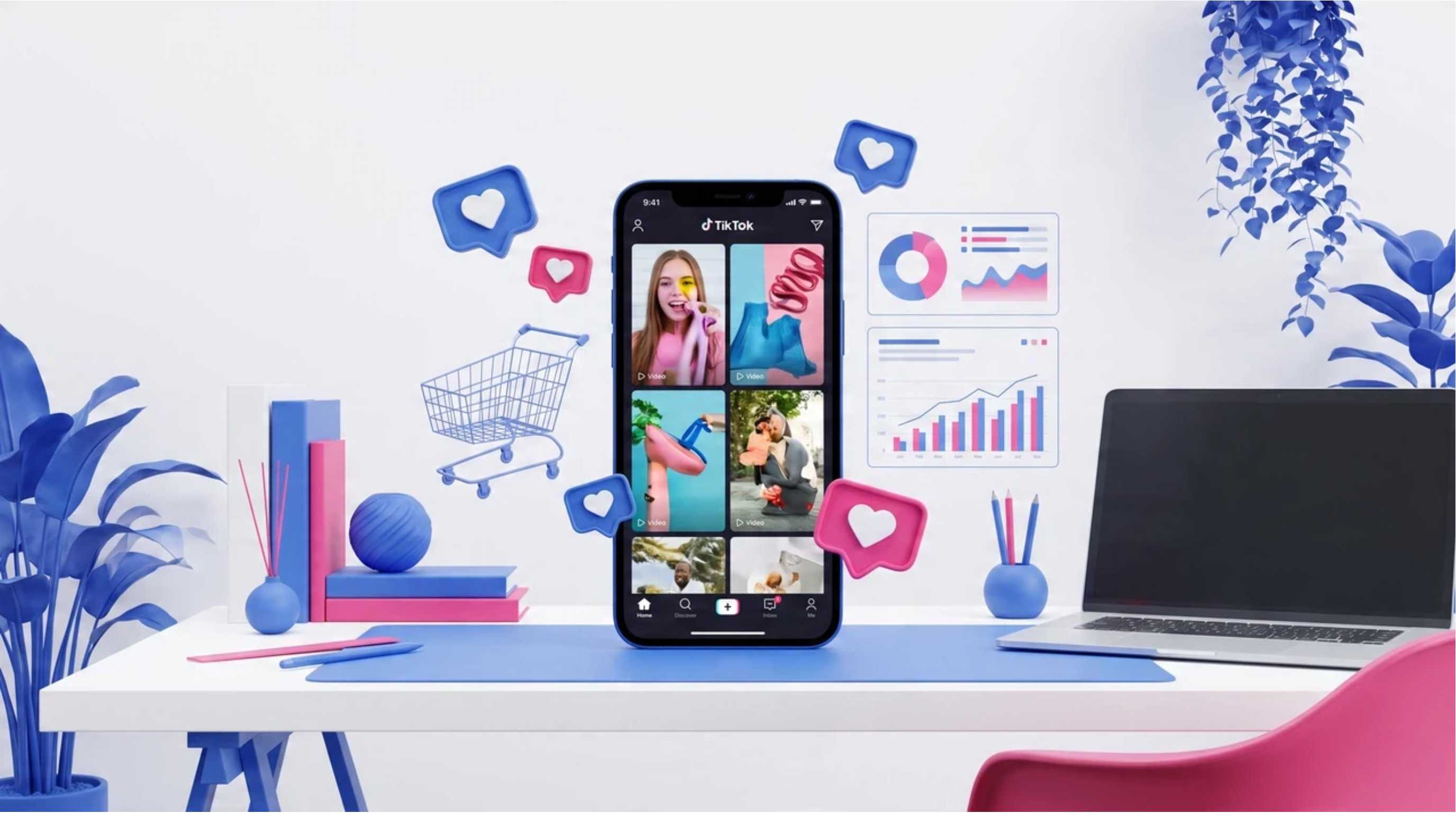
Hook Fast and Tell Stories the TikTok Way
The first few seconds are critical because they determine whether users keep watching or scroll to the next video. Start with a surprising result, highlight a common problem, or show a dramatic visual change to spark curiosity immediately.
Once you've captured your attention, use a storytelling format that feels natural on TikTok rather than a traditional advertisement. Structures like problem → solution, before → after, testing → result, or story → recommendation keep viewers engaged and make promotional content feel more authentic. This approach is a core part of effective TikTok video marketing.
Test Different Creative Angles
Many successful TikTok marketing campaigns are built through consistent testing instead of relying on a single idea. Small changes to your content can produce very different results.
Experiment with different hooks, messaging, video styles, and audience segments to discover what performs best. Reviewing these variations helps improve future content while strengthening your overall content strategy for TikTok.
Measure Watch Time, Engagement, and Business Results
High view counts don't always translate into business growth, so it's important to evaluate content using multiple performance metrics. Track watch time, completion rate, retention, shares, and saves to understand how well your videos hold attention. Also monitor comments, profile visits, and other engagement signals to see how your audience responds.
Finally, connect your TikTok activity to business goals by measuring website clicks, leads, sales, and conversion rate. Combining engagement metrics with business outcomes provides a clearer picture of whether your TikTok marketing strategy is delivering meaningful results.
Create TikTok Marketing Videos Faster with Designkit
Creating enough content to support a successful TikTok marketing strategy can be challenging, especially when brands need to test multiple ideas every week. Designkit simplifies the process by turning product images and creative concepts into TikTok-ready videos in minutes. Instead of spending hours editing each video manually, brands can quickly produce engaging creatives for product launches, promotional campaigns, and social media. This faster workflow makes it easier to test different hooks, messaging, and video styles while maintaining a steady content pipeline for consistent TikTok marketing.
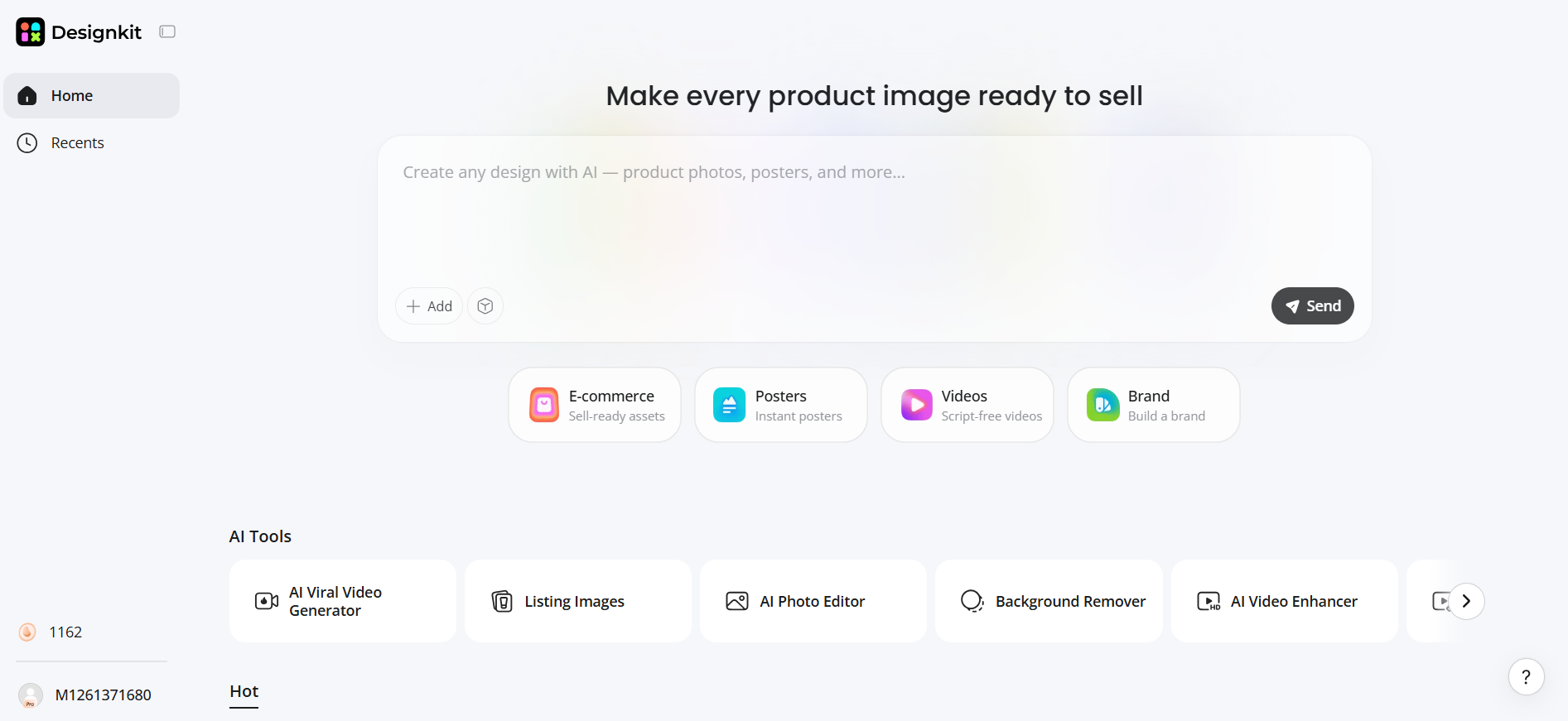
How Designkit Supports TikTok Creative Production
Create UGC-Style Product Videos from Images
Turn static product photos into authentic UGC-style videos that feel native to TikTok. Generate engaging product showcases without filming new content.
Generate Multiple Creative Variations
Create multiple versions of the same video with different hooks, scenes, messaging, or styles to test which creatives perform best.
Produce Product Demonstration Videos
Generate product demo videos that highlight key features, benefits, and real-world use cases, making it easier to educate and convert potential customers.
Maintain Consistent Brand Visuals
Keep colors, fonts, logos, and overall visual style consistent across every TikTok video to strengthen brand recognition while scaling content production.
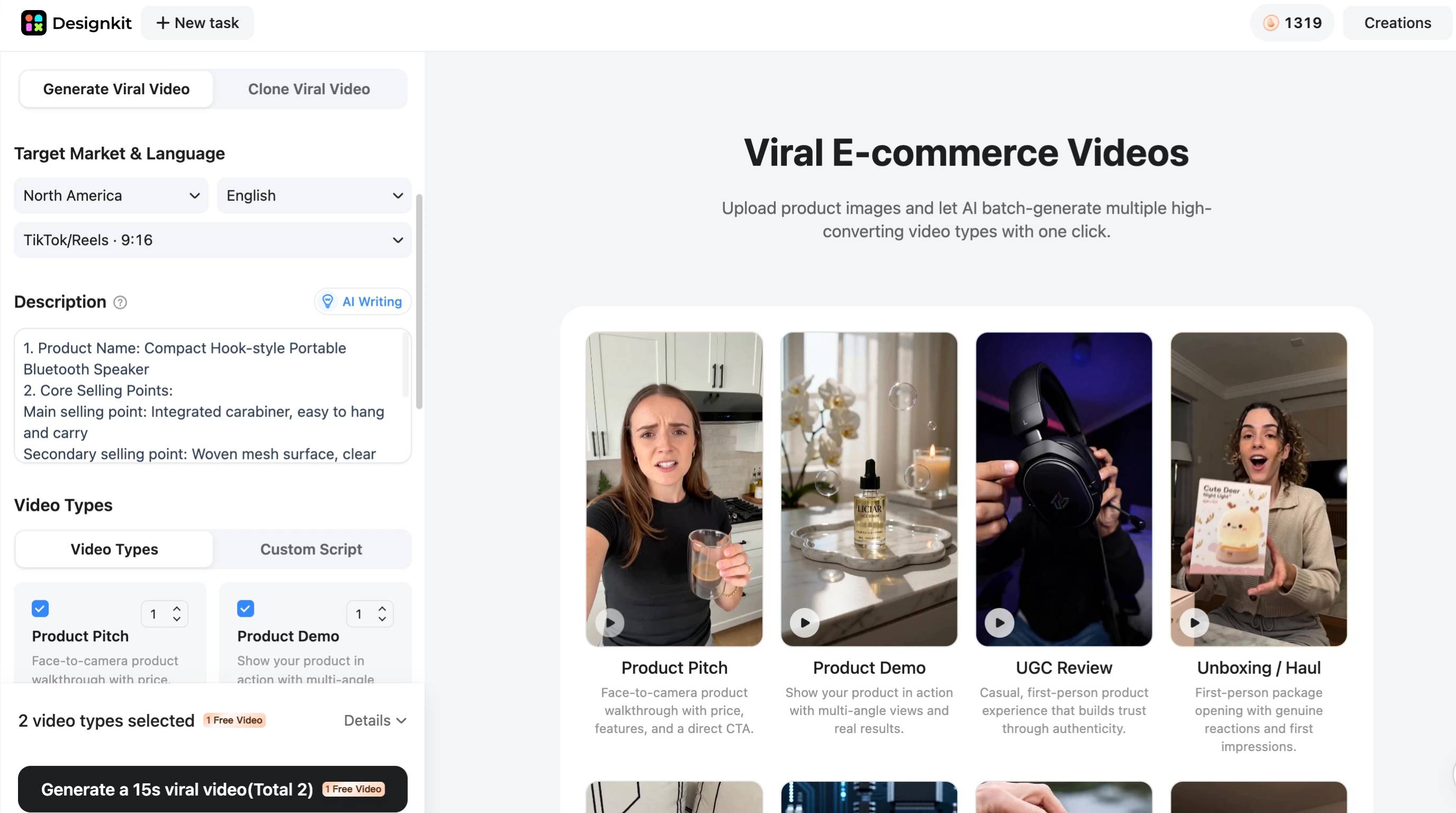
How to Create TikTok Videos with Designkit in 3 Steps
Step 1: Upload Product Assets and Details
Open Designkit and upload your product images, videos, or creative ideas.
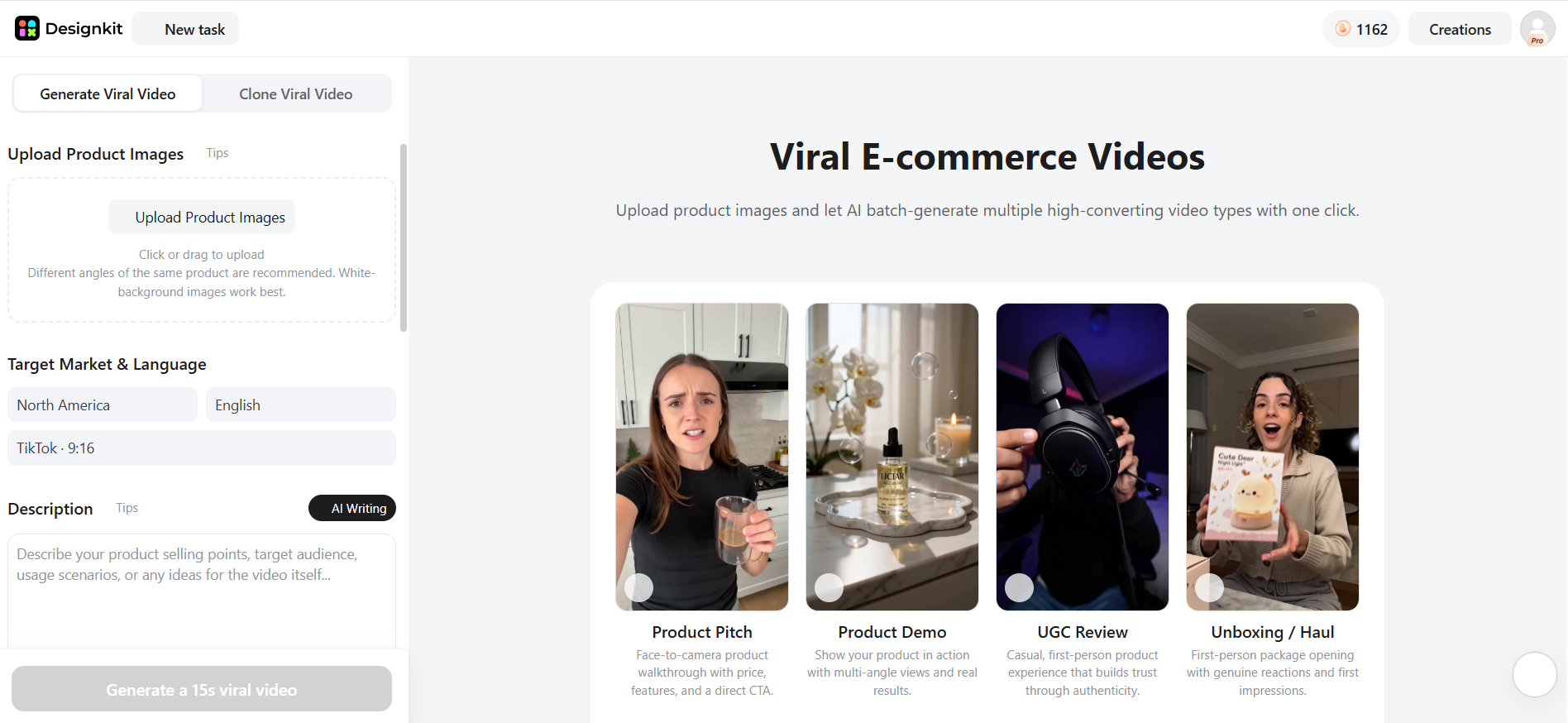
Step 2: Generate TikTok-Ready Videos
Choose TikTok as your target platform with your target market and language. Create different video versions with AI-assisted workflows, scripts, and visual styles.
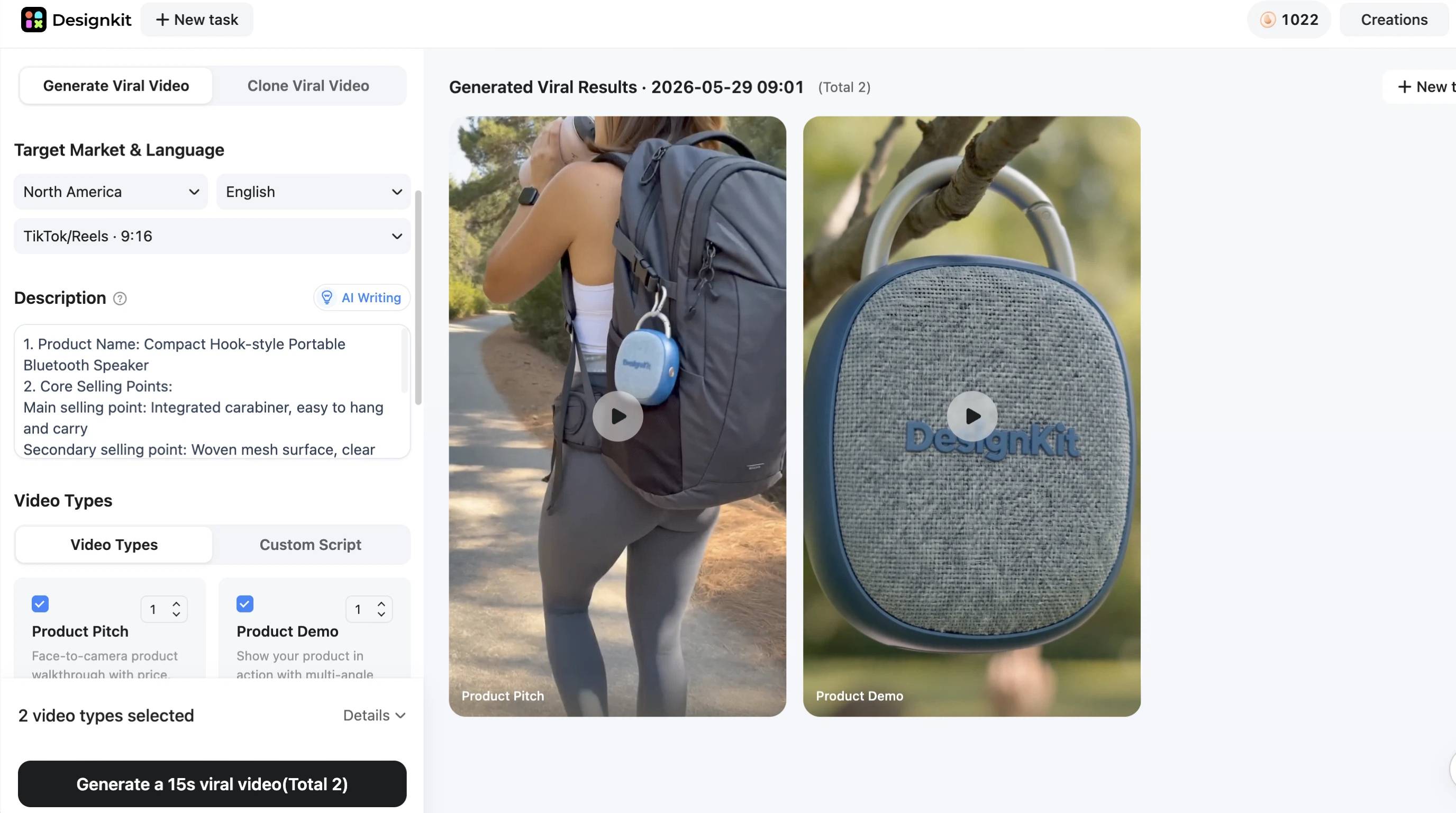
Step 3: Export and Publish
Preview and check your generated TikTok marketing video. Export multiple versions and use performance data to identify winning formats.
Create TikTok Videos Online Free
TikTok Marketing Mistakes to Avoid
Even the best TikTok marketing strategy can fall short if common mistakes go unnoticed. Avoiding these pitfalls helps improve engagement, reach, and overall campaign performance.
Making Every Video Promotional
Users come to TikTok for entertainment, education, and authentic content, not constant sales pitches. Instead of turning every post into an advertisement, mix product-focused videos with tutorials, behind-the-scenes content, customer stories, and trend-based posts. A balanced approach strengthens your TikTok content marketing and builds long-term audience trust.
Ignoring the First Seconds
The opening seconds determine whether viewers continue watching or scroll away. Weak hooks often lead to lower watch time and reduced reach. Start each video with a compelling question, surprising result, or strong visual to capture attention immediately and improve your TikTok video marketing performance.
Copying Trends Without Context
Joining trends can increase visibility, but only when they align with your brand. Rather than copying every viral format, adapt trends to communicate a relevant message or showcase your product naturally. This creates more authentic TikTok marketing campaigns that resonate with your target audience.
Creating Without Testing
Publishing a single video isn't enough to understand what works. Test different hooks, messaging, editing styles, and creative concepts to identify the content that performs best. Continuous testing is a key part of building a successful content strategy for TikTok.
Optimizing Only for Views
High view counts don't always translate into meaningful business results. Measure success using metrics like watch time, engagement, website clicks, leads, and conversions. Evaluating both audience interaction and business outcomes helps you make smarter decisions and improve your TikTok marketing efforts over time.
Conclusion
A successful TikTok marketing strategy in 2026 goes beyond following trends or chasing viral videos. Brands achieve consistent results by creating platform-native content, testing different creative ideas, understanding their audience, and measuring performance to improve future campaigns. While strategy remains the foundation, AI tools can significantly speed up content production.
Designkit helps brands create TikTok-ready product videos, UGC-style content, and multiple creative variations more efficiently, making it easier to test and scale campaigns. Combining the right strategy with the right creative tools allows businesses to produce engaging content consistently and drive long-term growth on TikTok
Frequently Asked Questions
What is TikTok marketing?
Is TikTok good for marketing?
Yes. TikTok is one of the strongest platforms for product discovery, brand awareness, and audience engagement. Businesses that consistently publish creative, value-driven videos often see higher reach and stronger community interaction. To keep up with content demands, Designkit helps brands quickly create product demos, UGC-style videos, and promotional creatives for TikTok.
How do brands use TikTok for marketing?
Brands use TikTok to showcase products, share tutorials, collaborate with creators, participate in trends, and run paid advertising campaigns. The goal is to educate or entertain while building trust with potential customers. Once a strategy is in place, Designkit can streamline production by generating multiple TikTok-ready videos from existing product assets.
What type of content works best on TikTok?
Content that feels authentic usually performs best. Product demonstrations, behind-the-scenes videos, tutorials, customer reviews, UGC, and trend-based content often generate higher engagement than polished advertisements. Designkit supports these formats by creating product demo videos and UGC-style creatives without requiring complex video editing.
How often should businesses post on TikTok?
Consistency matters more than volume. Many brands publish three to seven times per week while monitoring performance to determine what works best for their audience. Maintaining that schedule can be challenging, so Designkit helps speed up video production by generating multiple creative variations for ongoing TikTok campaigns.
What are the best TikTok marketing strategies?
The most effective strategies combine strong hooks, authentic storytelling, trend participation, creator partnerships, and continuous creative testing. Successful brands optimize content based on watch time, engagement, and conversions rather than views alone. Designkit supports this process by making it easy to create and test multiple video concepts faster.
What are some TikTok marketing examples?
Successful TikTok marketing examples include product demonstrations, before-and-after transformations, creator reviews, educational tutorials, and trend-based campaigns that naturally feature a product. These formats engage viewers while showcasing value. Designkit helps businesses produce similar TikTok-ready videos with AI-powered editing and product-focused creative tools.
How do you create TikTok videos for business?
Start by defining your audience, choosing a clear message, and creating a short vertical video with a strong opening and clear call to action. Test different formats and refine your content based on performance. Designkit simplifies this workflow by turning product images into engaging TikTok videos, helping businesses create content more efficiently.
Can AI help with TikTok marketing content creation?
Yes. AI can accelerate script generation, video editing, product demonstrations, creative testing, and content production, allowing brands to publish more consistently. Designkit extends these capabilities by generating TikTok-ready product videos, UGC-style content, and multiple creative variations, making it easier to scale content while maintaining a consistent brand identity.
You May Also Like

Amazon A+ Content Dimensions: Module Image Sizes
Print-On-Demand Designs: Create, Prepare, and Preview Your Work

Amazon A+ Content: What It Is and What to Build First
Is Print on Demand Profitable in 2026? Products and Niches

Amazon Brand Registry Application: How to Submit and Pass Review
How to Ship to Amazon FBA: Your First Shipment
What Is Amazon FBA? Should Beginners Use It in 2026

How to Get Ungated on Amazon: Restricted Category Approval Steps

Amazon Backend Keywords: Title, Bullets & Search Terms

What Is A/B Testing? A Practical Guide to Running Better Experiments

Best Time to Post on Instagram in 2026: Data & Tips
How to Get Verified on Instagram: Complete Guide
TikTok Monetization in 2026: Requirements & Ways to Earn

Instagram Desktop Posting Guide: Upload Posts, Stories & Reels
YouTube Shorts Monetization Requirements & Rules 2026

How Much Does YouTube Pay Per View? 1K, 100K & 1M Views

How to Make Money on Snapchat: 7 Ways to Earn

How to Get More Followers on Instagram in 2026
Best Time to Post on TikTok in 2026 for More Views
How to Repost on Instagram in 2026: A Simple Guide

Multichannel Marketing Guide: Strategy, Tools & Examples
How to Create Digital Products That Sell in 2026

Cyber Monday Marketing Ideas & Strategies (2026 Guide)
Black Friday Marketing Ideas for Ecommerce Brands (2026)
Instagram Marketing Guide: Strategies, Tips & AI Tools in 2026
Influencer Marketing Guide: Strategy, Campaigns & Creator Tips
15 Best Things to Sell on Etsy in 2026 (Listing Tips Included)

WooCommerce vs Shopify 2026: Pricing, Features & Which Is Better
How to Sell on Facebook Marketplace: Beginner Guide (2026)
How to Use Pinterest for Business: Strategy, Tips & Growth Guide
How to Sell on Etsy in 2026: Setup, Listings & Growth Tips

What Is a Target Audience? Types, Examples & How to Find Yours
TikTok Marketing Guide 2026: Strategies, Ideas & AI Tools

Vibe Marketing Explained: Strategy, Examples & AI Tools
How to Sell on Depop: Beginner Guide to Getting Your First Sale
Online Advertising Guide: Types, Costs & Examples (2026)
Facebook Advertising Guide: Costs, Strategy & Tools 2026

What Are E-commerce Ads? Examples, Strategy & Tools (2026)
Where to Sell Handmade Items Online (2026): Etsy, Amazon, or Shopify?
Shopify vs Amazon (2026): Brand Store or Marketplace FBA?
Amazon Handmade vs Etsy (2026): Which Is Better for Makers?
Etsy vs eBay (2026): Handmade, Vintage, or Secondhand?
Selling on Amazon vs eBay (2026): Fees, Profit & Where to Sell

What Is Brand Awareness? Examples, Strategies & Tools 2026

10 Best Online Selling Platforms (2026): Pick by What You Sell
Shopify vs Etsy (2026): Which Is Better for Handmade Sellers?

YouTube Automation Step-by-Step AI Guide for Beginners
What Is Brand Identity? Examples, Elements & Strategy

AI Marketing Agent: How It Works, Benefits & E-Commerce Examples

What Is Personalized Advertising? Examples & How It Works
How to Build a Shopify Store That Actually Converts Visitors
Amazon Marketing Guide 2026: Strategies, Tips & Tools
Local Advertising: Strategies, Examples & Tools (2026)
What Is Branded Content? Examples, Strategy & Tools 2026

What Is Performance Marketing? Strategies & Examples 2026

Inbound Marketing: Strategies, Examples & Tools (2026)
Create TikTok Marketing Content Faster with AI
Turn product images and ideas into engaging TikTok videos and UGC-style creatives with Designkit—so you can test more ideas and keep up with short-form demand.