
How Virtual Jewelry Try-On Helps Ecommerce Brands Scale Faster
Discover how ecommerce jewelry brands use virtual try-on technology and AI-generated visuals to improve conversions, scale content production, and create more engaging shopping experiences.

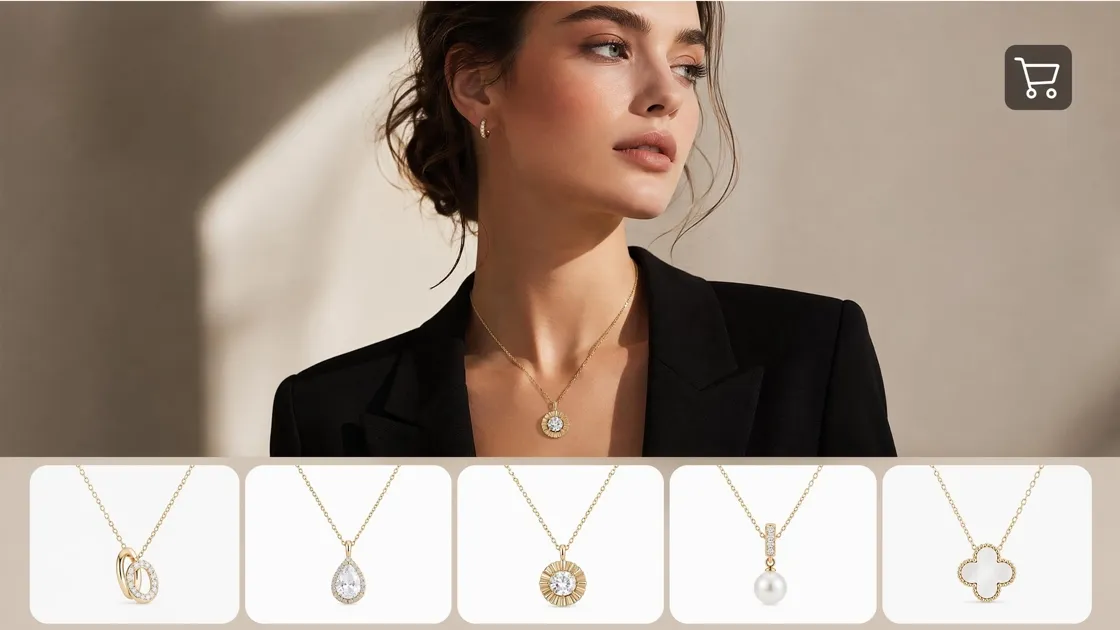
Online jewelry sales are challenging because customers cannot try products before purchasing. Customers are always reluctant to buy such products without a lifelike preview. That visualization gap lowers trust and often hurts conversion performance. Yet, modern brands now use virtual jewelry try-on to bridge this visualization gap effectively.
These solutions help shoppers visualize jewelry on realistic facial features instantly. According to Business Research Insights, the global body jewelry market will reach above $10 billion by 2035. So, this guide explores how AI transforms jewelry ecommerce visuals. You will also discover scalable strategies to improve conversions and content production efficiency.
Part 1. Why Virtual Jewelry Try-On Increases Ecommerce Conversion Rates
Building a bridge between digital browsing and physical ownership is a major challenge. Providing an immersive experience helps your brand overcome the traditional online trust gap. A virtual jewelry try-on simplifies the decision process for hesitant global shoppers.
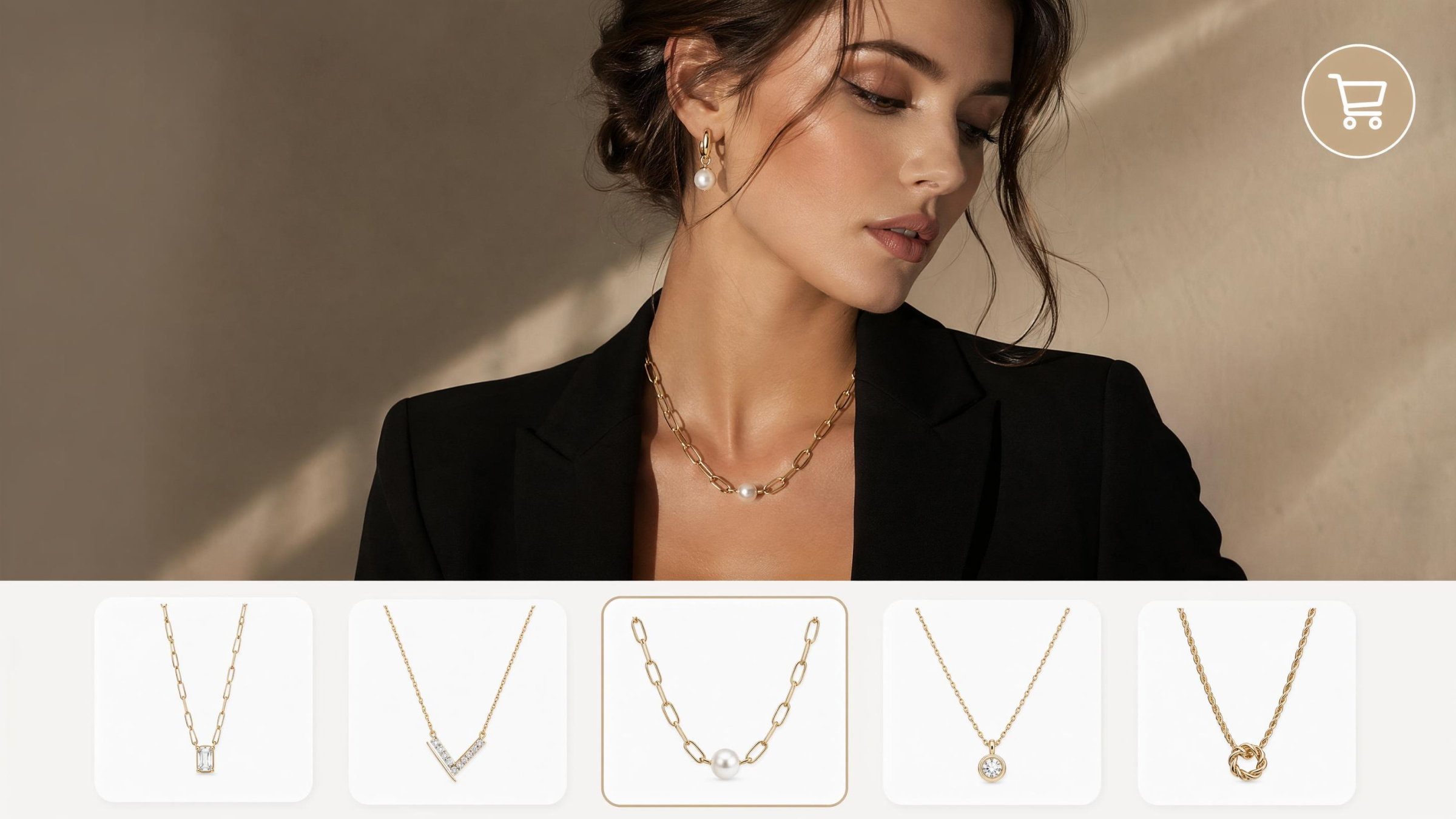
In addition, it transforms static product pages into interactive and highly engaging shopping experiences. Therefore, the following points detail exactly why these visual tools drive better sales results:
1. Trust Building: Clear visual proof significantly reduces the high psychological risk of luxury purchases. Moreover, authentic previews ensure that buyers feel much more comfortable during checkout.
2. Scale Accuracy: A jewelry virtual try-on ecommerce toolshows the exact product size. Thus, customers avoid the common mistake of buying jewelry that is too large.
3. Reduced Returns: Realistic digital trials prevent the disappointment caused by a poor style match. Free Yourself also reports that using virtual try-ons can lead to 64% fewer product returns.
4. Increased Engagement: Interactive features keep users on your product pages for much longer periods. Along with that, higher time on site leads to a significantly stronger conversion rate overall.
5. Social Validation: Users love to share their digital try-on results with their close friends. This organic social sharing acts as free marketing for your jewelry brand.
Therefore, visualization tools directly improve conversion rates by reducing friction across customer journeys.
Part 2. How AI Jewelry Try-On Works for Ecommerce Products
Understanding the technical process behind AI jewelry try-on reveals its immense business value. This advanced technology uses computer vision to map digital items onto human features accurately. The system analyzes skin tones and lighting to ensure the final image looks authentic.
According to Gartner, 91% of retail IT leaders are prioritizing AI implementation by 2026. Yet, knowing how AI jewelry try-on works helps you implement it into your store.
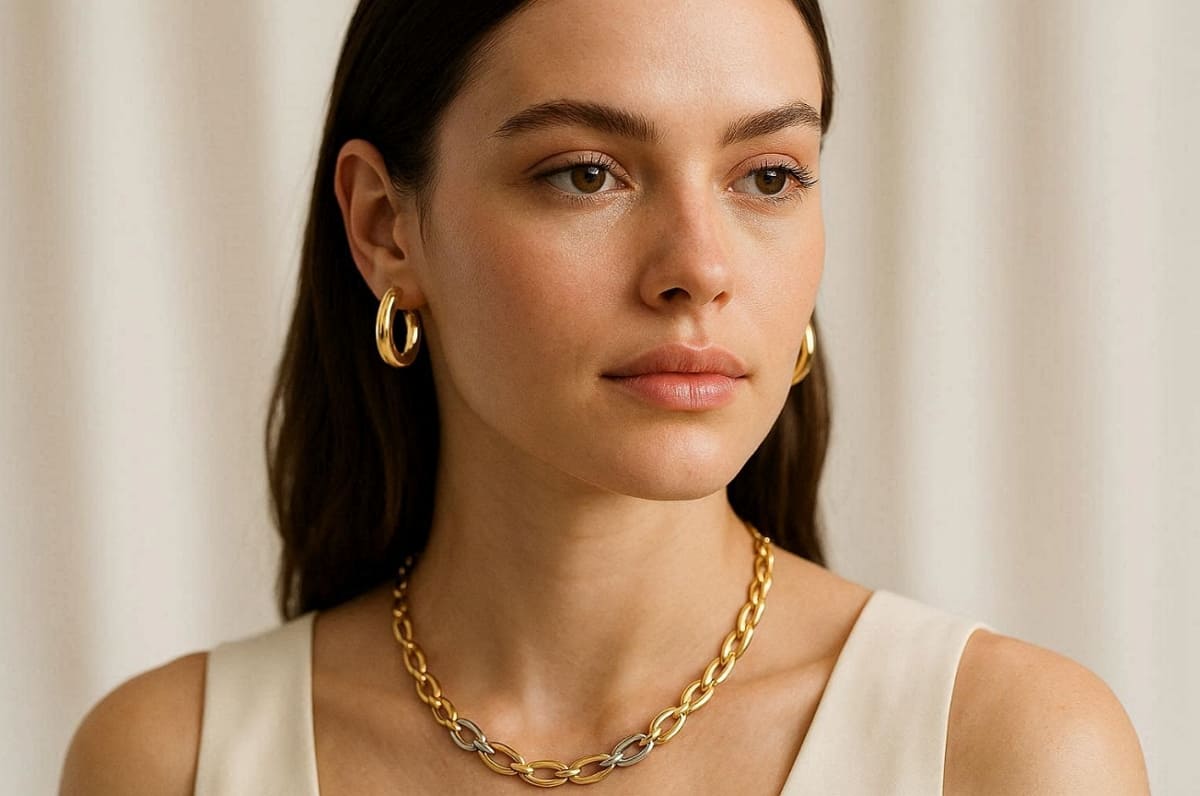
The following sections explain the transformation of product images and category-specific digital mapping:
2.1. Turning Product Images into Realistic Try-On Visuals
You can transform simple flat-lay photos into professional and wearable lifestyle marketing assets. Modern jewelry virtual try-on ecommerce tools maintain the original texture and metallic shine. Moreover, artificial intelligence automatically adjusts shadows to match the new digital environment perfectly. This ensures that every piece of jewelry looks like it was physically photographed online.
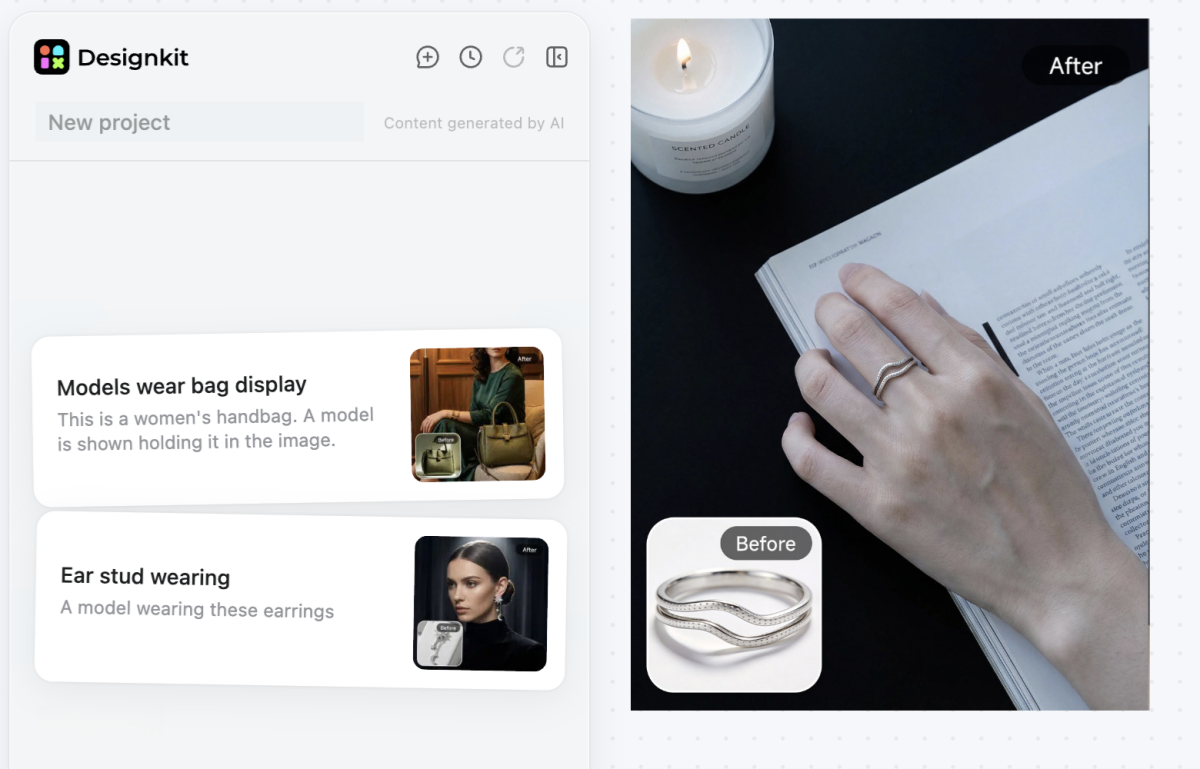
For example, Designkit Virtual Try-On simplifies this entire creative workflow for your brand. It allows you to upload product photos and generate high-quality on-model imagery instantly. Therefore, this level of automation saves your team hours of manual editing and post-production work.
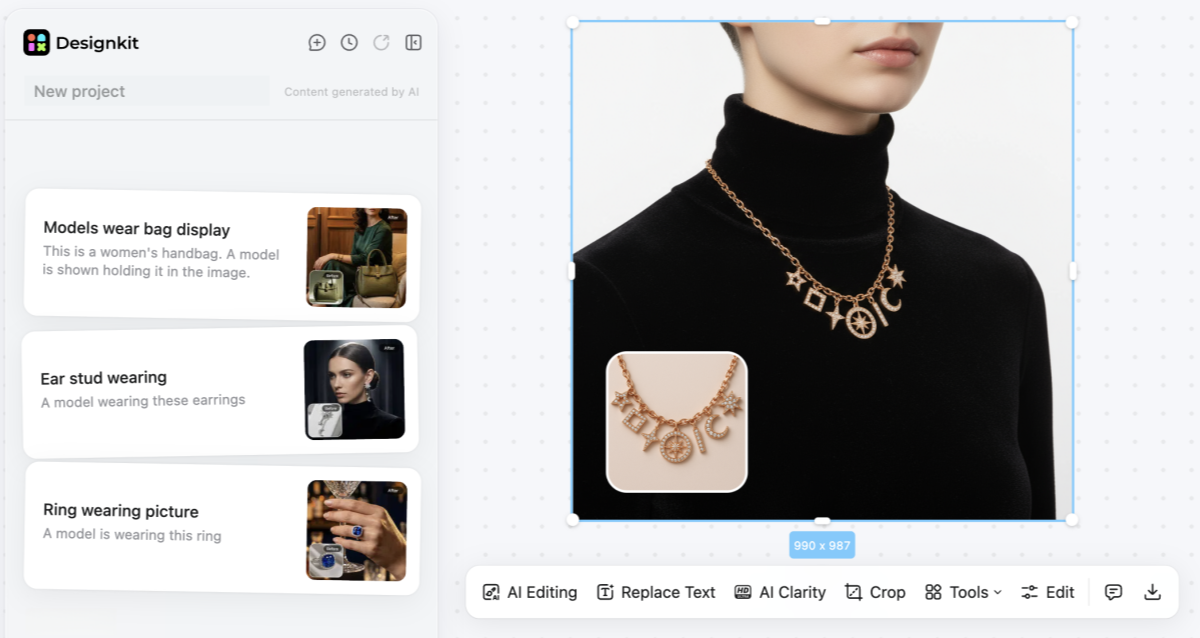
Try AI Jewelry Try-On Free Online
2.2. Adapting Try-On for Rings, Necklaces, and Earrings
Each jewelry category requires a specific technical approach to ensure a perfect digital fit. So, the given table summarizes how different items are handled by the intelligent AI system:
|
Jewelry Type |
Technical Focus |
AI Implementation Goal |
|---|---|---|
|
Rings |
Finger tracking |
Ensures the band sits naturally on the knuckle area. |
|
Necklaces |
Torso mapping |
Achieves a realistic AI necklace try-on with natural drape. |
|
Earrings |
Lobe detection |
Provides anearring virtual try-on with accurate depth and positioning. |
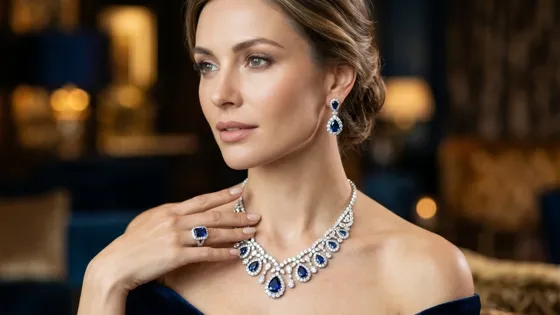
Hence, achieving a realistic AI necklace try-on requires the software to understand gravity. The jewelry must curve naturally around the neck and sit properly on the chest. Similarly, an earring virtual try-on must account for the shape of the ear. These category-specific details are essential for maintaining the high-end look of your brand.
Part 3. Scaling Jewelry Content with AI Fashion Model Generators
Scaling content production is a major challenge for modern jewelry ecommerce brands. Traditional jewelry model photography requires expensive shoots and post-production editing workflows. However, an AI Fashion Model Generator removes these limitations by automating visual creation efficiently.
Brands can now produce quality lifestyle visuals without repeated photoshoots or logistical complexities. Therefore, this approach enables faster content scaling while maintaining brand consistency across product catalogs. This part reveals how brands replace expensive shoots with scalable ecommerce jewelry image production:
3.1. Creating Jewelry Variations Without Reshooting Products
Managing multiple product variations is complex in traditional jewelry ecommerce workflows. Each SKU variation typically requires separate photography, increasing costs and production timelines significantly. However, a jewelry color changer simplifies this by digitally transforming product attributes in an instant. The points below explain how the jewelry color changer supports scalable SKU variation management:
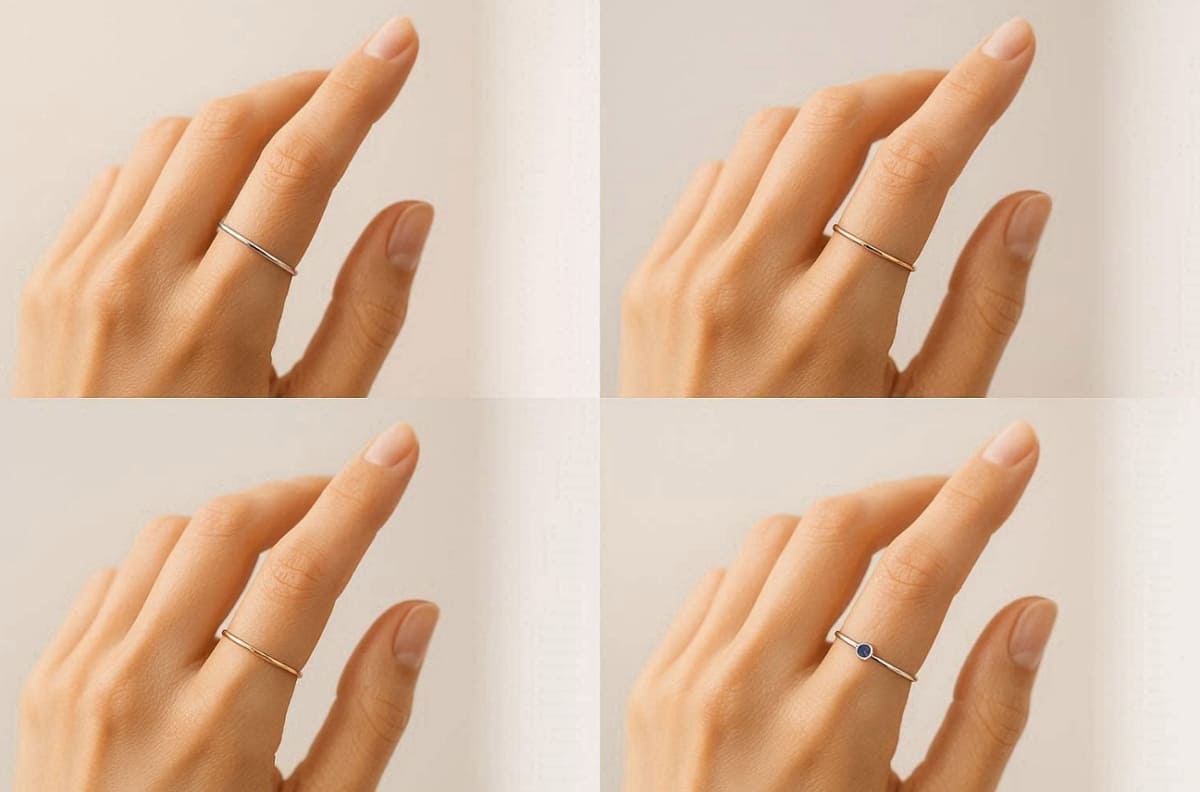
1. Instant Recoloring: Transform a single silver ring photo into gold or rose gold versions.
2. Gemstone Swapping: Update center stones digitally to reflect your entire available product range easily.
3. Visual Consistency: Maintain identical lighting and angles across all metal variations you offer.
4. Faster Launches: Prepare all your product page assets weeks before the physical stock actually arrives.
At this point, users can use tools like Designkit, which serve as practical solutions for these specific needs. This high level of automation ensures that your storefront always looks perfectly polished and professional. By generating variations digitally, you remove the logistical nightmare of shipping every sample to studios.
3.2. Improving Visual SEO and Marketplace Performance with Better Images
Each jewelry image should capture attention clearly across crowded online shopping platforms. Therefore, optimizing visual search SEO ensures your products rank higher in global image search results. Better visuals are a direct boost to the number of clicks on competitive platforms, such as Etsy. The following table summarizes how optimized imagery impacts your performance across various digital sales channels:
|
Platform Type |
SEO Visual Strategy |
Expected Business Result |
|---|---|---|
|
Google Search |
Optimize image alt tags |
Improved visibility in organic visual search results |
|
Marketplaces |
Use diverse model shots |
Higher customer engagement and increased sales volume |
|
Social Media |
Post high-quality renders |
Stronger brand awareness and better social media growth |
Thus, strategic image management keeps your online store looking professional and up to date for every shopper. Search engines prioritize websites that offer quality visual data to their active user base. Along with that, investing in superior visual content is a proven strategy for long-term ecommerce success globally.
Part 4. How to Add Virtual Jewelry Try-On to Your Ecommerce Workflow
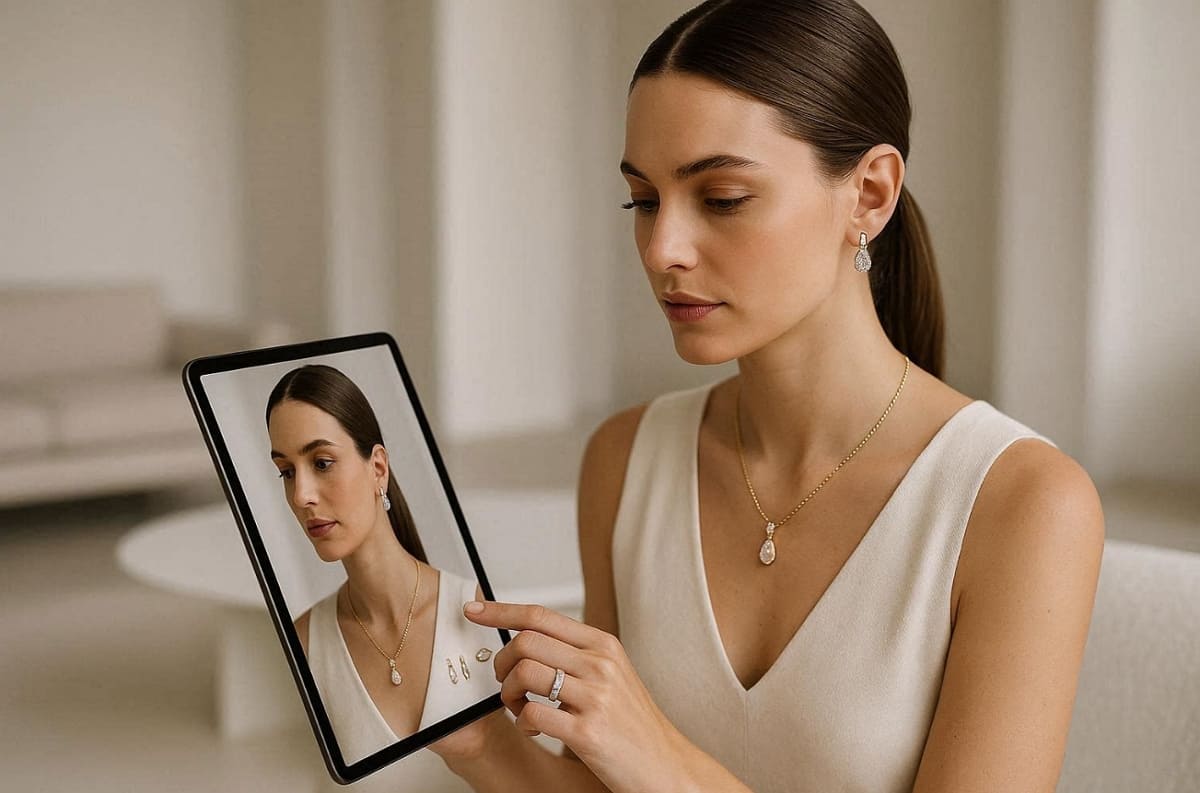
Integrating modern visual technology into your jewelry ecommerce workflow is a strategic necessity. You must move beyond simple product shots to remain competitive in modern markets. Furthermore, adding virtual try-on for jewelry products requires a structured and professional implementation plan.
This process ensures that your digital assets align perfectly with your existing branding. Here, a unified solution like Designkit helps manage these complex visual tasks very efficiently. The upcoming parts guide you through implementing these interactive assets across your storefront:
4.1. Using Try-On Images on Product Pages to Increase Conversions
Product pages are the most critical touchpoint in your jewelry ecommerce workflow. Yet, adding jewelry virtual try-on ecommerce visuals improves clarity and reduces hesitation instantly. Customers rely on realistic previews to evaluate scale and overall aesthetic appeal.
Therefore, the strategic placement of visuals directly influences conversion rate performance significantly. The table below explains the optimal placement of jewelry virtual try-on ecommerce assets:
|
Placement Area |
Purpose |
Conversion Impact |
|---|---|---|
|
Main Image Gallery |
Show virtual jewelry try-on first |
Immediate trust and engagement |
|
Secondary Images |
Display variations and angles clearly |
Better comparison and decision-making |
|
Zoom Feature |
Highlight details in ecommerce jewelry images |
Increased perceived product quality |
|
User Interaction Section |
Allow switching styles or views |
Higher engagement and lower bounce rates |
Hence, using jewelry virtual try-on ecommerce visuals enhances product understanding instantly. It shortens decision cycles and strengthens trust within your jewelry ecommerce workflow. This approach directly supports higher conversions and reduces product return rates effectively.
4.2. Using AI Jewelry Visuals in Ads and Social Media Campaigns
Marketing campaigns need visually strong content to capture attention immediately. The applications of AI jewelry try-on improve both paid and unpaid channels. Meanwhile, quality ecommerce jewelers' images also boost clicks and conversion rates greatly.
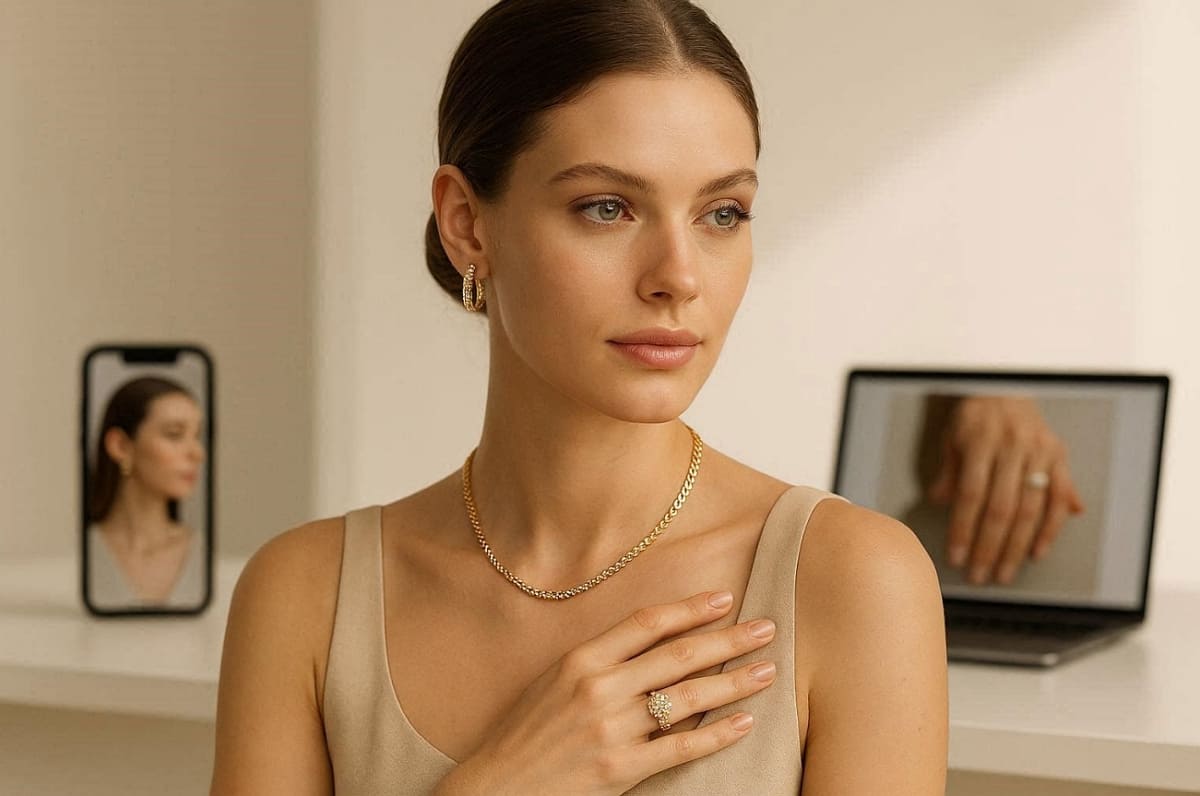
According to eMarketer, mobile-driven transactions now account for 61.4% of all online jewelry sales. Thus, incorporating visuals into campaigns empowers your whole jewelry ecommerce workflow plan. The following are several major uses of AI jewelry try-on visuals in advertising campaigns:
1. Paid Advertising: AI jewelry try-ons creatives can be used in Facebook and Google Ads campaigns. This enhances the level of click-through and lowers the cost of acquisition on competitive advertising sites.
2. Social Media Content: Post virtual jewelry try-on images to raise the level of engagement naturally. Regular ecommerce jewelry images are effective in creating brand image and trust among the audience.
3. Retargeting Campaigns: Display personalized virtual try-on of jewelry product images to repeat customers. This strengthens interest and motivates conversions in your jewelry ecommerce funnel.
4. Email Marketing: Have AI jewelry try-on images in promotional newsletters and campaigns. Thus, it effectively boosts open rates and generates more traffic to product pages.
5. Influencer Collaboration: Grant creators virtual jewelry try-on resources to make genuine promotions. This increases reach and consistency throughout your jewelry ecommerce workflow visuals.
Hence, by leveraging AI jewelry try-on, brands maximize campaign performance across multiple channels. This ensures scalable growth while maintaining quality ecommerce jewelry images across platforms.
Conclusion
In conclusion, virtual jewelry try-on is no longer a choice to grow competitively in the ecommerce business. It helps to bridge the trust gap and enhance customer satisfaction. In addition, AI-based images substitute expensive production processes with scalable and uniform content creation systems.
Therefore, brands gain efficiency while delivering better shopping experiences across every digital touchpoint. According to multiple sources, the global online jewelry market is growing at a robust 13% CAGR. So, this strategic shift guarantees a more professional and trustworthy shopping experience for everyone.
Frequently Asked Questions
How realistic is AI jewelry try-on for ecommerce stores today?
Does virtual try-on for jewelry products improve online conversion rates?
Yes, virtual try-on of the jewelry items can greatly enhance customer confidence and lessen uncertainty. Customers clearly understand scale and visual appeal before making purchasing decisions. This increases conversion rates and improves jewelry virtual try-on ecommerce performance.
What is the implementation cost of AI jewelry try-on systems?
AI jewelry try-on platforms reduce costs compared to traditional jewelry model photography setups. Brands avoid repeated photoshoots, studio rentals, and manual editing expenses entirely. Overall, the virtual try-on cost is significantly lower and more scalable long-term.
Can AI jewelry try on maintain brand consistency across SKUs?
Yes, AI jewelry try-on ensures consistent lighting, angles, and product presentation across variations. It helps maintain uniform ecommerce jewelry images for all product listings and SKUs. This improves brand identity across jewelry virtual try-on ecommerce platforms.
How does an AI fashion model generator support jewelry ecommerce scaling?
An AI fashion model generator creates lifestyle visuals without traditional jewelry model photography processes. It enables faster production of diverse marketing assets across multiple campaigns. This supports scalable virtual try-on for jewelry products workflows efficiently.
You May Also Like
How to Match Makeup by Undertone: Virtual Lipstick and Foundation Try-On
Wedding Dress Styles for Every Body Type: A Practical Guide for 2026
7 Best AI Virtual Makeup Try-On Tools for Realistic Results in 2026

AI Virtual Makeup Try-On: Boost Beauty E-Commerce Sales in 2026
Free Online Glasses Try-On Tools: See Yourself in Glasses Instantly
Top Virtual Ring Try-On Tools for Engagement and Wedding Rings in 2026
How to Try Shoes On Virtually: A Step-by-Step Guide
Best Virtual Shoe Try-On Tools for Ecommerce: 2026 Guide
How to Try On Wigs and Bangs Virtually to Find Your Perfect Style
Create Model Outfit Photos Instantly With AI Outfit Generator
Best AI Virtual Try-On Clothes Tools for Any Body Type
How to Try On Clothes Online with AI for Better Fit & Style
Virtual Nose Ring Try On Online Before Your Piercing
How to Try Makeup Online with AI and Virtual Makeup Try-On Apps (2026)
How to Use Virtual Earring Try-On for a Flattering Look in 2026
How to Try On Engagement Rings Online with AI in 2026
Scale Your Jewelry Brand with Virtual Jewelry Try-On Solutions
How to Try Hairstyles on Your Face Online (Step-by-Step Guide)
Best Virtual Hairstyle Try-On Tools Online for Realistic Previews 2026
How to Use a Free AI Hairstyle Generator to Find Your Perfect Look

Virtual Hair Color Try-On Guide for Every Skin Tone (2026)
Virtual Wedding Dress Try-On Online for Brides in 2026
How to Choose the Right Sunglasses for Your Face Shape Online
How Accurate Is Virtual Glasses Try-On? AI vs AR Compared
Best Virtual Try-On Glasses Apps in 2026 (Free & Paid Tools)
How AI Virtual Try-On Is Transforming Eyewear Ecommerce
5 Best Virtual Try-On Glasses Tools for Ecommerce and Consumers 2026
How to Try On Glasses Online with AI in 2026 (Easy Guide)
How to Create Jewelry Photos with AI Models That Drive Sales in 2026
AI-Generated Fashion Models: Technology, Brand Adoption & Trends
How to Batch Generate 100+ AI Clothing Model Photos Fast
7 Best AI Fashion Model Generators for Ecommerce in 2026
AI Clothing Model Photos for E-Commerce: Platform Rules & Best Practices
How AI Virtual Try-On Helps Fashion Brands Boost Sales & Reduce Returns

AI Fashion Models vs Real Models: Which Is Better for Brands?
Best Free AI Fashion Model Generators for Real Product Photos
Virtual Outfit Try-On Guide: Plan Outfits Before You Buy
What Is an AI Clothing Model Generator? Full Guide for Sellers
Virtual Try-On Technology in 2026: How It Works & Key Trends
10 Best Virtual Try-On Apps & Tools for Online Shopping in 2026
How to Create AI Fashion Models: Complete Step-by-Step Guide
How to Use AI Fashion Models for E-Commerce Product Photos: A Complete 2026 Guide
How to Virtually Try On Clothes Online: A Complete Guide
Create High-Converting Jewelry Try-On Visuals in Minutes
Generate realistic jewelry try-on images for rings, necklaces, and earrings using AI. Create scalable ecommerce visuals without expensive photoshoots or model reshoots.