
How Accurate Is Virtual Glasses Try-On? AI vs AR Explained


The biggest issue with purchasing glasses online is deciding whether you can believe what you see on your screen. The virtual try-on is an excellent tool that helps to make shopping more convenient, but many customers are still concerned about whether the fit, size, and overall appearance will look the same as in real life. This makes virtual try on accuracy the most important aspect of the decision-making process.
Different solutions have different approaches; some use AI-generated modeling, and others show you a real-time AR overlay showing how a frame would look on your face. Here we break down the hype, weigh the pros and cons of each technique, and offer sensible recommendations. By the end, you'll also see how tools like Designkit virtual try on are pushing accuracy forward with fast, realistic AI-generated results.

Part 1: What Determines Virtual Try-On Accuracy
When assessing the virtual try-on accuracy, it's not simply about how 'real' glasses appear on screen, it involves several technical and visual aspects that must be harmonized. Even the most sophisticated systems can appear unreliable if one of these components is lacking.
Frame positioning
This is the basis for a genuine experience when users try on glasses virtually. The glasses must align accurately with the eyes, the nose bridge, and the ears. If the position is even slightly off, say by a few pixels, it drastically diminishes realism and immediately causes the users to doubt the outcome.
Dimensions and ratio
Precisely measured sizes are, in fact, one of the most powerful signs of accurate virtual try-on performance. Eyewear needs to correspond to the user's face in terms of both width and height. If glasses seem large or too small, the users might pick up the frames that don't fit them in real life.
Color accuracy
This is about how exactly the system retains frame materials, finishes, and lens tints during reproduction. Improper rendering can cause colors to appear dull, too bright, or even incorrect. Since contributions are style-focused, color precision significantly influences shoppers' trust in their buying decision.
Depth and perspective
An effective virtual try-on must emulate three-dimensional reality and not merely place an image over another one. This also concerns how the temples curve behind the ears and how the nose bridge is placed on the nose. In the absence of accurate depth depiction, glasses may look two-dimensional or forcibly inserted.
In the end, the virtual try-on accuracy is determined by both the AI or AR technologies that operate the system and the quality of the user's input photo. Proper lighting, a well-centered face orientation, and high-resolution images largely contribute to the virtual glasses try-on results.
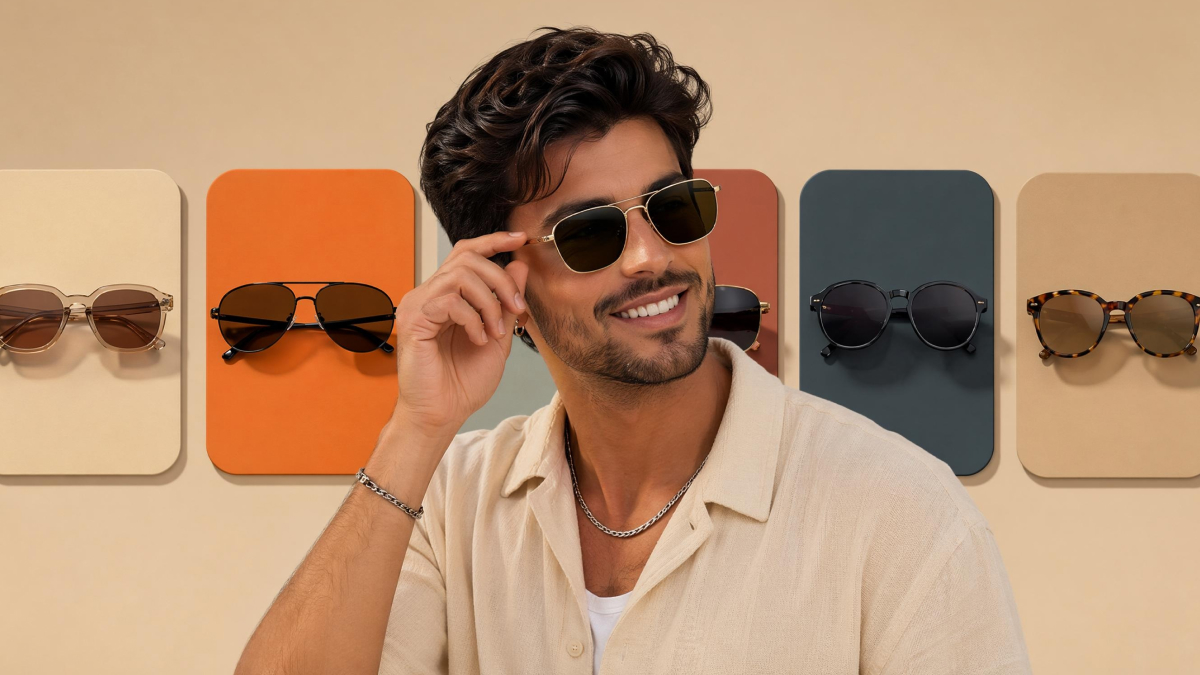
Part 2: AI vs. AR Virtual Try-On Accuracy Compared
When discussing AI versus AR virtual try on, the actual question should not be which one looks better, but which one brings higher virtual try on accuracy in practice.
Frame placement accuracy
AR is ahead here as it uses facial tracking for in-the-moment alignment, placing the glasses right on significant points such as the eyes and nose. As a result, even with a person moving, the position remains stable. AI, however, is based on image processing or generation, so there might be some slight mismatching because of the quality of the photo.
Size and proportion accuracy
In this case, AI is usually superior as it can more cleverly obtain facial makeup and modify the frame size through trained datasets. On the other hand, AR, although being interactive, has difficulty with subtle proportion differences on various angles.
Color fidelity accuracy
AI is more likely to offer better results because it has the capabilities to mimic light and fabrics in a controlled environment. AR is limited by live camera conditions and thus, in bad lighting, the colors of the frame or lens may not be accurately represented.
Depth and perspective accuracy
AR still leads in this aspect because it is synchronized with the user's head movement in real time, thereby rendering the 3D depth in a natural way. AI results, on the other hand, tend to be quite static and potentially less lively unless they are specifically made more dynamic.
2.1: AI Vs AR Virtual Try-On Accuracy Comparison
|
Accuracy Dimension |
AI Virtual Try-On |
AR Virtual Try-On |
|---|---|---|
|
Frame placement |
Good, but it depends on the input photo quality |
Excellent real-time facial tracking |
|
Size & proportion |
Strong predictive scaling from datasets |
Moderate, can vary with angle/movement |
|
Color fidelity |
High, controlled lighting and rendering |
Medium, affected by camera lighting |
|
Depth & perspective |
Strong in static results, less dynamic |
Excellent real-time 3D depth simulation |
Regarding overall virtual try on accuracy, AI usually gives better results for controlled, high-quality outputs (especially for catalog or product images). In contrast, AR performs better in live interaction when users put glasses on themselves virtually in real time.
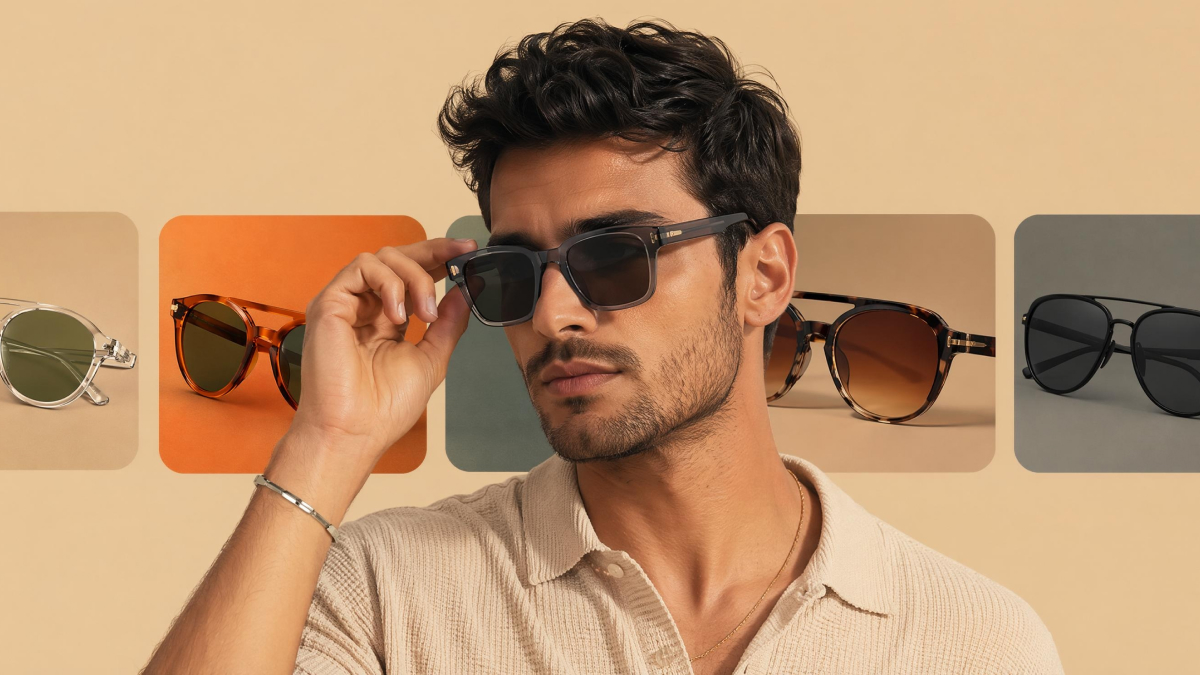
2.2: How AR Camera-Based Try-On Performs on Accuracy
Systems based on augmented reality (AR) are the foremost choice for AR glasses try on accuracy as they are capable of real-time camera tracking and placing virtual eyewear right on a user's face. The result is an experience that is both interactive and natural for the users when they are virtually trying on different models of glasses.
Strengths
Among several features, AR's real-time response capability stands out. It identifies and tracks eye, nose, and jaw points on the face in an instant, allowing users to turn their heads while the glasses stay aligned correctly. Therefore, for a quick experiment and spontaneous styling decision, this is the most suitable method.
Weaknesses
Owing to great interactivity, the accuracy of AR try-on still depends greatly on the external environment. Dim lighting, use of still cameras, and unstable internet may lessen the precision level. On old devices, there could be lag in face-tracking and slight drift leading to a decrease in the realism level. Since the method requires camera access, some users may be reluctant to grant it.
Best use case
It is when the virtual try-on based on AR is intended for a quick preview that factors like good lighting, stable camera, and modern hardware will determine the success of the try-on. Under these conditions, it not only keeps the user engrossed but provides a seamless experience.
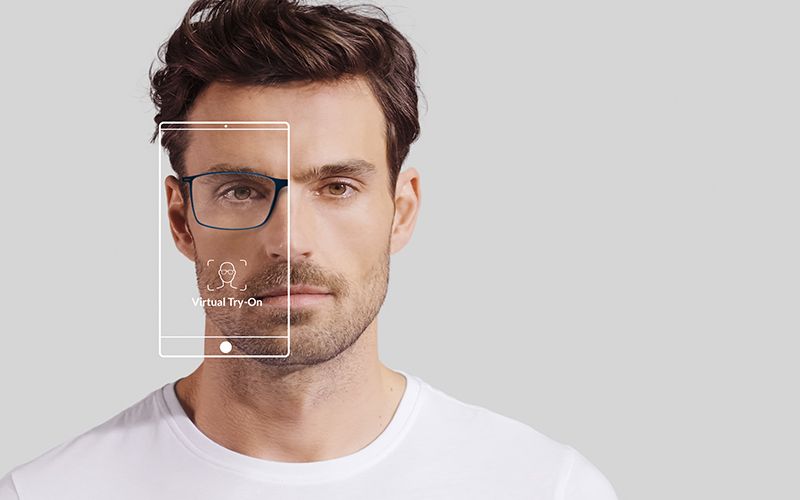
2.3: How AI Photo-Based Try-On Performs on Accuracy
AI-based platforms featured in AI glasses try on apps mainly aim to produce top-notch, static visuals instead of real-time communication. Therefore, they are especially suitable for assessing virtual try-on precision under structured and uniform conditions.
Strengths
AI try-on can present dazzling, lifelike imagery that can be equally viewed on any device, be it mobile or desktop. Besides, users are facilitated in storing and sharing their results, which is a great feature when it comes to comparing different options. Most systems also have the capability to print multiple sides or versions of the same eyeglass frame for users to identify their preferred style confidently.
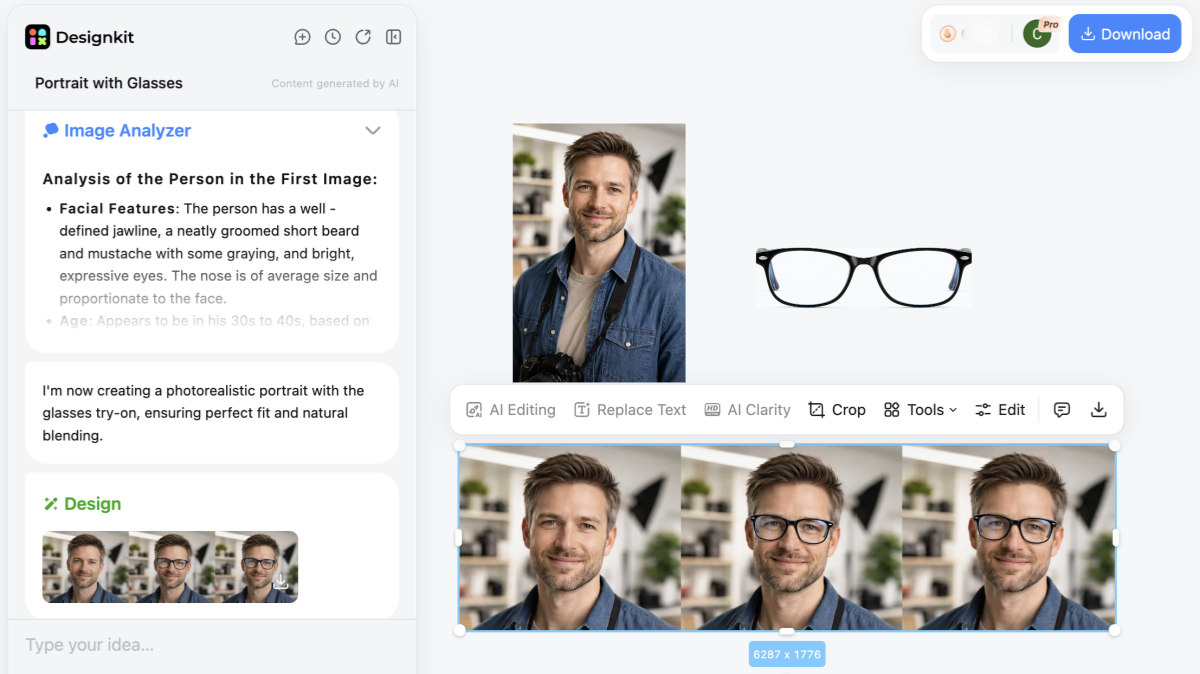
An important benefit lies in the way AI takes care of the facial layout. For instance, tools like Designkit Virtual Try On pinpoint and analyze the facial landmarks, such as the width of the nose bridge and the temple-to-temple measurement, to depict glasses that are in line with the proportions of a real person. This not only helps in accurately fitting the frame but also minimizes the uncertainty in frame selection online.
Weaknesses
The main downside of AI try-on compared to AR is that it does not operate live or with the user. One cannot see one's face interacting with the virtual glasses as the user moves their face. In addition to this, the output quality largely depends on the photo that is uploaded; if the photo is taken with a heavy shadow, from a strange angle, or with a low pixel count, all these can impact the accuracy and the naturalness of the final product.
Best use case
The AI-based try-on technology is great for saving one's back when they decide to make a purchase. When users are in search of clear, detailed, and highly comparable images prior to the purchase, this type of platform would provide a smoother and visually consistent pathway of the experience compared to the real-time ones.
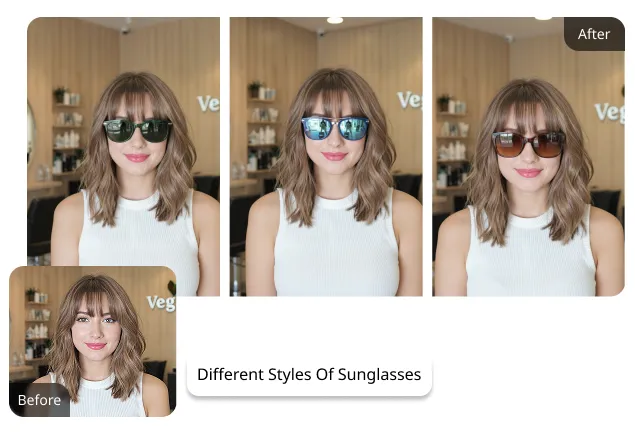
Part 3: How to Get the Most Accurate Virtual Try-On Results
It's not just the right tool that helps you improve virtual try on accuracy, it also greatly depends on the way you present yourself in the system. When you use either AI or AR, tiny changes can lead to a major improvement in the ways you are able to try on glasses virtually in a lifelike manner.
-
Use a high-resolution, well-lit image
Clear lighting helps both AI and AR systems to locate facial landmarks quite accurately, resulting in better alignment and proportion matching of the frames.
-
Face the camera directly
A direct front view guarantees that the eyes, nose, and ears will be detected evenly. Pictures taken at an angle usually distort the size and therefore lower the overall accuracy of the try-on.
-
Remove existing glasses
Real glasses have the potential to confuse the tracking points or get in the way of the frame placement, especially in systems based on AR.
-
Keep hair away from the face
Hair covering jawline, temples, or edges of the forehead might lower the recognition capability and influence the way frames are set.
-
Use a neutral expression
Try not to smile too broadly or tilt your head. A calm, neutral face provides the system with a steady frame of reference for the frame mapping.
-
Compare across multiple tools
In case you are not sure about the results, try different 2 to 3 platforms. Comparing between systems may show how consistent your virtual try on accuracy is and lead you to a more confident decision.
Conclusion
By 2026, virtual try on accuracy has improved so much that it can be trusted largely for the selection of frame style and visual appearance. AI vs AR virtual try on technologies help reduce the uncertainty about how glasses will look on your face to a great extent, thus making online eyewear shopping more confident than ever.
Nonetheless, they are still not capable of fully assessing the physical comfort factors such as temple tightness, nose pad pressure, or long-term wear fit. The most secure way to buy would be to combine the results of the virtual try-on with the retailer's return or exchange policies. This way, one can ensure a purchase with a very low risk, even if there is some difference in comfort with the real-world scenario.
Frequently Asked Questions
Can I trust virtual try-on enough to buy glasses online?
Why does virtual try-on look different across different apps?
Differences in how accurately virtual try on works are mainly caused by different algorithms, the quality of 3D modeling of frames, and rendering processing.
Is AI or AR more accurate for glasses try-on?
Regarding AI vs AR virtual try on, neither of them is the best all the time. AI best does static, high-quality previews that help you with making your mind up, but AR is the king of real-time interaction.
Does face shape affect virtual try-on accuracy?
Currently, systems are being built to accommodate any face shape effectively. Virtual try on accuracy is influenced mainly by lighting, head angle, and image quality rather than by face shape in most cases.
You May Also Like
How to Match Makeup by Undertone: Virtual Lipstick and Foundation Try-On
Wedding Dress Styles for Every Body Type: A Practical Guide for 2026
7 Best AI Virtual Makeup Try-On Tools for Realistic Results in 2026
AI Virtual Makeup Try-On: Boost Beauty E-Commerce Sales in 2026
Free Online Glasses Try-On Tools: See Yourself in Glasses Instantly
Top Virtual Ring Try-On Tools for Engagement and Wedding Rings in 2026
How to Try Shoes On Virtually: A Step-by-Step Guide
Best Virtual Shoe Try-On Tools for Ecommerce: 2026 Guide
How to Try On Wigs and Bangs Virtually to Find Your Perfect Style
Create Model Outfit Photos Instantly With AI Outfit Generator
Best AI Virtual Try-On Clothes Tools for Any Body Type
How to Try On Clothes Online with AI for Better Fit & Style
Virtual Nose Ring Try On Online Before Your Piercing
How to Try Makeup Online with AI and Virtual Makeup Try-On Apps (2026)
How to Use Virtual Earring Try-On for a Flattering Look in 2026
How to Try On Engagement Rings Online with AI in 2026
Scale Your Jewelry Brand with Virtual Jewelry Try-On Solutions
How to Try Hairstyles on Your Face Online (Step-by-Step Guide)
Best Virtual Hairstyle Try-On Tools Online for Realistic Previews 2026

How to Use a Free AI Hairstyle Generator to Find Your Perfect Look

Virtual Hair Color Try-On Guide for Every Skin Tone (2026)
Virtual Wedding Dress Try-On Online for Brides in 2026
How to Choose the Right Sunglasses for Your Face Shape Online
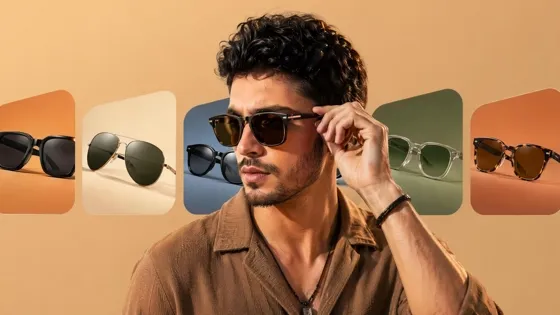
How Accurate Is Virtual Glasses Try-On? AI vs AR Compared
Best Virtual Try-On Glasses Apps in 2026 (Free & Paid Tools)
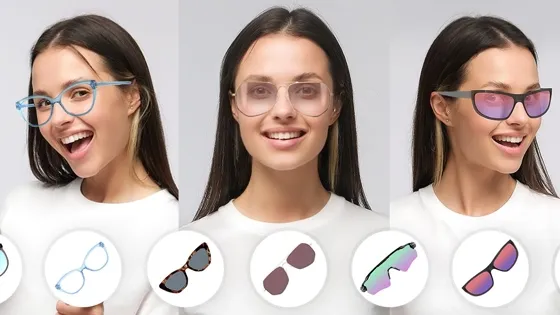
How AI Virtual Try-On Is Transforming Eyewear Ecommerce
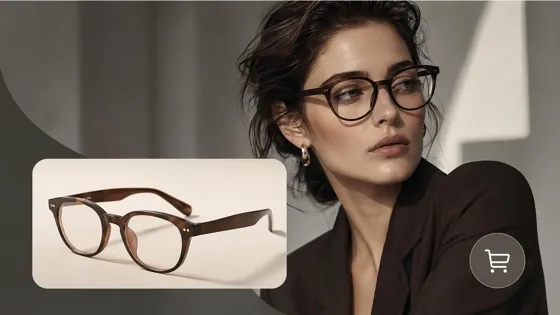
5 Best Virtual Try-On Glasses Tools for Ecommerce and Consumers 2026
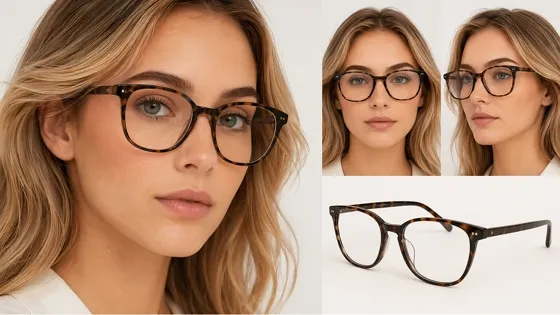
How to Try On Glasses Online with AI in 2026 (Easy Guide)

How to Create Jewelry Photos with AI Models That Drive Sales in 2026
AI-Generated Fashion Models: Technology, Brand Adoption & Trends
How to Batch Generate 100+ AI Clothing Model Photos Fast
7 Best AI Fashion Model Generators for Ecommerce in 2026
AI Clothing Model Photos for E-Commerce: Platform Rules & Best Practices
How AI Virtual Try-On Helps Fashion Brands Boost Sales & Reduce Returns

AI Fashion Models vs Real Models: Which Is Better for Brands?
Best Free AI Fashion Model Generators for Real Product Photos
Virtual Outfit Try-On Guide: Plan Outfits Before You Buy

What Is an AI Clothing Model Generator? Full Guide for Sellers
Virtual Try-On Technology in 2026: How It Works & Key Trends
10 Best Virtual Try-On Apps & Tools for Online Shopping in 2026
How to Create AI Fashion Models: Complete Step-by-Step Guide
How to Use AI Fashion Models for E-Commerce Product Photos: A Complete 2026 Guide
How to Virtually Try On Clothes Online: A Complete Guide
See How Glasses Really Look Before You Buy
Upload a photo and instantly preview realistic glasses try-ons with AI. DesignKit helps ecommerce brands and eyewear stores create accurate virtual try-on visuals with natural frame placement, realistic proportions, and studio-quality results — without AR app complexity.