
Social Media Copywriting: Tips, Examples & Best Practices
Learn social media copywriting with practical tips, real examples, and best practices you can adapt across Instagram, LinkedIn, TikTok, and more.


Social media copywriting is the process of creating written content that captures attention, communicates a clear message, and encourages people to take action on social platforms. From short captions to promotional posts, effective copy helps brands connect with audiences while supporting their broader content goals. When strong writing is paired with relevant visuals, social posts can become easier to notice, understand, and remember.
Key Takeaways
-
Understand what makes social media copy clear, engaging, and platform-appropriate
-
Use strong hooks to capture attention in the first few words
-
Adapt your writing style to different audiences and social platforms
-
Keep each post focused on one main message and a relevant CTA
-
Use real social media copywriting examples to understand effective approaches
-
Pair strong copy with visuals that reinforce the message and brand identity
What Is Social Media Copywriting?
Social media copywriting is the art of producing captions, posts, headlines, hooks, CTAs, and other short-form material for social platforms. The difference from general content writing is that it is typically meant to elicit a specific response, such as commenting, clicking, sharing, saving, joining up, or buying. Good writing examines the platform, audience, brand voice, format of the content, and the result you want to achieve. For example, a product announcement can benefit from text that emphasizes the advantage, while an instructive piece might benefit from insightful insight and then a straightforward explanation.
Why Does Social Media Copy Matter?
Good social media writing helps firms get attention in crowded feeds and deliver value fast. It can also help you develop deeper ties with your audience by making your content more relevant and relatable. Most importantly, good text gives readers a clear reason to perform the intended action, whether that's commenting, sharing, clicking, saving, or purchasing.
What Makes Good Social Media Copy?
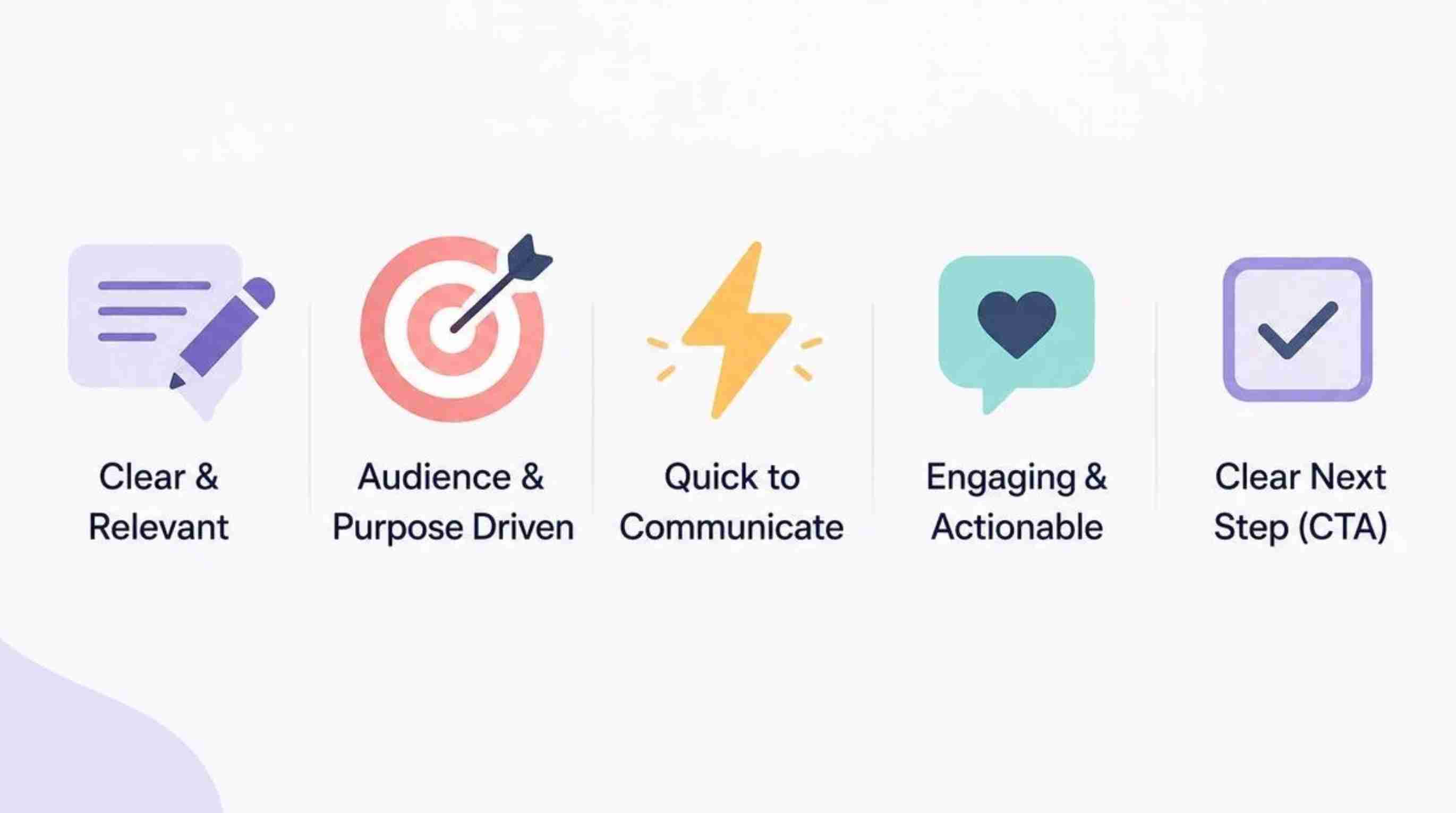
Good social media copy is clear, relevant, and written with a specific audience and purpose in mind. It needs to communicate quickly in a crowded feed while giving readers a reason to stop, read, engage, or take the next step.
Copywriting for Social Media vs. Traditional Copywriting
Social media copy differs from website, email, advertising, and long-form copy because it appears in fast-moving feeds where people often scan content quickly. Social posts generally need sharper openings, tighter messaging, scannable structures, and language that fits the specific platform. The table below highlights the key differences:
|
Aspect |
Social media copywriting |
Traditional copywriting |
|---|---|---|
|
Purpose |
Capture attention quickly, encourage engagement, or drive a specific action. |
Inform, persuade, educate, or drive action through more detailed content. |
|
Opening |
Uses a strong hook or attention-grabbing first line. |
Can take more time to introduce the topic or build context. |
|
Length |
Usually concise and focused on one main message. |
Can be longer and include multiple sections or supporting details. |
|
Structure |
Uses short paragraphs, clear formatting, and scannable content. |
Can use longer paragraphs and more detailed explanations. |
|
Tone |
Often conversational, direct, and adapted to the platform. |
Usually follows the brand, audience, and format of the specific channel. |
|
Audience behavior |
Designed for users who are quickly scrolling through a feed. |
Designed for readers who may spend more time with the content. |
|
Platform influence |
Copy changes based on the features and expectations of each social platform. |
Format and structure are generally determined by the medium, such as websites, emails, or ads. |
|
CTA |
Often short and direct, such as asking users to comment, save, share, or click. |
Can include more detailed or persuasive calls to action depending on the format. |
How to Write Effective Social Media Copy
Writing effective social media copy requires more than keeping your posts short. You need to capture attention quickly, understand who you are writing for, communicate one clear idea, maintain a recognizable brand voice, and give readers a relevant next step. The following practices can help make your social media copy clearer and more engaging.
Start With a Strong Hook
A hook is an incentive for people to stop and read in. It could be a query, an unexpected statement, a comparable problem, a helpful promise, or an observation that piques attention. Instead of saying, "Here are five ways to improve your marketing", say something more specific, like Your marketing might not need more content. It could use some better hooks.
Write for a Specific Audience
Good writing is written for a particular group, not for everyone. Ask yourself about the audience's problem, interest, expertise level, language, and what they expect before writing. A post for a first-time entrepreneur may use different examples and terminology than a post for an experienced marketing professional. Certain messaging tends to feel more relevant and personal.
Keep Your Message Clear and Concise
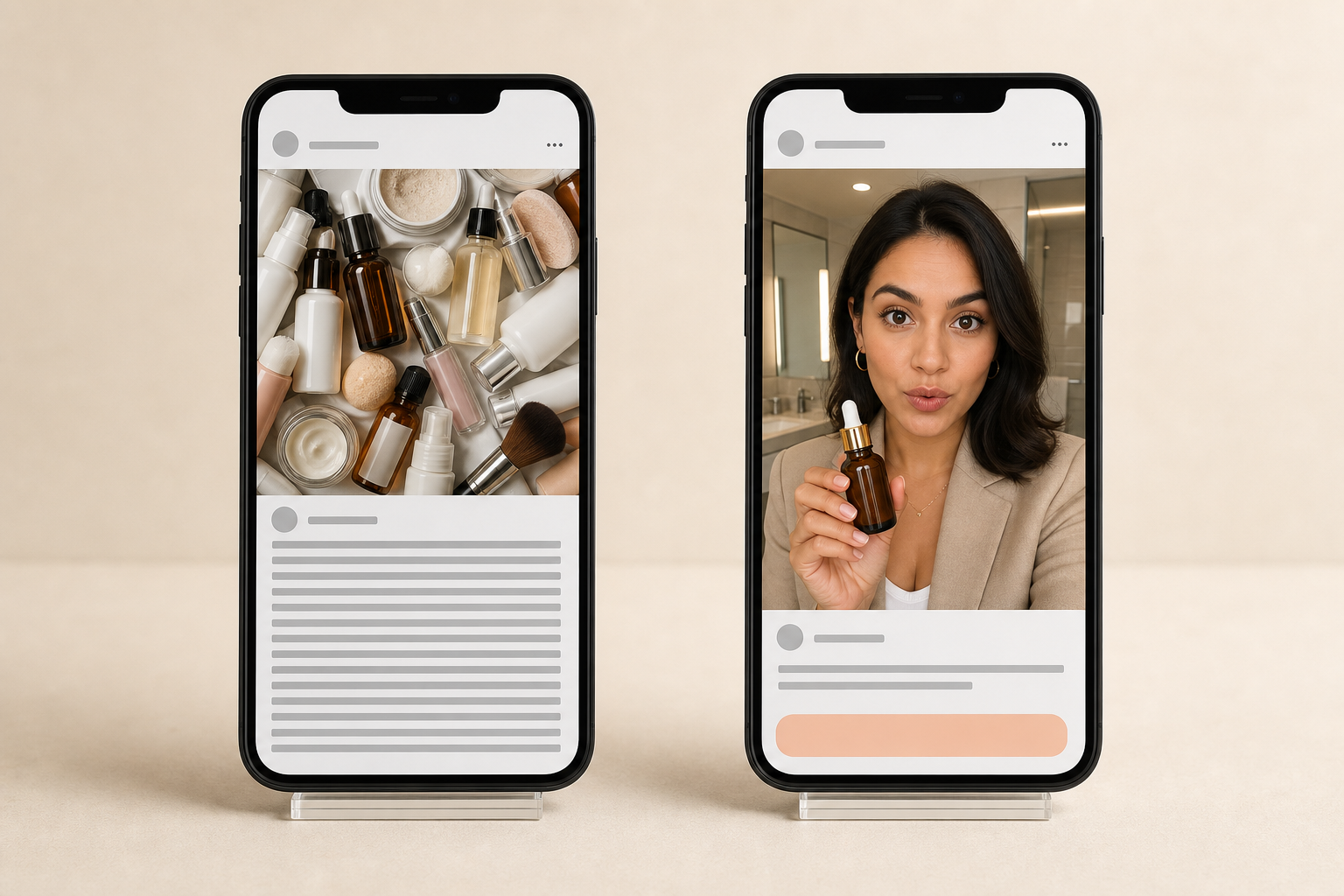
Good social media copy doesn't need to explain ever ything. Pick one main point. Remove words that are not necessary. Don't use complex jargon if you can say the same thing with a simpler term. Short paragraphs, simple phrases, and purposeful line breaks can help make longer posts easier to skim.
Use a Consistent Branded Voice
You want to be able to tell that it's your brand voice across the numerous kinds of material you produce. It could be conversational, professional, instructive, amusing, authoritative, or inspirational depending on your audience and your persona. Consistent doesn't mean every post should sound the same. Instead, the tone should feel like it's coming from the same brand, even if the topic or platform changes.
End with a Relevant CTA
The call to action tells the reader what to do next. It is contingent upon your purpose: whatever you want them to do, comment, share, save, click, sign up, shop, learn more. Align CTA to the post's goal. If the goal is conversation and not sales-oriented training, "What do you think?" may be better.
Social Media Copywriting Examples for Different Platforms
Different platforms have different audiences, genres, and expectations. As you can see in these social media copywriting examples, you can adapt the same overall message to suit the setting, rather than sharing the same copy everywhere.

Instagram Social Media Copy Examples
Instagram is highly visual, so copy usually needs to complement the image, carousel, or video rather than explain everything on its own. Captions can work well for storytelling, quick tips, product information, educational content, and conversation, while strong opening lines can encourage people to stop scrolling and read further. For example, a skincare post could use a question-based hook, a short list of tips, and a save-focused CTA.
Examples:
-
"Dry skin after a long day? Try these 3 simple ways to refresh your routine. Save this post for tonight."
-
"Your morning skincare routine does not need 10 steps. Here are 3 essentials worth keeping."
-
"Which skincare step do you never skip? Tell us in the comments."
Instagram content can also extend beyond captions, with the same campaign idea adapted into short-form video. An AI Instagram video generator can help turn a campaign idea into video content that complements the copy and fits Instagram's visual format.
Facebook Social Media Copy Examples
Facebook supports a mix of community discussions, announcements, events, promotions, images, and longer-form updates. Copy can therefore provide more context than a typical short-form post while still maintaining a conversational tone. Questions, community-focused updates, useful information, and discussion prompts can encourage people to interact with the post.
Examples:
-
"We're adding three new items to this weekend's menu. Which one would you try first?"
-
"Planning your next weekend outing? Here are five things to know before you visit."
-
"What is one product you would love to see us add next? Tell us below."
LinkedIn Social Media Copy Examples
LinkedIn is designed around professional networking, industry discussions, company updates, and career-related content. Copy works best when it provides a useful insight, shares an experience, discusses a business challenge, or gives readers something practical to consider. A professional tone can still feel personal when you use real observations, lessons learned, and clear takeaways.
Examples:
-
"More content does not always mean better results. Here are three things we learned from focusing on quality instead of volume."
-
"One mistake we made when launching our first campaign was assuming more features meant more value. Here's what changed our approach."
-
"What is the biggest challenge your team faces when turning audience insights into content?"

TikTok Social Media Copy Examples
TikTok is built around short-form video, fast-moving trends, strong hooks, and highly engaging content. Copy should support the video by creating curiosity, adding context, or encouraging viewers to interact rather than simply repeating what appears on screen. Short, conversational phrases and questions can work particularly well when they match the video's pacing and subject.
Examples:
-
"The workout mistake I wish I had stopped making sooner."
-
"POV: You finally find a skincare routine that actually fits your schedule."
-
"Would you try this? Watch until the end and tell us what you think."
For TikTok campaigns, an AI TikTok video generator can help turn a strong hook or content idea into short-form videos that support the message and suit the platform's format.
X and Other Short-Form Social Media Copy Examples
X and other short-form platforms are suited to concise observations, questions, opinions, quick insights, and timely discussions. Because users can quickly scan large amounts of content, the copy should communicate its main point without unnecessary wording. A strong statement or question can also give readers a reason to respond and continue the conversation.
Examples:
-
"More content does not always mean more engagement. Sometimes one strong idea is enough."
-
"What is one social media metric you stopped tracking this year?"
-
"A good hook gets attention. A useful idea earns the follow."
How to Structure Social Media Copy for Different Goals
The optimum structure is a function of what a post needs to do. Rather than try to fit every article into one formula, leverage a simple structure that ties the introduction, key message, supporting details, and CTA back to the content aim.
Structure for Educational and Engagement Posts
Educational pieces should swiftly present a helpful notion and then explain it. Engagement postings can ask a question or viewpoint to get people involved. Both formats perform best when the reader knows from afar what the purpose is.
-
Educational structure: Start with a strong hook, introduce the key insight, provide supporting information, and finish with a relevant CTA.
-
Engagement structure: Begin with a hook, add context or an opinion, ask a question, and end with an engagement-focused CTA.

Structure for Promotional and Product Posts
Advertising must link the demands of the audience to the answer. State the problem or announcement. State the key advantage. Give helpful supporting details. End with a single targeted action.
-
Structure: Start with the problem or announcement, introduce the solution, highlight the key benefit, provide supporting details, and finish with a relevant CTA.
This format can also be used for product launches, feature announcements, limited-time offers, and campaign content.
Structure for Storytelling Posts
Storytelling makes the content of brands and producers more relatable. Start with an interesting moment or situation, develop the story, share a useful takeaway, and invite the audience to respond when appropriate.
-
Structure: Start with an opening that introduces the topic, share the story, highlight the key takeaway, and finish with a relevant CTA.
Common Social Media Copywriting Mistakes to Avoid
Even the best ideas might be lost to an audience if they are not written clearly, generically, or in a way that fits the platform. Reviewing frequent blunders may allow you to enhance your social media copy before you publish.
Starting without a Clear Hook
A weak start can lead people to browse past the post before they comprehend its importance. Start with something relevant to your audience, such as a problem, question, insight, or unique benefit.
Writing for Everyone Instead of a Specific Audience
Generic copy seems less meaningful because it's not solving a specific need. Know your audience and write your examples, language, and message for that target.
Using Unnecessary Words, Jargon, or Too Many Ideas
A very long post, or one that uses technical jargon and/or makes numerous unrelated points, can be difficult to follow. Keep your message concentrated, and use plain language when you can.
Making Every Post Overly Promotional
When there's constant selling, social content feels repetitive. Add promotional posts with instructive, amusing, conversational, and valuable information. Give people one clear CTA, not numerous conflicting actions.
Ignoring Platform Requirements or Skipping Proofreading
Every platform has its own demands about formatting and content. Before posting, check character restrictions, formatting, links, spelling, and grammar, and ensure the material is right for its platform.
Create Social Media Videos and Copy With Designkit
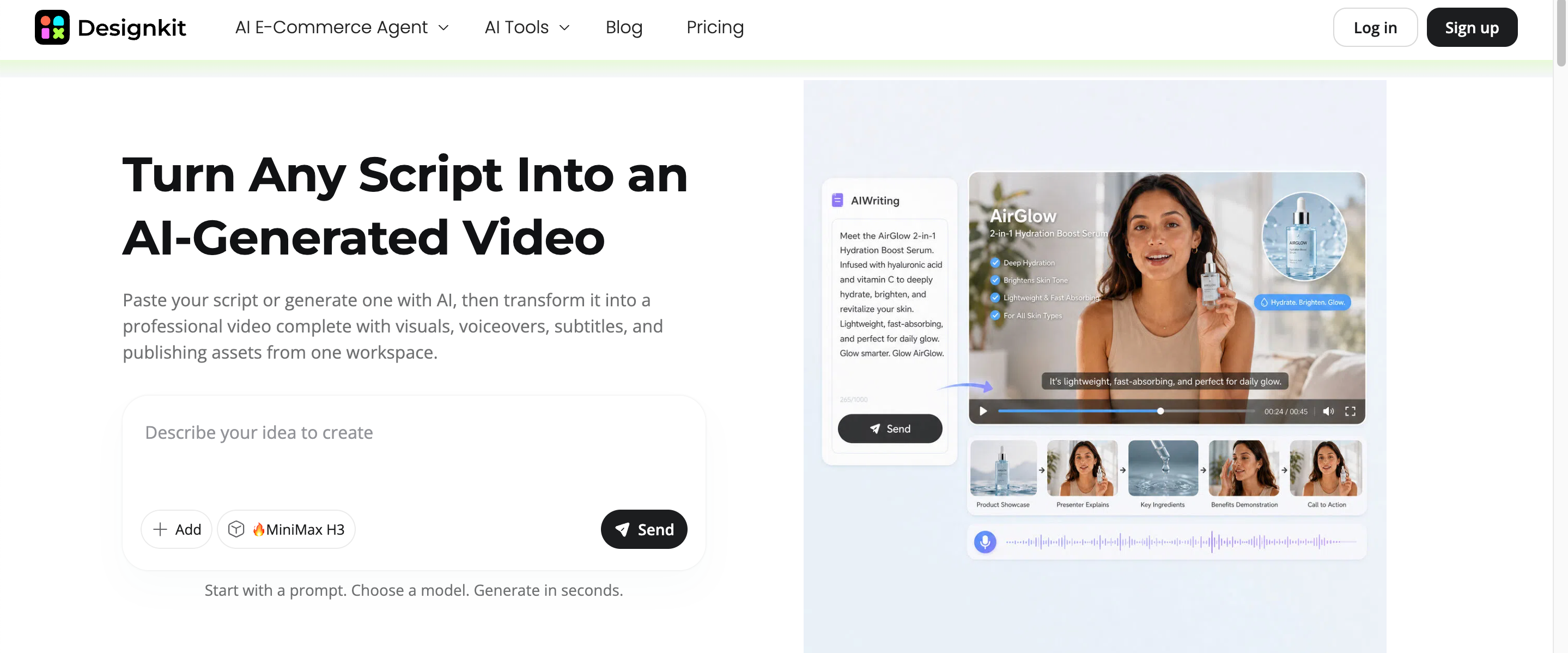
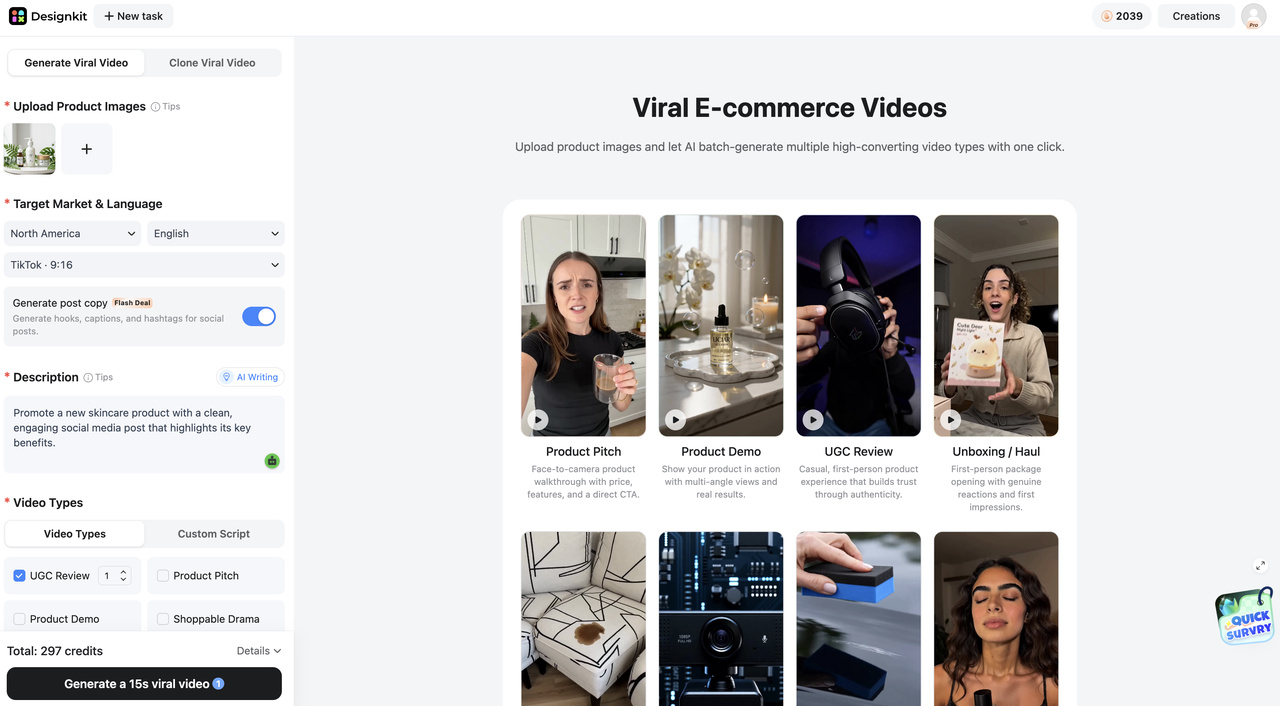
Creating effective social content often means developing the copy and visuals together. Designkit's script to video AI brings social media copy generation and video creation into one place, helping you move from an initial content idea to a complete social media post.
How to Create Social Media Content With Designkit
Create social media content faster by turning your ideas into ready-to-publish copy and videos. Designkit helps you streamline the process from planning your message to creating visuals that match your content goals.
Step 1: Enter Your Content Idea
Start with your topic, product, campaign, or message. Define what you want to communicate and consider your target audience and social media goal.
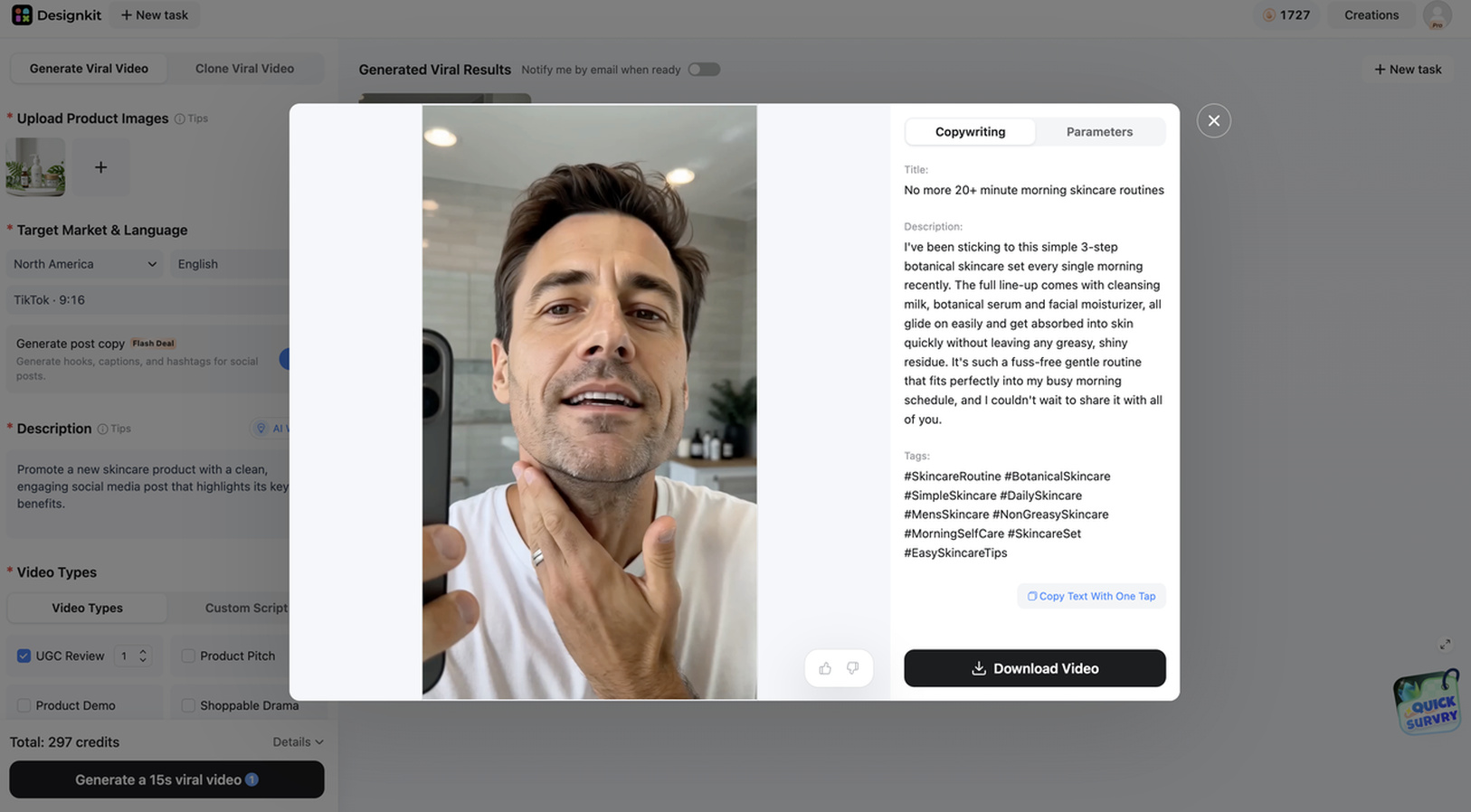
Step 2: Generate Your Copy and Video
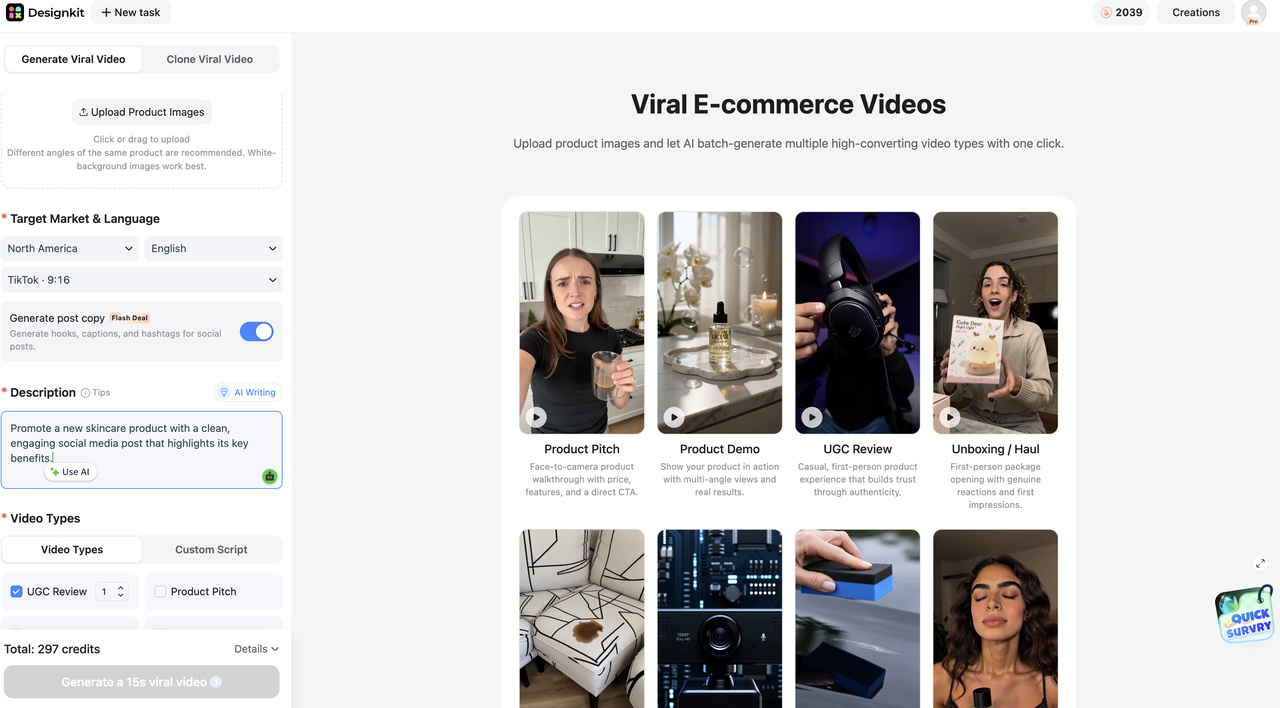
Use Designkit to generate social media copy based on your content idea, then create a social media video that supports the message. Refine the wording, tone, visuals, and creative direction as needed.
Step 3: Review and Export
Review the copy and video together to ensure the message, visuals, tone, and branding work consistently. Make any final adjustments, then export your content for publishing.
How Designkit Helps Create Social Media Content
Designkit brings copy creation and visual content production together, helping you create more consistent social media assets. From promotional posts to educational content, you can develop different types of content while keeping your message and style aligned.
Generate Copy and Videos in One Place
Create written copy and social media videos without switching between separate tools, making the content creation process more streamlined.
Create Content for Different Goals
Develop content for promotional campaigns, educational posts, product announcements, and engagement-focused social content.
Keep Copy and Visuals Consistent
Align your messaging, video style, and branding to create more cohesive social media content across different campaigns and platforms.
Final thoughts
Good social media writing begins with a purpose, a hook, and a tailored message that speaks to the intended audience. Write your material to suit the platform and the content's purpose. Add a relevant call to action and back up your message with graphics. Designkit can help get your writing and social media videos all in one place.
Frequently Asked Questions
What is social media copywriting?
How is social media copy different from regular copywriting?
Social media copy is usually shorter, faster to consume, and more dependent on platform-specific formats. It needs to capture attention quickly while communicating a focused message.
How do I write engaging social media copies?
Start with a strong hook, write for a specific audience, keep the message focused, use a recognizable branded voice, and finish with a CTA that matches the post's goal. You can also use Designkit to generate social media copy and develop a supporting video around the same content idea.
How long should social media copy be?
There is no perfect length. The appropriate duration depends on the platform, audience, format, and goal. The goal should be to present the message in a clear, concise manner, with no extraneous material.
What are some social media copywriting examples?
Imagine informative Instagram captions, promotional Facebook posts, photo leadership pieces on LinkedIn, curiosity-piquing captions on TikTok, and bite-sized observations on X. Designkit may be used to generate supporting social media visuals and videos to modify these ideas for your own campaigns.
How can I improve my writing on social media?
Study how your audience responds to different hooks and formats, simplify your language, experiment with different structures, and review content performance regularly. Designkit can also help you create different copy and video variations to explore different approaches.
Can AI help with social media copywriting?
Yes. Artificial intelligence can help brainstorm, write copy, create variations, change tone, and customize for multiple platforms. Designkit can help with this by generating social media prose and videos based on your content concept. Human review is still required for accuracy, brand voice, and final editing.
You May Also Like

PixVerse AI Review 2026: Is It Worth Using for AI Videos?

How to Animate a Picture with AI: Easy Step-by-Step Guide

How to Write a Video Script: Structure, Tips & Examples

What Is B-Roll? Meaning, Examples, and How to Use It

How to Make a TikTok Video: A Step-by-Step Guide 2026

How to Make an Instagram Post: Step by Step Creation Guide

Social Media Copywriting: Tips, Examples & Best Practices

What Are AI Fruits? The Trend, the Formats, and How to Make One

LTX Studio Review: Features, Pricing & AI Filmmaking Guide

HeyGen vs Arcads: Which AI Video Tool Wins in 2026?

Arcads AI Review 2026: Features, Pricing, Pros, Cons & Alternatives
Creatify AI Reviews: Features, Pricing & Alternatives (2026)

What Are Satisfying Videos? Types, Tips & How to Make (2026)

How to Generate Product Videos from Images with AI (2026 Guide)

How to Create a Product Launch Video with AI: A Step-by-Step Guide
What Is a Brand Video? Types, Examples & How to Create One

AI Product Demo vs Live Demo: Which Gets More SaaS Sign-Ups?

How to Create AI Product Promotion Videos in Minutes (Step-by-Step)

Best AI Product Video Ad Generators for Ecommerce in 2026

How to Boost Ecommerce Sales: Proven Strategies That Work
How to Add Video to eBay Listing: Step-by-Step Seller Guide
Short Form Video Marketing for E-commerce: AI Video Guide

What Is Video Marketing? E-commerce Guide & Strategies 2026
Create Social Content That Gets Noticed
Create polished visuals to support your social media copy with Designkit. Build engaging, platform-ready content for brands, creators, and businesses.