

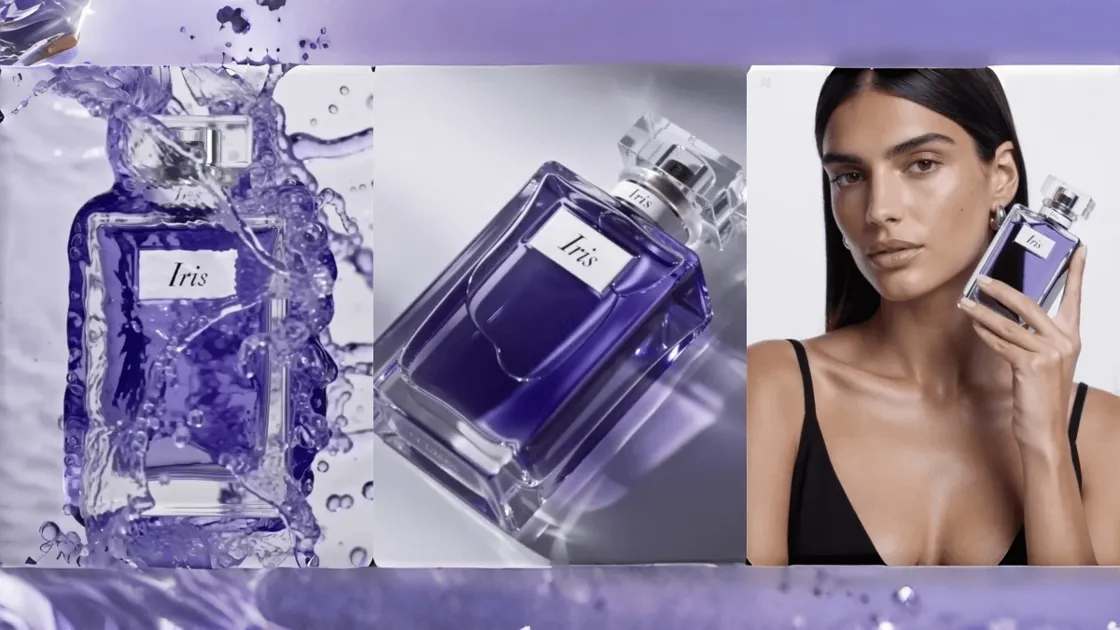
Why AI Product Videos Are the Future of Ecommerce
If you’re selling on Amazon, TikTok Shop, or Shopify, you already know that product video converts. According to recent ecommerce benchmarks, product listings with video see up to 80% higher conversion rates compared to static image-only listings. On TikTok Shop, short-form video ads consistently outperform banner ads by 3–5x in click-through rate. And on Shopify, merchants who add product videos report an average of 6–30% uplift in purchase intent depending on the category.
The problem? Traditional video production is slow, expensive, and operationally complex. Hiring a production crew, renting a studio, casting models, and editing a single 30-second product video can easily cost $2,000–$10,000 per SKU — completely unscalable if you’re managing a catalog of 50, 100, or 500 products.
This is where AI product video generation is rewriting the rules. Tools powered by foundation video models like Seedance 2.0 are now capable of transforming a single product photo into a cinematic, motion-rich video in under two minutes — at a fraction of the cost. For ecommerce sellers and brand marketers, this isn’t a future trend. It’s happening right now.
In this guide, we’ll break down exactly how Seedance 2.0 works for ecommerce, walk through real-world use cases, share copy-paste prompt templates, and show you how to build a complete AI ecommerce content workflow using Designkit and Seedance 2.0 together.
- Part 1. What Is Seedance 2.0 and Why Ecommerce Brands Are Paying Attention
- Part 2. Four Ecommerce Use Cases for Seedance 2.0
- Part 3. The Complete AI Ecommerce Content Workflow
- Part 4. Seedance 2.0 Pricing and Cost for Ecommerce Sellers
- Part 5. Prompts for E-commerce Videos
- Final Verdict: The Smart Ecommerce Stack — Seedance 2.0 + Designkit
Part 1. What Is Seedance 2.0 and Why Ecommerce Brands Are Paying Attention
1.1 Seedance 2.0 Overview
Seed 2.0 was officially released on February 14, 2026. Seedance 2.0 is an advanced AI video generator developed by ByteDance, the parent company of TikTok, under its cloud and AI infrastructure division Volcano Engine. It belongs to the new generation of generative video foundation models — the same class as Sora, Kling, and Runway — but with a particular emphasis on motion fidelity, physical realism, and commercial-grade visual output.
What makes Seedance 2.0 stand out in the AI video model landscape is its dual capability: it supports both text-to-video (generate a video purely from a written prompt) and image-to-video (animate an existing product image). For ecommerce sellers, the image-to-video function is especially transformative — it means you can take your existing product photography and bring it to life with realistic movement, ambient lighting, and cinematic composition.
1.2 How Seedance 2.0 Helps Create Cinematic Product Videos
One of Seedance 2.0’s most commercially valuable features is its ability to generate what professionals call cinematic motion — smooth, purposeful camera movements paired with realistic subject animation. This includes:
- Camera techniques: Slow dolly-ins, orbital rotations, vertical reveals, and rack focus effects that mimic high-end commercial cinematography
- Multi-shot storytelling: The model can simulate scene transitions and visual pacing that tells a product’s story across multiple angles and moments — something traditionally requiring hours of editing
- Material physics: Fabric billows naturally. Liquids catch the light. Perfume bottles gleam with bokeh. Sneakers drop onto surfaces with weight and realism
- Ambient consistency: Lighting, shadows, and background elements remain coherent across motion frames, giving output a polished, professional quality
For ecommerce, this translates directly to higher-quality product showcase videos that were previously only achievable by brands with six-figure production budgets.
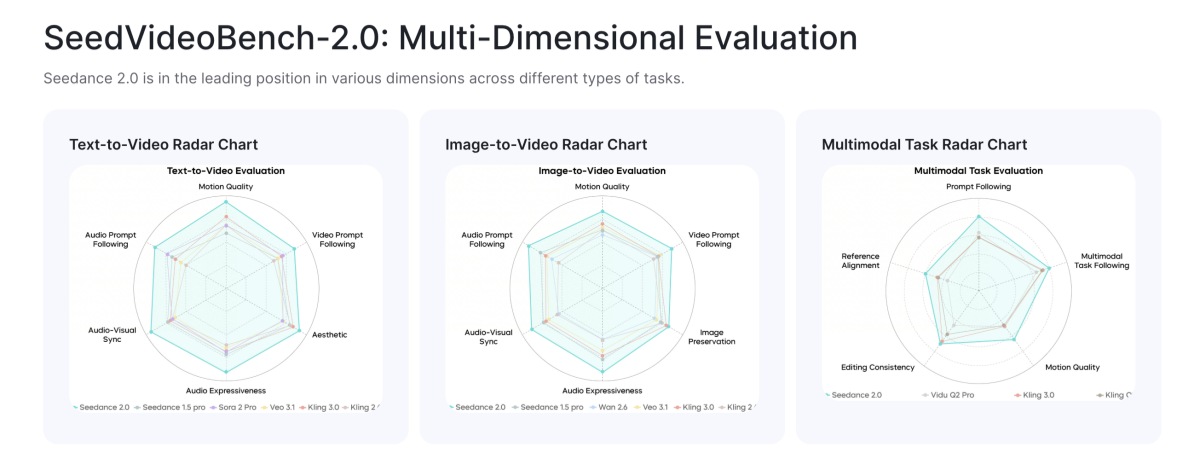
1.3 Seedance 2.0 vs Traditional Product Video Production
Here’s the honest comparison that every ecommerce seller should see before planning their next product video campaign:
|
Factor |
Traditional Video Production |
Seedance 2.0 (via Designkit) |
|
Cost per video |
$500 – $5,000+ |
~$0.50 – $2.00 |
|
Turnaround time |
3–14 days |
1–3 minutes |
|
Equipment needed |
Studio, lighting, camera rig |
A product photo + text prompt |
|
Team required |
Director, videographer, editor, model |
Solo operator |
|
Scalability |
5–10 videos/month max |
Hundreds of videos/day |
|
Iteration speed |
Days per revision |
Seconds per variation |
|
Platform optimization |
Manual resizing/reformatting |
One-click aspect ratio control |
|
Entry barrier |
High (budget + connections) |
Low (subscription plan) |
The verdict is clear: for high-volume, multi-SKU, multi-channel ecommerce operations, Seedance 2.0 isn’t just cost-effective — it’s an operational paradigm shift.
Part 2. Four Ecommerce Use Cases for Seedance 2.0
Understanding the theory is one thing. Let’s look at the specific product marketing scenarios where Seedance 2.0 delivers measurable ROI.
2.1 Dynamic Product Showcases: From Static to Cinematic
Imagine you’re selling a white linen shirt. Your current listing has clean, professional flat-lay photos — but they’re static. Now imagine that same shirt billowing gently in a warm afternoon breeze, with sunlight catching the texture of the fabric as the camera slowly pulls back to reveal the full silhouette. That’s the difference between a photo and a Seedance 2.0 product showcase video.
For consumer electronics (3C products), the effect is equally powerful. A wireless earbud hovers in frame, rotating slowly while ambient light plays across the matte black housing, revealing the fine engraving details. A laptop snaps open with satisfying motion as the screen illuminates with a soft glow. These aren’t CGI renders from expensive agencies — they’re generated in minutes from a product image.
This use case is ideal for sellers who want to elevate their brand perception without inflating production costs. On Amazon, this kind of video in the A+ content section or the main listing image carousel can directly impact your BSR (Best Seller Rank) by improving dwell time and reducing bounce rate.
2.2 Social Media Product Ads
Speed is the competitive advantage in paid social media advertising. Ad creative fatigue sets in within 3–7 days on platforms like TikTok, Meta, and Pinterest. That means brands running performance marketing campaigns need a continuous supply of fresh video creatives — different angles, different hooks, different visual styles — to maintain efficient CPAs.
With Seedance 2.0’s high rendering throughput, a single media buyer or performance marketer can generate 20+ distinct ad creative variations in half a day — something that would otherwise require a full creative production sprint. Variations can include:
- Different background environments (studio, outdoor, lifestyle)
- Different camera movements (zoom-in hook vs. reveal vs. rotation)
- Different product orientations and lighting moods
- Different aspect ratios (9:16 for TikTok/Reels, 1:1 for feed, 16:9 for YouTube pre-roll)
This is a game-changer for traffic managers and media buyers who need to feed testing pipelines at scale. Instead of waiting on a creative agency, you control the output — and the speed.
2.3 Product Storytelling Videos
Not every ecommerce video needs to be a direct-response ad. Brand storytelling is increasingly important for building long-term equity on platforms like YouTube, Pinterest, and Instagram — and even on Amazon’s brand stores.
Seedance 2.0 supports multi-shot narrative sequences that can communicate a brand’s values through visual metaphor. A skincare brand might use slow-motion water droplets meeting botanicals. A coffee brand might use warm, golden-hour outdoor scenes with steaming mugs in hand. A fitness equipment brand might string together aspirational lifestyle moments that place the product in the context of transformation.
These storytelling videos build emotional resonance that static images simply cannot. And because Seedance 2.0 generates content that matches the aesthetic of high-production brand films, small and mid-size ecommerce brands can now compete with the visual storytelling quality of heritage consumer brands — without the heritage budget.
2.4 Product Launch Videos
A successful product launch needs visual momentum. Whether you’re dropping a new SKU on your Shopify store, launching on Amazon FBA, or going live on TikTok Shop, a compelling launch video creates the anticipation and urgency that drives day-one sales velocity.
Seedance 2.0 is perfectly suited for product launch content because it allows you to generate a full suite of launch assets from a single product image before the product even ships. You can create:
- A teaser video (close-up reveal with dramatic lighting)
- A full product showcase (360-degree view with feature callouts via prompt)
- Platform-specific cuts (TikTok vertical, Amazon square, YouTube landscape)
- Multiple visual moods (luxury, playful, minimal, bold) for A/B testing at launch
This means your launch campaign is fully loaded before the first unit lands in your warehouse.
Part 3. The Complete AI Ecommerce Content Workflow
This is the section that ties everything together. The most efficient ecommerce operators in 2026 are building end-to-end AI content pipelines that eliminate manual creative work at every stage — from product imagery to listing optimization to video ad production. Here’s the proven four-step workflow:
Step 1 — Generate Product Images with AI
Before you can create a video, you need a high-quality product image. If your product photography is inconsistent, underlit, or simply absent (common for dropshippers or pre-launch products), Designkit’s AI Product Images Generator solves this at the source.
Designkit’s AI product image tool allows you to:
- Generate studio-quality product photography from a simple product photo or even a rough sketch
- Place products in contextually relevant lifestyle environments (kitchen, gym, outdoor, office)
- Apply consistent brand aesthetics across an entire product catalog
- Remove backgrounds, adjust lighting, and add shadows automatically
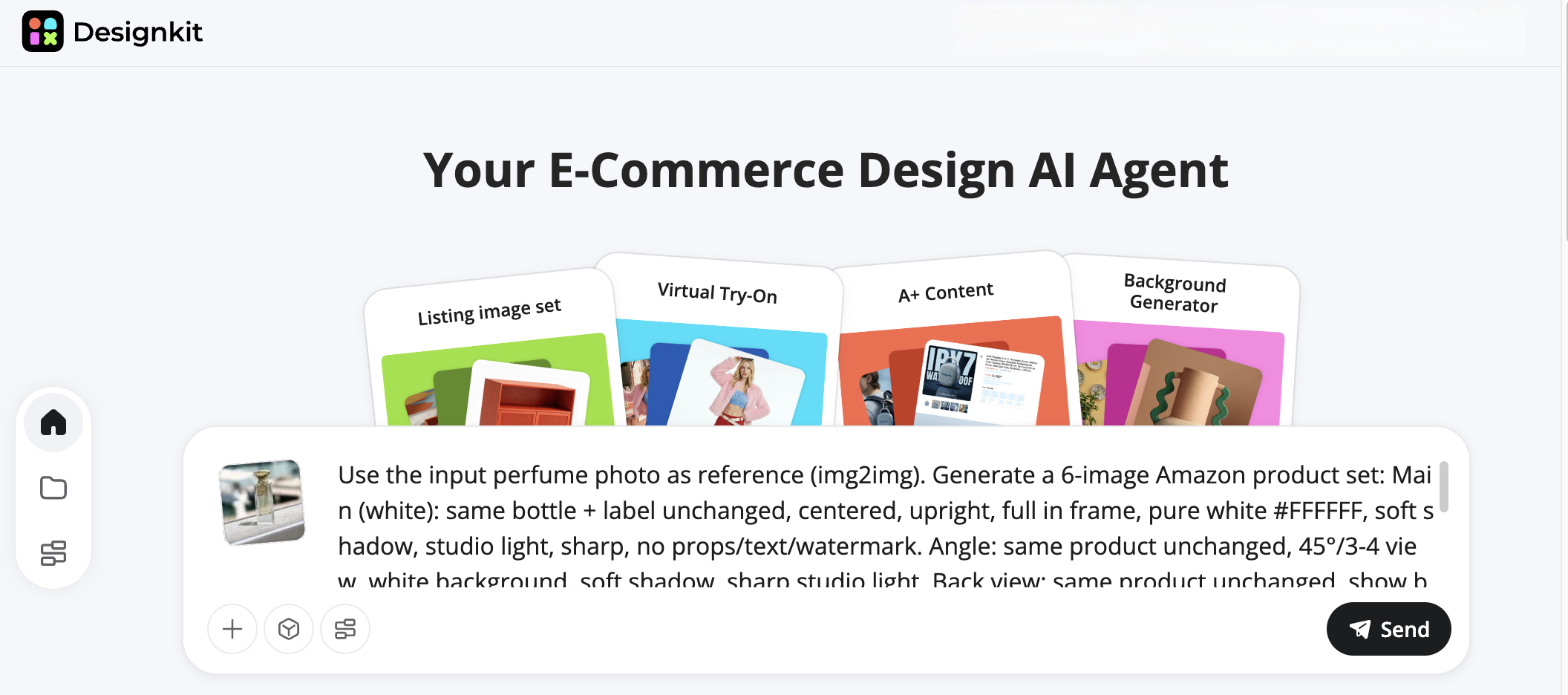
The output is a polished, high-resolution product image ready for the next step — and for use across all your listing and marketing channels. This is the foundation of your AI content stack.
Step 2 — Create Listing Images for Amazon or Shopify
Raw product images are one thing. Optimized listing images — with infographic callouts, feature badges, size charts, lifestyle context, and mobile-optimized layouts — are what actually convert browsers into buyers.
Designkit’s AI Product Listing Images Generator is purpose-built for this task. It understands the specific requirements of Amazon listing image guidelines (white background mains, infographic secondaries, A+ content modules) as well as Shopify product page best practices.
With this tool, you can:
- Generate a complete 7-image listing set for Amazon in a single workflow
- Auto-populate feature callouts based on your product description
- Create mobile-first designs that display correctly across devices
- Maintain visual consistency across your entire catalog
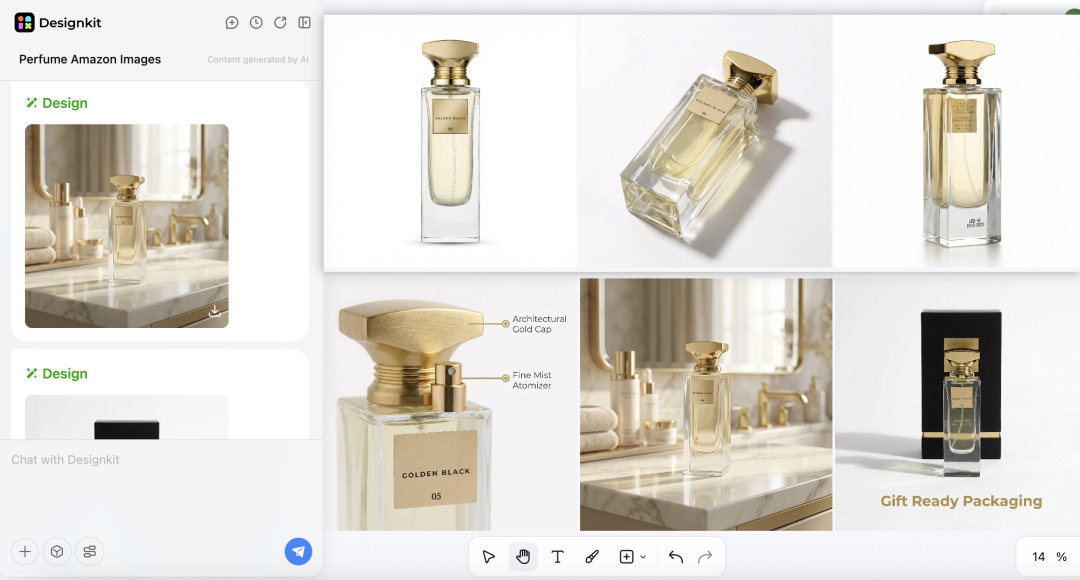
This step ensures that by the time you create video content, your product’s visual identity is already fully established and optimized.
Step 3 — Generate AI Product Videos
With your product images polished and your listing assets ready, it’s time to add motion. You can start creating dynamic product clips immediately with Seedance, available now through Designkit’s AI Video Generator.
Plus, stay tuned—the even more powerful Seedance 2.0 is currently being integrated to take your video automation to the next level.
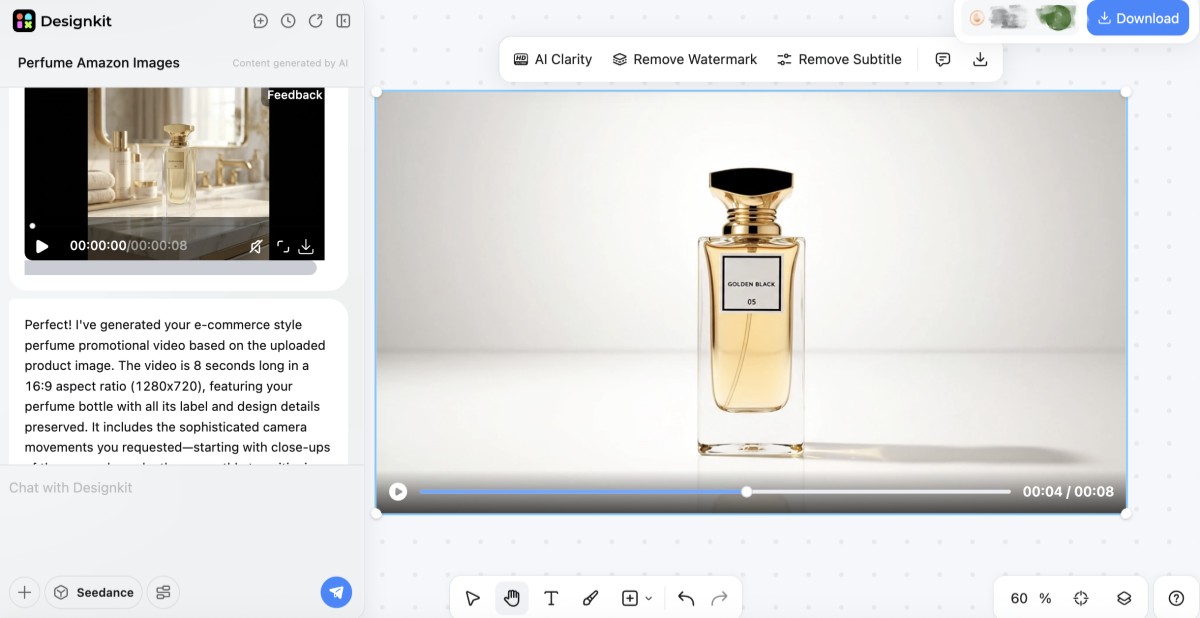
Simply upload your optimized product image from Step 1 or Step 2, write a descriptive prompt (we’ll cover best-practice templates in the next section), select your aspect ratio and duration, and generate. Within minutes, you have a cinematic product video that:
- Brings your product to life with realistic motion and lighting
- Matches the brand aesthetic established in your static imagery
- Is optimized for the platform you’re targeting (TikTok, Amazon, Shopify, Instagram)
Because Designkit integrates the new Seedance model directly into its platform, you don’t need to juggle multiple tools or manage API keys. The entire image-to-video pipeline lives in one interface.
Step 4 — Optimize Visuals for Marketing Channels
The final step is distribution and optimization. Different platforms have different technical requirements, audience behaviors, and creative best practices:
- Amazon: Upload videos to the main listing video carousel (max 500MB, 15 seconds recommended for main listing), A+ content video modules, and Amazon Brand Story sections. Product videos on Amazon directly influence organic ranking signals by increasing time-on-page.
- Shopify: Embed product videos on product pages (above the fold is ideal), use them in email marketing sequences for abandoned cart recovery, and leverage them in Shopify Collabs for influencer seeding.
- TikTok Shop: Vertical 9:16 format, 15–30 seconds, high-energy opening hook within the first 3 frames. TikTok’s algorithm heavily rewards native-looking content — Seedance 2.0’s cinematic style performs exceptionally well here because it doesn’t look like traditional advertising.
Across all channels, using Designkit as your centralized asset hub means you can resize, reformat, and repurpose every video asset for multiple platforms without re-generating from scratch.
Part 4. Seedance 2.0 Pricing and Cost for Ecommerce Sellers
One of the most common questions from ecommerce sellers evaluating AI video tools is: what’s the real cost? Here’s a transparent breakdown.
4.1 Free Plan
Seedance 2.0 offers a free tier that includes a daily credit allocation — typically enough to generate 2–5 videos per day depending on resolution and duration settings. This is genuinely useful for:
- Testing the tool before committing to a paid plan
- Solo sellers with small catalogs (under 20 SKUs)
- One-off product launch videos for new businesses
The free plan has watermark restrictions on some output formats, but the core generation quality is identical to paid tiers — making it a meaningful way to evaluate the tool’s commercial viability for your specific use case.
4.2 Paid Plans
Seedance 2.0’s paid plans begin at $19.9/month, which represents extraordinary value compared to any traditional video production alternative. At this tier, you receive:
- Significantly expanded daily credit limits
- Access to higher resolution output (up to 1080p)
- Priority generation queue (faster turnaround)
- Watermark-free export for commercial use
- Access to advanced camera control parameters in prompts
For medium-to-large ecommerce operations running regular ad campaigns, higher-tier plans unlock bulk credit packages that reduce the per-video cost even further — often to well below $1 per video when used at scale.
Part 5. Prompts for E-commerce Videos
The quality of your Seedance 2.0 output is directly proportional to the quality of your prompts. Generic prompts produce generic videos. Specific, commercially-oriented prompts produce scroll-stopping content. Here are three professional templates tailored to the most common ecommerce product categories.
5.1 Copy-Paste Templates for Your Next Ad Campaign
Template 1 — Consumer Electronics (3C Products)
A [product name], placed on a sleek dark marble surface.
Camera: slow dolly-in from product front, transitioning to 45-degree
orbital rotation. Lighting: dramatic studio rim lighting with subtle
blue-white highlights catching metallic edges and screen surface.
Motion: ambient particle dust floating in mid-air. Product remains
perfectly stationary. Duration: 6 seconds. Aspect Ratio: 9:16.
Style: premium tech commercial, cinematic depth of field.
Key parameters: Camera Pan (orbital), Lighting: Studio Rim, Depth of Field: Shallow, Motion: Ambient Particles
Template 2 — Fashion & Apparel
A [garment type] in [color/material], displayed on an invisible
mannequin in an airy, sun-drenched minimalist studio. Camera: slow
vertical tilt from hem to collar, with a gentle 15-degree pan right.
Lighting: Studio Soft with warm golden hour overlay, casting long
natural shadows. Motion: fabric moves gently as if caught by a slow
breeze. Duration: 8 seconds. Aspect Ratio: 9:16. Style: luxury
fashion editorial, soft film grain, muted warm tones.
Key parameters: Camera Tilt (vertical), Lighting: Studio Soft + Warm Overlay, Fabric Physics: Breeze, Film Grain: Light
Template 3 — Beauty & Skincare
A [product name] — [bottle/tube/jar shape] in [brand color] —
resting on a white frosted glass surface surrounded by fresh [key
ingredient: e.g., rose petals / green tea leaves / citrus slices].
Camera: slow zoom-in from wide shot to tight close-up on product
label, followed by a circular orbit. Lighting: studio soft diffused
light with specular highlight on product cap. Motion: water droplets
condensing on product surface, ingredient elements slowly rotating.
Duration: 7 seconds. Aspect Ratio: 1:1 and 9:16. Style: clean beauty
aesthetic, clinical precision meets natural warmth.
Key parameters: Camera Zoom + Orbit, Lighting: Soft Diffused + Specular, Surface: Frosted Glass, Motion: Condensation Effect

5.2 Pro Tips for All Templates
1. Always specify duration (5–10 seconds is the sweet spot for ecommerce ads)
2. Always specify aspect ratio before generating — changing it after wastes credits
3. Use material descriptors (matte, glossy, frosted, metallic) to guide lighting rendering
4. Name the camera move explicitly — “dolly-in,” “orbital rotation,” “vertical tilt” produce more accurate results than vague terms like “move around”
5. Add a style reference at the end of every prompt (e.g., “Style: Apple product commercial” or “Style: ASMR skincare unboxing”) — this significantly influences the overall visual mood
Final Verdict: The Smart Ecommerce Stack — Seedance 2.0 + Designkit
We’ve covered a lot of ground. Let’s bring it to a clear conclusion.
The ecommerce brands that will dominate visual commerce in the next two years are those building AI-native content pipelines right now — not waiting for the tools to mature further or for competitors to prove the concept first.
The Seedance 2.0 + Designkit stack represents the current gold standard for this approach:
- Designkit AI Product Images Generator handles your product photography foundation
- Designkit AI Listing Images Generator optimizes your static assets for conversion on Amazon and Shopify
- Designkit AI Video Generator (Seedance 2.0 model coming soom) transforms those assets into cinematic product videos for every marketing channel
Together, these tools enable a single operator — a solo brand founder, a lean marketing team, or a VA-managed ecommerce operation — to produce the volume and quality of visual content that previously required an in-house creative studio.
The math is straightforward. The quality is commercially viable. The workflow is reproducible at scale.
If you’re serious about competing in ecommerce in 2026 and beyond, building this AI content stack isn’t optional — it’s the baseline. Seedance via Designkit is where that stack starts.
Ready to build your AI ecommerce content stack? Start generating cinematic product videos with Seedance on Designkit — free plan available, no credit card required.
Frequently Asked Questions
Can I use Seedance 2.0-generated videos directly on Amazon listings?
How should I handle copyright for AI-generated video content?
Copyright ownership of AI-generated content varies by jurisdiction, but for commercial purposes, videos generated through Designkit are licensed for full commercial use under the platform’s terms of service — meaning you can use them in paid advertising, product listings, brand stores, and social media without additional licensing concerns. You retain usage rights as the prompt author and the uploading account holder. Always review the specific terms of service for your Designkit plan to confirm commercial usage scope, particularly for high-volume ad campaigns.
Does Seedance 2.0 support voiceover or audio in multiple languages?
Seedance 2.0’s core function is visual video generation — it does not natively generate voice narration or music audio within the model itself. However, when accessed through Designkit’s AI Video Generator, you can combine AI-generated video with separately generated voiceover audio in multiple languages (including English, Spanish, French, German, Japanese, Korean, and Mandarin Chinese) through Designkit’s integrated audio tools. This means you can produce a fully localized product video — visuals from Seedance 2.0, voiceover in the target language — for global market expansion without leaving the platform.
How long does it take to generate a product video with Seedance 2.0?
Generation time varies based on video duration, resolution, and current server load, but typical turnaround for a 6–8 second 1080p product video is 60–180 seconds. Priority queue access on paid plans reduces this significantly during peak usage hours. This means a skilled operator can realistically produce 20–30 distinct product video assets per day on a single paid plan.
Is Seedance 2.0 suitable for dropshipping businesses without physical product samples?
Absolutely. This is one of Seedance 2.0’s most powerful applications for dropshippers. Using supplier-provided product photos (commonly available from platforms like AliExpress, CJdropshipping, or direct manufacturer contacts), you can generate professional product videos without ever physically handling the product. Pair this with Designkit’s AI Product Images Generator to clean up and enhance supplier photos first, then animate them with Seedance 2.0 for a complete product content package that rivals brands with physical studios.
What resolutions and aspect ratios are supported?
Seedance 2.0 via Designkit supports multiple output formats including 9:16 (TikTok, Instagram Reels, YouTube Shorts), 1:1 (Instagram feed, Amazon square), 16:9 (YouTube, Amazon listings, Shopify hero), and 4:5 (Facebook/Instagram feed optimized). Resolution outputs go up to 1080p Full HD on paid plans, with 720p available on the free tier. All major platform technical specs are covered within a single generation workflow.
You May Also Like

GPT Image 2 Prompts for Product Photos (Copy-Paste Examples)

How to List a Product on Amazon: Materials Checklist for First Listings

Kling vs Veo for Product Video & UGC Ads (2026)

Nano Banana vs Midjourney for Product Photos and Campaign Visuals (2026)

Seedance 2.5 Review: What Changed in ByteDance's New Model

MiniMax H3: Features, Benchmarks, Pricing, and How to Use It

Luma vs Seedance (2026): Ray 3.2 or Seedance 2.0?

Gemini Omni Review: Real Tests, Pros & Limitations for Video Generation

GPT Image 2 Review: Features, Prompts & E-commerce Use Cases

Happy Horse 1.0: The AI Video Model E-Commerce Sellers Need to Know About
AI UGC for Ecommerce in 2026: Text-to-Video, Image-to-Video & Reference Replication Guide

HappyHorse AI Review: Features, Benchmarks & How to Use It
Seedance 3.0 Predictions: Will AI Video Enter the Feature Film Era?
Grok AI vs ChatGPT: Features, Pricing & Best Choice (2026)

How to Use Grok AI: Features, Tips & Best Prompts (2026 Guide)
Sora Is Shutting Down? Best AI Video Alternatives for Creators in 2026
Seedance 2.0 for Ecommerce: Create AI Product Videos in Minutes
Seedance 2.0 Review: Features, Improvements, Pricing & How It Works (2026)
Make every product image ready to sell
Designkit is an all-in-one AI platform for ecommerce visuals. Create product photos, AI videos, virtual try-ons, and Amazon listing images in seconds. Generate HD backgrounds, batch edit photos, and scale your brand with studio-quality content.