
How Inbound Marketing Attracts, Connects & Grows Business
Inbound marketing helps people find your business naturally without pushing hard sales. It builds trust, attracts the right audience, and creates real connections. With helpful content, your business grows step by step in a simple and steady way.

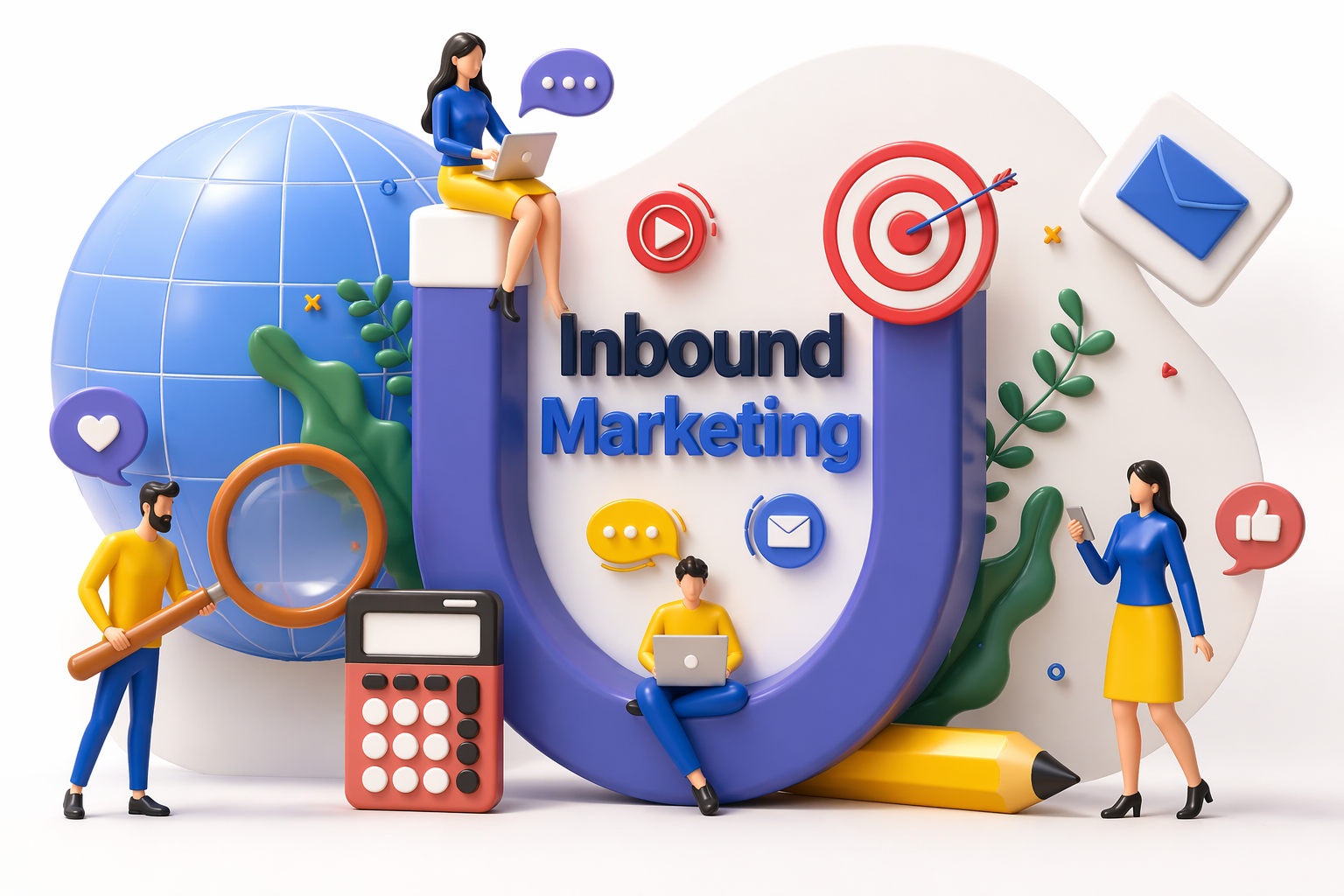
Inbound marketing is how businesses attract customers by being found, not by interrupting them. Instead of paying to push ads, you publish content that answers what your audience is already searching for. This guide breaks down how inbound marketing works, the strategies that drive results, real examples, how it compares to outbound, and the agencies, services, and tools that help you run it.
What is inbound marketing?
Inbound marketing is a digital marketing approach that attracts customers by creating valuable content and tailored experiences instead of interrupting them with ads. Instead of pushing messages, businesses attract users through helpful resources and content-driven discovery. This approach is known as inbound marketing content, where blogs, videos, and SEO help users find solutions naturally.
How inbound marketing works
Inbound marketing follows four stages, each moving a stranger closer to becoming a loyal customer.
Attracting the right audience
Inbound marketing starts by attracting potential customers through SEO, blogs, videos, social media posts, and other valuable content. Instead of pushing advertisements, businesses focus on solving problems and answering questions that their audience is already searching for online.

Engaging visitors with valuable content
Once users discover the content, businesses encourage engagement through email sign-ups, newsletters, downloadable guides, webinars, and interactive resources. This helps brands build trust while collecting valuable customer insights for future communication.
Converting leads into customers
After engagement, businesses guide leads toward becoming paying customers through landing pages, calls-to-action, product demos, and personalized email campaigns. The focus is on nurturing relationships and providing useful information that supports purchasing decisions.
Delighting customers after purchase
Inbound marketing continues even after a sale is completed. Businesses maintain customer relationships by offering support, updates, educational content, and personalized experiences that encourage repeat purchases and long-term loyalty.
Building long-term business growth
This method is widely used in inbound digital marketing because it creates sustainable growth through trust, consistency, and customer-focused communication. Strong inbound strategies help businesses generate ongoing traffic, leads, and customer retention over time.
Benefits of inbound marketing for business growth
Lower customer acquisition cost
Published content keeps attracting traffic and leads for months without added spend, unlike paid ads that stop the moment you stop paying.
-
One ranking blog post can generate leads for years at zero marginal cost
-
Reduces dependence on rising ad budgets to maintain visibility
-
Lowers blended cost-per-lead as your content library grows
Higher quality leads
Inbound attracts people already searching for your solution, so they arrive with intent rather than being interrupted.
-
Visitors self-qualify by searching for specific problems you solve
-
Higher intent means higher conversion and lower churn
-
Sales teams spend time on warm leads, not cold lists
Long-term traffic growth
SEO content compounds—rankings build on each other instead of resetting each month.
-
Topic clusters earn authority that lifts the whole domain
-
Organic traffic keeps climbing 6–12 months after publishing
-
Steady visibility without recurring media buys
Stronger brand trust
Helping before selling positions you as the expert that buyers turn to.
-
Educational content earns trust ahead of the purchase
-
Becomes the reference that people share and cite
-
Trust shortens the sales cycle when buyers are ready
Better engagement
Audiences who choose your content engage longer and convert better.
-
Longer time-on-page signals quality to search engines
-
Interest-based readers are more likely to subscribe and return
-
Engagement data tells you exactly what to create next
Scalable marketing system
One asset can reach thousands without proportional cost increases.
-
A single guide or video serves unlimited visitors
-
Repurpose one piece across blog, social, and email
-
Growth depends on consistency, not headcount
Inbound marketing examples
-
SEO blog post: a blog that answers a search like "how to lose weight naturally" attracts visitors from Google and builds trust by providing helpful information before any selling.
-
YouTube tutorial: a video that teaches "how to edit product photos" gives value first, helping viewers learn while naturally introducing the brand behind the content.
-
Free guide or ebook: a website offering a free checklist or ebook in exchange for an email helps users solve a problem while the business builds a long-term relationship.
Inbound marketing vs outbound marketing: what's the difference?
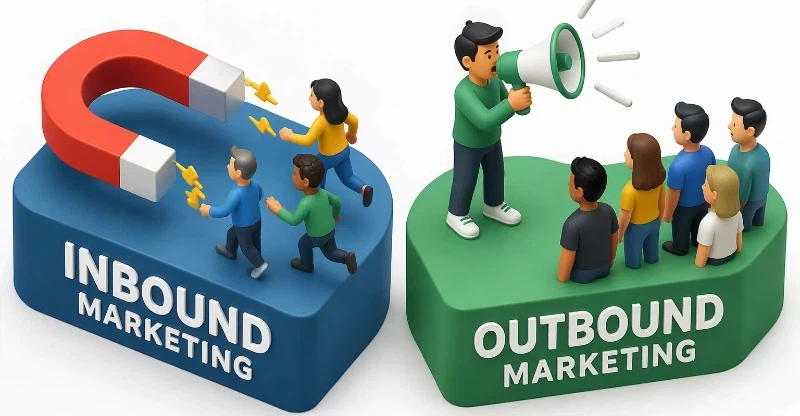
Inbound and outbound marketing are two different ways businesses reach customers—one by attracting them naturally, the other by pushing messages out.
Inbound marketing
Inbound marketing is all about attracting people naturally instead of chasing them. You share helpful blogs, videos, SEO content, and social posts, so people find you when they actually need help. It feels more natural because customers come to you on their own, and over time it builds real trust and stronger connections.
Outbound marketing
Outbound marketing is more direct and "pushy" in nature. It's when businesses reach out through ads, cold calls, emails, or TV commercials—even if people weren't looking for it. It tries to grab attention quickly, but people may ignore it because they didn't ask for it.
Difference between inbound and outbound marketing
|
Factor |
Inbound marketing |
Outbound marketing |
|
Approach |
Attracts users naturally |
Pushes messages out |
|
Strategy |
Pull strategy |
Push strategy |
|
Audience targeting |
People already searching |
Broad, general audience |
|
Cost |
Lower long-term cost |
Higher ongoing cost |
|
Trust level |
Builds trust over time |
Lower trust, more interruptive |
|
Channels |
SEO, blogs, social media, content |
Ads, cold calls, TV, email blasts |
|
Engagement |
High-quality, interest-based |
Low to medium, interruption-based |
|
Result |
Long-term growth |
Short-term attention |
Inbound marketing strategies & best practices
Inbound marketing strategies
Content marketing
Content marketing focuses on creating blogs, videos, and guides that answer user questions instead of directly selling. It is a key part of inbound content marketing because it builds authority and drives long-term organic traffic.
-
Attracts users through helpful, search-based content
-
Builds brand trust and authority over time
-
Generates consistent organic traffic
SEO optimization
SEO optimization improves how your content ranks on search engines by using keywords, structure, and search intent. It is essential for visibility in inbound digital marketing.
-
Improves organic search rankings
-
Brings high-intent traffic
-
Reduces dependence on paid ads
Lead magnets (free guides & checklists)
Lead magnets offer free resources like ebooks, templates, or checklists in exchange for user contact details. They are widely used to grow email lists and leads.
-
Captures qualified leads
-
Provides instant value to users
-
Strengthens funnel growth
Email marketing
Email marketing nurtures leads through helpful updates, guides, and personalized messages. It builds relationships instead of pushing direct sales.
-
Improves customer engagement
-
Supports automated nurturing flows
-
Builds long-term trust
Social media engagement
Social media helps distribute content and engage with audiences across platforms. It increases reach and drives traffic back to your website.
-
Expands brand visibility
-
Increases audience interaction
-
Supports content distribution
Marketing automation tools
Marketing automation tools handle emails, follow-ups, and lead tracking automatically. They make inbound systems more scalable and efficient.
-
Automates repetitive marketing tasks
-
Improves lead nurturing
-
Supports scalable growth
Best practices to keep in mind
Focus on search intent
Creating content that matches search intent means understanding exactly what users are looking for when they type a query. When your content aligns with their needs, whether informational, navigational, or transactional, it ranks better and keeps users engaged for longer.
Stay consistent with publishing
Consistency in publishing helps search engines recognize your website as active and reliable. Regular updates also keep your audience engaged, whereas irregular posting can reduce visibility and weaken long-term growth.
Track performance using analytics
Using analytics tools allows you to measure how your content performs in terms of traffic, engagement, and conversions. This data helps identify what works best so you can refine your strategy and improve future results.
Improve and update old content
Updating older content helps maintain rankings and keeps information accurate and relevant. Search engines prefer fresh, updated pages, so improving existing posts can often boost performance faster than creating new ones.
Focus on value first, not hard selling
Inbound marketing works best when you prioritize helping your audience instead of directly pushing sales. Providing useful information builds trust, which naturally leads to higher conversions over time.
Optimize continuously
Inbound marketing is not a one-time effort but an ongoing process of improvement. Continuously optimizing content, SEO, and user experience ensures steady growth in traffic, leads, and overall performance over time.
Inbound marketing agencies, services & pricing
For businesses that prefer outside help, agencies and services can run inbound campaigns end to end.
Top inbound marketing agencies
HubSpot partner agencies
HubSpot Partner Agencies specialize in inbound marketing systems built around HubSpot CRM, automation, and lead nurturing tools. They help businesses attract traffic, convert leads, and manage customer relationships through structured workflows and personalized campaigns.
-
Focus on CRM-driven inbound marketing
-
Strong expertise in automation and lead nurturing
-
Ideal for scalable inbound systems and B2B growth
WebFX
WebFX is a full-service digital marketing agency offering SEO, content marketing, and performance-based inbound strategies. The agency uses data-driven insights to improve traffic, conversions, and ROI across different industries.
-
Strong focus on SEO and content performance
-
Data and analytics-driven campaign optimization
-
Suitable for businesses focused on measurable growth
SmartBug Media
SmartBug Media delivers inbound marketing solutions combining content, automation, and CRM strategy. The agency helps businesses improve lead nurturing, customer engagement, and long-term revenue growth.
-
Specializes in inbound funnels and automation
-
Strong emphasis on content-driven lead generation
-
Focus on long-term customer lifecycle growth
Ironpaper
Ironpaper is a B2B inbound marketing agency focused on generating qualified leads through SEO, content strategy, and conversion optimization. Their approach is built around aligning marketing with sales outcomes.
-
B2B-focused inbound strategy
-
Strong conversion and lead qualification focus
-
Designed for sales pipeline improvement
Thrive
Thrive provides inbound marketing services, including SEO, social media, and content marketing to improve organic visibility and engagement. The agency focuses on building long-term digital presence and consistent lead flow.
-
Focus on organic traffic growth
-
Balanced SEO and social media strategy
-
Suitable for long-term inbound visibility
Inbound marketing services list
Inbound marketing services help businesses attract, engage, and convert customers through valuable content and data-driven strategies. These services focus on building long-term organic growth instead of relying only on paid ads. A strong inbound approach improves visibility, leads, and overall brand authority.
SEO content creation
SEO content creation produces optimized blogs, landing pages, and website copy designed to rank in search and attract targeted traffic.
-
Targets buyer-intent keywords your competitors already rank for
-
Builds topic clusters that compound traffic over 6–12 months
-
Brings in users actively searching for solutions you offer
-
Generates leads without ongoing ad spend
Content strategy
Content strategy defines what to create, who it's for, and how each piece supports business goals across the customer journey.
-
Maps topics to awareness, consideration, and decision stages
-
Aligns messaging with real audience search behavior
-
Prevents wasted effort on content that doesn't convert
-
Sets a publishing cadence the team can actually sustain
Marketing automation
Marketing automation runs repetitive tasks—emails, lead nurturing, follow-ups—through workflows so communication stays timely and relevant.
-
Triggers email sequences based on user behavior, not manual sends
-
Scores and routes lead, so sales act on the warmest first
-
Personalizes follow-up at scale without extra headcount
-
Keeps the funnel moving while the team sleeps
Lead generation
Lead generation attracts potential customers and converts them into qualified leads through offers, forms, and conversion funnels.
-
Captures interest with lead magnets tied to real pain points
-
Qualifies visitors before they reach the sales team
-
Feeds a predictable pipeline instead of feast-or-famine
-
Improves ROI by focusing spend on high-intent audiences
Analytics & reporting
Analytics and reporting track performance across campaigns so decisions are based on data, not guesses.
-
Pinpoints which content and channels actually drive revenue
-
Reveals where leads drop off in the funnel
-
Turns user behavior into clear next actions
-
Ties marketing activity to measurable ROI
Social media management
Social media management creates, schedules, and manages content across platforms to maintain presence and distribute inbound content.
-
Pushes blog and video content to wider audiences
-
Keeps brand presence consistent across channels
-
Drives qualified traffic back to your site
-
Builds trust through ongoing audience interaction
Inbound marketing agency pricing
| Pricing Model | Description | Typical Range |
| Monthly Retainer | Ongoing monthly service covering SEO, content, and campaigns | $1,000 – $10,000+ per month |
| Project-Based | One-time campaigns like website setup or content strategy | $2,000 – $20,000 per project |
| Service-Based | Individual services like SEO, content writing, or automation setup | $500 – $5,000+ per service |
Pricing depends on business size, goals, and complexity of the inbound marketing strategy. More advanced campaigns with automation and full-funnel systems usually fall on the higher end.
Create inbound marketing visuals faster with Designkit
Inbound marketing relies on a consistent flow of visual content like blog graphics, product images, and marketing videos to attract and engage audiences. The main challenge for many businesses is keeping this content pipeline active without delays. Designkit solves this by using AI to quickly generate high-quality marketing visuals, including product images, videos, and social media assets. It removes the need for long design cycles or constant designer dependency. While it doesn't replace your overall inbound strategy or agency support, it significantly speeds up visual content creation, helping brands maintain consistent inbound marketing performance and audience engagement.
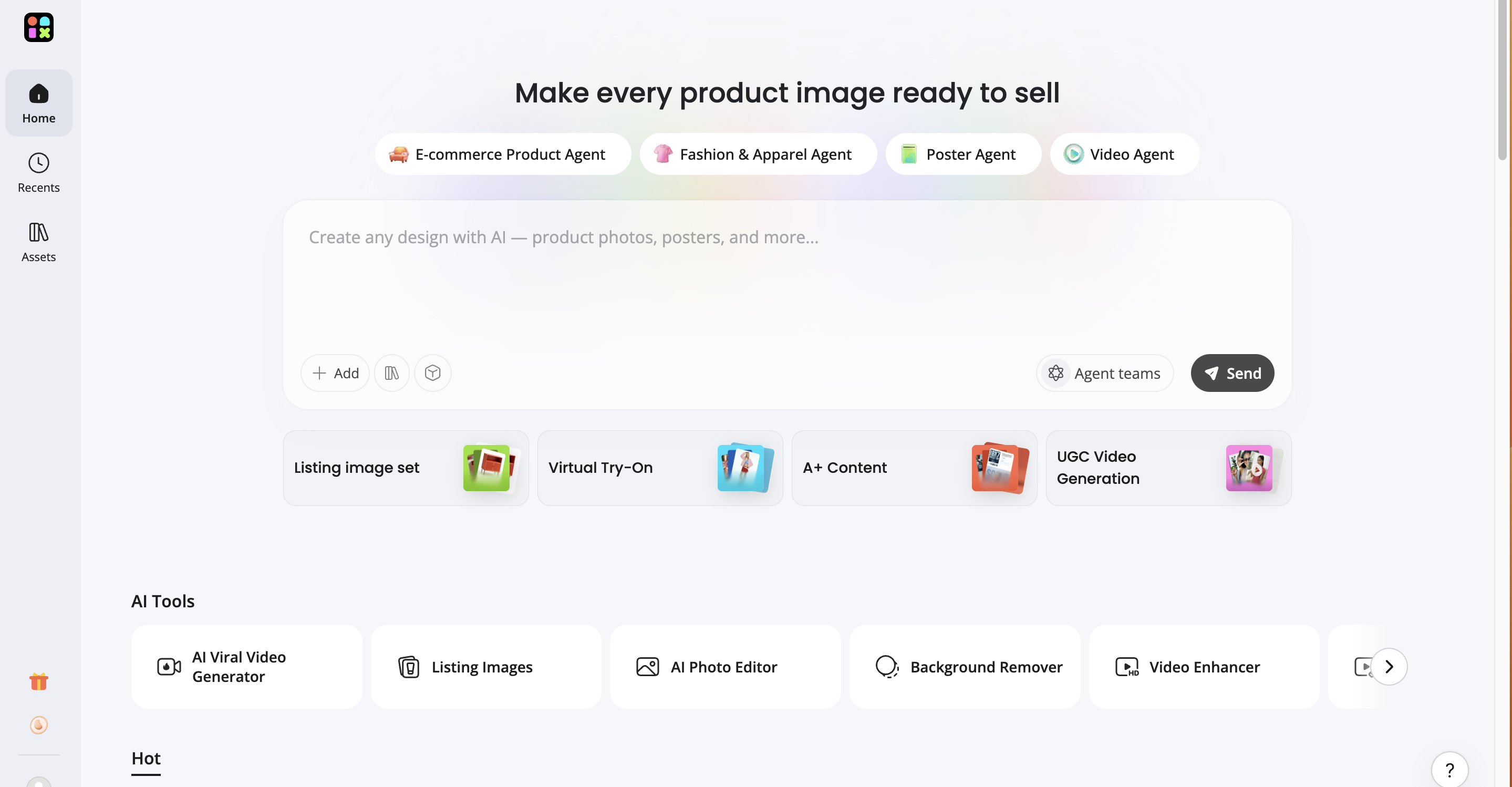
How to create inbound content visuals with Designkit in 3 steps
Step 1: Upload your product or content asset
Upload your product images, creator photos, or existing marketing visuals into the Designkit workspace, no studio shots or design files required, just your raw assets.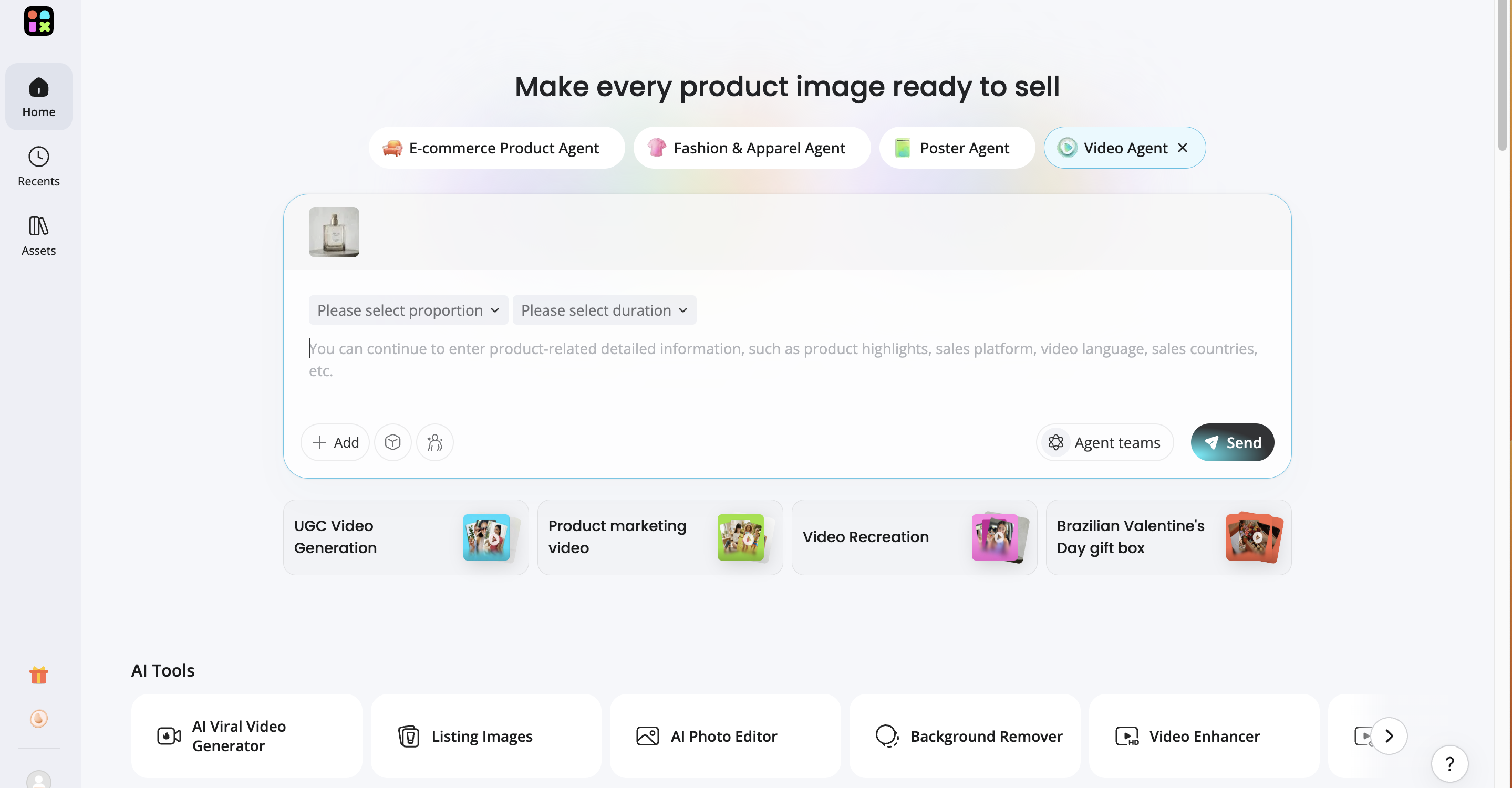
Step 2: Describe your content and let AI fill the details
Choose your format and add your key selling points, then let Designkit's AI generate the framing, scene, and visual styling — producing blog images, social creatives, or product videos tailored to your inbound campaign.
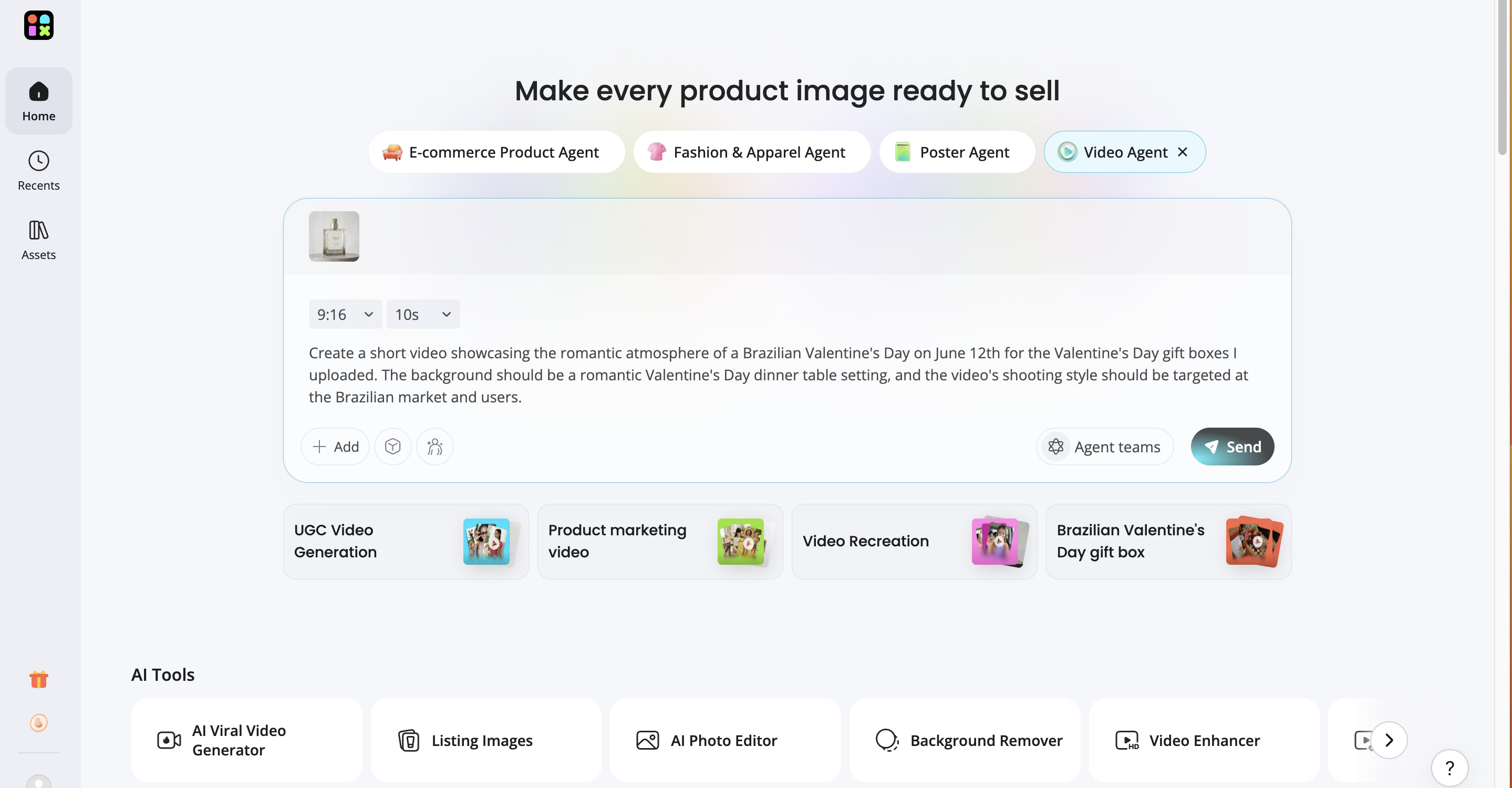
Step 3: Preview and export your inbound-ready visual
Review the generated visual, make quick adjustments, then export a high-quality, platform-ready file for your blog posts, social channels, and campaigns.
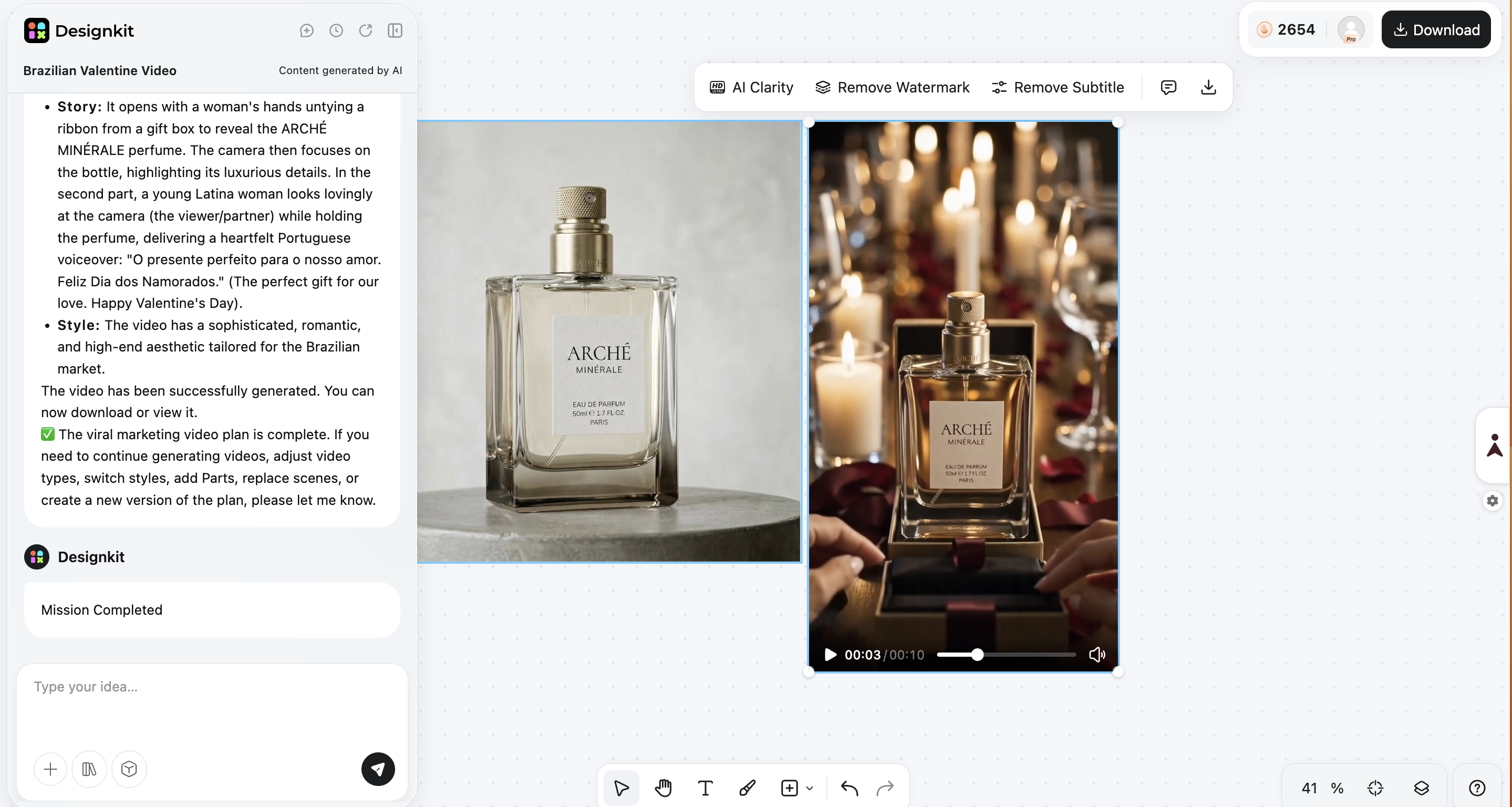
Create inbound content visuals
Designkit features for inbound content creation
AI product image generation for ecommerce and blog visuals
This feature creates high-quality, SEO-friendly product images that can be used in blogs, landing pages, and ecommerce stores without needing a photoshoot. It helps maintain a consistent visual style across inbound marketing content, improving engagement, trust, and organic traffic from search engines and social platforms.
AI product video generation for marketing content
It converts simple product images into engaging marketing videos that can be used on social media, websites, and ads. This boosts inbound marketing performance by increasing user attention, improving storytelling, and helping brands explain product value more clearly, which leads to better engagement and higher conversion rates.
Online image editing for quick enhancement
This tool allows fast editing, such as background removal, resizing, color correction, and quality enhancement, directly in the browser. It supports inbound marketing workflows by speeding up content production and ensuring all visuals remain polished, professional, and consistent across blogs, social media, and email campaigns.
Ecommerce-ready optimization for multiple platforms
Automatically adjusts and formats visuals for platforms like Shopify, Amazon, Instagram, and Facebook. This ensures inbound marketing content is properly optimized for each channel, improving visibility, click-through rates, and user experience while saving time on manual resizing and formatting for different platforms.
Conclusion
Inbound marketing attracts customers by earning attention with helpful content instead of buying it with ads. By combining SEO, content, social media, and automation, businesses of any size can build steady, compounding growth—because it rewards consistency more than budget. The strategies, examples, and services above give you a full playbook to start. And when you're ready to keep the content pipeline moving, tools like Designkit make producing the visuals and videos behind it faster and easier.
Frequently Asked Questions
How long does inbound marketing take to show results?
Is inbound marketing suitable for small businesses or only big brands?
Both can use it, because inbound focuses on value-driven content rather than large ad budgets. Small businesses often benefit most, since they can target niche audiences and rank for specific keywords that bigger competitors overlook.
What is the difference between inbound marketing vs outbound marketing in simple terms?
Inbound attracts customers through helpful content they choose to engage with, while outbound pushes ads and promotions out to people who didn't ask for them. Inbound builds trust over time; outbound buys quick exposure.
Do I need paid ads for inbound marketing to work?
No, paid ads are optional. Inbound can perform well through organic channels like SEO, blogs, and social media. Ads only speed up early visibility while your organic content gains traction.
Which type of content works best for inbound marketing campaigns?
Educational content: blogs, how-to guides, videos, and case studies, performs best because it answers real user questions and naturally attracts search traffic. Visual tools like Designkit help produce the images and videos these formats rely on to stay engaging.
How do inbound marketing services actually help with lead generation?
Services like SEO, content creation, and automation attract the right audience and guide them through funnels using lead magnets and email nurturing. This turns anonymous visitors into qualified leads more predictably than cold outreach.
What tools are commonly used in inbound marketing automation?
Automation tools handle email workflows, lead tracking, and customer segmentation to keep communication consistent across the funnel. Visual tools like Designkit complement them by creating the images and videos used in those automated emails, ads, and social posts.
Can inbound marketing work without an inbound marketing agency?
Yes, it works without an agency if content stays consistent, SEO is applied properly, and audience engagement is maintained. Agencies mainly help speed up execution and scale once you've outgrown what your team can manage in-house.
You May Also Like
How to Boost Ecommerce Sales: Proven Strategies That Work
How to Add Video to eBay Listing: Step-by-Step Seller Guide
Ecommerce Video Ads: 7 Strategies That Drive Higher Conversions
Short Form Video Marketing for E-commerce: AI Video Guide
What Is Video Marketing? E-commerce Guide & Strategies 2026
Attract Customers Naturally with Inbound Marketing Strategies
Inbound marketing helps you attract people who are truly interested in your business through helpful content and trust. With Designkit, creating the visual content behind your campaigns feels easier, faster, and more impactful for growth.