
The Beauty Brand's Guide to AI Virtual Makeup Try-On in 2026
Discover how beauty brands use AI virtual makeup try-on to reduce purchase uncertainty, improve shade matching, increase conversions, and drive more online sales.

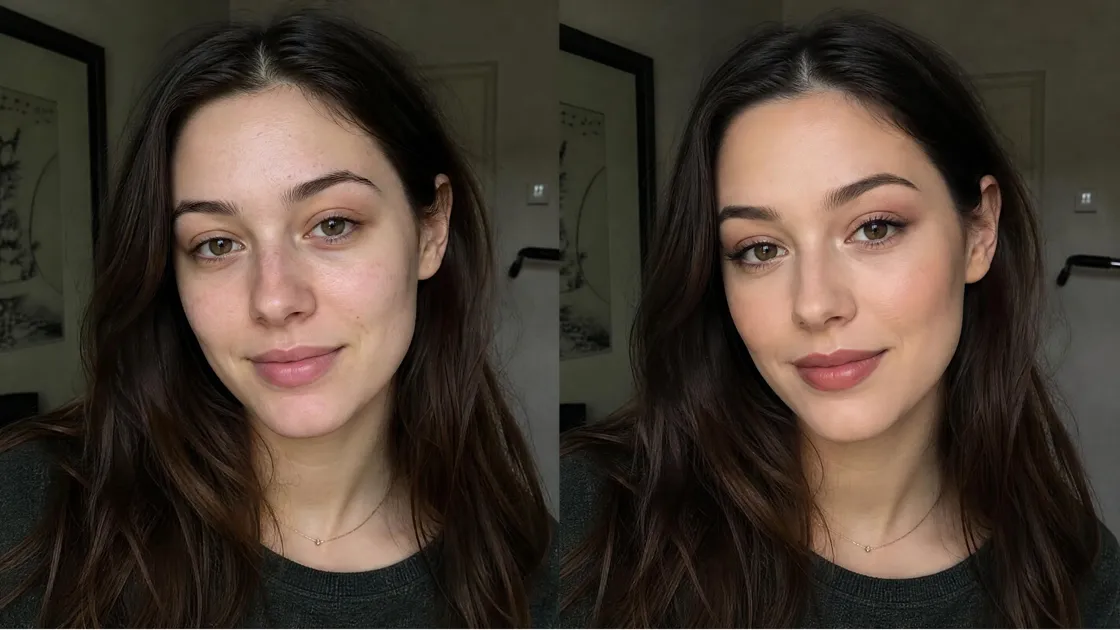
Beauty ecommerce isn't really having problems with demand; it's having problems with doubt. Not knowing one's complexion is one of the conversion killers in the beauty industry. Online shopping is such a pain because you cannot be sure which shade of foundation or lipstick is the right one, so most of the time, you hesitate, abandon your shopping cart, or in the end, return the products. This hesitation has an impact on beauty ecommerce conversion, increases return rates, and reduces customer trust, especially for DTC and marketplace brands that are competing on a large scale.
That's the reason why virtual makeup try on ecommerce is no longer just a "cool feature" only. It is turning into essential conversion infrastructure. By enabling customers to see how products really look on their face right away, brands have gotten rid of the biggest obstacle to buying: doubt. This changes ecommerce product visualization from static images to decision-making that involves interaction, which makes customers more confident, helps with conversion, and results in higher AOV in a way that traditional visuals cannot do.
Why Virtual Makeup Try-On Directly Impacts Beauty Ecommerce Revenue Growth
For beauty brands, growing revenue is not only about getting more traffic, but also about converting existing traffic. Beauty ecommerce conversion is the right tool here. Virtual try-on directly influences three main metrics: conversion rate, average order value (AOV), and return rate. When customers feel secure about shade selection, they are more inclined to finish buying, try products without limits, and most importantly, avoid returns made just because of the wrong color.
When it comes to a beauty ecommerce strategy, virtual try-on can be a game-changer. It eases the buyer's mind exactly at the point where the choice is being made – the stage of product selection. Shoppers get to experience products themselves instead of just viewing flat colors or pictures of models, which results in longer visits, more interactions, and eventually higher earnings per visitor. Simply put, it changes window shopping into actual buying.
The Shade Mismatch Problem That Limits Beauty Ecommerce Conversions
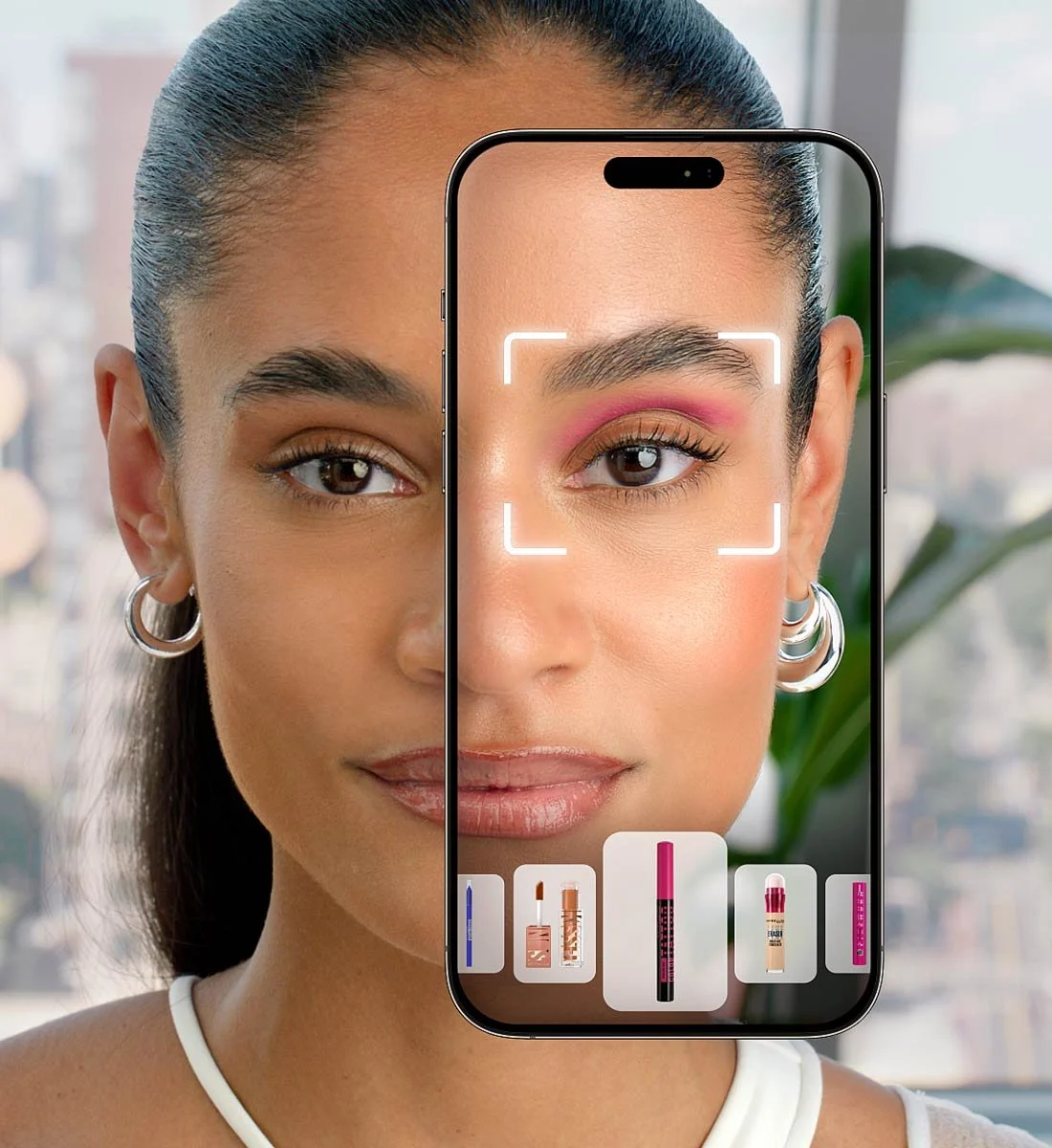
Shade mismatch is the most significant secret revenue loss in the beauty ecommerce industry. Cosmetics differ from other product categories in that they mainly depend on how well the product matches an individual's unique skin tone, undertone, and lighting conditions. Static product photos do not explain this complexity and leave customers to guess, and most of them are not confident enough to decide.
This doubt results in two very expensive consequences: leaving the shopping cart and returning the goods. Customers are either postponing their decision or buying several shades to test, thereby increasing the return logistics and operation costs. If there is no effective virtual makeup trial ecommerce experience, then, in fact, brands are mandating customers to take the risk, and many are simply not ready to do so.
How Virtual Try-On Improves Conversion Rates and Purchase Confidence
Virtual try-on works because it removes the factor of uncertainty in the exact points when conversions are made or lost. Here is the influence on beauty ecommerce conversion:
Instantly lowers hesitation: A virtual beauty try on can provide you with a live image of the makeup you chose on your face. This convinces and helps users reach a decision more quickly, rather than doubting themselves with the second choice.
Increasing customer loyalty through personalization: With the help of AI makeup try on for brands, customers can see the products on their own face rather than only models. This will make choices seem more precise and dependable.
Raises user engagement and average order value (AOV): Interactive try-on will encourage users to keep discovering different shades and products that will increase the basket size naturally, and at the same time, will help to build a stronger beauty ecommerce strategy.
Four High-Impact Strategies Beauty Brands Use to Increase Conversions with Virtual Try-On
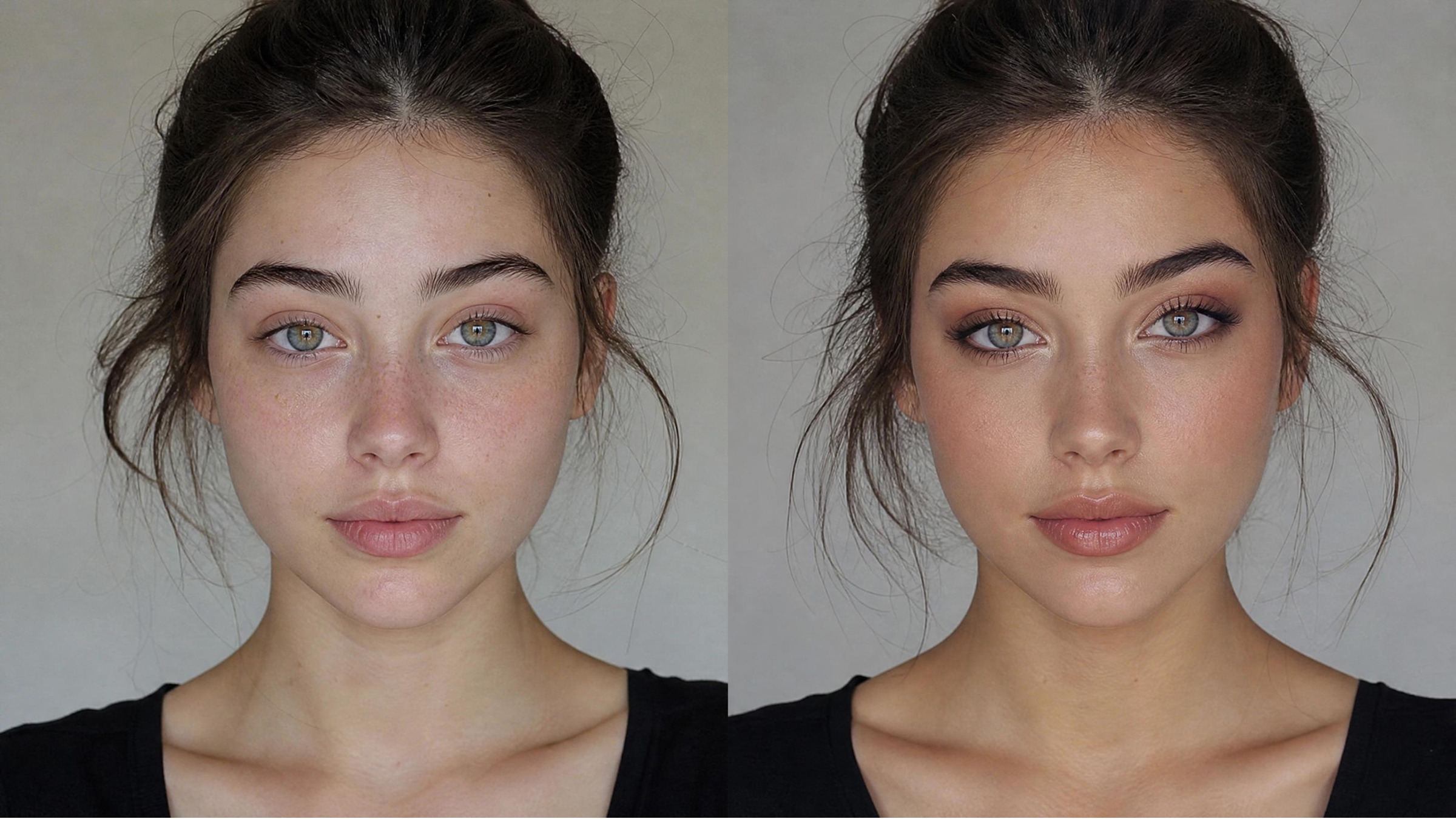
To realize genuine return on investment, companies must consider AI makeup try on for brands as a conversion mechanism rather than just a feature. Below are some strategies that demonstrate how top teams use try-on at various stages of the funnel to achieve measurable growth.
Embedding Virtual Try-On on Product Pages to Reduce Drop-Off
The best and most effective place to put a virtual try-on feature is right there on the PDP, alongside the color selection tool. Rather than asking the user to imagine how a particular shade will look, AI makeup try on for brands enables them to visually test different shades straight away without having to leave the page.
This is a very effective way of eliminating unnecessary steps at the point, which is shade selection, where most users decide not to continue. Consequently, the whole process of deciding becomes easier, more users add products to their carts, and overall beauty ecommerce conversion performance is strengthened.
Using Try-On Behavior Data to Drive Personalized Recommendations
Every virtual try-on is a precious piece of intention information. A reliable virtual beauty try on solution records what colors the users try, how long they stay engaged, and which ones they look at again.
Brands may then utilize this information for intelligent recommendation systems, a virtual assistant that offers close shares or presenting a complete set of complementary or best-match products to the user. This way of providing relevant recommendations during a person's interaction results in higher conversion and increased AOV by means of personalized cross-selling.
Building Full Shade Range Visualization Across Multiple Skin Tones
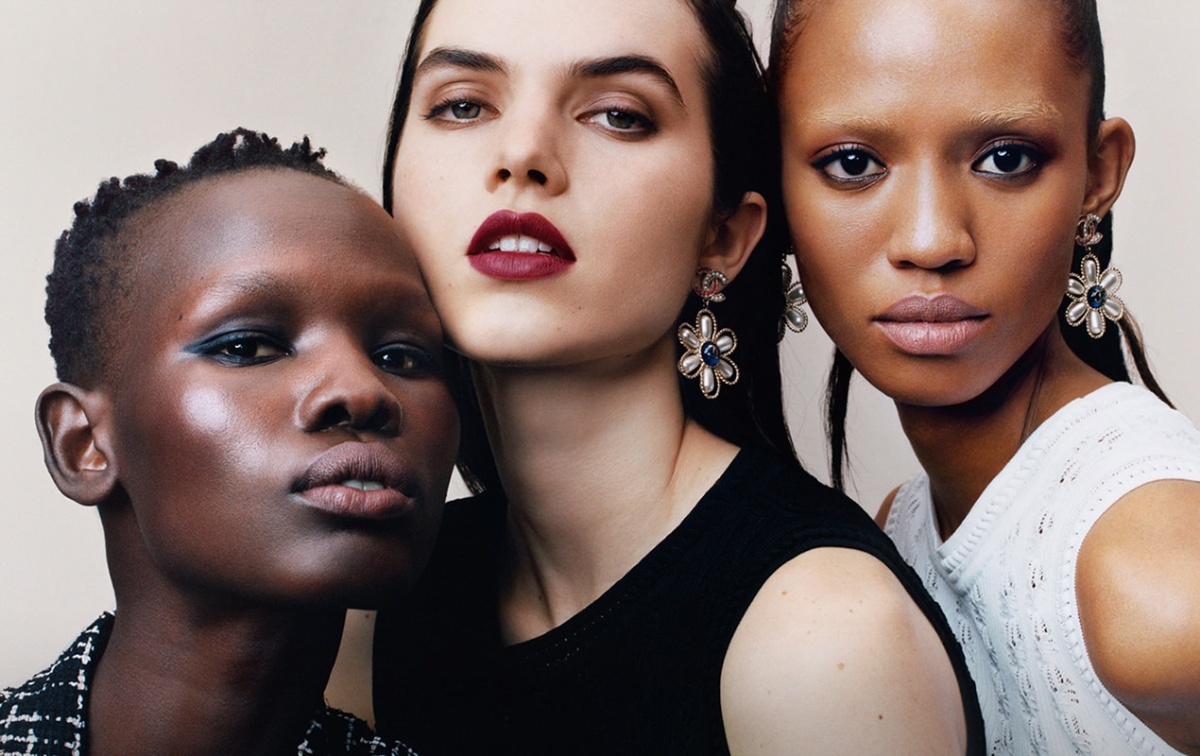
Beauty ecommerce still has a major trust issue with lack of representation. Some brands go the extra mile and display products on different skin tones along with virtual makeup try on ecommerce as a way of erasing this barrier.
Of course, it's not just about being socially inclusive, it's also a direct factor in increasing beauty ecommerce conversions. Once customers find themselves looking at a product with the right shade for their skin tone, they feel more confident, change their minds less, and are more willing to buy.
Extending Try-On into Social Ads and TikTok/Instagram Commerce
Leading companies don't restrict try-on only to their site; they bring it along their acquisition channels as well. With AI makeup try on for brands, the interactive experiences can be embedded not only in social ads but also in short-form video platforms.
Such approach gives users the chance to experience a product even before they land on the PDP, and, as a result, they get warmer in terms of intent, their conversion rates go up, and it becomes easier for marketers to prove the success of their campaigns. Besides that, the ad becomes livelier and more attractive, and one of the outcomes is an increased CTR. In the end, this leads to a reduced CAC, which is essential for a smart beauty ecommerce strategy.
How Beauty Brands Scale Product Visual Production for Virtual Try-On Systems
Even top-notch virtual beauty try on systems are ineffective without this one essential component: scalable, consistent product visuals. Most beauty brands come up against a production bottleneck when they try to expand their shade ranges to cover multiple skin tones, lighting conditions, and product variants. Strategy is excellent but there is an execution problem when visual assets can't keep up with SKU complexity and personalization demands in today's virtual makeup try on ecommerce systems.
If brands want their virtual try on to be a real driver of conversions, they must have in place a highly industrialized visual pipeline that allows for fast generation of assets, maintains consistency across different skin tones, and accurately renders the products. This layer of execution is what changes AI makeup try on from just being a feature at beauty brands to a highly scalable revenue generator that can support growth across product detail pages (PDPs), advertisements, and personalization systems.
Creating Multi-Skin-Tone Model Assets Without Expensive Photoshoots
One of the greatest operational obstacles when scaling a virtual beauty try on solution is the ability to produce high-quality visuals representing different skin tones. Conventional shooting methods are not only slow, costly, but also highly challenging when it comes to photographing hundreds of shades, SKUs, and campaign variations.
Designkit AI Fashion Model Generator tackles this problem by transforming a single product image into multiple on-model photos, with just one click. Besides uploading a garment or a product image, teams can generate five different model photos instantly to reflect various ethnicities, poses, angles, and scenes, no casting, studios, or reshoots involved.
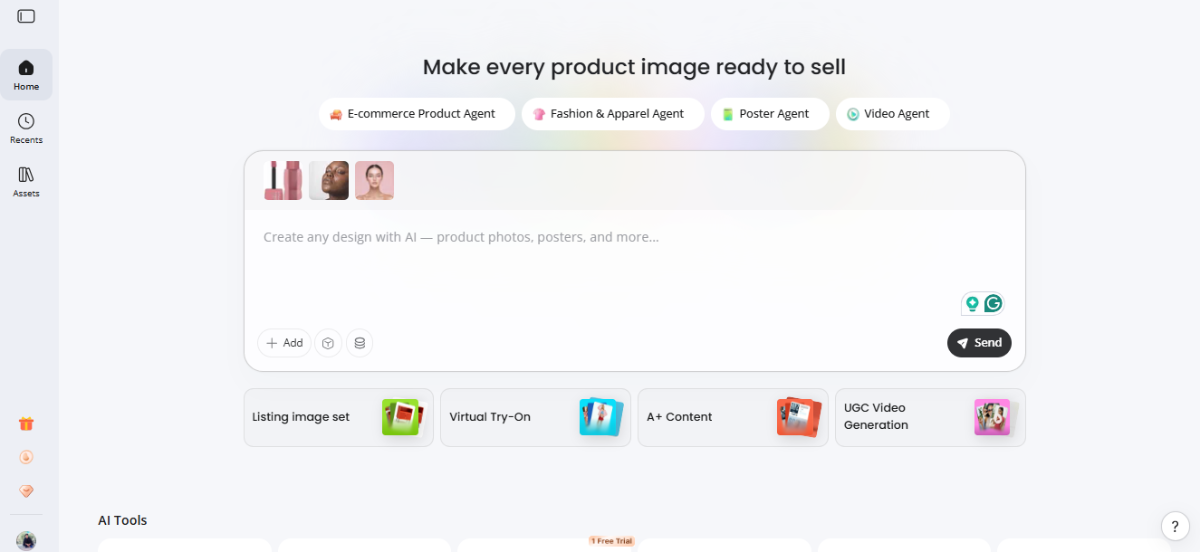
Step 1 — Upload model photos and lipstick reference
Click the "+" button in the Designkit AI Fashion Model Generator and upload two clear model images with different skin tones and a lipstick product image for shade reference. Press "Send".
Step 2 — Write a prompt to apply lipstick to both models
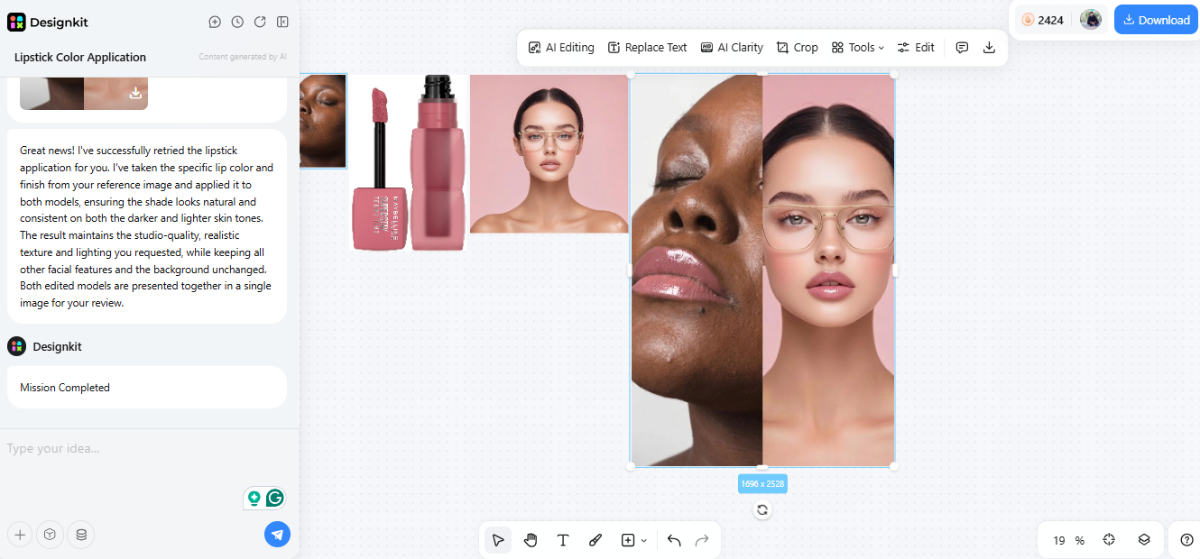
Go to the prompt box and clearly instruct the AI to apply the lipstick shade to both models.
Example prompt:
"Apply the uploaded lipstick shade to both model images. Ensure the color is consistent across both skin tones while preserving natural lip texture, lighting, and realistic finish. Keep results studio-quality and true-to-product."
Generating Consistent Shade Range Product Visuals at Scale
Aside from model visuals, the brands encounter a bottleneck of diversifying across all skin tones, variants, and SKUs. Not having this results in the best virtual beauty try on solution failing as the customers are unable to compare the options clearly.
Designkit AI Color Changer is a great help in this case at a product level. Not only is shooting every shade unnecessary now but the teams can even upload a single master asset and obtain full color ranges instantly by using the exact HEX codes or the preset palettes. The AI model not only recognizes the texture, lighting, and material but also generates each variant so that it is visually authentic rather than being obviously edited.
Connecting Virtual Try-On Experiences to Ecommerce Visual Infrastructure
However, virtual try-on is only effective if it accurately reflects the product that a customer will receive. If the color a customer sees on the try-on is different from the product picture, then the customer's confidence in the brand will decrease leading to a drop in sales. Hence, virtual makeup try-on ecommerce needs to be in-sync with your product images.
For instance, different parts of the product presentation such as try-on, swatches, and product images should have brand colors, illumination, and shade names kept uniform.
Conclusion
The growth of the beauty ecommerce sector is mainly driven by two factors: excellent user experience and scalable visual production. Virtual makeup try on ecommerce can enhance the experience by eliminating the uncertainty of shades and facilitating customers to make quicker and better decisions. This will ultimately lift the beauty ecommerce conversion, increase AOV, and lower the number of returns.
However, try-on by itself is not sufficient. Brands also require a robust visual framework uniform shade photo, representation of multiple skin tones, and large-scale asset generation. Hence, when the AI makeup try on for brands is used together with a trustworthy virtual beauty try on solution and top-notch product visuals, it becomes a whole system rather than just a feature. This is the factor that will lead to significant, repeatable growth in 2026 and after.
Frequently Asked Questions
How can beauty brands measure ROI from virtual makeup try on ecommerce?
How difficult is it to integrate AI makeup try on for brands into an ecommerce store?
Integration is usually simple. The main work is setting up correct shade data and visuals for an accurate virtual beauty try on solution.
What is the cost of a virtual beauty try on solution?
Costs vary. Enterprise tools are expensive, but brands can start small and scale as beauty ecommerce conversion improves.
Which products benefit most from virtual makeup try on ecommerce?
Products where shade matters most—like foundation, concealer, lipstick, and blush—see the highest impact. Any category that depends on color matching can benefit from virtual makeup try on ecommerce.
What is the best budget-friendly way to start?
Start with visuals. Tools like Designkit help create multi-shade, multi-skin-tone assets, improving beauty ecommerce conversion before full ai makeup try on for brands deployment.
You May Also Like
How to Try Makeup Online with AI and Virtual Makeup Try-On Apps (2026)
Best Virtual Hairstyle Try-On Tools Online for Realistic Previews 2026
How to Choose the Right Sunglasses for Your Face Shape Online
How AI Virtual Try-On Helps Fashion Brands Boost Sales & Reduce Returns
10 Best Virtual Try-On Apps & Tools for Online Shopping in 2026
Best AI Virtual Try-On Clothes Tools for Any Body Type
How to Virtually Try On Clothes Online: A Complete Guide
Create Beauty Product Visuals That Convert More Shoppers
Scale beauty content production with AI. Generate diverse model imagery, showcase products across skin tones, and build virtual try-on experiences that increase customer confidence and sales.