
Shopify vs Etsy: Which Platform Is Better for Handmade Sellers?
Marketplace traffic or your own store? Compare fees, discovery, and branding for handmade sellers on both platforms.

If you're comparing Shopify vs Etsy, you're probably answering a practical question, not collecting a feature checklist. Should you start with a marketplace that already has shoppers, or build your own online store from day one?
The answer depends less on which logo looks better and more on your business stage, marketing resources, and long-term goals. Etsy helps new sellers reach buyers inside a marketplace. Shopify gives you control over your brand, customer relationships, and website.
Many handmade businesses do not treat this as either-or. They use Etsy to validate products and find new customers, then add a Shopify store to improve repeat purchases and reduce dependence on marketplace traffic alone.
This guide compares Shopify vs Etsy on fees, traffic, branding, customer ownership, SEO, and scalability. It also covers when using both makes sense, so you can choose based on your current stage of growth.
Shopify vs Etsy at a Glance
If you only need a quick recommendation, start here.
| If your priority is... | Recommended platform | Why |
|---|---|---|
| Getting your first sales quickly | Etsy | Access to an established marketplace with buyers already searching for handmade products. |
| Building your own brand | Shopify | Complete control over your storefront, domain, and customer experience. |
| Growing a long-term ecommerce business | Shopify | Own your customer data, improve repeat purchases, and scale with marketing channels. |
| Testing product demand with minimal upfront cost | Etsy | Lower fixed costs make it easier to validate new products. |
| Maximizing both discovery and brand growth | Use both | Many handmade businesses use Etsy for customer acquisition and Shopify for repeat customers. |
In short:
- Choose Etsy if you're launching your first handmade business and need marketplace traffic.
- Choose Shopify if you already have an audience through Instagram, TikTok, Pinterest, SEO, email marketing, or paid ads.
- Choose both platforms if you want to diversify traffic sources while building a brand you fully own.
Marketplace vs Your Own Store: What's the Real Difference?
Most comparisons between Etsy vs Shopify focus on fees or features. In reality, the biggest difference is their business model.
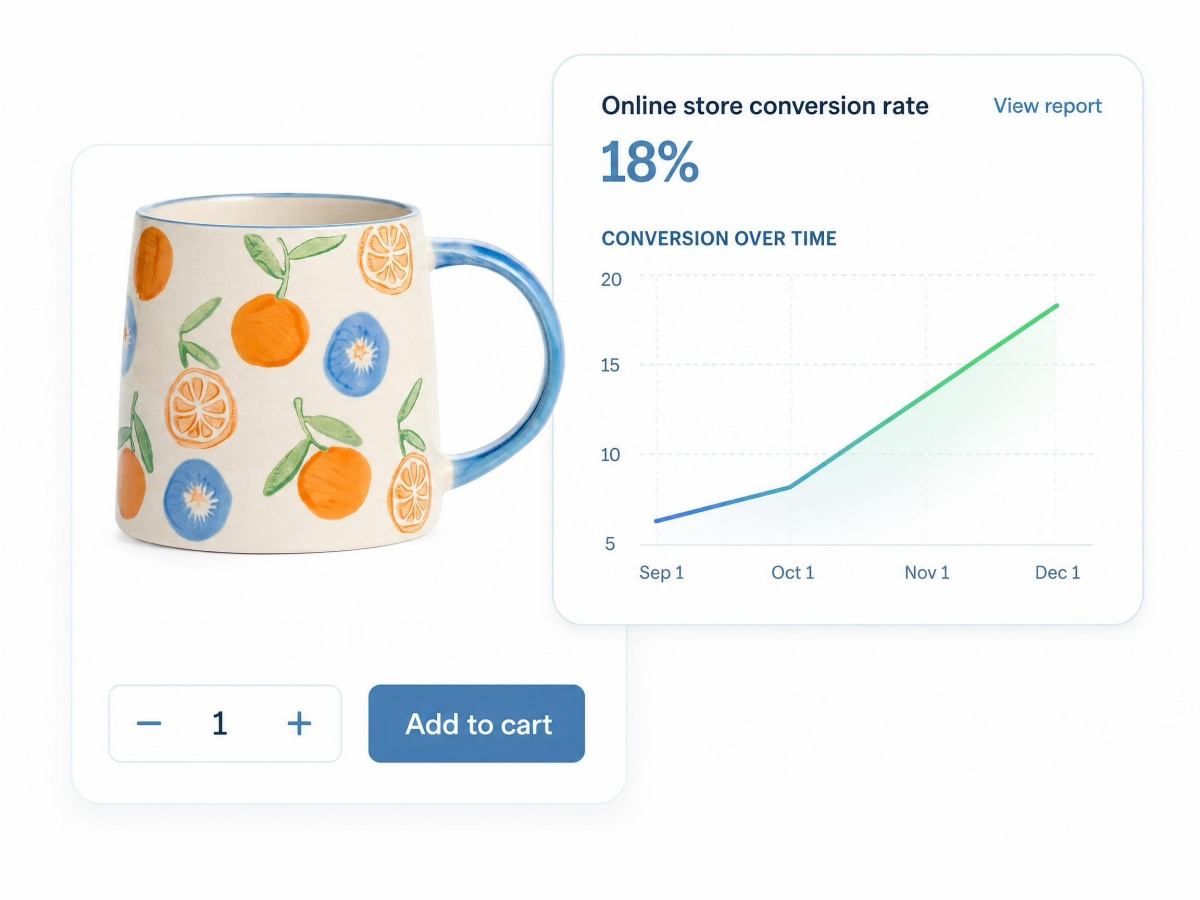
Etsy is an online marketplace. Shopify is ecommerce software for creating your own website.
That distinction shapes almost everything else: how customers find you, how much control you keep, and how hard early growth feels.
Etsy: Sell Inside an Existing Marketplace
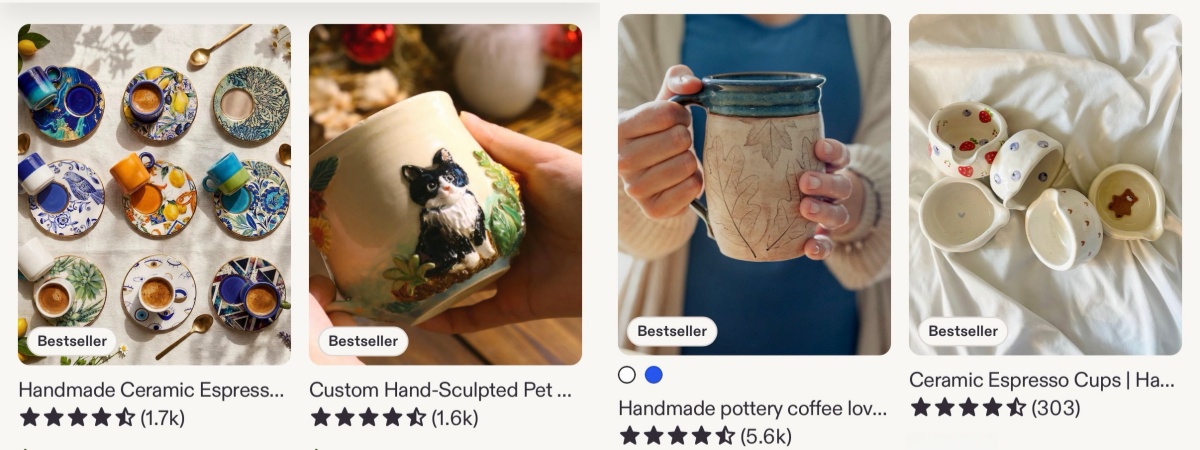
Etsy works like a digital marketplace dedicated to handmade, vintage, and craft-related products. Millions of shoppers visit Etsy specifically because they want unique or handmade items.
Instead of attracting visitors to your own website, you compete alongside other sellers within Etsy's search results. Buyers often discover products through Etsy search, category pages, recommendations, or Etsy Ads.
The biggest advantage is visibility. You don't need to build traffic from scratch because the marketplace already has an established audience.
The trade-off is reduced control. Your listings follow Etsy's design, search algorithm, and policies. Customers often remember purchasing "from Etsy" rather than remembering your individual brand.
Shopify: Build Your Own Ecommerce Website
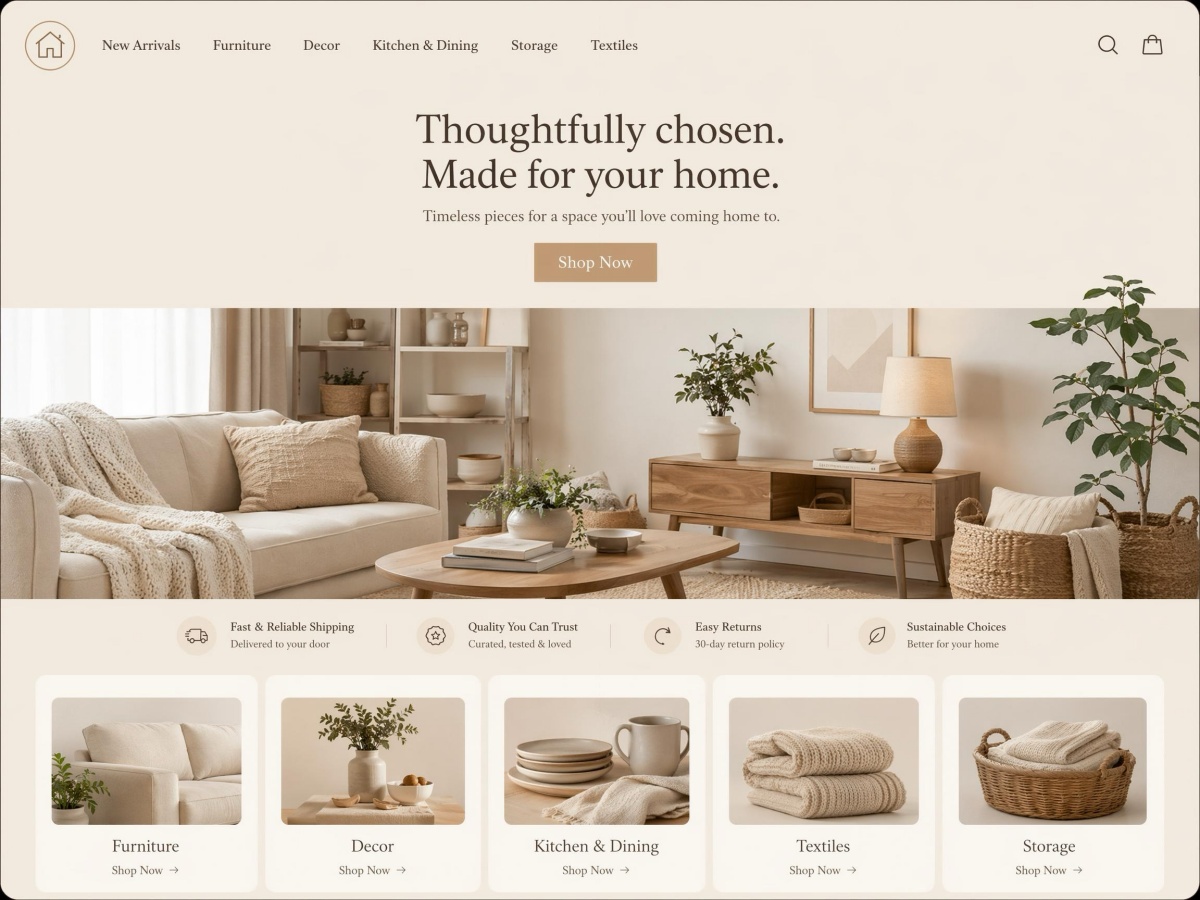
Shopify provides the tools to create and manage your own online store. You choose the domain name, storefront design, checkout experience, and marketing strategy.
Unlike Etsy, Shopify doesn't include built-in marketplace traffic. Customers only visit if you attract them through channels such as:
- Google Search (SEO)
- Instagram or TikTok
- Email marketing
- Influencer collaborations
- Paid advertising
That requires more effort early on, but it also gives you ownership of your customer relationships and brand identity.
Why This Difference Matters
If your biggest challenge is getting your first customers, Etsy usually offers a faster path to early sales because shoppers are already browsing the marketplace.
If your goal is building a recognizable brand with repeat customers, Shopify provides more flexibility. You control your website, collect customer data, build email lists, and create a shopping experience that isn't limited by marketplace rules.
According to Shopify's Future of Commerce research, many merchants now combine marketplaces with direct-to-consumer websites instead of relying on a single sales channel. This multichannel approach helps businesses diversify traffic while strengthening long-term customer relationships.
Rather than asking "Which platform is better?", a more useful question is:
Which platform solves your biggest business challenge today?
For new sellers, that challenge is often getting discovered. For established sellers, it's usually building a brand customers remember and return to.
Shopify vs Etsy Fees: Which Costs Less?
For many sellers, fees are the deciding factor when comparing Shopify vs Etsy. Asking "Which platform is cheaper?" can still be misleading, because the two platforms charge in different ways.
Etsy costs little to open a shop, but takes a percentage of each sale. Shopify charges a monthly subscription, while transaction costs are usually lower if you use Shopify Payments.
Which option costs less depends on three variables:
- Your average order value
- Your monthly sales volume
- How much traffic you generate yourself
Compare your expected monthly revenue and operating costs before deciding. Also confirm live pricing on each platform, since rates change by country and plan.
Etsy Fees
According to the Etsy Fees & Payments Policy, sellers may pay several different fees depending on where they operate and which services they use.
| Fee | Typical U.S. Rate* |
|---|---|
| Listing fee | $0.20 per listing |
| Transaction fee | 6.5% of the order total |
| Etsy Payments processing | 3% + $0.25 (U.S.) |
| Offsite Ads | 12% or 15% when applicable |
*Rates vary by country. Always verify current pricing in Etsy's official fee documentation before calculating your costs.
Example: Selling a $100 Product on Etsy
- Transaction fee: $6.50
- Payment processing: $3.25
- Total selling fees: about $9.75 (excluding listing fees, taxes, shipping, and optional advertising)
If you regularly use Etsy Ads or Offsite Ads, your effective selling cost may be significantly higher.
Shopify Fees
Shopify follows a different pricing model. Instead of marketplace transaction fees, sellers pay a monthly subscription plus payment processing fees.
| Cost | Shopify Basic (U.S.)* |
|---|---|
| Monthly subscription | Confirm current Basic plan price on Shopify Pricing (monthly and yearly billing differ) |
| Product listing fee | None |
| Shopify Payments | About 2.9% + $0.30 for standard online cards on Basic (confirm live rates) |
| Third-party payment fee | An additional fee may apply if you do not use Shopify Payments |
*Confirm numbers on Shopify's official pricing page before publishing or making a plan decision.
Example: Selling a $100 Product on Shopify
- Payment processing: about $3.20 with Shopify Payments at common Basic online rates
- Monthly subscription is paid separately, whether you make zero sales or many
If you're already generating consistent traffic, Shopify's pricing structure often becomes more predictable as sales grow.
Which Platform Costs Less?
There isn't a universal answer.
Etsy is often less expensive for new sellers because you can start without paying for a monthly ecommerce platform. That makes it easier to validate products before investing in your own website.
Shopify often becomes more cost-effective as your business grows, especially if you generate repeat customers through SEO, email marketing, or social media instead of relying entirely on marketplace traffic.
At low monthly sales, Etsy is often cheaper to start. As volume rises, Shopify's subscription model can look better if you already have traffic. Always add marketing spend into the Shopify side of the math. Estimate costs over a full month: platform fees, advertising, payment processing, shipping, apps, and your own marketing budget. That picture is more accurate than comparing one order.
Official references:
- Etsy Fees & Payments Policy
- Etsy Seller Handbook
- Shopify Pricing
Marketplace Traffic vs Brand Ownership
Fees are easy to compare because they're visible. Traffic and customer ownership usually have a bigger impact on long-term profitability.
This is where the difference between Etsy vs Shopify becomes clearer.
| Etsy | Shopify | |
|---|---|---|
| Traffic source | Marketplace search | Your marketing channels |
| Brand control | Limited | Complete |
| Customer ownership | Primarily marketplace relationship | You own customer relationships |
| Email marketing | Limited | Full control |
| SEO | Etsy search + Google | Google SEO for your own website |
| Long-term scalability | Moderate | High |
Why Marketplace Traffic Matters
One of Etsy's biggest advantages is that shoppers already visit the platform looking for handmade, vintage, and personalized products.
You do not need to convince people to visit Etsy first. You mainly need them to choose your listing.
For new businesses without an established audience, this can reduce the time required to generate initial sales.
Why Brand Ownership Matters
As a business grows, relying entirely on marketplace traffic can become limiting.
With Shopify, every visitor arrives at your own website. You control the shopping experience, collect first-party customer data, build email lists, publish SEO content, and create marketing campaigns across multiple channels.
According to Shopify's Future of Commerce research, successful merchants increasingly combine marketplaces with owned ecommerce websites instead of relying on a single acquisition channel.
For many small businesses, the real decision is not Shopify or Etsy. It is what role each platform should play:
- Use Etsy to reach shoppers who are actively searching for handmade products.
- Use Shopify to build your own brand and encourage repeat purchases.
- Use social media, email marketing, and Google SEO to gradually increase traffic to your own website.
This approach reduces dependence on a single marketplace while giving you more chances to build long-term customer relationships.
How to Choose: Shopify, Etsy, or Both
Choosing between Shopify vs Etsy is not about finding the "better" platform. It is about identifying the biggest challenge your business needs to solve today.
Ask yourself these four questions before making a decision.
1. Where Will Your First Customers Come From?
If you don't already have an audience, Etsy usually offers the faster path to your first sales. Buyers actively search Etsy for handmade, vintage, and personalized products, giving new sellers immediate exposure without building a website.
If you already attract visitors through Instagram, TikTok, Pinterest, YouTube, email marketing, or Google Search, Shopify lets you send those visitors to your own branded store.
2. Is Brand Building a Priority?
If your goal is simply validating a product idea, Etsy's marketplace can help you start quickly.
If you're building a business you hope customers will remember and return to, Shopify gives you more control over branding, content, and customer experience.
This becomes increasingly important as repeat purchases become a larger share of your revenue.
3. How Comfortable Are You With Marketing?
One of the biggest differences between Etsy and Shopify is who is responsible for generating traffic.
Etsy already has shoppers. Shopify requires you to attract visitors through SEO, social media, paid advertising, partnerships, or email marketing.
If marketing feels overwhelming today, Etsy may be the more practical starting point.

4. Where Do You Want Your Business to Be in Three Years?
If you're building a side business with a limited product catalog, Etsy may continue to meet your needs.
If you plan to expand your product range, launch new collections, build a recognizable brand, or sell across multiple channels, Shopify offers more flexibility for long-term growth.
A simple rule: Choose the platform that solves today's biggest problem while keeping future growth in mind.
Who Should Start on Etsy
Etsy is often the best option for sellers who want to launch quickly without investing heavily in website management or digital marketing.
You may want to start with Etsy if:
- You're launching your first handmade business.
- You have little or no existing audience.
- Your budget is limited.
- You sell handmade, vintage, or personalized products.
- You want to validate product demand before building a standalone website.
You may outgrow depending on Etsy alone if:
- You want complete control over branding.
- You rely heavily on repeat customers.
- You plan to build an email marketing strategy.
- Your margins are shrinking because of marketplace fees and advertising costs.
- You want more flexibility in pricing, promotions, and customer experience.
Many established handmade brands continue selling on Etsy while gradually shifting more traffic to their own websites.
Who Should Prioritize Shopify
Shopify is designed for businesses that want to build an independent ecommerce brand rather than relying mainly on marketplace traffic.
Shopify may be the better choice if:
- You already have followers on social media.
- You receive traffic from Google Search.
- You have an email list.
- You sell higher-value products with healthy profit margins.
- You expect repeat purchases.
- You want ownership of your customer relationships.
You may struggle on Shopify if:
- You have no strategy for attracting visitors.
- You expect customers to discover your store automatically.
- You only plan to sell occasionally.
- Your catalog is still experimental.
Without traffic, even a well designed Shopify store won't generate sales.

Using Etsy and Shopify Together
For many handmade businesses, the answer is not exclusive use of one platform. Many sellers treat Etsy as a customer acquisition channel and Shopify as their long-term brand hub.
A Practical Dual-Channel Workflow
- Launch new products on Etsy to test demand.
- Identify your best-selling products.
- Build optimized product pages on Shopify.
- Create blog content that attracts organic traffic from Google.
- Grow your email list and encourage repeat purchases through your own website.
This strategy combines Etsy's marketplace visibility with Shopify's branding and customer ownership.
The main challenge is operational rather than technical. If you sell on both platforms, keep inventory, pricing, shipping policies, and product information synchronized to avoid overselling or inconsistent customer experiences.
How to Move From Etsy Toward Shopify Without Abrupt Cuts
Many successful handmade businesses don't leave Etsy overnight. They reduce dependence on marketplace traffic while building their own ecommerce brand.
A practical migration path looks like this:
- Continue selling your best-performing products on Etsy.
- Launch a Shopify store with the same core catalog.
- Create unique content, blog posts, and product pages to attract Google Search traffic.
- Use social media and email marketing to direct repeat customers to your Shopify store.
- Introduce exclusive collections or limited editions that are only available on your website.
This phased approach helps reduce risk while giving customers more than one way to find you. Instead of replacing Etsy immediately, Shopify can gradually become your primary brand destination.
Product Images on Shopify and Etsy
Choosing between Shopify and Etsy still matters. Visuals matter too. Shoppers decide from what they can see and understand about the product, whether the listing sits in Etsy search or on your own Shopify store.
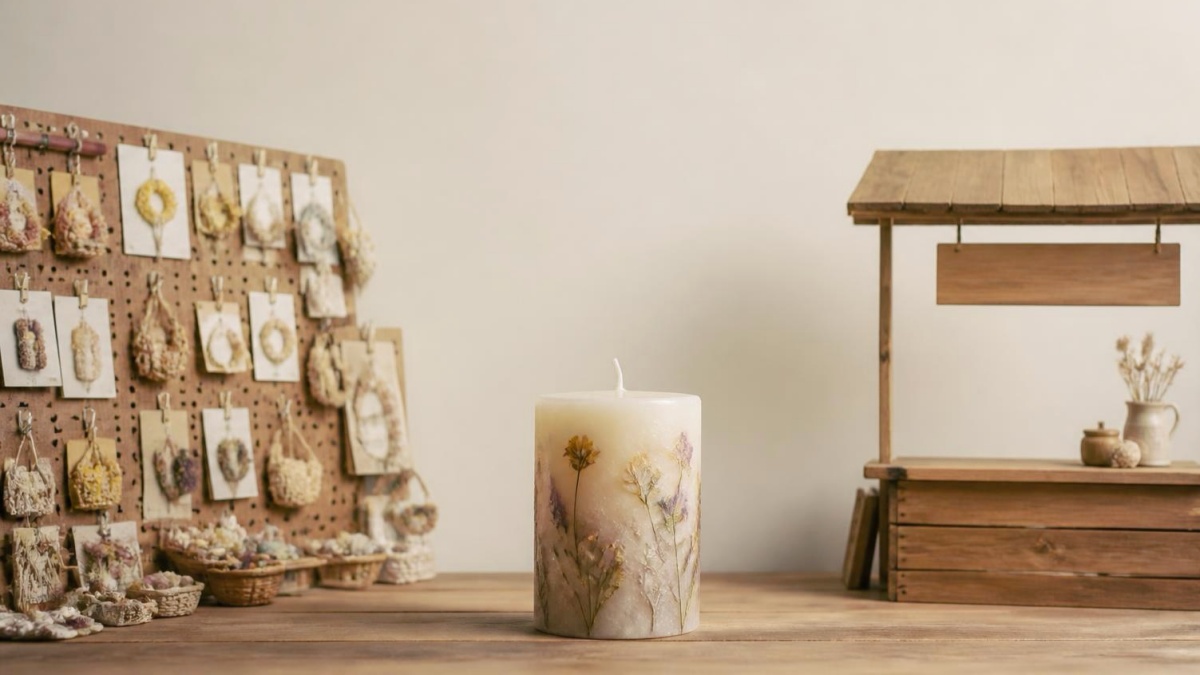
For handmade items, photos should show craftsmanship, materials, size, texture, and finish. Clear, consistent images help listings earn clicks and reduce buyer hesitation.
Whether you're selling on Etsy, Shopify, Amazon, or your own website, consider including:
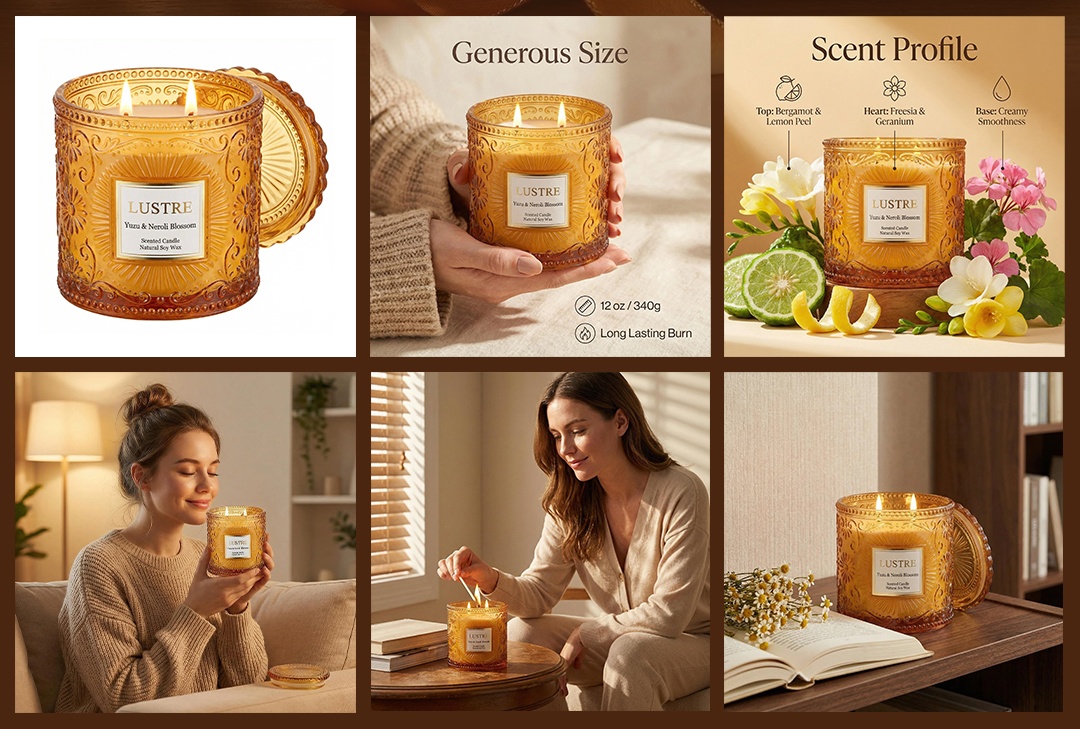
- A clean hero image with a simple background
- Close-up photos that highlight materials and craftsmanship
- Lifestyle images showing the product in use
- Scale references that help buyers understand dimensions
- Photos of packaging if your products are commonly purchased as gifts
- Images showing available colors, sizes, or customization options
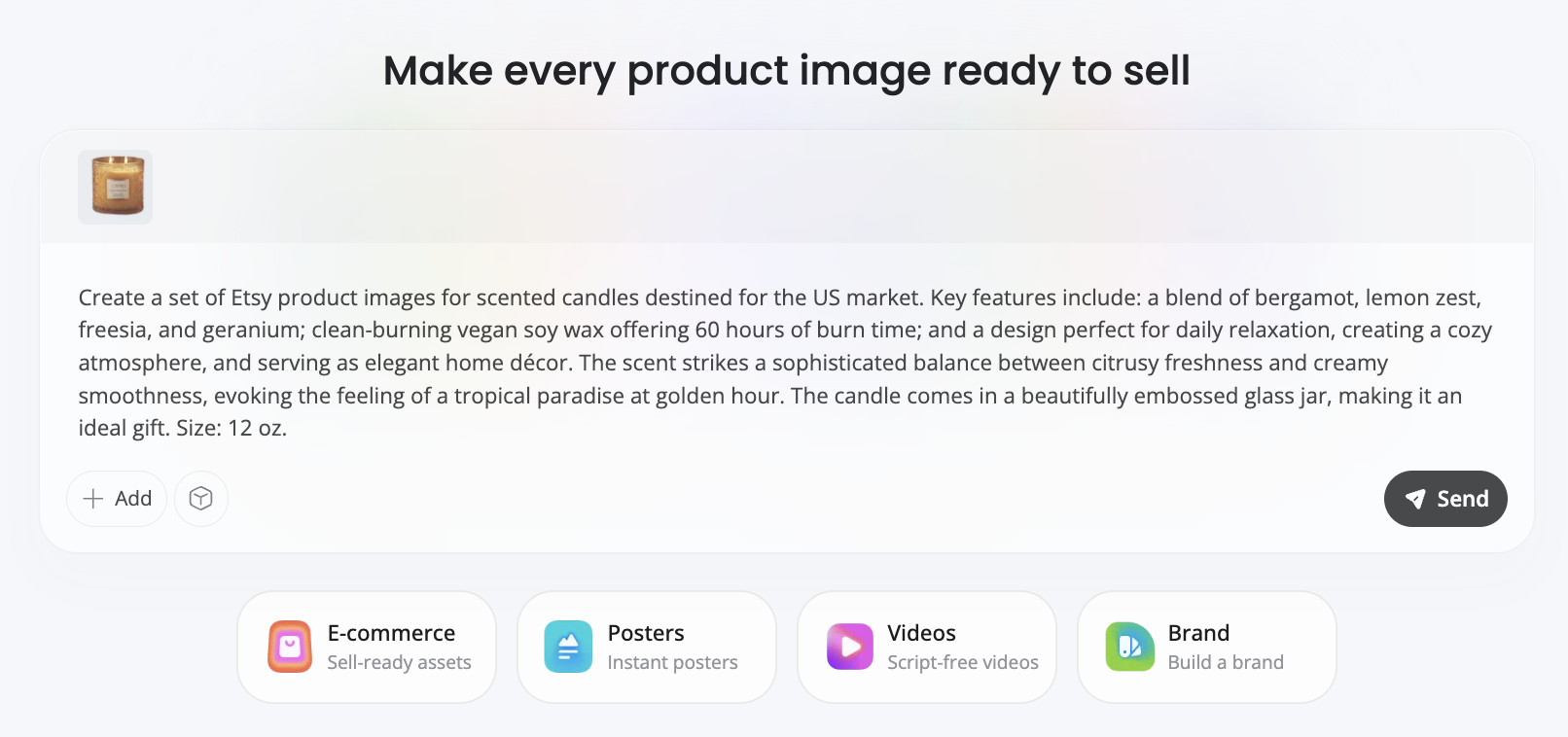
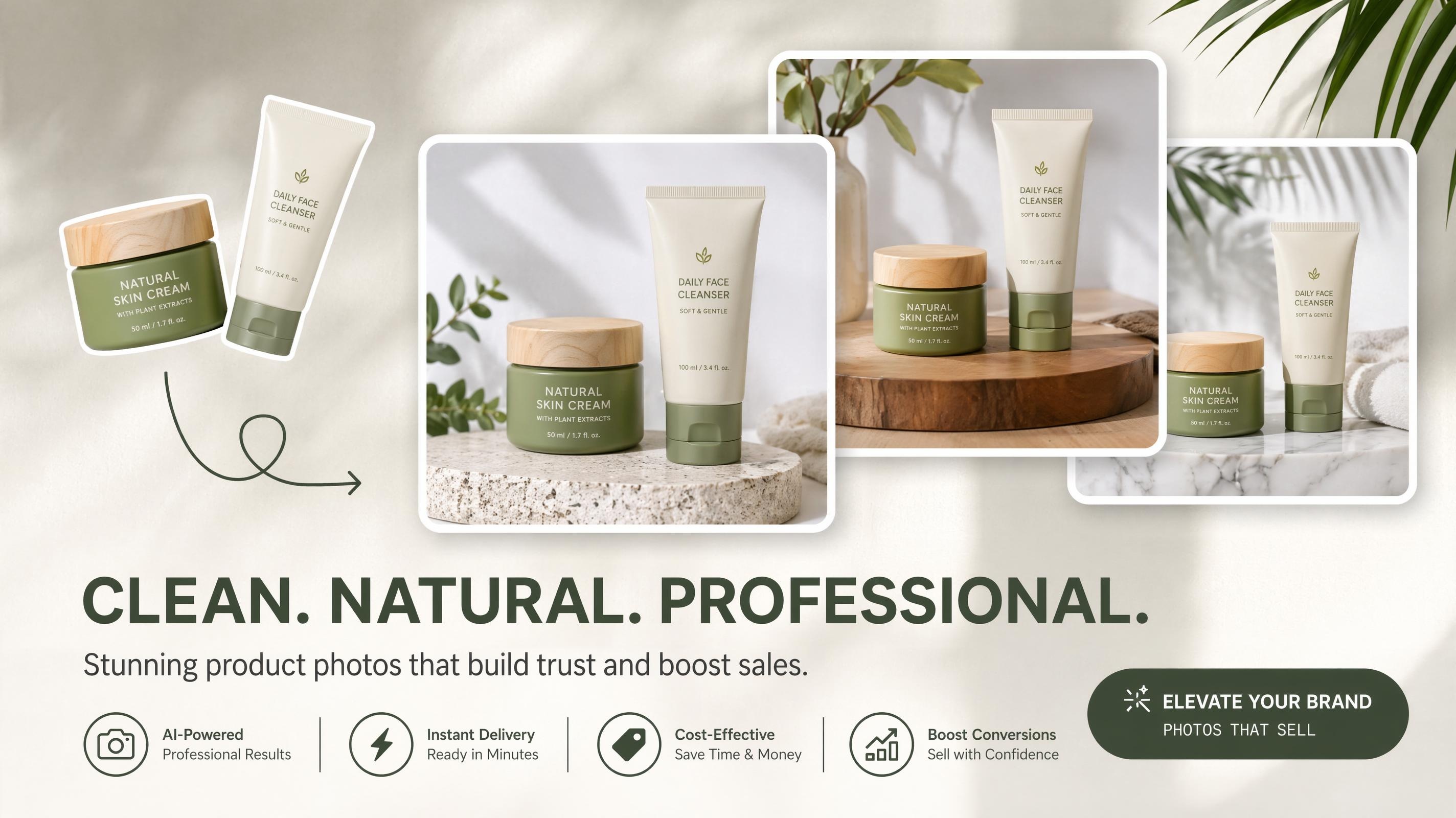
If you need extra lifestyle or background variations from photos you already have, AI product photography tools can help. Designkit is built for ecommerce visuals: you can generate lifestyle scenes, swap backgrounds, and prepare marketplace-ready images from product shots. Use AI to expand your set after you have accurate photos of the real item. Do not replace honest product photography with generated images that misrepresent materials or scale.
Prepare listing visuals with Designkit
- Upload clear product photos. Use sharp shots of the real item on a simple background when you can.
- Generate extra scene or background options. Create lifestyle or clean marketplace-style variations without a full reshoot.
- Export for your channel. Save versions for Etsy listing thumbnails or Shopify product galleries, and keep details consistent if you sell in both places
Final Thoughts
When comparing Shopify vs Etsy, there isn't a single platform that's right for every handmade business.
Etsy helps new sellers reach customers quickly through an established marketplace. Shopify provides greater control over branding, customer relationships, and long-term business growth.
The best choice depends on your current stage:
- Starting your first handmade business? Etsy often offers the fastest path to validating demand.
- Building a recognizable brand? Shopify gives you more flexibility and ownership.
- Planning for long-term growth? Using both platforms strategically can combine marketplace discovery with the advantages of your own ecommerce website.
Rather than asking which platform is objectively better, choose the one that solves today's biggest constraint: discovery, brand control, or both. As the business grows, you can keep Etsy, add Shopify, or run both.
Wherever you sell, keep product visuals accurate and consistent. If you need more lifestyle or listing-ready images from photos you already have, Designkit can help with that part of the workflow.
Frequently Asked Questions
Is Shopify better than Etsy for beginners?
Which platform is better for handmade products?
Etsy remains one of the most popular marketplaces for handmade, vintage, and craft-related products. Shopify gives handmade businesses greater flexibility, branding, and customer ownership. Many successful sellers eventually use both platforms.
Is Etsy cheaper than Shopify?
For many new sellers, Etsy has lower upfront costs because there isn't a monthly ecommerce subscription. As sales increase, Shopify's pricing model may become more cost-effective, depending on your order volume, marketing costs, and payment processing fees.
Can I sell on Etsy and Shopify at the same time?
Yes. Many businesses use Etsy to reach marketplace shoppers while using Shopify as their branded online store. Selling on both platforms can diversify your traffic sources, provided you keep inventory and order management synchronized.
Is Shopify better than Etsy for SEO?
Shopify gives you greater control over SEO because you own the website, publish blog content, optimize landing pages, and build authority around your brand. Etsy listings can also appear in Google Search, but sellers have less control over the overall website structure and optimization.
Can I migrate my Etsy shop to Shopify?
Yes. Shopify supports importing products from Etsy through official tools and third-party apps. Many sellers migrate gradually by keeping their Etsy shop active while expanding their Shopify store.
Do I need my own website if I already sell on Etsy?
Not immediately. Many new businesses successfully validate products on Etsy before investing in their own website. As your business grows, having an independent ecommerce site can provide more branding opportunities, stronger customer relationships, and additional marketing channels.
Why do some sellers leave Etsy?
Common reasons include increasing competition, marketplace fees, limited branding opportunities, and a desire to build direct relationships with customers. However, many businesses continue using Etsy successfully as part of a broader multichannel strategy rather than leaving the platform entirely.
Should I switch from Etsy to Shopify?
If you already have consistent sales, repeat customers, or reliable marketing channels, adding Shopify can help you build a stronger long-term business. For many sellers, the best approach is gradual expansion rather than a complete migration.
You May Also Like
10 Best Online Selling Platforms (2026): Pick by What You Sell
Etsy vs eBay (2026): Handmade, Vintage, or Secondhand?
Amazon Handmade vs Etsy (2026): Which Is Better for Makers?
Selling on Amazon vs eBay (2026): Fees, Profit & Where to Sell
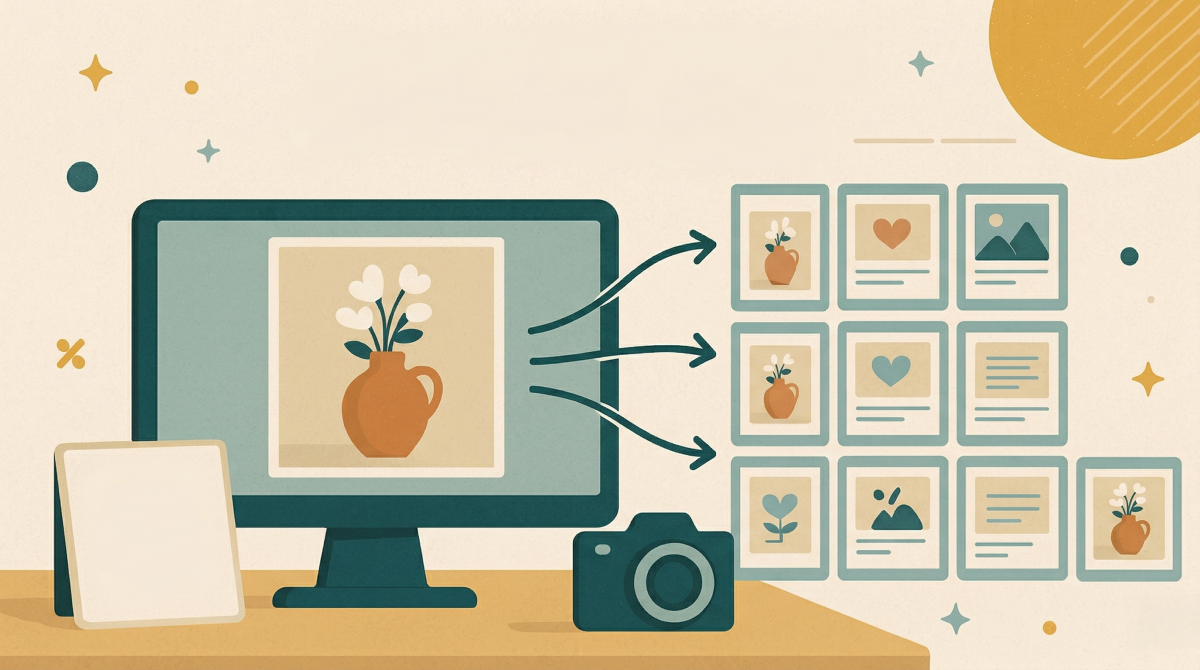
How to Turn One Photo into 10 Etsy Listing Images Fast: Batch Workflow
Etsy Thumbnail Optimization: Keep Your Product Fully Visible
Optimize Etsy Images for Mobile: Listing Photos That Convert
Shopify Image Size 2026: Complete Guide and Tips for Better Product Display
How to Build a Shopify Store That Actually Converts Visitors
Shopify Product Photography Guide with Tips & Setup
Ready to upgrade the visuals that sell on either platform?
Strong product photos help handmade listings convert, whether you start on a marketplace or move to your own store. Create multi-scene product images without a studio shoot.