

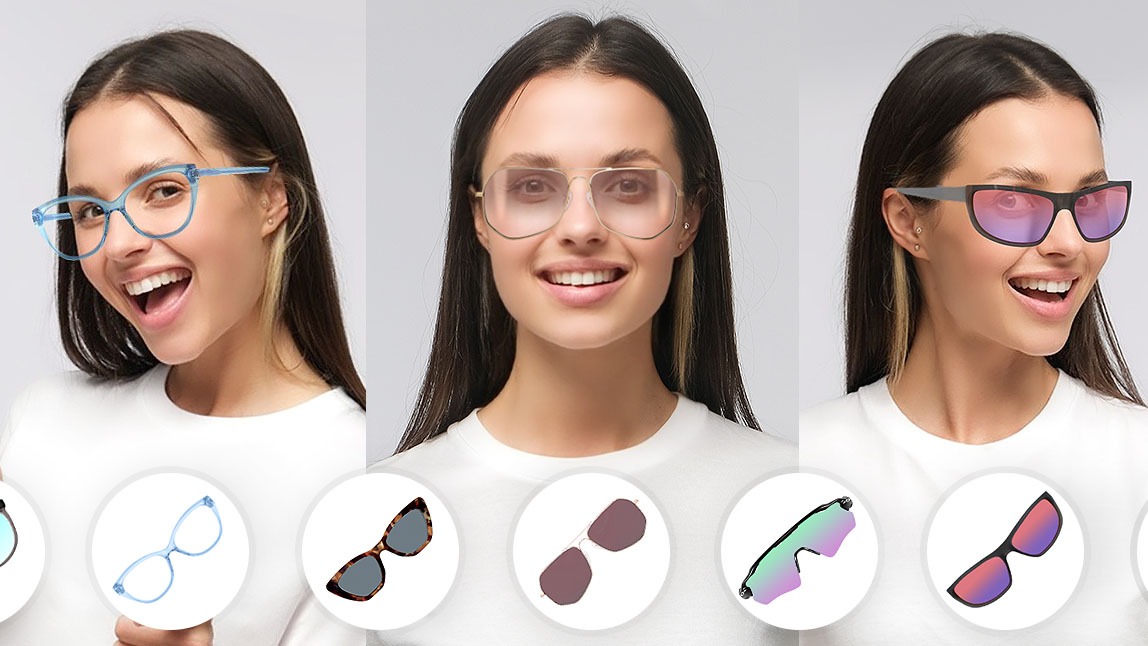
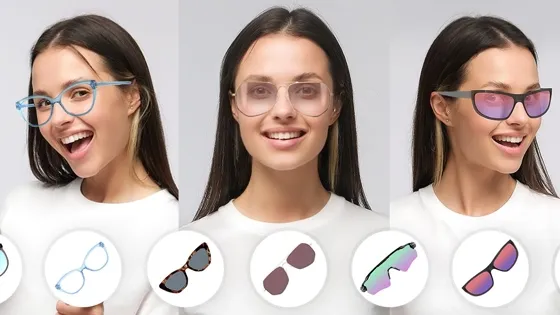
Online eyewear has always faced the problem that customers can't physically try the glasses before buying them. This uncertainty often leads to hesitation, lower conversion rates, and high return volumes. Today, virtual try-on technology for glasses using AI is changing the game of this long-standing ecommerce challenge by allowing shoppers to virtually see how frames fit their face in real time.
The latest studies on AR-based virtual eyewear systems have revealed that computer vision and augmented reality can help address this issue by providing face tracking in real time. For instance, a 2025 AR system was able to classify face shape with an accuracy of up to 92% [Data Source: researchgate.net].
Eyewear virtual try on tools are evolving at a rapid pace and their benefits are far beyond enhancing the user experience only. They are also changing the way eyewear brands make digital sales. The article examines the reasons for such changing trends, major performance indicators, and the methods by which brands can successfully use AI glasses try-on solutions.
Part 1: The Problem AI Virtual Try-On Solves for Eyewear Brands
Eyewear ecommerce is the only retail category that specifically has a conversion problem. For example, customers who are buying apparel or electronics can use these products right at the point of purchase and then decide about the purchase. This purchase behavior is not possible for eyewear, so there is a lot of hesitation, indecision, and abandoned carts.
A study reveals that eyewear customers lack help in finding their style (83.5%), and they have difficulties in buying size and fit online (78.2%). Also, 72.4% are worried about the right prescription. The real problem is that 72.5% of customers concentrate on at least three main issues together on their purchase journey of eyewear.
This is the reason why the conversion rates of eyewear ecommerce are still very low at only 0.5%, 1.5% while the general rate for ecommerce is 2.5%, 3%. For brand managers and DTC founders, this difference in numbers means they are missing out on a lot of revenue rather than traffic [Data Source: pttrns.ai].
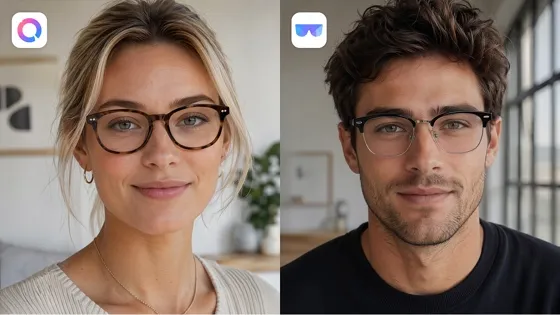
In this case, AI glasses try on and eyewear virtual try on technology takes on strategic significance. Instead of depending on the static images of the product or the filter-based mode of discovering, the try-on virtually simulates the 'mirror moment' in the store.
Part 2: How AI Try-On Impacts Conversion, Returns, and Engagement
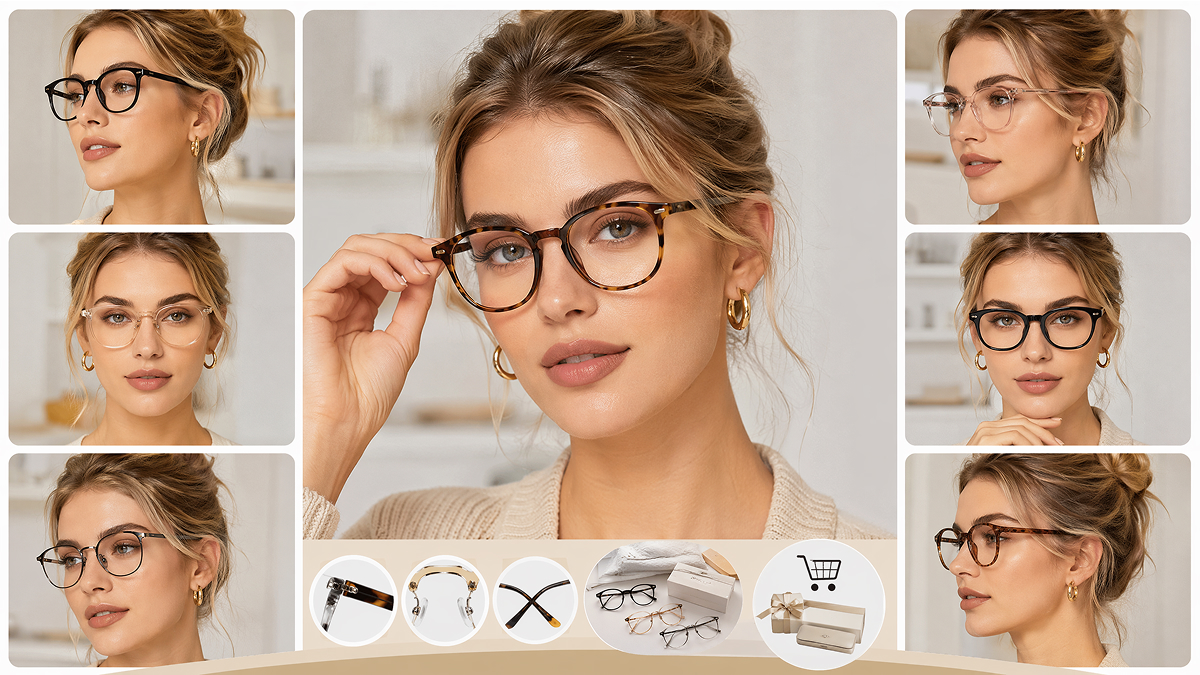
For eyewear companies, the main thing that matters about AI glasses try on is the results that can be measured. Most e-commerce features only work on redesigning or enhancing user experience, but virtual try-on has a direct impact on major business metrics, conversion rate, return rate, and user engagement.
The explanation is simple. When customers get the chance to really visualize the glasses and how they fit their face, they gain more trust in their decision to purchase. This lowers the level of reluctance and helps them convert from just looking at products to buying in a shorter time span. In the case of eyewear virtual try on, the product page is no longer a simple image, but an interactive one, thus keeping users even more engaged and helping with better decisions.
2.1: Conversion and Return Rate Improvements with Virtual Try-On
Some recent industry figures reveal how virtual try on conversion rate enhancements lead to practical business value:
- Conversion uplift: Virtual try-on has the potential to increase sales by as much as 30%, since customers, when able to visualize products directly, are much more inclined to make a purchase.
- Return rate reduction: Returns could decrease by approximately 20%, which not only saves brands from margin erosion but also lowers the costs associated with reverse logistics [Data Source: forbes.com].
- Return problem baseline: Roughly, 30% of online purchases get returned, and each return could cost about 20% to 70% of the price of a product; this is a major profitability challenge for the whole industry [Data Source: invespcro.com].
- Engagement impact: Visitors interact more with products and, on average, spend 2 to 3 times longer on product pages when try-on features are available.
There are also other strong examples. Brands like Avon Products have reported 320% increases in conversions and a 33% rise in average order value after adopting virtual try-on—showing how impactful the technology can be when implemented effectively.
To better understand the impact of eyewear virtual try on, here's a simple comparison:
|
Metric |
Without VTO |
With VTO |
|---|---|---|
|
Conversion rate |
Lower due to uncertainty |
Higher (up to +30%) |
|
Customer confidence |
Low (no real visualization) |
High (real-time try-on) |
|
Return rate |
High (up to ~30%) |
Reduced ( ~20%) |
|
Cost impact of returns |
Significant (20–70% per return) |
Lower due to better fit accuracy |
|
Session duration |
Short browsing |
2–3x longer engagement |
|
Decision-making |
Slow, hesitant |
Faster, more confident |
2.2: How AI-Generated Models Are Expanding Eyewear Marketing
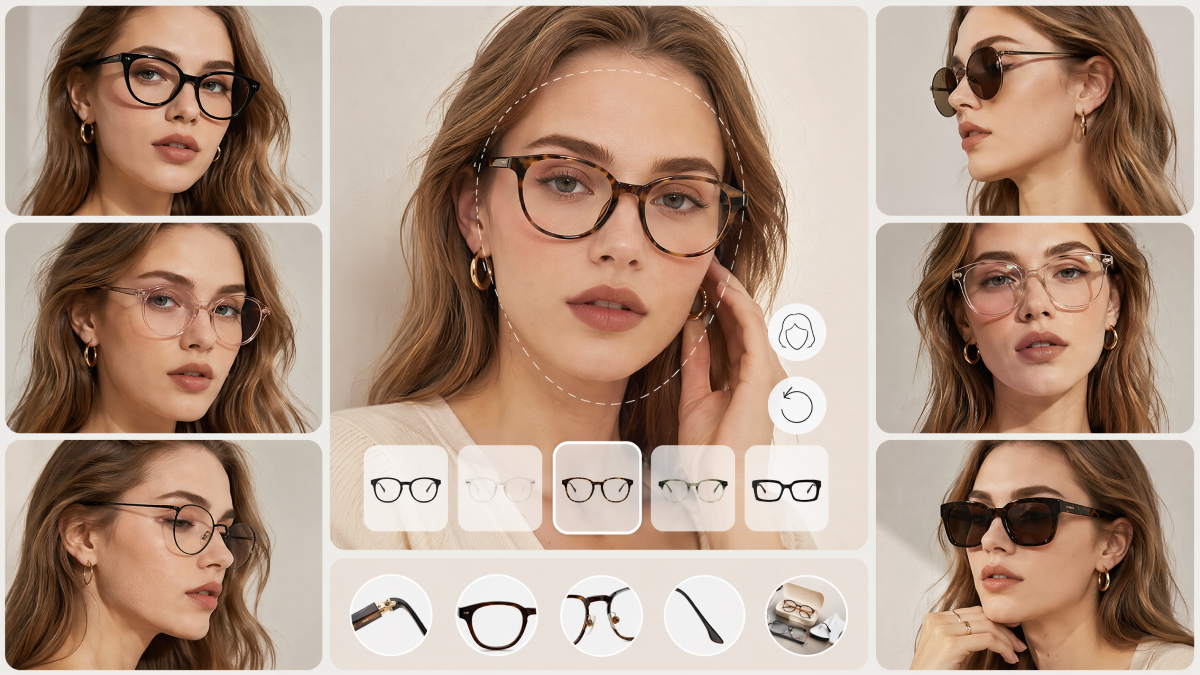
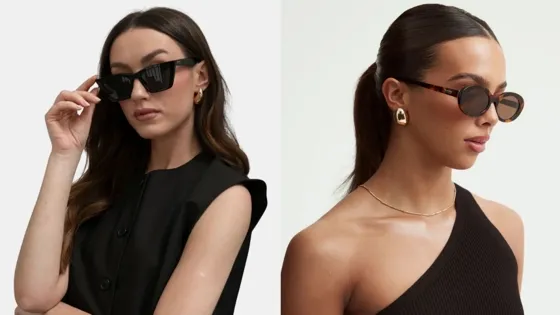
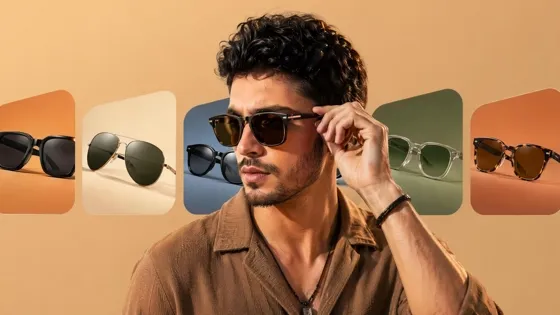
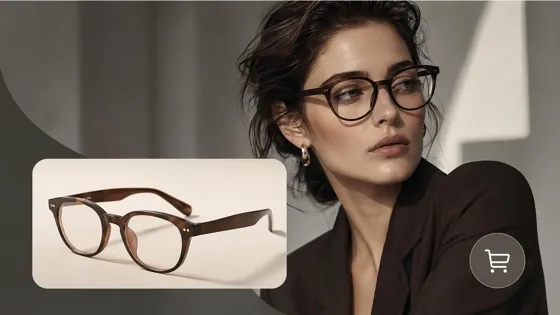
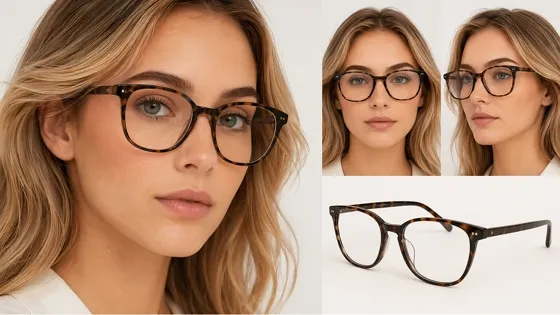
Besides AI glasses try on, a different rapidly expanding area of application is the use of AI-created models for marketing eyewear. Traditionally, photoshoots were the only source of model images, now brands use AI to generate as-if models genuinely wearing their eyeglasses on a large scale.
In fact, all these features: computer vision, face mapping, and rendering create the very same base technology that powers AI model eyewear as well as virtual try-on. The key difference lies in the use of technology. Virtual try-on is a visualization tool for customers, whereas AI-generated models are visual marketing tools for brands.
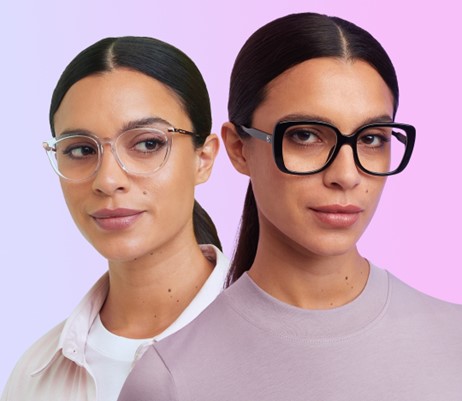
For eyewear companies, the solution brings several tangible benefits:
- Representing instant diversity and localization: A brand can create a diverse range of model characters with different facial features, ethnic groups, and age categories without shooting any new photos. Besides, this is a very handy tool for the US/ EU/ UK markets where a diverse representation is one of the conversion factors.
- Campaigns are implemented much quicker: Launching new collection ads, seasonal campaigns, or A/B testing creatives can be done within a couple of hours rather than weeks.
- Cost control: Working with fashion eyewear still requires a whole team, including the model, the photographer, the studio, and the post-production. AI brings this expense down drastically without compromising on the quality of visuals.
- Unlimited product visualization: One frame can be portrayed on numerous face types, thus enhancing relatability and assisting customers even before using try-on devices.
In fact, this is a very good additional tool for the business side of things rather than a threat to eyewear virtual try on. At a higher point of the funnel, AI-generated model images get better click-through rates and engagement, while at a lower point of the funnel, the virtual try-on brings the conversion.
Simply saying:
- AI models catch people's eyes and make it easier to find a product
- AI glasses try on turns attention into purchase
This shift is already visible in emerging tools that merge multiple capabilities into a single workflow.
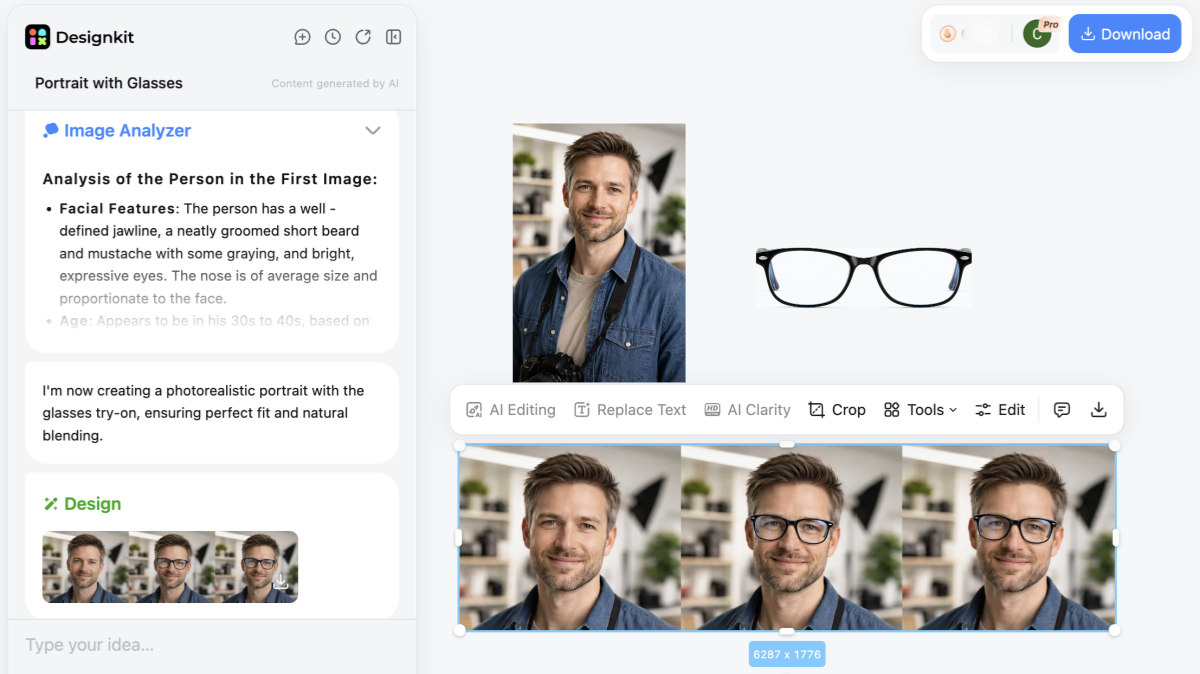
Designkit, among other platforms, integrates AI glasses try-on with AI model generation to help brands produce realistic visuals of eyewear on models from a single product photo. Rather than arranging different photo shoots, a group can generate various model pictures, carry out creative tests, and renew listings within a few minutes. This is a part of a general transition to AI content pipelines in eyewear e-commerce.
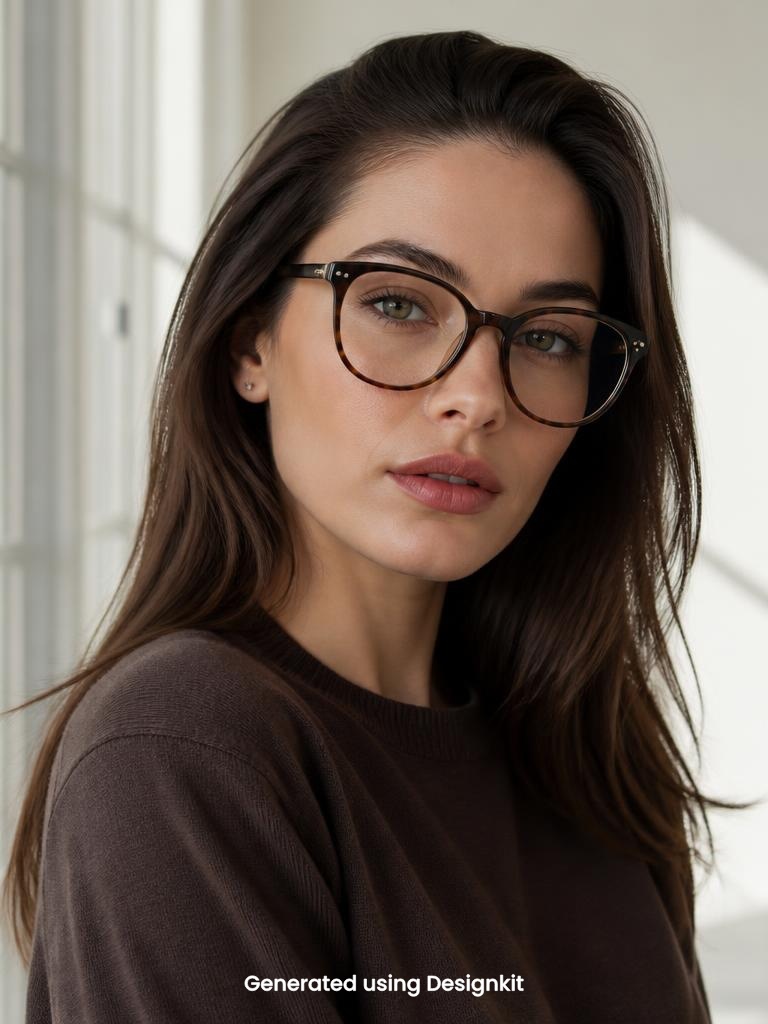
Generate AI Eyewear Models Free
Part 3: How to Implement AI Virtual Try-On for Your Eyewear Store
Eyewear brands, using eyewear virtual try on, are not taking a mere cosmetic touch; rather, they are making a conversion tool an integral part of the shopping experience. The great news is that thanks to the availability of a range of options that depend on your technology platform, budget, and the time frame you wish to work within, implementation has become quite a lot easier.
3.1: Choosing an Integration Approach for Your Store
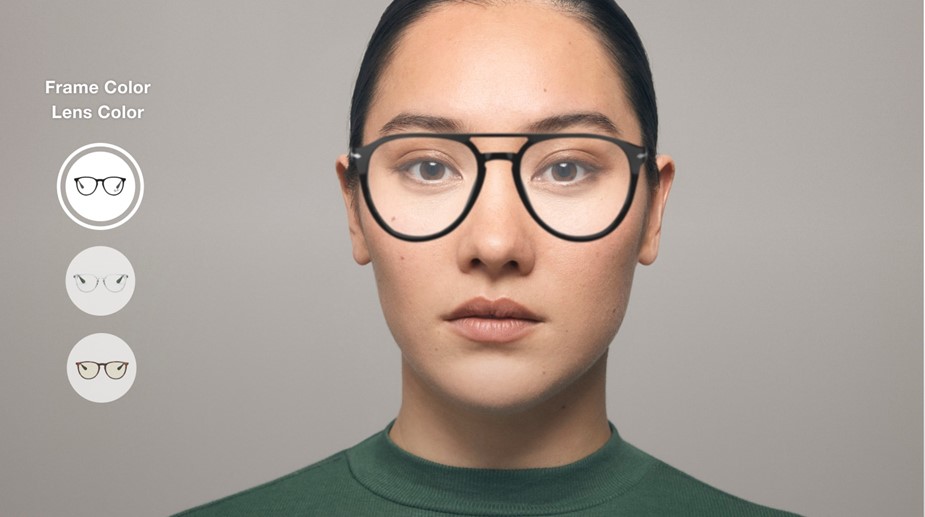
There are three main types of virtual try-on, each with its pros and cons:
Embeddable widget ( quickest, ~2 days):
The fastest method to implement virtual try-on is using a widget. You only need to put the script or plugin on your product pages.
API integration (2-4 weeks):
This alternative permits you to have total control over the experience. You can always tweak the UI, performance, and even the try-on flow to match your brand design. On the downside, it calls for developer resources, and a longer time gets the system up and running.
Standalone tool page (simple):
Here, the try-on experience is hosted on a separate page or a tool, and users are directed from product pages. Implementation is quite easy, but it may cause users drop-off.
In short:
- Choose widget for speed
- Choose API for control
- Choose standalone for simplicity
3.2: Preparing Product Assets and Measuring Results
An effective AI glasses try-on is extremely dependent on the product data quality. Brands need to prepare the following before implementation:
· Top quality frame images (front, side, and angled views)
· Precise color rendition to prevent virtual and real product mismatch
· Frame dimensions (bridge width, lens size) to enable better scaling and fitting accuracy
Within the integration phase, it's also useful to look at platforms like Designkit, which offer both widget-based embedding and API integration—giving brands flexibility to start fast and scale into more customized implementations over time.
After publishing, it is equally important to measure. Consider it a performance test rather than a feature launch.
The most important metrics are:
- Conversion rate increase (with vs. without try-on)
- Return rate decrease
- Engagement metrics (time on page, interaction rate)
The best way to decide is A/B testing, comparing product pages with and without virtual try-on activated. This will provide a straightforward perspective of extra impact.
Conclusion
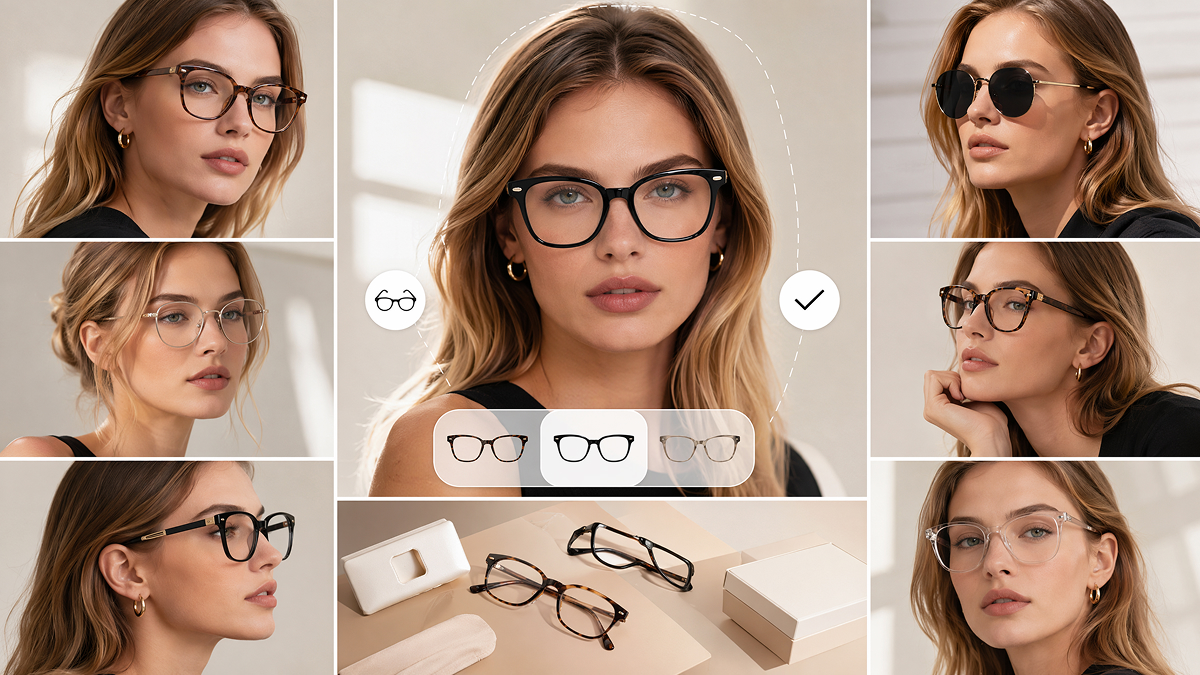
Eyewear virtual try-on is no longer just an optional feature — it has become a core requirement for online eyewear brands that want to compete in a digital-first market. It directly solves critical ecommerce challenges such as low purchase confidence, high return rates, and uncertainty around frame fit.
With DesignKit’s AI Virtual Try-On, customers can instantly visualize how different eyewear frames look on their face using advanced AI face mapping and real-time rendering. This creates a more accurate and intuitive shopping experience, helping shoppers make confident buying decisions without physically trying on the product.
Today, implementing AI glasses try-on is no longer complex or costly. Brands can easily integrate it into their product pages and start with a few high-traffic SKUs to measure performance improvements such as conversion rate, engagement time, and return reduction. Once results are validated, scaling across the entire catalog becomes a data-driven and low-risk growth strategy.
Frequently Asked Questions
Is AI Virtual Try-On Worth the Investment for Small Eyewear Brands?
Does Virtual Try-On Work with Prescription Lenses?
Yes, virtual try-on technology can work with prescription lenses, but it primarily focuses on frame visualization rather than simulating optical correction.
AI virtual try-on tools are designed to show how frames fit a user’s face, including size, style, and positioning. This helps customers understand how the glasses will look in real life, regardless of lens type. Prescription details are typically handled separately during the checkout or customization process.
Some advanced systems can also simulate lens effects such as tint, anti-reflective coating, or blue light filtering, but accurate vision correction simulation is still limited. Therefore, virtual try-on is best used as a visual and fitting tool rather than a medical-grade prescription simulator.
How Does AI Try-On Handle Diverse Skin Tones and Face Shapes?
Modern AI virtual try-on systems are trained on large and diverse facial datasets that include different skin tones, face shapes, facial features, and lighting conditions. Using computer vision and facial landmark detection, the technology maps key areas of the face — such as the eyes, nose bridge, cheek width, and jawline — to accurately position eyewear frames in real time.
Advanced AI try-on tools can also adjust frame scaling, shadows, reflections, and color contrast to create more realistic previews across different skin tones and facial structures. Some systems even analyze face shape categories, such as oval, round, square, or heart-shaped faces, to recommend frame styles that may fit better visually.
As AI models continue improving, eyewear brands can offer more inclusive shopping experiences with virtual try-on technology that better represents diverse customers and reduces uncertainty during online purchases.
What Is the Future of AI Virtual Try-On in Eyewear?
The future of AI virtual try-on in eyewear is moving toward more realistic, personalized, and interactive shopping experiences. Advances in computer vision, facial mapping, and generative AI are making virtual glasses fitting far more accurate than earlier AR filters. Modern systems can already analyze face shape, pupillary distance, and frame proportions to recommend better-fitting eyewear in real time.
In the coming years, AI eyewear try-on tools are expected to support hyper-personalized recommendations, dynamic lighting simulation, and multi-angle previews that closely replicate in-store experiences. Brands are also beginning to combine AI-generated fashion models with virtual try-on technology to create scalable marketing content for ecommerce listings, ads, and social campaigns.
As ecommerce competition increases, virtual try-on is likely to become a standard feature for online eyewear stores rather than an optional add-on. The technology can help brands improve conversion rates, reduce product returns, and create more engaging shopping journeys across mobile and desktop platforms.
You May Also Like
How to Match Makeup by Undertone: Virtual Lipstick and Foundation Try-On
Wedding Dress Styles for Every Body Type: A Practical Guide for 2026
7 Best AI Virtual Makeup Try-On Tools for Realistic Results in 2026
AI Virtual Makeup Try-On: Boost Beauty E-Commerce Sales in 2026
Free Online Glasses Try-On Tools: See Yourself in Glasses Instantly
Top Virtual Ring Try-On Tools for Engagement and Wedding Rings in 2026
How to Try Shoes On Virtually: A Step-by-Step Guide
Best Virtual Shoe Try-On Tools for Ecommerce: 2026 Guide
How to Try On Wigs and Bangs Virtually to Find Your Perfect Style
Create Model Outfit Photos Instantly With AI Outfit Generator
Best AI Virtual Try-On Clothes Tools for Any Body Type
How to Try On Clothes Online with AI for Better Fit & Style
Virtual Nose Ring Try On Online Before Your Piercing
How to Try Makeup Online with AI and Virtual Makeup Try-On Apps (2026)
How to Use Virtual Earring Try-On for a Flattering Look in 2026

How to Try On Engagement Rings Online with AI in 2026
Scale Your Jewelry Brand with Virtual Jewelry Try-On Solutions
How to Try Hairstyles on Your Face Online (Step-by-Step Guide)
Best Virtual Hairstyle Try-On Tools Online for Realistic Previews 2026
How to Use a Free AI Hairstyle Generator to Find Your Perfect Look
Virtual Hair Color Try-On Guide for Every Skin Tone (2026)
Virtual Wedding Dress Try-On Online for Brides in 2026
How to Choose the Right Sunglasses for Your Face Shape Online
How Accurate Is Virtual Glasses Try-On? AI vs AR Compared
Best Virtual Try-On Glasses Apps in 2026 (Free & Paid Tools)
How AI Virtual Try-On Is Transforming Eyewear Ecommerce
5 Best Virtual Try-On Glasses Tools for Ecommerce and Consumers 2026
How to Try On Glasses Online with AI in 2026 (Easy Guide)

How to Create Jewelry Photos with AI Models That Drive Sales in 2026
AI-Generated Fashion Models: Technology, Brand Adoption & Trends
How to Batch Generate 100+ AI Clothing Model Photos Fast
7 Best AI Fashion Model Generators for Ecommerce in 2026
AI Clothing Model Photos for E-Commerce: Platform Rules & Best Practices
How AI Virtual Try-On Helps Fashion Brands Boost Sales & Reduce Returns
AI Fashion Models vs Real Models: Which Is Better for Brands?
Best Free AI Fashion Model Generators for Real Product Photos
Virtual Outfit Try-On Guide: Plan Outfits Before You Buy
What Is an AI Clothing Model Generator? Full Guide for Sellers
Virtual Try-On Technology in 2026: How It Works & Key Trends
10 Best Virtual Try-On Apps & Tools for Online Shopping in 2026
How to Create AI Fashion Models: Complete Step-by-Step Guide
How to Use AI Fashion Models for E-Commerce Product Photos: A Complete 2026 Guide
How to Virtually Try On Clothes Online: A Complete Guide
Launch AI Glasses Virtual Try-On Experiences in Minutes
Help shoppers see exactly how frames look before they buy. With DesignKit’s AI virtual try-on technology, eyewear brands can create realistic glasses fitting previews, improve customer confidence, and scale high-converting ecommerce visuals without expensive photo shoots or complex AR setups.