
Selling on Amazon vs eBay: Which Marketplace Is Better in 2026?
Selling on Amazon vs eBay depends on your products, fees, fulfillment strategy, and profit margins, not just marketplace size.

If you are comparing selling on Amazon vs eBay, you want a seller answer: which channel fits your inventory, and what you keep after fees and fulfillment. This is not a shopper guide about Prime shipping versus auction deals.
Amazon uses a shared product catalog where multiple sellers compete on the same listing. eBay gives each seller more control over their own listing and product presentation. That difference drives fees, competition, photos, and growth, more than brand size alone.
Below is a short verdict, then an online marketplace comparison covering Amazon seller fees, eBay selling costs, Amazon fulfillment options versus self-fulfilled orders, and when multichannel selling makes sense.
Quick Verdict: Selling on Amazon vs eBay
Choose Amazon if you sell new, branded, wholesale, or private-label products; you want scale and Prime-eligible demand; and you can handle stricter policies, advertising, and Buy Box competition.
Choose eBay if you sell used goods, collectibles, parts, or unique items; you want listing-level control; and you prefer starting without a required monthly subscription.
Use both if your catalog is mixed. Route standardized, high-volume SKUs to Amazon. Keep unique, used, or long-tail inventory on eBay, and optionally test demand on eBay before committing FBA inventory.

Who is eBay best for?
- Beginner resellers and declutter sellers who need a fast listing path
- Collectors, vintage sellers, and specialty-parts businesses
- Sellers whose edge is condition photos, rarity, or detailed descriptions
- Part-time sellers who want to pay mainly when something sells
Who is Amazon best for?
- Sellers with new, replenishable inventory
- Private-label and wholesale brands aiming for volume
- Teams willing to use FBA or compete on Merchant Fulfilled shipping speed
- Operators prepared for compliance, account health, and often Amazon Ads
How Amazon and eBay Selling Works
Amazon centers the product page. Multiple sellers can share one detail page, and the Buy Box usually decides who gets the sale. Metrics around shipping, returns, and customer experience stay tightly monitored.
eBay centers the listing. You choose auction or fixed price, write the condition notes, and upload your own photo set. That is why secondhand electronics, discontinued parts, and collectibles still perform well there.
Amazon Seller University materials emphasize catalog quality, fulfillment performance, and customer experience as the operating system of the marketplace. eBay’s model puts more of that work, and more of that control on the individual listing. Marketplace Pulse, which tracks marketplace trends, also frames Amazon and eBay as different seller workflows rather than interchangeable storefronts.
Amazon vs eBay at a glance
| Dimension | Amazon | eBay |
|---|---|---|
| Best inventory fit | New / branded / wholesale / private label | Used, vintage, collectibles, niche parts |
| Traffic | Large built-in demand, especially with Prime | Strong for niche and model-number search |
| Listings | Shared catalog + Buy Box competition | Unique listings with more creative control |
| Fulfillment | FBM or FBA | Mostly self-fulfilled (+ optional services) |
| Fee shape | Referral % + selling plan (+ FBA if used) | Final value % + per-order fee; free listing allowances |
| Beginner difficulty | Higher (gated categories, account health) | Lower for many casual sellers |
| Branding | Limited on shared pages; Brand Registry helps approved brands | Stronger on your own listing |
What Does It Cost to Sell on Amazon vs eBay?
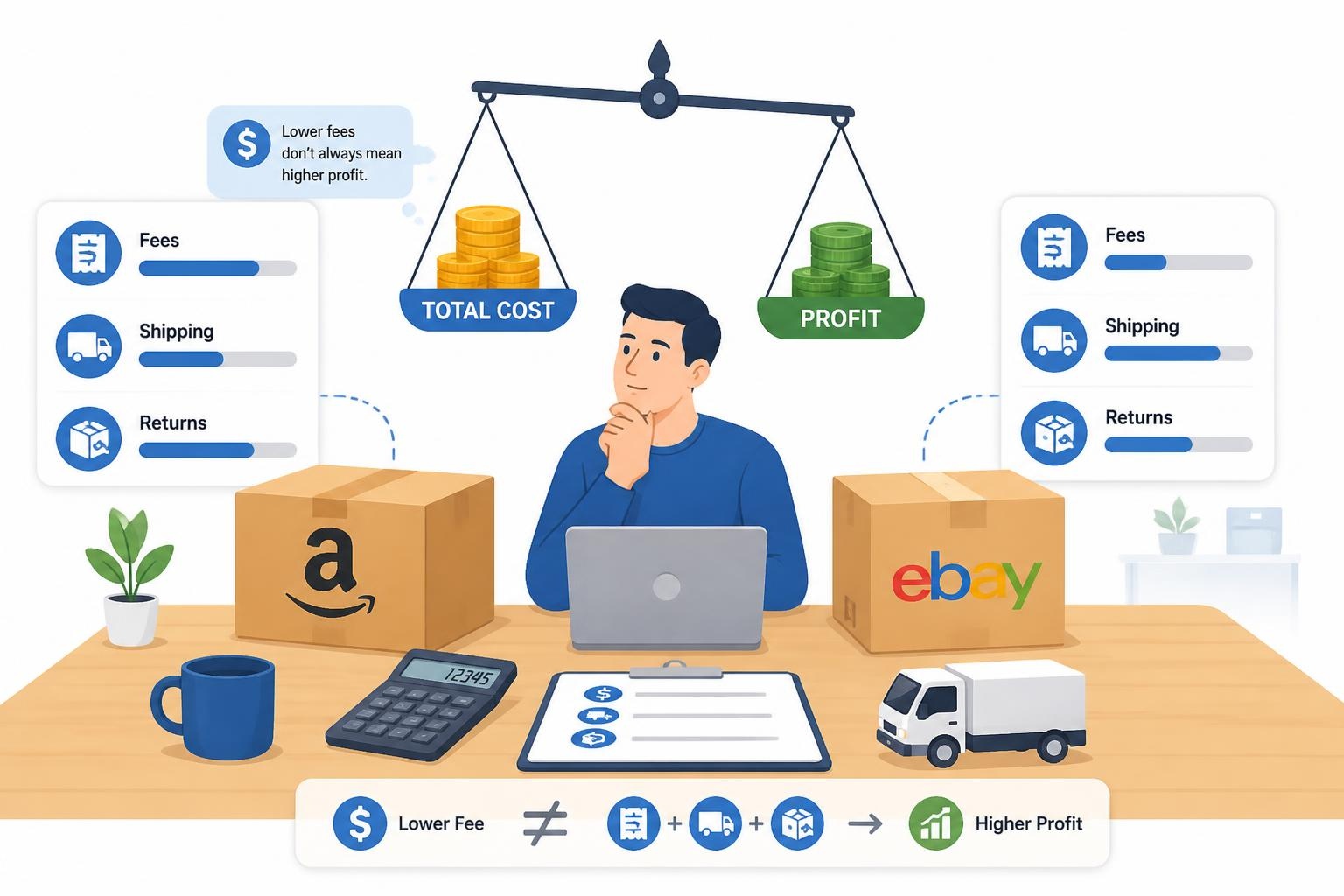
A lower headline rate does not automatically mean higher profit. Before you compare Amazon seller fees with eBay seller fees, ask:
- Will this item sell repeatedly?
- Can it qualify for FBA?
- How much does shipping cost?
- How often do buyers return this product?
Those answers matter more than memorizing a percentage. Fee rates also change by category, store plan, and promotions, verify official pages before you price inventory.
Official references:
- Amazon selling plans and referral fees
- Amazon FBA Revenue Calculator (estimates only)
- eBay selling fees help
Amazon fee stack
- Selling plans: Individual is $0.99 per item sold; Professional is $39.99 per month (plus selling fees). Source: Amazon US pricing page.
- Referral fees: a category percentage of the total price (item + shipping + gift wrap when applicable). Many everyday categories are near 15%; others are lower or tiered.
- Optional FBA: separate fulfillment and storage fees when Amazon picks, packs, and ships.
- Optional ads: Amazon Ads can move profit more than the base referral rate in competitive categories.
eBay fee stack
- Final value fees: a percentage of the total sale amount for most categories (often mid-teens for standard categories — confirm yours).
- Per-order fee: a small flat fee per order (commonly $0.30 / $0.40 depending on order size under current US help docs — verify).
- Listing insertion: many sellers get a monthly free-listing allowance; beyond that, insertion fees or store subscriptions may apply.
- Optional promotions: Promoted Listings raise visibility and effective cost.
Example: what a $100 sale can look like
Illustrative model only, not net profit after product cost. Assumes a simple $100 item price and an eBay total sale amount of $100 with no tax/shipping add-ons in the example.
| Scenario | Marketplace fees (illustrative) | What else you still pay |
|---|---|---|
| eBay, self-fulfilled | About $13.60 at 13.6% final value fee + about $0.40 per-order ≈ $14.00 | Shipping labels, packing materials, your time |
| Amazon FBM, Professional | About $15.00 referral at a 15% category rate + monthly plan amortized across sales | Postage, materials, labor |
| Amazon FBM, Individual | About $15.00 referral + $0.99 per item | Same as FBM above; plan cost rises if volume grows |
| Amazon FBA | Referral (e.g. ~$15) plus pick/pack/ship and storage | Inbound prep; slow movers get expensive in storage |
On a $25 reseller item, the percentage fees look smaller in dollars, but packing time and returns matter more. Low average order value rewards fewer SKUs, accurate condition photos, and honest fee math.
How do Amazon fulfillment options compare with self-fulfilled orders?
Amazon fulfillment options usually come down to Merchant Fulfilled (you ship) versus FBA fulfillment (Amazon ships). On eBay, most sellers still run self-fulfilled orders, with optional third-party help depending on volume.
- FBA advantages: Prime eligibility, outsourced pick/pack/ship, and often higher conversion on comparable prices.
- FBA trade-offs: inbound rules, storage fees, sizing limits, and less control when inventory sits.
- Self-fulfilled orders: clearer per-sale math and direct control, offset by shipping labor and response times.
FBA works best when units turn quickly, dimensions are efficient, and price can absorb fulfillment fees. Slow, bulky, or highly unique inventory is usually a poor FBA candidate and a better eBay listing. For most beginners, the live comparison is still Amazon FBA versus shipping yourself on eBay.
What hidden costs should sellers budget for?
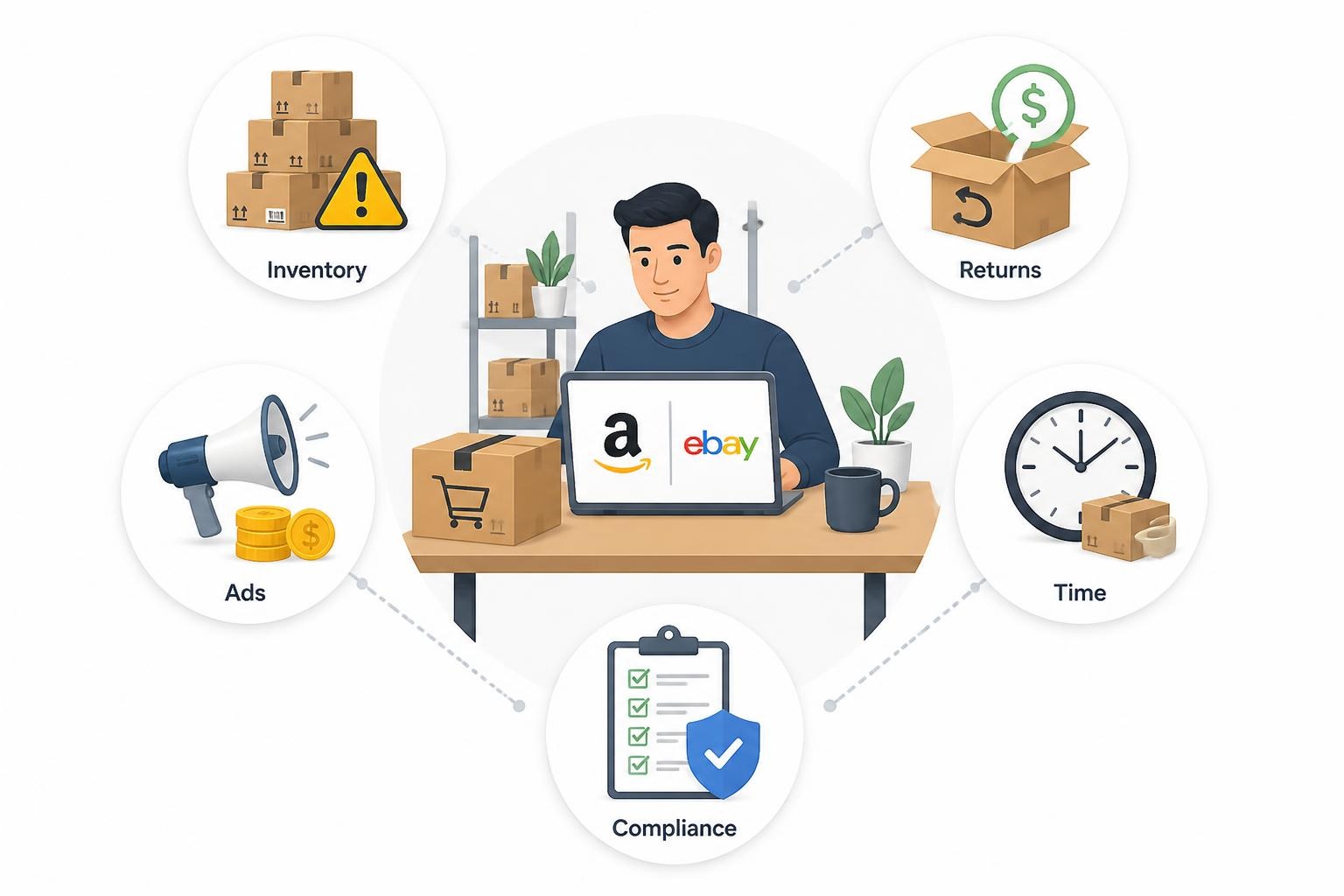
According to Jungle Scout’s annual State of the Amazon Seller report, advertising and inventory management remain two of the biggest operating costs for many Amazon sellers. Marketplace Pulse’s marketplace trend coverage makes a similar point across platforms: operating cost is broader than the referral or final-value line.
| Cost area | Why it matters | Where it shows up most |
|---|---|---|
| Inventory storage | Slow movers quietly erase margin | FBA storage / long-term storage; warehouse space on eBay |
| Customer returns | Restocking, refunds, and damaged opens cut true profit | Both marketplaces; high on apparel/electronics |
| Advertising costs | Visibility is rarely free in crowded categories | Amazon Ads; eBay Promoted Listings |
| Time spent packing orders | Labor is a real cost even if you do not invoice yourself | Self-fulfilled Amazon FBM and most eBay orders |
| Marketplace policy compliance | Suspensions, gating, and appeals cost selling days | Especially Amazon account health and gated categories |
That is why “eBay looks cheaper” and “Amazon looks more profitable” can both be true for different SKUs in the same business.
Which Products Sell Better on Amazon vs eBay?
How do buyers and competition differ?
Amazon’s demand pool is large, which also means dense competition: brands, other third-party sellers, and sometimes Amazon retail. eBay’s audience is smaller overall but concentrated around bargains, collectibles, and exact model search.
On Amazon, price, fulfillment method, and seller metrics heavily influence Buy Box eligibility. On eBay, you usually own a distinct listing for the same item type, so condition photos and shipping terms can differentiate you without racing only on the Buy Box.
If your edge is photography and honest wear notes, eBay lets that work harder. If your edge is replenishable new inventory plus ads and reviews on a shared ASIN, Amazon is the cleaner fit.
Products that tend to win on Amazon
- New home, beauty, and kitchen staples with repeat demand
- Accessories and consumables you can replenish
- Private-label goods you can brand, review, and advertise
- Wholesale new stock with clear UPCs and invoices for gated categories
Products that tend to win on eBay
- Used and refurbished electronics
- Collectibles, trading cards, vintage apparel, and memorabilia
- Automotive and specialty parts searched by model number
- Discontinued or odd-lot inventory that does not fit a neat ASIN story
What about restricted or gated categories?
Amazon often requires approvals, brand documents, or safety credentials in categories such as health, beauty, and certain electronics. eBay is generally more flexible for used and unique goods, but both platforms ban hazardous or restricted items. Check category rules before you buy inventory because someone else sold a similar unit last week.
Which Marketplace Should You Choose?
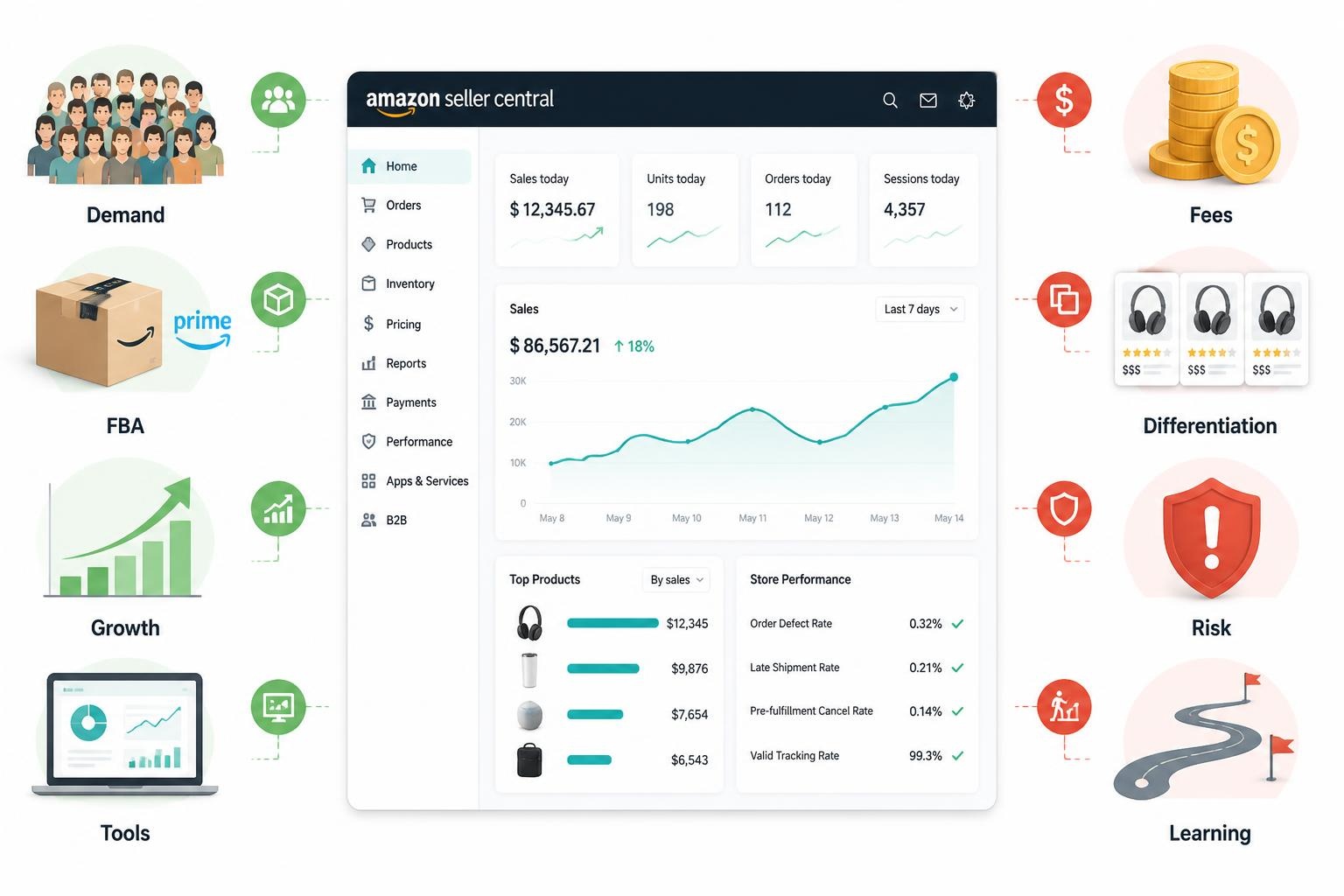
Amazon pros
- Large built-in demand and strong conversion when Prime-eligible
- FBA can remove most day-to-day shipping work
- Clearer path for scalable new-product businesses
- Mature advertising and analytics tools for sellers who invest
Amazon cons
- Fees stack: referral + plan + optional FBA + ads
- Shared pages limit creative differentiation
- Strict performance metrics and suspension risk
- Steeper learning curve for beginners
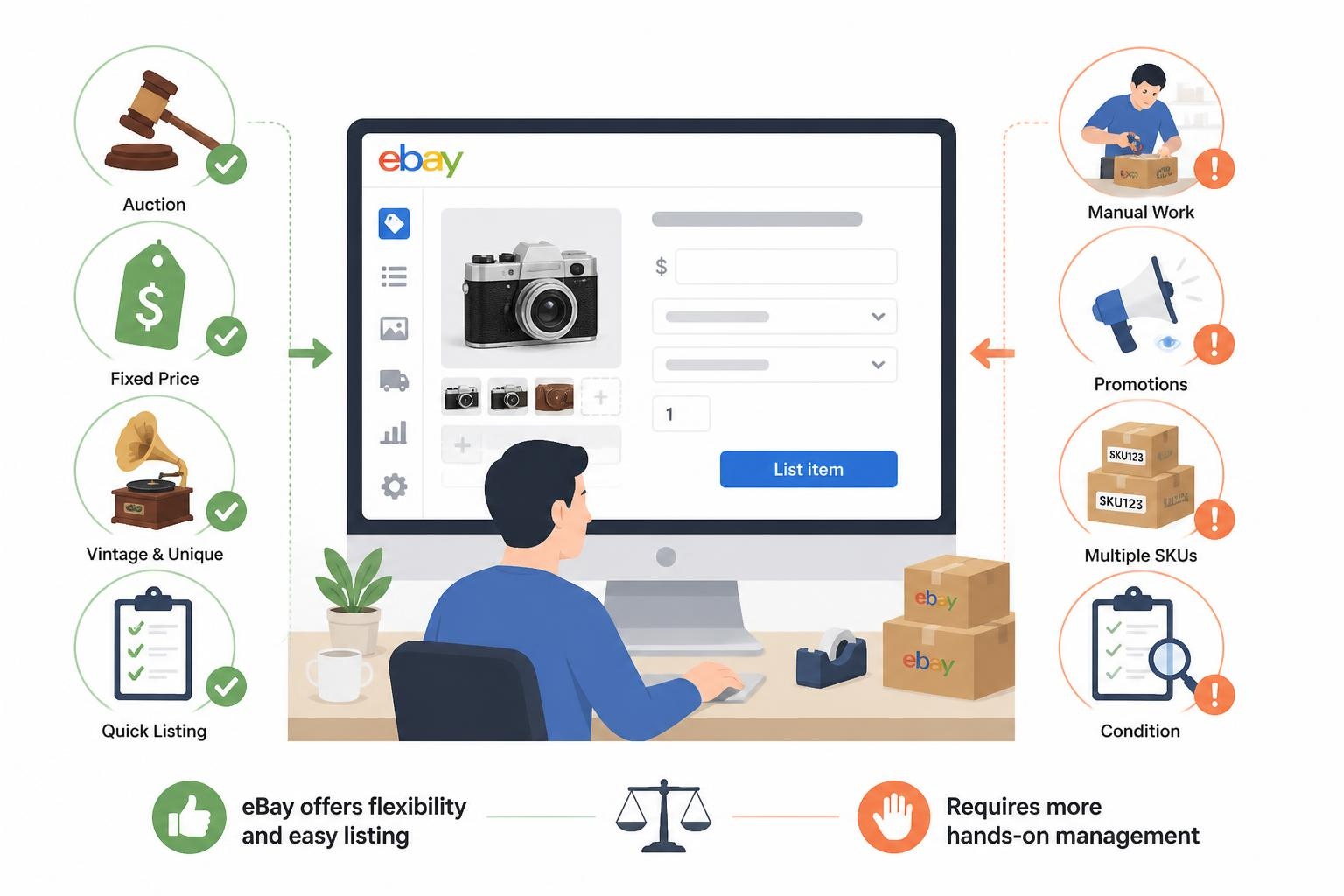
eBay pros
- Unique listings and flexible formats (auction + fixed price)
- Often clearer per-sale fee visibility
- Friendly to used, vintage, and hard-to-catalog goods
- Faster path to list for many new sellers
eBay cons
- Less hands-off logistics than FBA
- Visibility still depends on listing quality and promotions
- Multi-SKU warehouse ops can feel more manual
- Buyers still expect accurate condition notes and reasonable shipping speed
Recommendations by seller type
- Beginner reseller / declutter seller: start on eBay.
- Private label or wholesale scale: prioritize Amazon (often with FBA).
- Collectibles / used electronics / parts: prioritize eBay.
- Fast-moving new commodity SKUs: prioritize Amazon.
- Mixed inventory: use both and split SKUs by fit.
Should you sell on Amazon and eBay at the same time?
Multichannel selling works when inventory sync is reliable and pricing reflects different fee structures. Master shipping and returns on one channel first, then expand. For a broader channel map, see best platforms for selling online. If you later want an owned storefront, Shopify vs Etsy covers a related fee and branding trade-off.
Four questions before you commit
- Is the item new and repeatable, or used / unique?
- Do buyers search a known brand/model, or do they need your photos and story?
- Can you absorb Amazon’s monthly plan and possible FBA fees?
- Are you willing to pack and ship yourself this month?
Do Listing Photos Affect What You Keep?
On eBay, your listing is the product page, multi-angle shots and honest defect photos reduce returns and build Buy It Now confidence. On Amazon, the main image still drives the click in search results. Weak photos tax margin on both.
Useful shot list:
- Clean white-background hero image
- Multi-angle views
- Close-up details and, for used goods, visible wear
- Size reference or measurements
- What’s included in the box
If you need more angles or background variants without a full studio day, Designkit can help with visual production, not with choosing a marketplace or running FBA fee models.
How to create marketplace-ready images with Designkit
- Upload a real product photo (keep wear honest on used items).
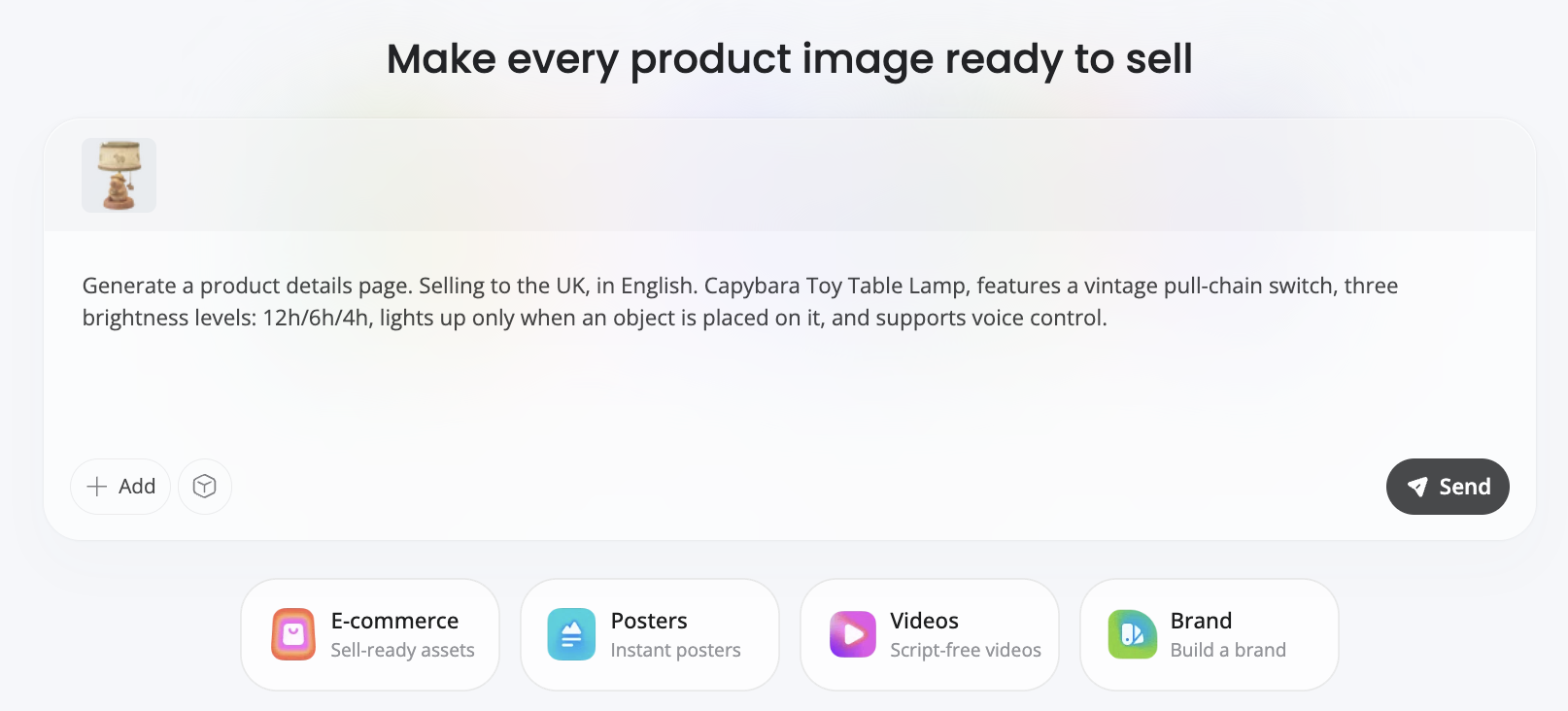
- Generate clean multi-angle or scene variants for listings.
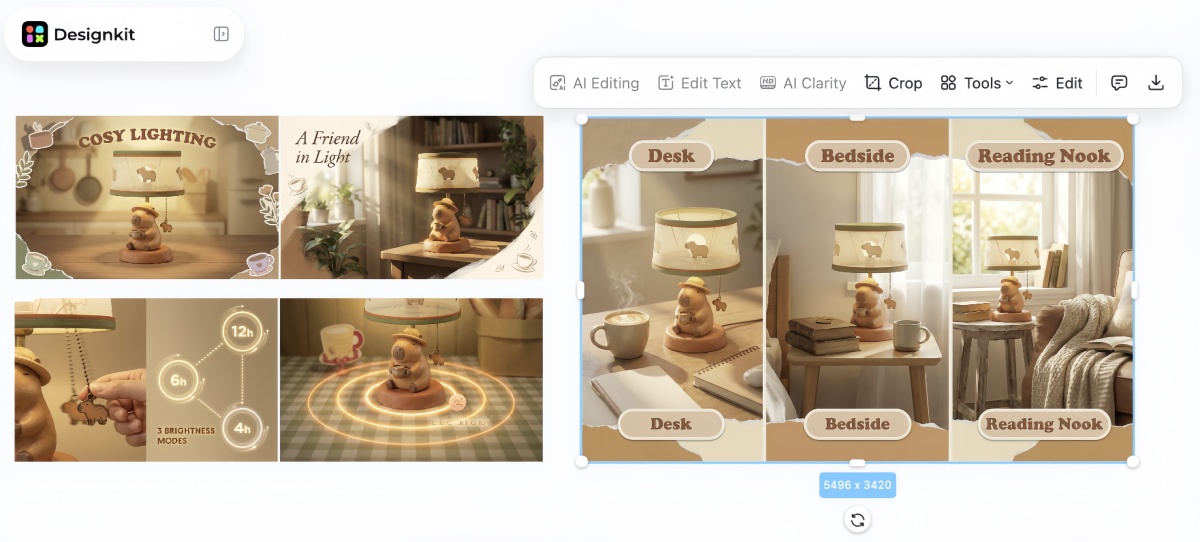
- Export sizes that fit marketplace image guidelines.

- Reuse the same asset set across eBay, Amazon, and social posts.
Designkit does not replace fee calculators, inventory strategy, or compliance reviews. Do not use edits to conceal damage, marketplace rules and buyer trust both punish that.
Conclusion
There isn’t a universal winner between Amazon and eBay. Sellers who build long-term businesses usually choose the marketplace that matches their inventory instead of chasing the lowest fee. If you sell repeatable products, Amazon often provides more room to scale. If your inventory is unique, used, or constantly changing, eBay usually offers more flexibility. Many experienced sellers eventually use both, assigning products to the marketplace where they perform best.
Fee math, FBA eligibility, return risk, and photo quality decide more outcomes than brand recognition. Use official fee pages, treat Jungle Scout–style operating-cost findings as a warning against ignoring ads and inventory, and build a marketplace selling strategy around inventory fit, not headlines.
Frequently Asked Questions
Can beginners sell on both Amazon and eBay?
Is Amazon better for handmade products?
Not always. Amazon can work for handmade goods that fit catalog standards and ship reliably, but many makers find listing flexibility—and buyers looking for unique pieces—easier on eBay (or on craft-focused marketplaces). Handmade success still depends on photography, reviews, and whether the item can compete against factory-made alternatives.
Does eBay have lower competition?
Often yes at the listing level, because you are not always sharing one product page. Competition still exists on popular search terms. The difference is how you differentiate: condition, photos, and shipping terms matter more than winning a Buy Box.
Is it better to resell on eBay or Amazon?
For used or unique finds, eBay is usually the clearer starting channel. Amazon fits better when inventory is new, branded, and replenishable.
Is Amazon FBA better than selling on eBay?
Only when units turn quickly and FBA fees fit the price. Unique, slow, or bulky inventory usually stays on eBay—or ships as Amazon FBM—rather than sitting in FBA storage.
Can I sell the same products on Amazon and eBay?
Yes, if both platforms allow the item and inventory sync prevents overselling. Expect different prices after fees and shipping promises.
Where should I verify current Amazon and eBay selling costs?
Use Amazon’s pricing page and Revenue Calculator for seller and FBA estimates, and eBay’s selling fees help for final value and per-order fees. Category rules change; treat third-party blogs as secondary.
You May Also Like

10 Best Online Selling Platforms (2026): Pick by What You Sell
Amazon Handmade vs Etsy (2026): Which Is Better for Makers?
Etsy vs eBay (2026): Handmade, Vintage, or Secondhand?
Shopify vs Etsy (2026): Which Is Better for Handmade Sellers?
Amazon 7-Image Listing Strategy: Boost Sales by Optimizing Every Image

10 High-Converting Lifestyle Product Images for Amazon Listings

Amazon Marketing Guide 2026: Strategies, Tips & Tools
11 Must-Have Tools for Amazon Product Photography in 2026

How to Add Video to eBay Listing: Step-by-Step Seller Guide
How to Create Amazon Infographics: Boost Sales with Compelling Visuals
Amazon Main Image Requirements: Size, Guidelines & Tips
Create Product Images That Work for Amazon and eBay
Create marketplace-ready product images for Amazon and eBay without scheduling new photoshoots for every product.