
How to Boost Ecommerce Sales: Proven Tactics That Actually Work
Boost your e-commerce sales with proven growth strategies, SEO, and AI-powered tools. Improve conversions, fix product pages, drive high-intent traffic, reduce drop-offs, and turn more visitors into paying customers at scale.


Boosting ecommerce sales comes down to three areas: attracting the right traffic, improving conversions, and increasing repeat purchases. Small improvements in these areas can create meaningful growth. This guide covers practical strategies you can apply immediately.
E-commerce growth is no longer just about getting more traffic—it's about turning the right visitors into paying customers. With rising competition, brands need smarter strategies to stand out and convert consistently.
In this guide, you'll learn proven methods to increase e-commerce sales through SEO, conversion optimization, and performance-driven marketing tactics. We’ll also explore how AI-powered tools can streamline content creation, improve product pages, and boost engagement. From attracting high-intent traffic to reducing cart abandonment, every step is designed to improve real revenue. Whether you run a Shopify store, Amazon shop, or DTC brand, these strategies will help you scale faster and sell smarter.
How to fix product page issues that are killing conversions
Write product descriptions that sell benefits, not just features
Instead of only listing specs, translate each feature into the outcome the buyer cares about. "10,000mAh battery" becomes "two full days of charge without finding an outlet." Lead with the problem the product solves, then back it with the spec — shoppers buy the result, and the feature is just proof it's real.
Add reviews, guarantees, and UGC to build buyer trust
Trust is what closes the sale online. Add star ratings and written reviews near the buy button, a clear return or money-back guarantee to remove risk, and real user-generated photos or clips showing the product in actual use. These signals reassure shoppers in the moment they're deciding, when doubt is highest.

Use honest urgency and scarcity to speed up decisions
You can use genuine low-stock indicators ("only 4 left"), time-bound discounts with a real end date, or limited-edition framing — but only when they're true. Authentic urgency nudges shoppers who are already close to buying; fake countdowns that reset on refresh destroy trust and often backfire.
Optimize your store for mobile shoppers first
Most online shoppers browse on mobile devices, so your store should be fast and easy to use. Keep navigation simple, use clear buttons, and make checkout smooth. This is one of the most effective ways to learn how to increase e-commerce sales through a better user experience.
How to drive high-intent traffic that actually converts
Target buyer-intent keywords, not just browser keywords
Not all traffic leads to sales. People searching “best running shoes for flat feet” or “wireless earbuds under $100” usually have stronger buying intent than users searching broad terms like “running shoes.”
Focus on keywords that signal buying readiness: specific product + qualifier ("wireless earbuds under $100"), problem-solving intent ("best running shoes for flat feet"), and comparison or purchase terms ("vs", "review", "buy"). These pull in visitors already near a decision, not casual browsers.
Use short-form video on TikTok, Reels, and YouTube Shorts
Short-form video marketing works because it quickly shows the product in action and captures attention before users scroll away. Platforms like TikTok are great for trend-driven discovery and impulse products, while Instagram Reels often perform well for lifestyle and visual brands. YouTube Shorts is especially effective for tutorials, product comparisons, and search-driven content.
Videos that consistently perform: quick product demos showing the item in real use, before-and-after transformations, honest "is it worth it" reviews, and problem-solution clips that open on a pain point. These work because they answer the questions a buyer would otherwise hesitate over.

Retarget past visitors with personalized ads
Most shoppers do not buy it the first time they visit a store. Retargeting helps bring back users who already showed interest but left without purchasing.
Instead of generic ads, use personalized messaging based on what people viewed or added to the cart.
For example, show someone who viewed a product the exact item with a review or limited-time offer, or remind cart abandoners of what they left behind with free-shipping framing. Because they already know your brand, these audiences convert at far higher rates than cold traffic.
How to scale your video creatives faster with AI tools
Scaling ecommerce content manually is difficult when brands need fresh creatives for multiple platforms every week. AI video tools help speed up workflows by turning one product asset into multiple short-form videos quickly, making content production faster and more consistent.
With AI-powered batch creation, brands can turn one product asset into dozens of platform-specific videos, spin up multiple hook and format variations for testing, and refresh creatives weekly without a dedicated editor.
This allows ecommerce brands to test more creatives, identify winning content faster, and scale video output without slowing down production.
Why most brands struggle to scale ad creatives
Many ecommerce brands struggle to produce enough ad creatives because traditional video production is expensive, slow, and difficult to scale consistently. Brands often need fresh content for every campaign, platform, and audience segment, but creating multiple versions manually takes time and resources.
Common challenges include:
High video production costs
Slow turnaround for ad testing
Limited creative variations for A/B testing
Difficulty producing content consistently at scale
As a result, many brands test fewer ads and miss opportunities to discover high-performing creatives faster.
How Designkit solves creative scaling
AI video tools like Designkit help ecommerce brands create more ad creatives without slowing down production. Instead of manually editing every video, brands can quickly turn product images into high-converting short-form videos for multiple platforms. One product asset can be repurposed into different versions for TikTok, Instagram Reels, and YouTube Shorts in minutes. AI also makes it easier to generate multiple hooks, formats, and variations for faster A/B testing. This allows brands to test more creatives, identify winning ads faster, and scale content output more efficiently.
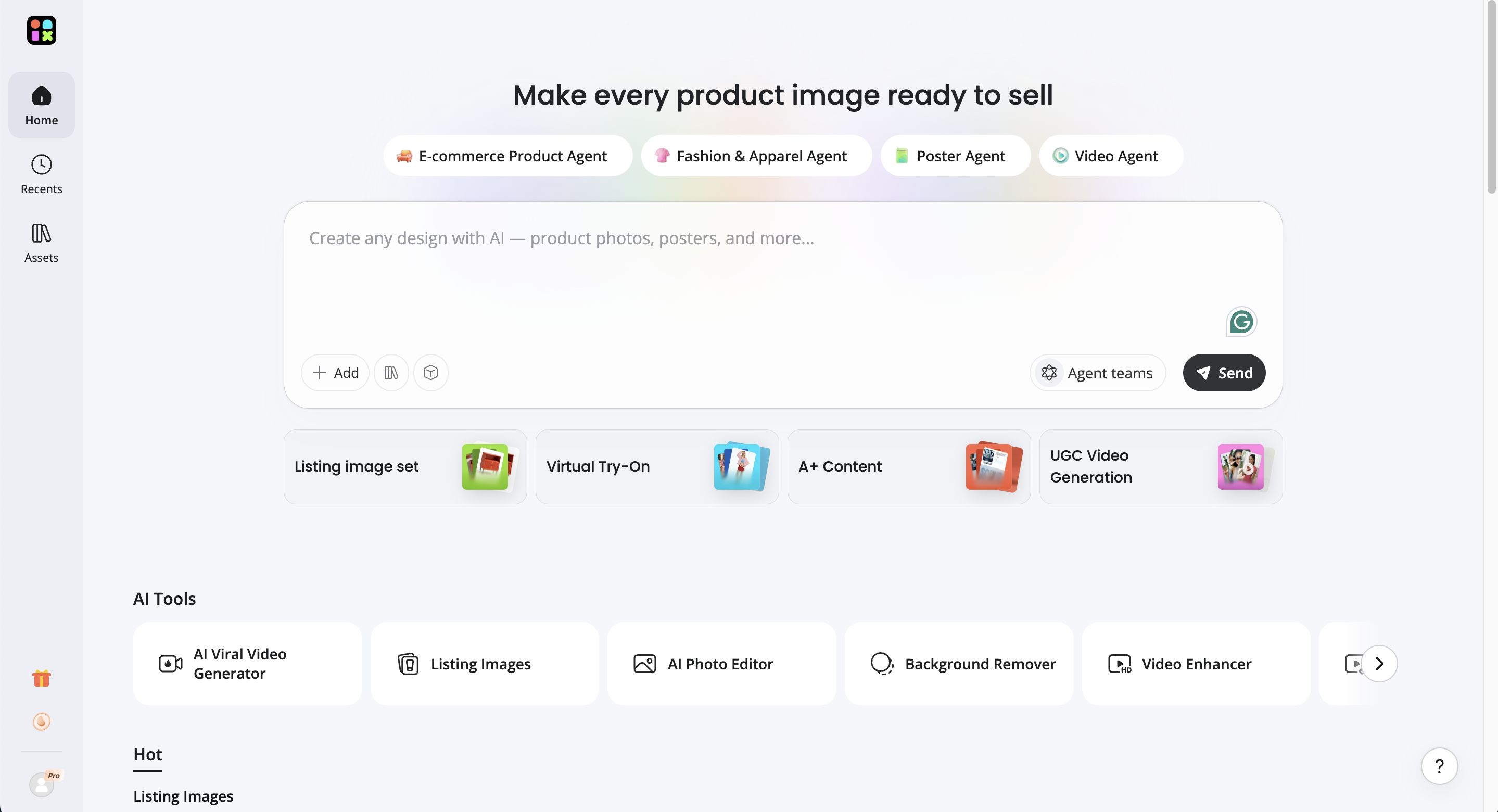
Designkit covers the full scaling workflow: turning product images into short-form videos, exporting one video into the right format for TikTok, Reels, Amazon, and Shopify, and batch-generating multiple ad variations from the same assets for faster A/B testing.
Create ecommerce product videos in 3 simple steps with Designkit
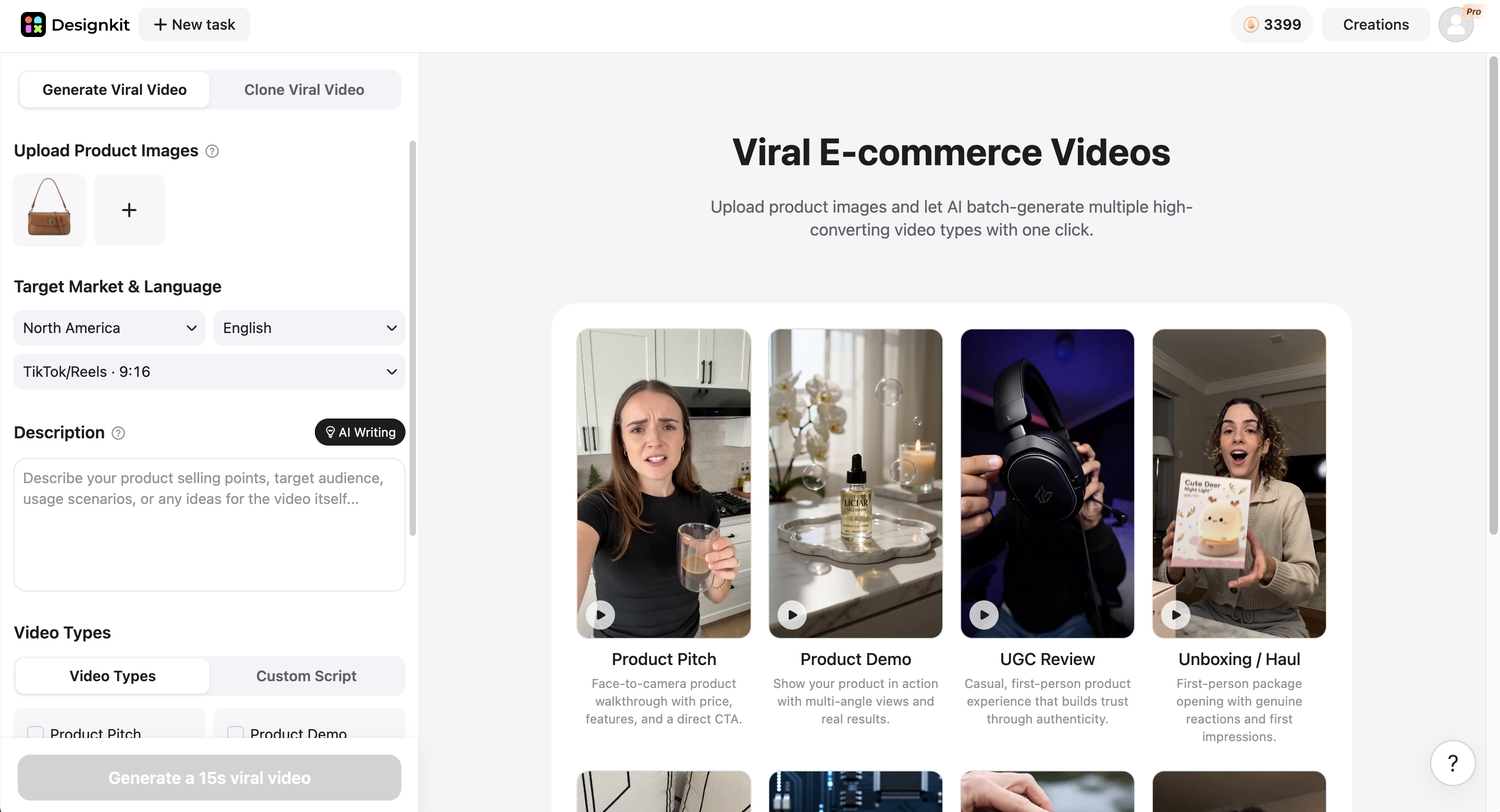
Step 1: Upload product images for video generation
Add high-quality product images, preferably multi-angle and white background shots. These help AI understand product details and create clean, high-conversion visuals for ecommerce video ads.
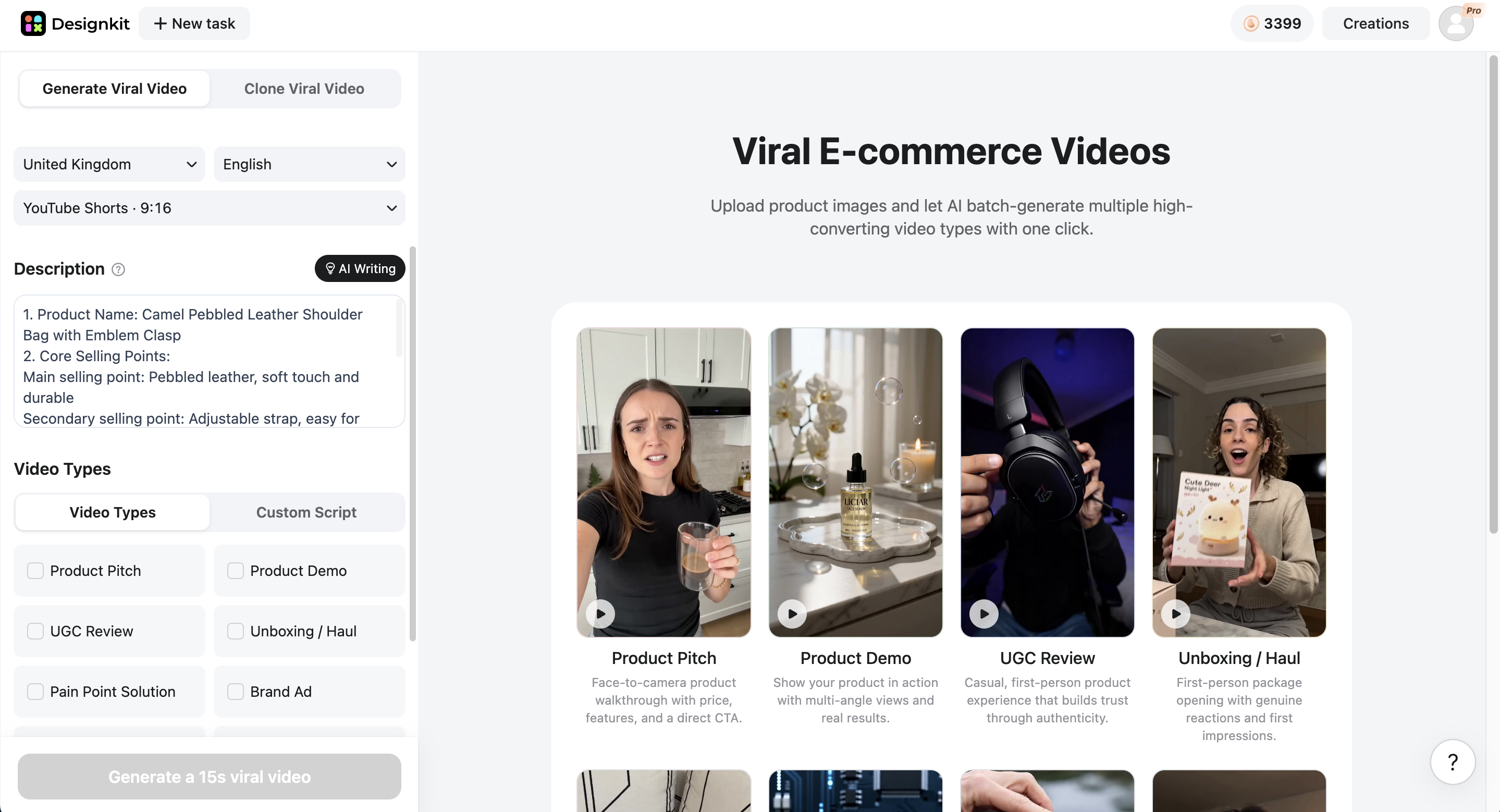
Step 2: Set your target platform and marketing goal
Select your target market, language, and platform ratio, such as TikTok, Reels, YouTube Shorts, or Amazon. Then add product information such as product features, benefits, problems it solves, unique advantages, and real usage scenarios so AI can build a strong marketing-driven video structure.
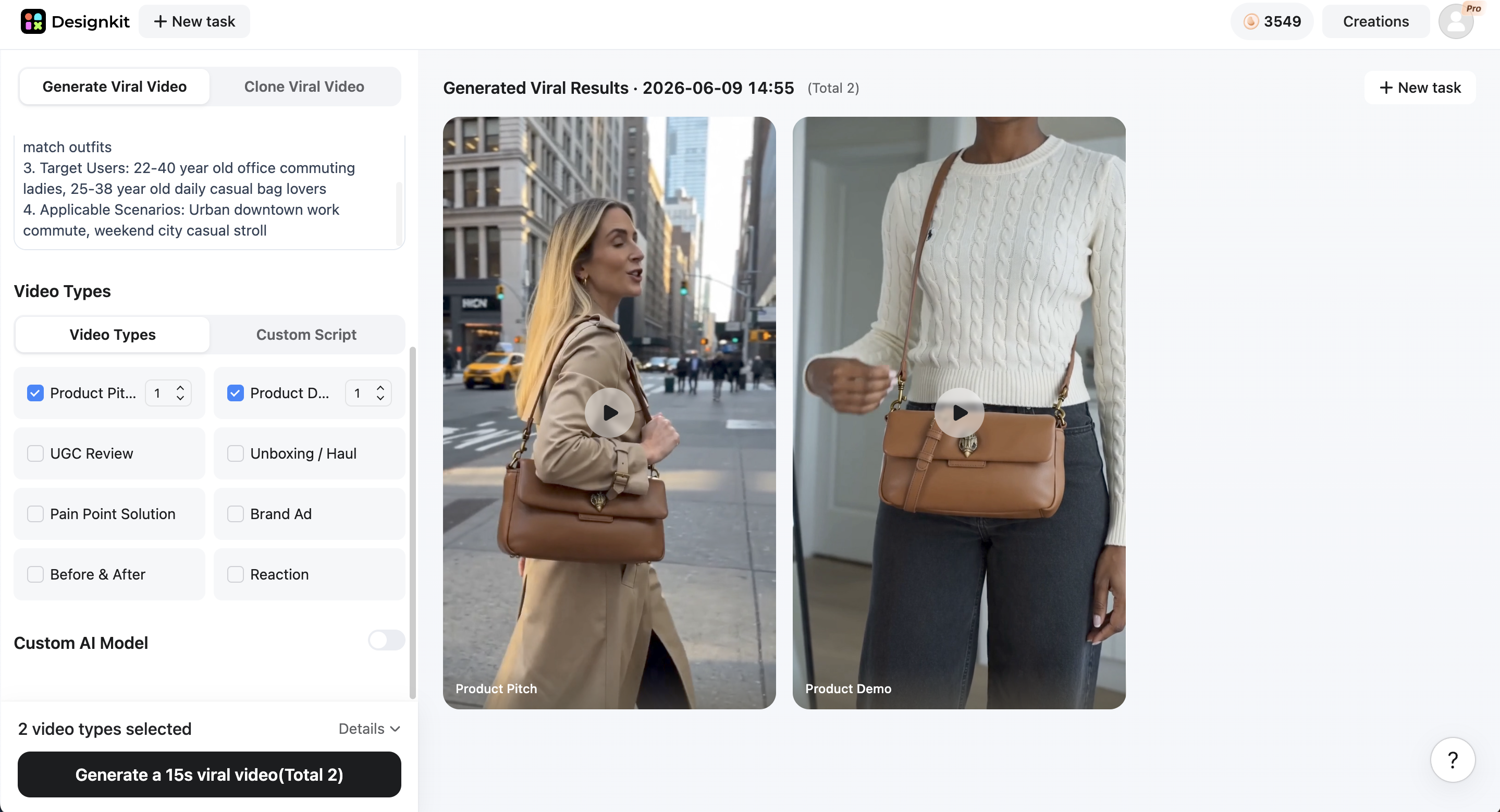
Step 3: Choose a video style and generate
Pick a style that matches your goal, such as a UGC-style testimonial, a fast product demo, a before-and-after transformation, or a problem-solution hook. Designkit then generates multiple high-conversion versions in one pass, exported in the right ratios for TikTok, Reels, YouTube Shorts, Amazon, or Shopify, ready to publish or A/B test.
How to reduce cart abandonment and recover lost sales
Simplify your checkout to remove drop-off points
Long or confusing checkout processes increase cart abandonment. Reduce unnecessary form fields, offer guest checkout, and keep payment steps simple. A fast, mobile-friendly checkout experience helps shoppers complete purchases without distractions or delays.
Add urgency at the right moment to close the sale
Well-timed urgency can encourage shoppers to complete their purchase before leaving. Use limited-time discounts, low-stock alerts, or free shipping countdowns during checkout. Authentic urgency helps reduce hesitation and motivates faster buying decisions.
Recover abandoned carts with email and WhatsApp
Many shoppers leave without buying but return after a reminder. Automated email and WhatsApp sequences can recover lost sales by reminding users about their cart, highlighting product benefits, or offering limited-time incentives to complete checkout.
Bring back lost shoppers with retargeting ads
Retargeting ads help reconnect with visitors who viewed products or abandoned their carts. Personalized ads showing recently viewed items, reviews, or special offers keep your brand visible and increase the chances of converting interested shoppers into customers.
How to increase repeat purchases and customer lifetime value
Set up post-purchase emails that drive upsells
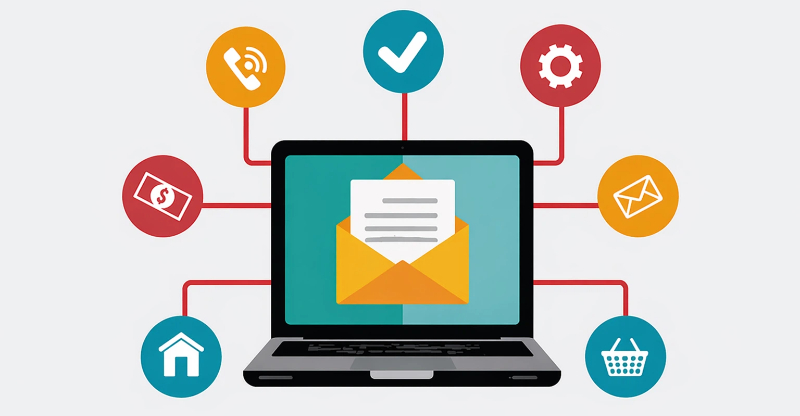
Post-purchase emails help brands stay connected with customers after checkout. Use follow-up emails to recommend complementary products, offer bundle discounts, or introduce upgrades based on previous purchases. Well-timed upsell emails can increase repeat purchases and improve overall customer lifetime value.
Use personalized recommendations to increase order value
Personalized recommendations help customers discover products that match their interests or past purchases. Showing relevant products on product pages, checkout pages, or email campaigns increases average order value while creating a more tailored shopping experience for returning buyers.
Build loyalty programs and referral systems that retain customers
Loyalty programs encourage repeat purchases by rewarding customers with points, discounts, or exclusive perks. Referral systems also help brands grow through word-of-mouth marketing by giving existing customers incentives to recommend products to friends and family.
Create educational content that helps customers get more value
Educational content helps customers use products more effectively, increasing satisfaction and long-term retention. Tutorials, how-to videos, product guides, and FAQs can reduce confusion, improve customer experience, and encourage repeat purchases by helping buyers get better results from their products.
Conclusion
Boosting ecommerce performance is not about one tactic but combining better traffic, stronger conversions, and higher customer retention. When you improve product pages, attract high-intent visitors, and reduce drop-offs, you naturally increase revenue without relying only on ads. Consistent testing and optimization are key to sustainable growth. Modern tools also make execution faster and easier.
Platforms like Designkit help turn simple product images into high-converting videos that improve engagement, trust, and conversions across channels. Focus on continuous improvement, and you will steadily increase your ecommerce sales and build a scalable, profitable online business.
Frequently Asked Questions
Can I increase eCommerce sales without increasing ad spend?
What is the fastest way to boost eCommerce sales for new products?
New products need fast attention, strong hooks, and quick testing. The goal is to launch multiple creative angles and find what works. With Designkit, you can instantly generate multiple video ad variations from one product, helping you test faster and scale winning creatives in less time.
How can I increase eCommerce sales if my store relies only on images?
Image-only stores often struggle to build emotion and trust. Video makes products feel real, usable, and more convincing. Designkit lets you convert simple product images into scroll-stopping videos designed for TikTok, Reels, and Shorts, helping you increase engagement and conversions quickly.
How does video content help increase eCommerce sales for stores?
Video captures attention, explains value faster, and builds stronger trust than images. It directly impacts buying decisions. With Designkit, brands can create high-performing video creatives at scale, test different hooks, and consistently improve ad performance across campaigns.
How to improve eCommerce sales for multiple products at scale?
Scaling requires speed and consistency in content creation. Instead of working product by product, brands need bulk creative systems. Designkit enables bulk video creation from multiple products, helping you launch more ads, test faster, and grow your entire catalog efficiently.
What are the most common reasons e-commerce stores lose sales at checkout?
Most drop-offs happen due to friction, hidden costs, or lack of trust. Even small issues reduce conversions. Strong product storytelling earlier in the funnel helps reduce this.
Which product page elements have the biggest impact on ecommerce conversions?
Clear benefits, strong visuals, reviews, and urgency all influence conversions. But visuals have the biggest impact because they shape first impressions.
How to improve eCommerce sales for products that are getting traffic but no orders?
This usually means visitors are interested but not convinced. Weak visuals, unclear value, or lack of trust can block sales. Fixing how the product is communicated is key. Designkit helps you transform static product images into powerful videos that clearly show benefits and build buying confidence instantly.
How do I get customers to buy again after their first purchase?
Repeat purchases depend on engagement after the sale. Brands that educate and re-engage customers build higher lifetime value.
You May Also Like

PixVerse AI Review 2026: Is It Worth Using for AI Videos?

How to Animate a Picture with AI: Easy Step-by-Step Guide

How to Write a Video Script: Structure, Tips & Examples

What Is B-Roll? Meaning, Examples, and How to Use It

How to Make a TikTok Video: A Step-by-Step Guide 2026

How to Make an Instagram Post: Step by Step Creation Guide

Social Media Copywriting: Tips, Examples & Best Practices

What Are AI Fruits? The Trend, the Formats, and How to Make One

LTX Studio Review: Features, Pricing & AI Filmmaking Guide

HeyGen vs Arcads: Which AI Video Tool Wins in 2026?

Arcads AI Review 2026: Features, Pricing, Pros, Cons & Alternatives

Creatify AI Reviews: Features, Pricing & Alternatives (2026)

What Are Satisfying Videos? Types, Tips & How to Make (2026)

How to Generate Product Videos from Images with AI (2026 Guide)
How to Create a Product Launch Video with AI: A Step-by-Step Guide
What Is a Brand Video? Types, Examples & How to Create One
AI Product Demo vs Live Demo: Which Gets More SaaS Sign-Ups?
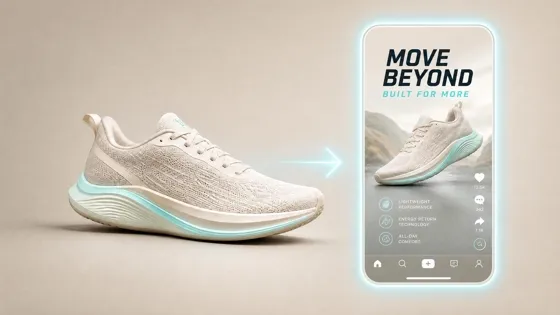
How to Create AI Product Promotion Videos in Minutes (Step-by-Step)

Best AI Product Video Ad Generators for Ecommerce in 2026

How to Boost Ecommerce Sales: Proven Strategies That Work
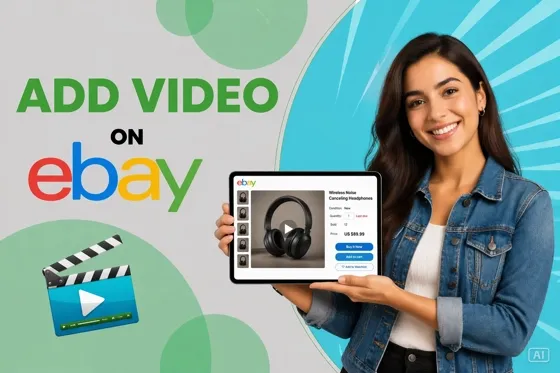
How to Add Video to eBay Listing: Step-by-Step Seller Guide
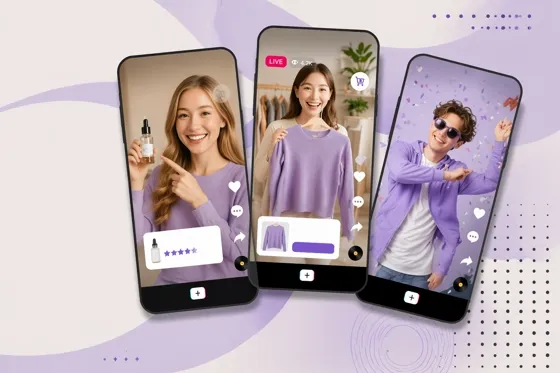
Short Form Video Marketing for E-commerce: AI Video Guide

What Is Video Marketing? E-commerce Guide & Strategies 2026
Boost eCommerce sales with high-converting product videos
Turn your product images into engaging sales-driving videos in minutes with Designkit. No reshoots, no editing skills needed, just upload, generate, and optimize to increase clicks, build trust, and improve conversions across your store.