
Influencer Marketing Guide: How to Plan, Run & Scale Campaigns
Influencer marketing helps brands reach trusted communities through creators. Learn how to build a strategy, run campaigns, pick the right partners, and use digital creatives wisely as the space evolves.

Nobody stops scrolling for a banner ad anymore. But a recommendation from someone they already follow on Instagram? That lands. It's why influencer marketing hasn't slowed down, brands get to borrow trust a creator spent years earning, instead of trying to build it themselves from a cold start. Follower count alone won't save a campaign, though. What actually works is a clear goal, a creator who genuinely fits the brand, a brief that doesn't insult anyone's intelligence, real tracking, and usage rights sorted out before anything ships.
This guide covers the whole arc: what influencer marketing is, how to build a strategy around it, what a campaign looks like from first outreach to final report, a few Instagram-specific notes, what things typically cost, and where AI or virtual-model content genuinely fits into all of it. Short version on that last part, it's a production tool worth having, not a replacement for human trust.
What is influencer marketing?
At its core, it's a paid or product-based arrangement where a brand partners with someone who already has an audience, and that person features the product in content they make on their own terms. It started as a niche tactic and has become a core piece of how digital marketing works, mostly because people respond to other people before they respond to a logo.
Why influencer marketing works today
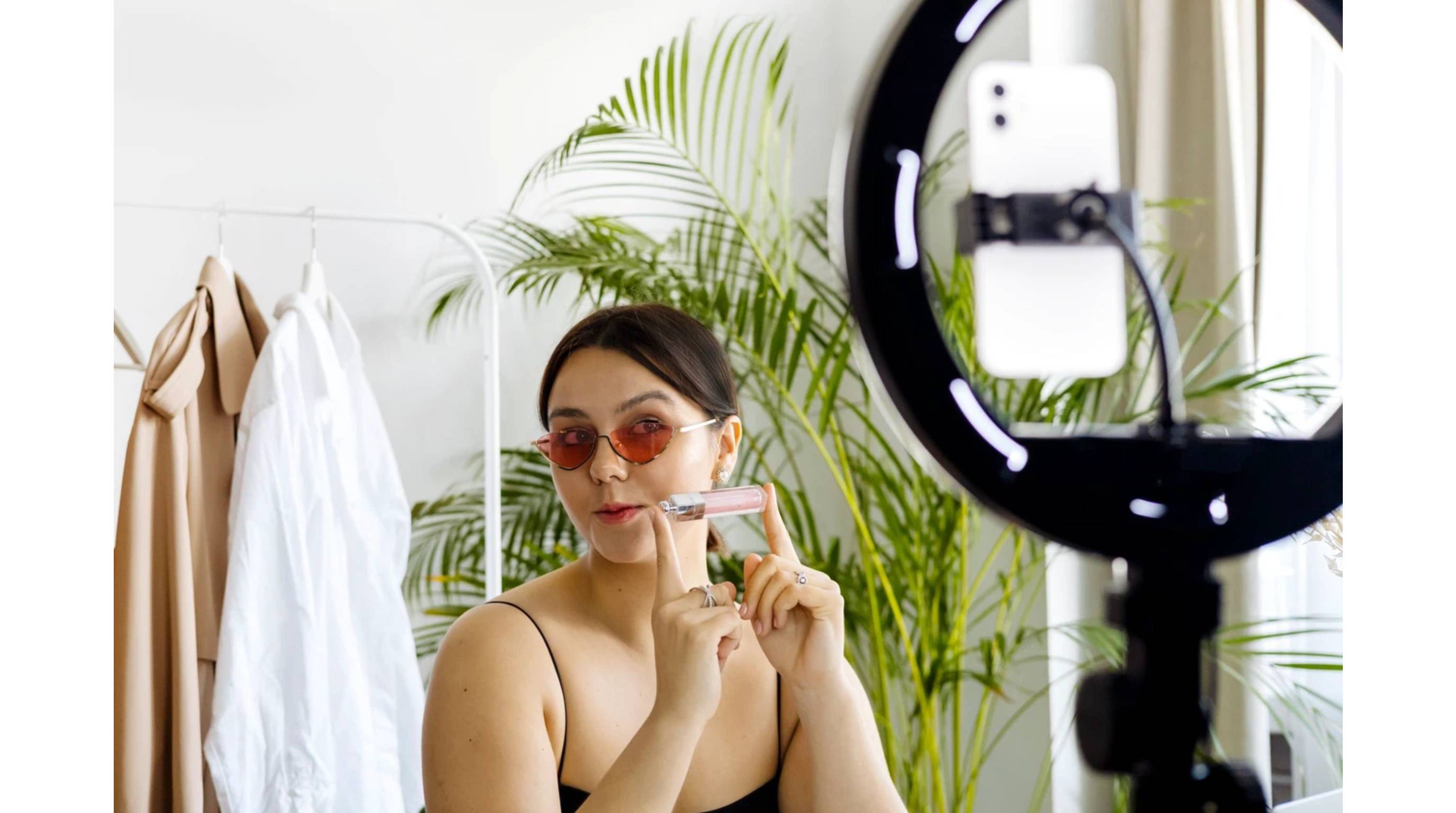
More and more, buying decisions get shaped by what people see creators post, not by what ads tell them. Consumers tend to trust someone who's shared honest opinions and experiences over time more than they trust a company talking about itself.
That's really the mechanism behind why creator partnerships build credibility, when a brand works with someone whose audience already overlaps with its own, the reach feels earned instead of bought. And these compounds. A single sponsored post might get a passing glance, but a creator who mentions a product across several months builds the kind of familiarity that actually changes minds.
Benefits of social media influencer marketing
|
Benefit |
Why it matters |
|---|---|
|
Higher engagement |
Creator content tends to pull in more likes, comments, shares, and real discussion than a standard brand post ever does. |
|
Better audience targeting |
Partnering with the right creator puts a brand in front of the exact people already interested in that niche. |
|
Improved brand awareness |
A good partnership introduces a product to new audiences without feeling like an interruption. |
|
Authentic content creation |
Footage shot by a creator reads as more relatable than anything that looks like a staged commercial. |
|
Stronger purchase intent |
A recommendation from someone trusted lowers hesitation and nudges shoppers closer to checkout. |
|
Better ROI than many traditional channels |
Well-targeted campaigns often outperform broad media buys while wasting less spend. |
Popular influencer marketing examples
-
Fashion: outfit styling, seasonal drops, lookbook-style content
-
Beauty: tutorials, honest product reviews, wear tests, skincare routines
-
SaaS: product walkthroughs, feature demos, workflow videos
-
Ecommerce: unboxings, product showcases, lifestyle content
-
Local businesses: restaurants, cafes, gyms, and other neighborhood brands teaming up with regional creators
Types of influencers brands can work with
|
Type |
Audience size |
Best for |
|---|---|---|
|
Nano influencers |
1K–10K |
Community trust, seeding |
|
Micro influencers |
10K–100K |
Niche audiences |
|
Macro influencers |
100K–1M |
Brand awareness |
|
Mega influencers |
1M+ |
Large-scale campaigns |
|
AI influencers |
Virtual audiences |
Scalable branded content |
How to build an influencer marketing strategy
Skipping a real plan is how budget gets wasted on partnerships that never should've happened. A good strategy just ties creator selection back to whatever the business is actually trying to accomplish.
Define campaign goals
Don't reach out to a single creator before deciding what success looks like. That might mean brand awareness in a market the company hasn't cracked yet, more traffic to the site, or sales in a specific window. Lead generation and app installs come up a lot too. Sometimes the goal is smaller than that, just growing a community by pulling some of a creator's audience over to a brand's own page.
Understand your audience
Who the target demographic actually is determines who gets hired, full stop. Age, location, core interests, buying habits, all of it matters, but so does where that audience spends time. A brand whose customers live on TikTok and YouTube Shorts needs creators who post short-form videos. A blog writer, however talented, isn't the right fit for that.
How to choose the right influencer for your brand
Vanity metrics are the easiest thing to fall for and the least useful thing to chase. Audience relevance matters more, do the followers actually care about this niche, or did they just click follow once and forget about it? Engagement rates are worth checking next, and not just the like count. Comments and saves say more about whether people are paying attention. Beyond the numbers, look at the actual content: does the visual style fit the brand? Has this creator worked with other companies before, and how did those partnerships perform? A quick fake-follower check rounds things out and can save a lot of wasted spend.
Set budget and campaign KPIs
Budget decides how big a campaign can get, but KPIs are what prove whether it worked. Reach tells you how many unique people saw the content. Engagement tells you how they responded to it. Conversions, cost per acquisition, and return on ad spend are the numbers that matter most for revenue, and they're best tracked through custom promo codes or UTM links rather than guesswork. It's also worth calculating earned media value, essentially, what it would have cost to buy the same visibility through paid ads.
How to run an influencer marketing campaign from start to finish
Launching a campaign without some kind of repeatable process is asking for chaos. Keeping things consistent from the first outreach email all the way to the final report makes the whole thing easier to manage, and easier to repeat next time.
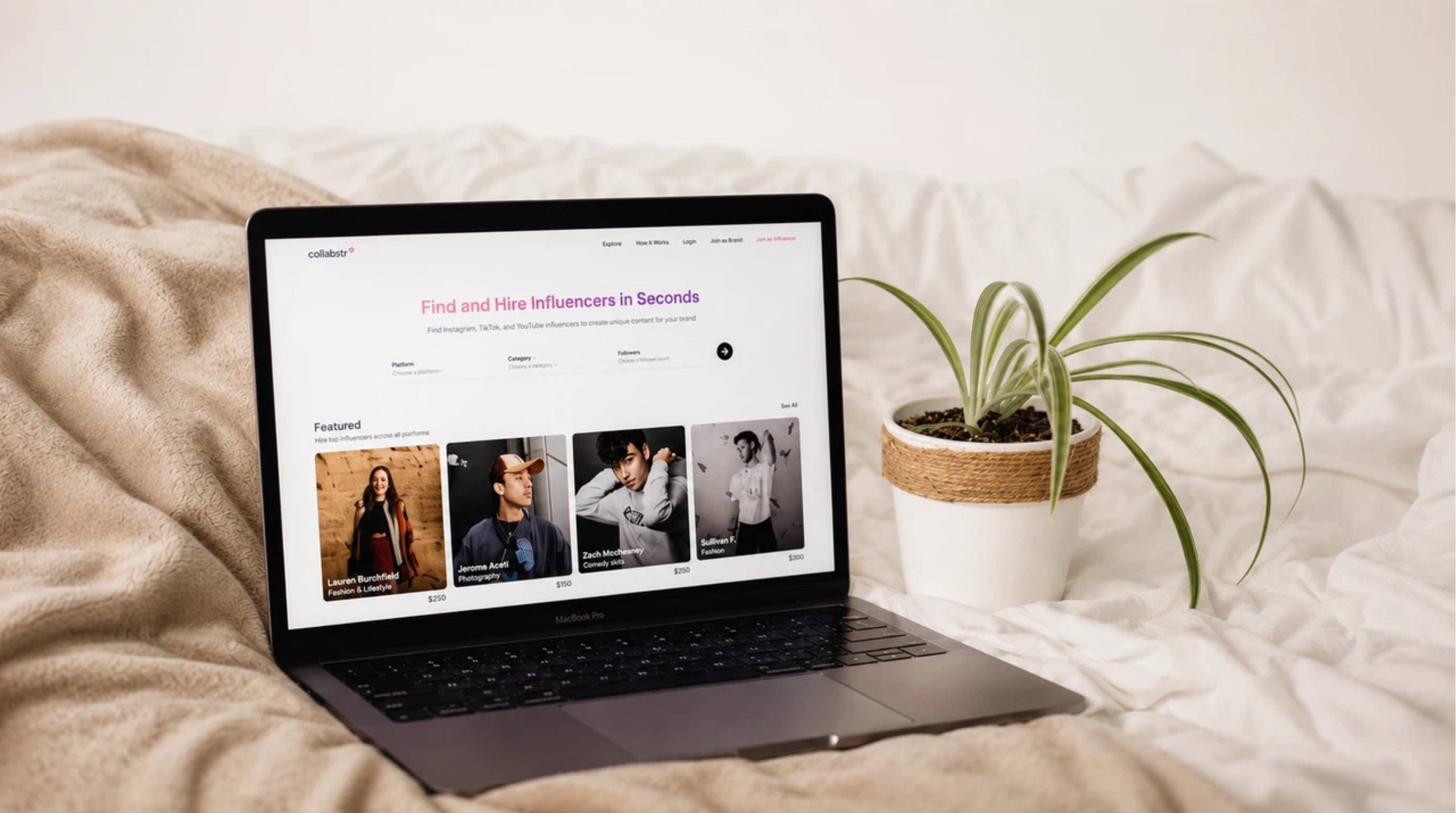
Step 1: Find suitable influencers
Start with a manual search across platforms using relevant hashtags and industry keywords. Build out a list of people whose aesthetic and audience genuinely line up with the brand, not just anyone with a decent follower count. Then reach out with a message that's actually personalized, one that makes clear why this specific partnership makes sense for both sides.
Step 2: Plan campaign requirements
Write a brief that's clear without being controlling. It should spell out deliverables, format sizes, deadlines, and the key points that need to come across, but it shouldn't try to script the creator's voice out of existence. This is also the point to negotiate rates, lock down usage rights, and sort out whitelisting permissions if the content might run as paid ads later.
Step 3: Produce influencer content
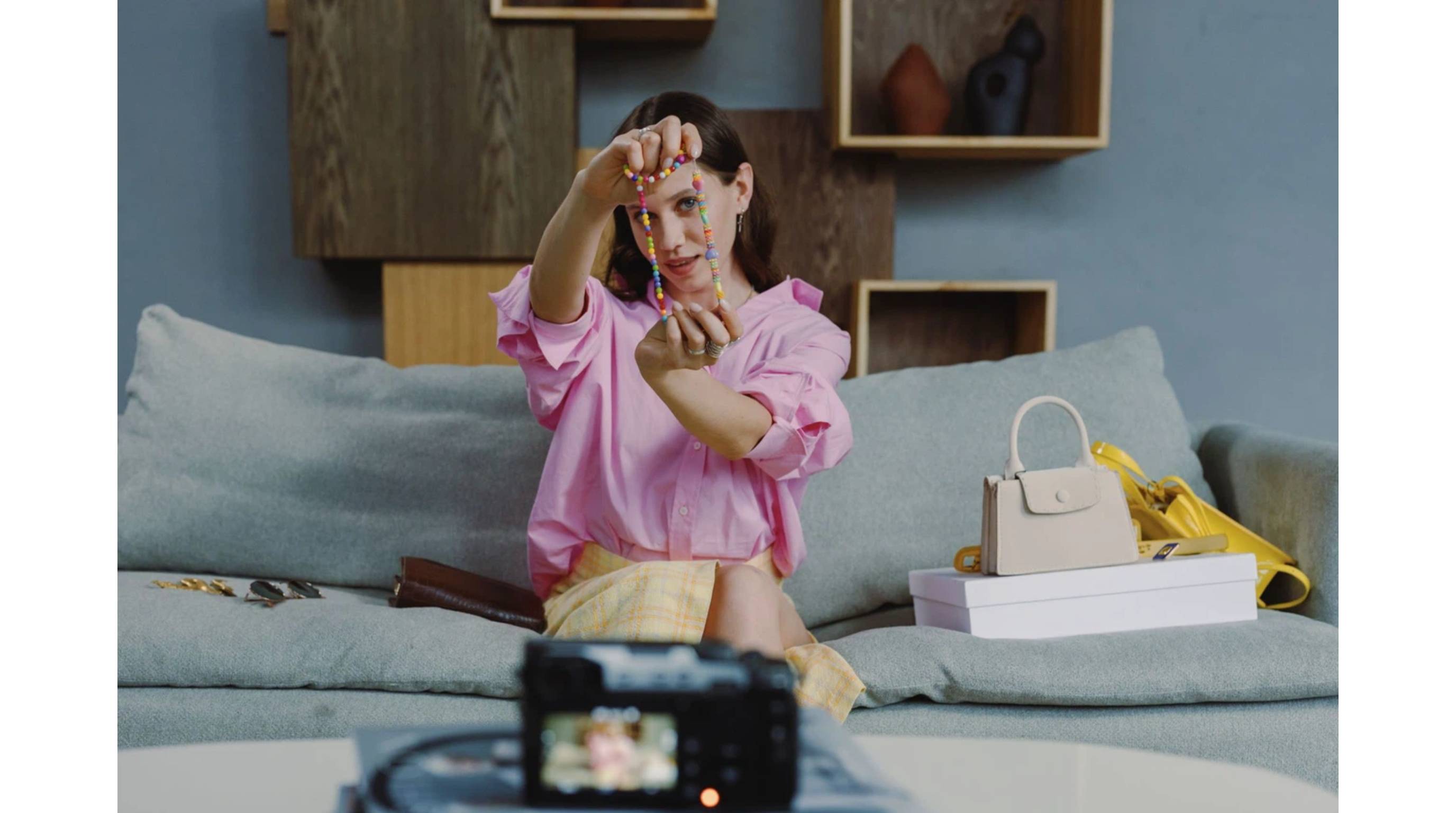
Get products shipped out fast, so creators have real time to test and film. Review drafts, but keep the review focused on brand safety, not creative control, a slightly rough, authentic post almost always beats something that reads like it was written legally. Micromanaging the creative direction tends to backfire more than it helps.
Step 4: Publish and track performance
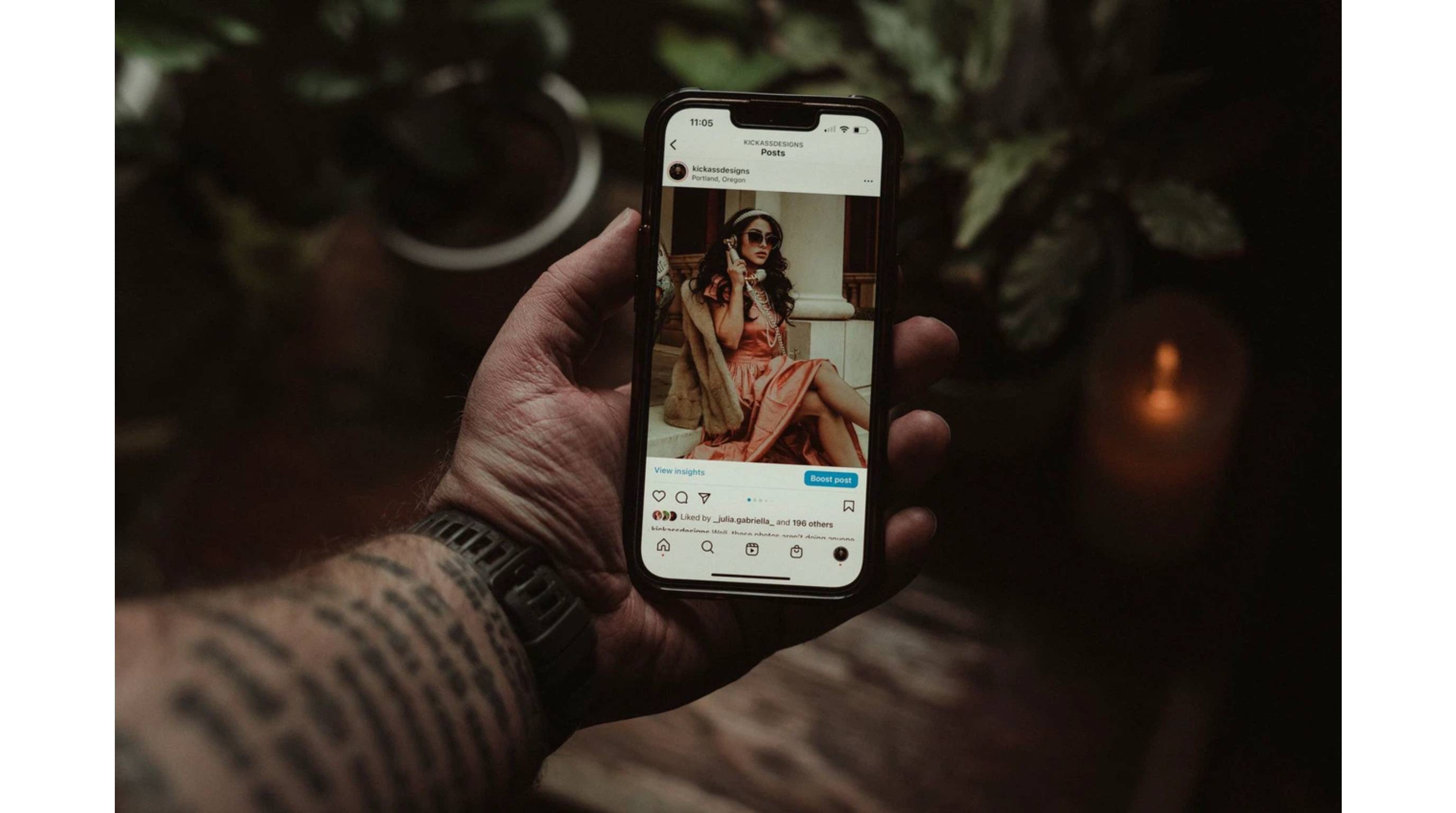
Once content goes live, keep an eye on the UTM links and discount codes tied to each creator. Watching daily traffic and sales by creator shows, pretty quickly, who's actually driving revenue and who just posted into the void.
Step 5: Repurpose winning content
Whatever performed best organically is worth feeding into paid funnels. A creator video that converts well organically can keep working as an ad for months, no need to reinvent the creativity when something proven already exists.
Influencer marketing mistakes to avoid
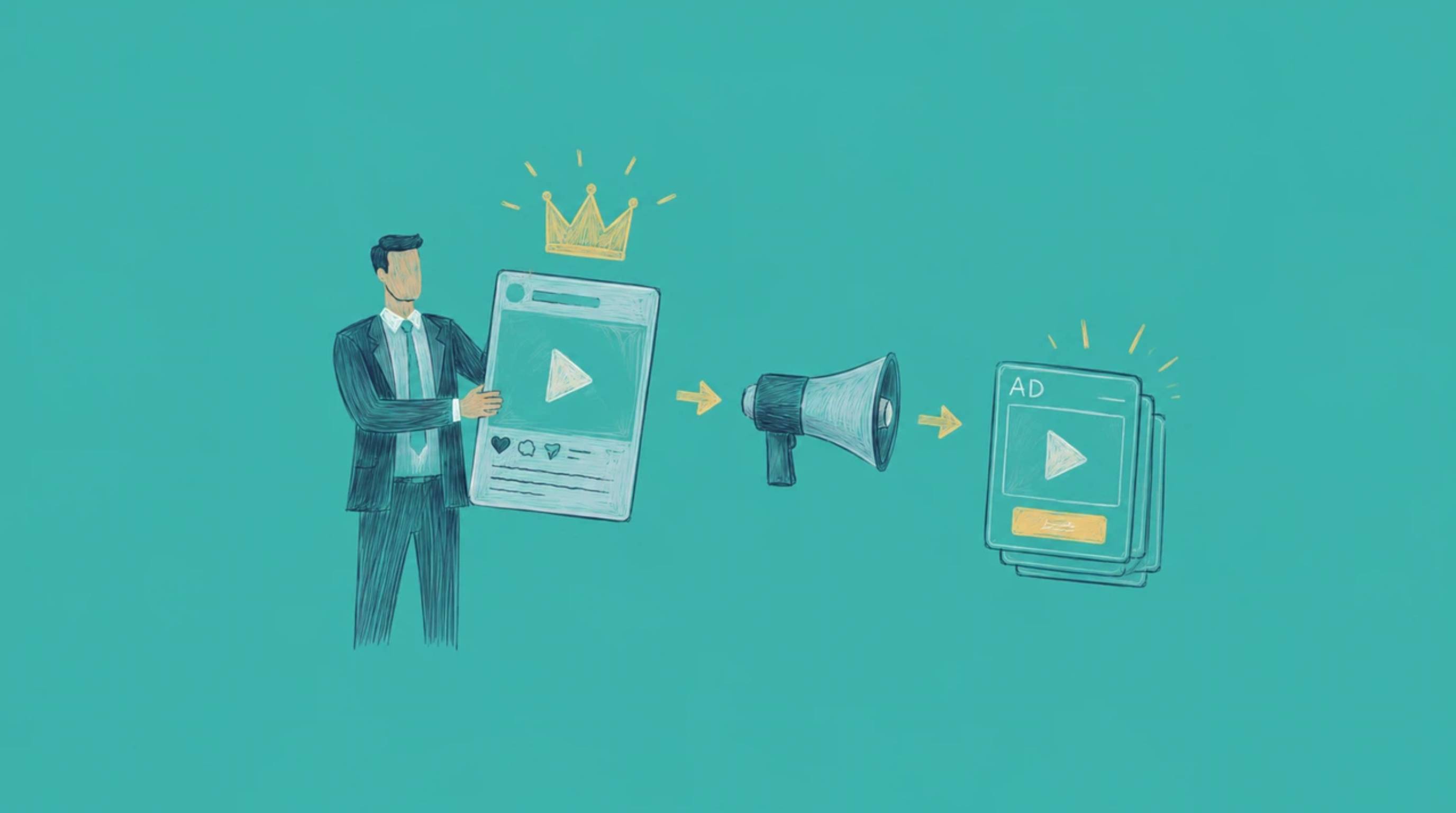
A few habits tend to wreck ROI more than anything else. Skipping content usage rights and whitelisting terms is the big one, without that agreement, a creator's video legally can't be reused as a paid ad later, no matter how well it performed. Treating AI visuals as a full substitute for human authenticity is another one that backfires, usually fast, with community-focused audiences. Sending briefs with no brand guardrails leads to messy, off-brand content nobody's happy with. And buying reach without checking audience quality first is close to guaranteed to underperform. If UTMs or discount codes never get set up in the first place, there's no way to fix what isn't working, because nobody can see what isn't working.
Traditional influencer marketing vs AI influencer marketing
Both approaches help brands reach an audience, but they pull apart on cost, scalability, creative control, and how flexible a campaign can be. The table below breaks down the differences, so it's easier to figure out which approach, or mix of both, fits a given goal.
|
Feature |
Traditional influencers |
AI influencers |
|---|---|---|
|
Creator |
Human creators |
Digital avatars |
|
Production speed |
Depends on creator schedule |
Instant generation |
|
Cost |
Higher collaboration costs |
Lower production costs |
|
Scalability |
Limited by creator availability |
Unlimited variations |
|
Brand control |
Creator-dependent |
Fully customizable |
|
Authenticity |
Human relationship |
Brand-controlled persona |
Advantages of AI influencer marketing
AI influencer content has some real, practical advantages for brands running large or content-heavy campaigns. A few of the places it helps most:
-
Frequent content production: Booking a studio every week isn't realistic for most teams, and digital models sidestep that problem entirely, marketers can generate fresh visuals on demand to keep up with a posting schedule that would otherwise be brutal.
-
Global campaigns: Campaigns that span regions benefit too, since virtual models can be swapped to match different demographics without reshooting anything, which helps the marketing actually feel relevant instead of generic.
-
Testing gets easier as well: Producing dozens of visual variations for A/B testing, something that would take weeks with a human shoot, becomes almost trivial, giving media buyers the volume they need to find whatever's actually working.
-
Consistent brand appearance: Virtual avatars stick to whatever style guide they're given, lighting and mood and overall aesthetic stay consistent across every placement in a way that's genuinely hard to pull off with human shoots at scale.
When should brands use AI influencers?
AI influencers make the most sense when a brand needs content that's scalable, consistent, and doesn't blow the budget. A few scenarios where that's especially true:
-
Fashion brands can show off entire seasonal collections through virtual models without booking a single physical shoot.
-
Beauty brands can demonstrate products across a range of skin tones while keeping the visual identity tight and consistent.
-
Ecommerce brands can generate campaign visuals for an entire catalog without the usual photoshoot bottleneck, sometimes launching a full promotional set in a matter of hours rather than weeks.
For brands ready to build their own virtual influencer presence, platforms like Designkit handle the generation, customization, and management side of AI-powered influencer content.
Human influencers or AI creatives: which should brands choose?
Honestly, it depends on the goal, the budget, and where a brand is in its content strategy. Human influencers are still what builds real relationships with an audience. AI influencers can't replace that, but they win on scalability and creative control. Here's a quick way to think about the tradeoff:
|
Goal |
Better option |
|---|---|
|
Build personal trust |
Human influencers |
|
Product-on-model volume |
Both, humans for proof, AI visuals for scale |
|
Large-scale creative testing |
AI-assisted visuals |
|
Brand-controlled product scenes |
AI-assisted visuals |
|
Community building |
Human influencers |
|
Fast ad creative testing |
AI-assisted visuals |
Create AI influencer campaigns with Designkit
Human creator partnerships are still what drive trust; that hasn't changed. But separately, plenty of ecommerce teams also need on-model product visuals and short video variants for ads and social testing, and they need them without booking a new shoot for every SKU.
That's the gap Designkit fills: generating virtual try-on images and marketing videos so product visuals can scale without slowing everything else down. It's not a replacement for influencer discovery, contract negotiation, or community management; it just handles the production side, quickly.
Step 1: Upload your product and enter product information
Log into the workspace and click the "+" under "Upload Product Images" to bring in a clean product photo. From there, choose the target market and publishing language, pick the platform format needed, and add product details, selling points, or a marketing angle into the prompt box.
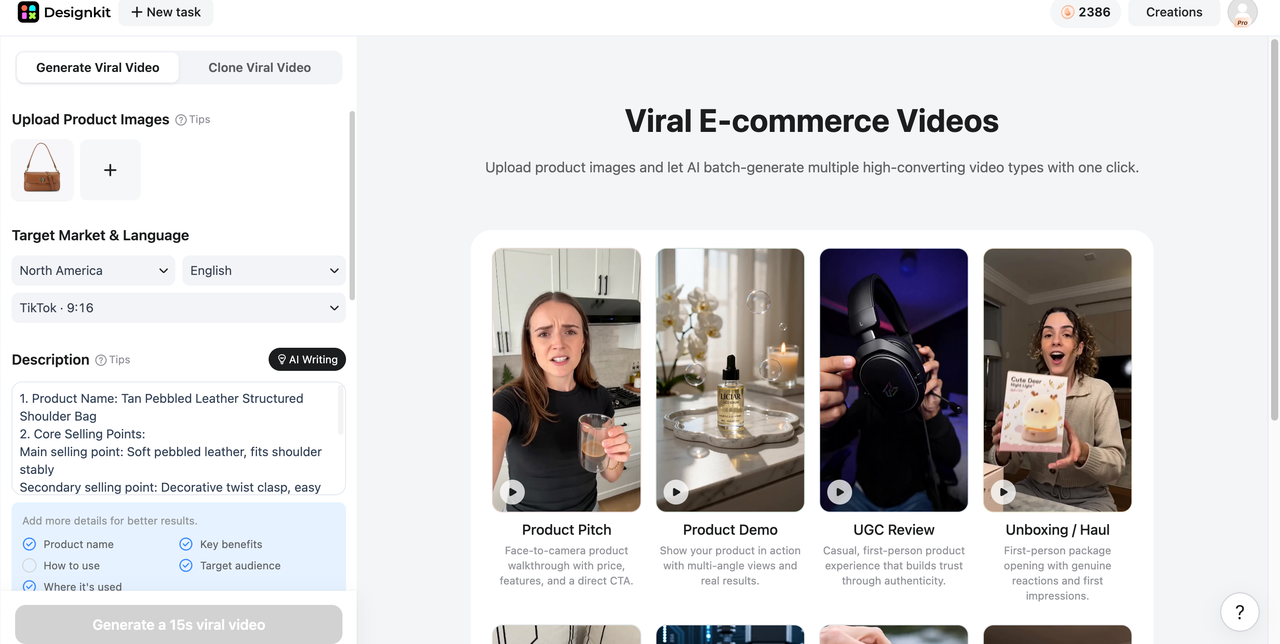
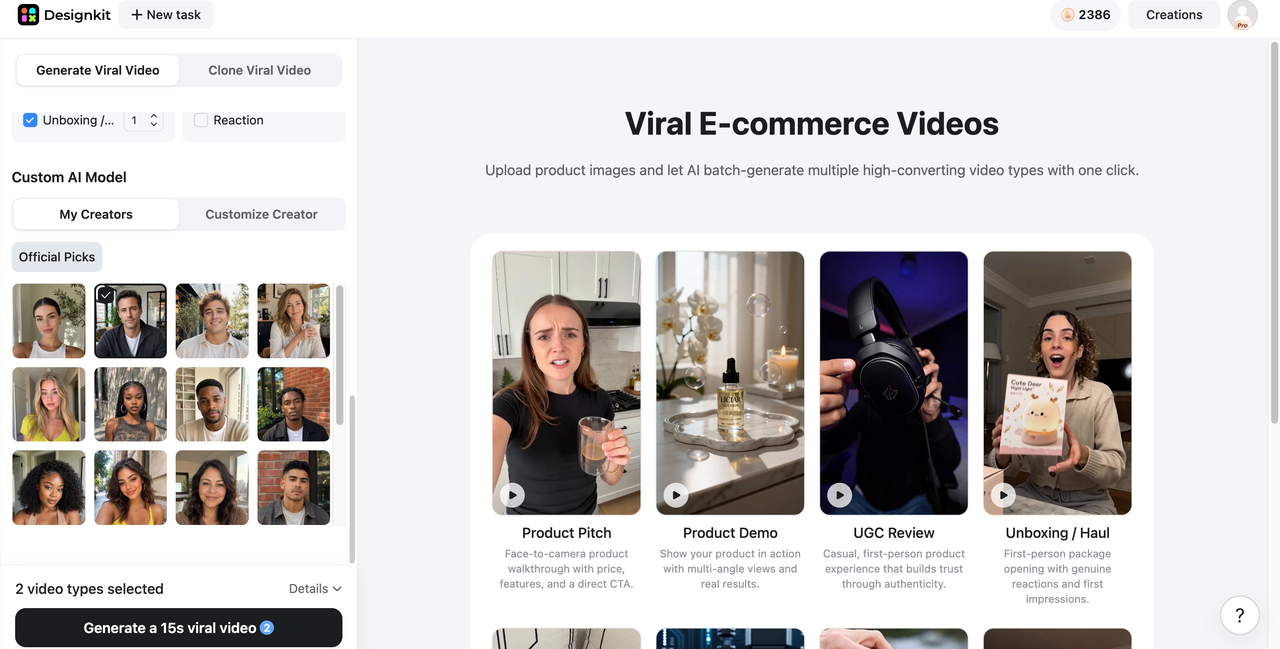
Step 2: Choose a virtual model and generate AI influencer content
Head to the "Custom AI Model" section and pick a persona, either from "Official Picks" or from saved creators, that actually fits the brand's aesthetic. Select the video type and check the generation parameters look right. Once everything's set, click "Generate a 15s viral video" and let it run.
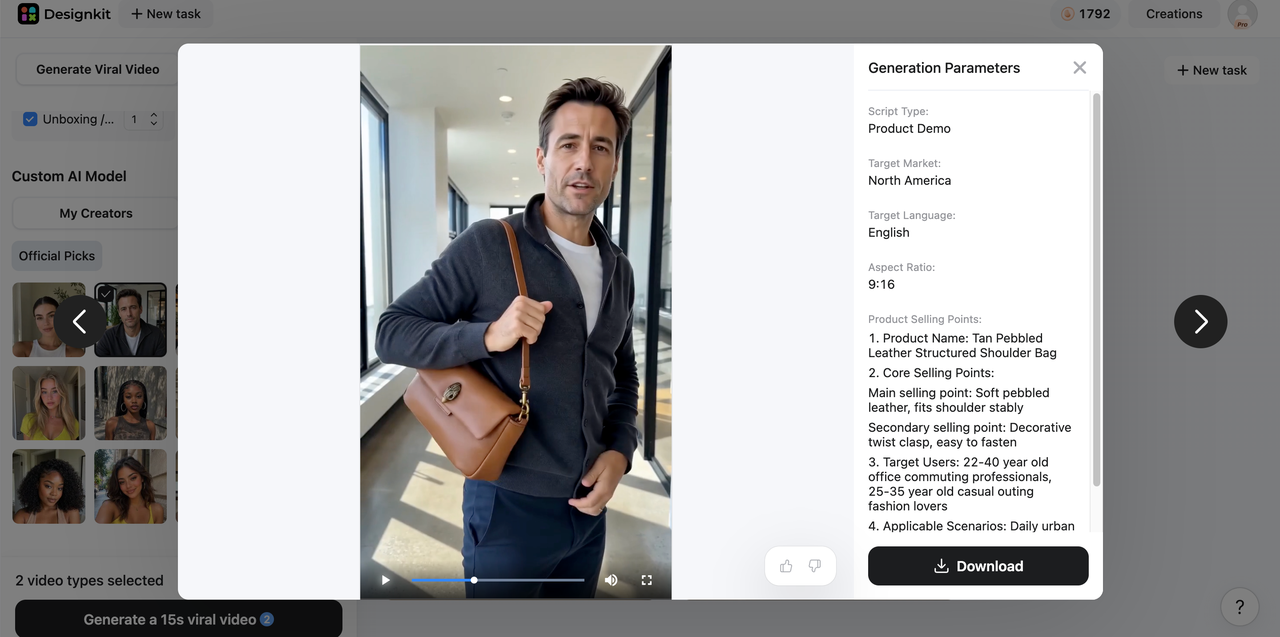
Step 3: Export and launch campaign-ready content
Once processing finishes, open the video preview to check the output against the generation parameters. If it holds up and matches the campaign's goals, hit "Download" to save high-resolution files ready to launch across ad channels.
Designkit features for AI influencer marketing
AI virtual models for on-product visuals: Booking studio time for every new apparel line gets expensive fast. A high-quality AI fashion model generator lets teams put clothing on diverse, realistic digital avatars instead, with lighting, pose, and styling adjustable on the fly.
AI virtual try-on: Shoppers want a sense of how something actually looks before they buy it. Virtual try-on lets companies show apparel or eyewear on customizable digital models, closing some of the gap between a flat product photo and real buyer confidence.
AI product photography: A plain catalog background rarely stops anyone mid-scroll. Product visual AI drops merchandise into realistic lifestyle scenes instead, a cozy living room for home goods, a sunlit beach for accessories, while keeping shadows and reflections looking right.
AI video generation for short promo clips: Static images only carry a campaign so far on platforms built around motion. AI video generation turns a single product photo into a short, dynamic clip, ready for TikTok or Instagram Reels without booking a videographer.
Creative variations for testing: Paid social usually needs a handful of different hooks before one actually works. Marketers can export multiple ad sizes and visual layouts at once, with safe margins handled automatically, so media buyers get what they need to find a winning creative faster.
Final thoughts
None of this works without a solid strategy, the right creator fit, and honest measurement; that part hasn't changed and probably never will. Human influencers are still the strongest tool for building trust and real engagement with a community. AI and virtual-model tools have their place too, mainly in helping ecommerce teams scale product creatives and run ad tests faster. Designkit can take on production-heavy lifting, but partnerships, the usage rights, and the disclosures still need to stay front and center.
Frequently Asked Questions
What is influencer marketing?
How does influencer marketing work?
Brands pay creators, or send them products, in exchange for content. The creator makes something authentic featuring the brand and shares it with their followers, while the marketing team tracks clicks, conversions, and everything in between.
How do brands choose the right influencers?
The smart approach looks past follower counts entirely. Engagement rates, audience demographics, content style, and how past brand partnerships performed all matter more than a raw number.
How much does influencer marketing cost?
It varies enormously by tier. Nano creators will often work for free products, while macro and mega creators can charge thousands per post.
What works best for influencer marketing on Instagram?
Authentic Stories with link stickers and short-form Reels tend to outperform everything else right now. The platform rewards raw, behind-the-scenes content over anything that looks too polished.
What are AI influencers?
They're digital, computer-generated personal brands used to model clothing, showcase products, or appear in marketing content without a human photoshoot.
Can AI influencers replace human influencers?
No, they can't replicate the trust and relationship a real person builds with their community. What they're genuinely good at is scaling product visuals and testing creative ideas quickly.
Do AI influencers or virtual-model ads need special disclosures?
Yes. Advertising guidelines require clearly disclosing when a video or image features an AI-generated model, and skipping that disclosure is a fast way to lose consumer trust.
How does Designkit create AI influencer campaigns?
Designkit places uploaded products onto virtual models based on the inputs entered in the workspace, letting teams generate large volumes of on-model visuals and promo clips for A/B testing without booking physical studio space.
You May Also Like
Amazon A+ Content Dimensions: Module Image Sizes
Print-On-Demand Designs: Create, Prepare, and Preview Your Work
Amazon A+ Content: What It Is and What to Build First
Is Print on Demand Profitable in 2026? Products and Niches
Amazon Brand Registry Application: How to Submit and Pass Review
How to Ship to Amazon FBA: Your First Shipment
What Is Amazon FBA? Should Beginners Use It in 2026
How to Get Ungated on Amazon: Restricted Category Approval Steps
Amazon Backend Keywords: Title, Bullets & Search Terms
What Is A/B Testing? A Practical Guide to Running Better Experiments
Best Time to Post on Instagram in 2026: Data & Tips
How to Get Verified on Instagram: Complete Guide
TikTok Monetization in 2026: Requirements & Ways to Earn
Instagram Desktop Posting Guide: Upload Posts, Stories & Reels
YouTube Shorts Monetization Requirements & Rules 2026
How Much Does YouTube Pay Per View? 1K, 100K & 1M Views
How to Make Money on Snapchat: 7 Ways to Earn
How to Get More Followers on Instagram in 2026
Best Time to Post on TikTok in 2026 for More Views
How to Repost on Instagram in 2026: A Simple Guide
Multichannel Marketing Guide: Strategy, Tools & Examples
How to Create Digital Products That Sell in 2026
Cyber Monday Marketing Ideas & Strategies (2026 Guide)
Black Friday Marketing Ideas for Ecommerce Brands (2026)
Instagram Marketing Guide: Strategies, Tips & AI Tools in 2026
Influencer Marketing Guide: Strategy, Campaigns & Creator Tips
15 Best Things to Sell on Etsy in 2026 (Listing Tips Included)
WooCommerce vs Shopify 2026: Pricing, Features & Which Is Better
How to Sell on Facebook Marketplace: Beginner Guide (2026)
How to Use Pinterest for Business: Strategy, Tips & Growth Guide
How to Sell on Etsy in 2026: Setup, Listings & Growth Tips
What Is a Target Audience? Types, Examples & How to Find Yours
TikTok Marketing Guide 2026: Strategies, Ideas & AI Tools
Vibe Marketing Explained: Strategy, Examples & AI Tools
How to Sell on Depop: Beginner Guide to Getting Your First Sale
Online Advertising Guide: Types, Costs & Examples (2026)
Facebook Advertising Guide: Costs, Strategy & Tools 2026
What Are E-commerce Ads? Examples, Strategy & Tools (2026)
Where to Sell Handmade Items Online (2026): Etsy, Amazon, or Shopify?
Shopify vs Amazon (2026): Brand Store or Marketplace FBA?
Amazon Handmade vs Etsy (2026): Which Is Better for Makers?
Etsy vs eBay (2026): Handmade, Vintage, or Secondhand?
Selling on Amazon vs eBay (2026): Fees, Profit & Where to Sell
What Is Brand Awareness? Examples, Strategies & Tools 2026
10 Best Online Selling Platforms (2026): Pick by What You Sell
Shopify vs Etsy (2026): Which Is Better for Handmade Sellers?
YouTube Automation Step-by-Step AI Guide for Beginners
What Is Brand Identity? Examples, Elements & Strategy
AI Marketing Agent: How It Works, Benefits & E-Commerce Examples
What Is Personalized Advertising? Examples & How It Works
How to Build a Shopify Store That Actually Converts Visitors
Amazon Marketing Guide 2026: Strategies, Tips & Tools
Local Advertising: Strategies, Examples & Tools (2026)
What Is Branded Content? Examples, Strategy & Tools 2026
What Is Performance Marketing? Strategies & Examples 2026
Inbound Marketing: Strategies, Examples & Tools (2026)
Scale Influencer Marketing with AI
Generate AI influencers, virtual try-on visuals, and campaign-ready content without photoshoots or production delays.