
AI Marketing Agent: How It Works and Why E-Commerce Brands Are Using It
Learn how AI marketing agents automate content creation, campaign production, and creative workflows to help e-commerce brands save time, scale faster, and improve marketing performance.

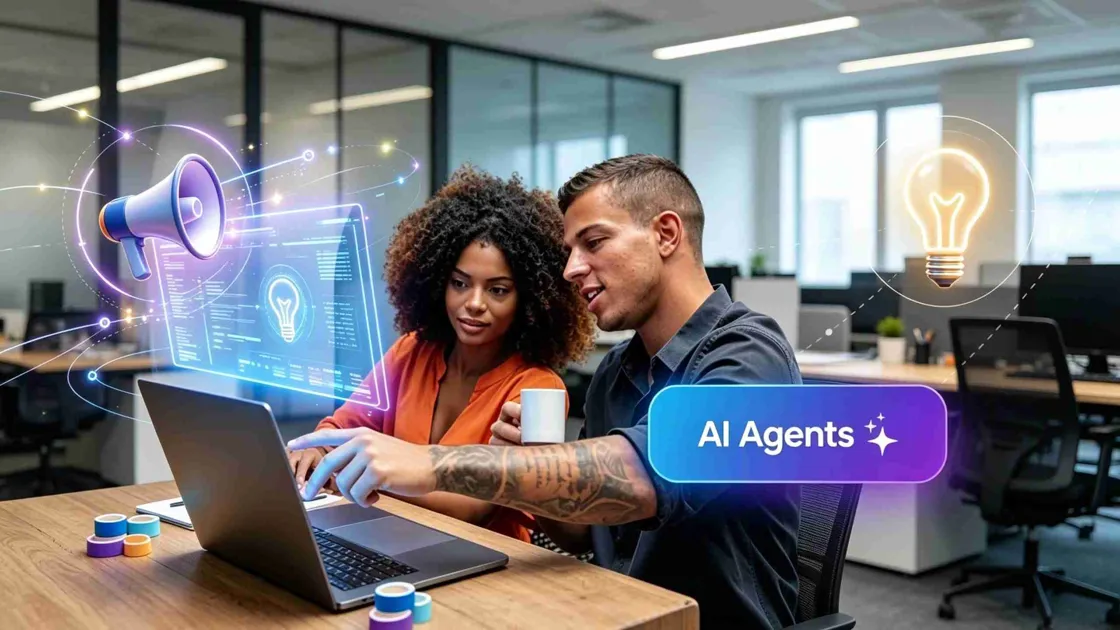
AI marketing agents are reshaping how e-commerce businesses approach content creation, advertising, and campaign execution. Instead of relying on manual design work and large teams, brands can now automate key marketing tasks using intelligent systems. This shift is helping sellers produce faster, scale content effortlessly, and improve overall efficiency. From product visuals to ad creatives, AI agents reduce production time while increasing output quality.
In this guide, we explore how AI marketing agents work, why they matter for e-commerce growth, and how tools like Designkit are enabling businesses to automate marketing workflows and boost conversions.
What Is an AI Marketing Agent in E-commerce?
What AI Marketing Agents Actually Do
An AI marketing agent is a system that automates marketing tasks like content creation, campaign management, and audience targeting using artificial intelligence. It helps businesses analyze data, optimize performance, and make faster marketing decisions with less manual effort.
However, these definitions are often built for marketing teams—not for sellers managing product listings.
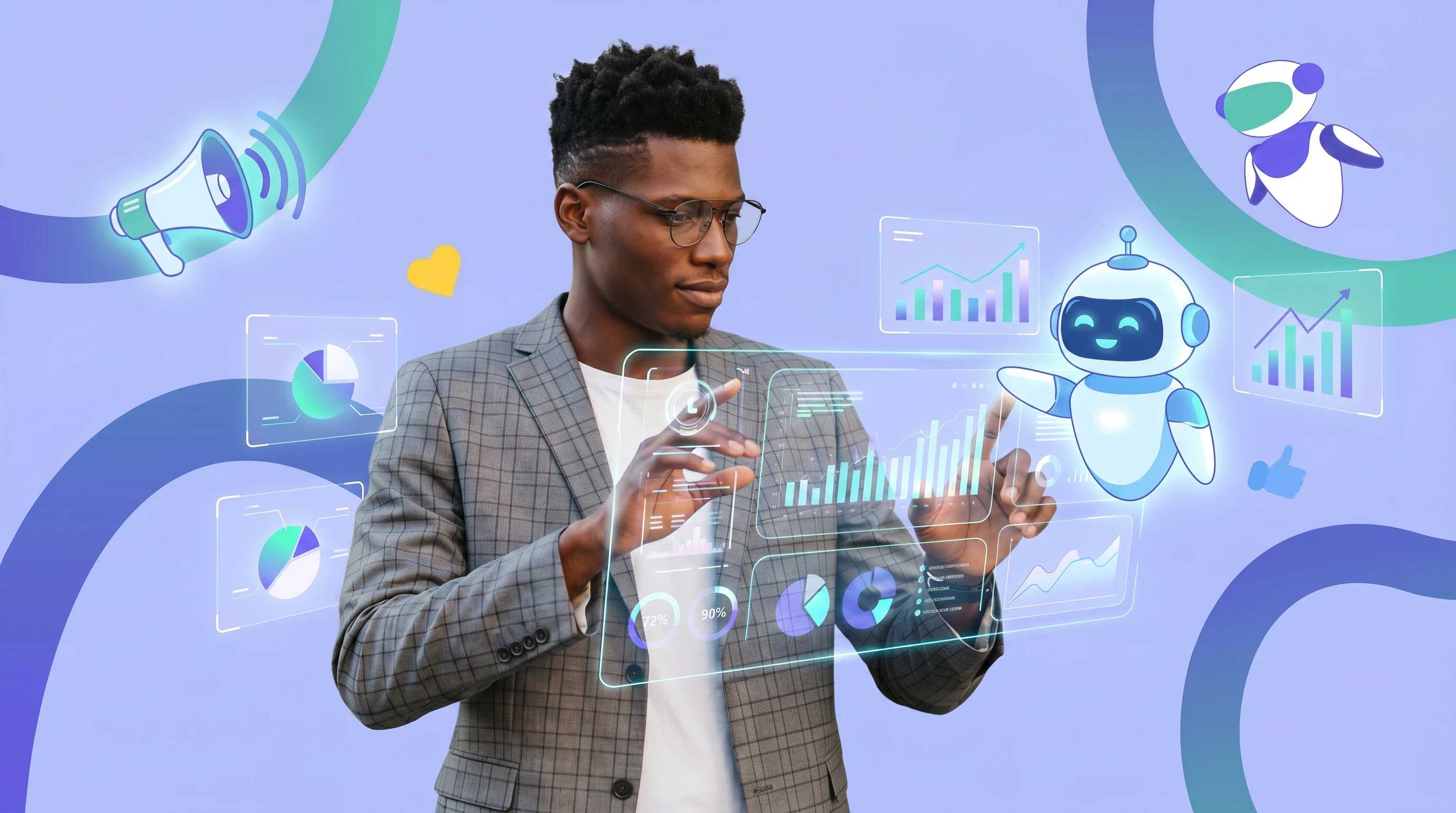
How AI Marketing Agents Work for Online Sellers
Traditional Marketing Workflow
Most AI agents in marketing follow a simple structure:
-
Input data
-
AI processes information
-
Output campaigns or insights
This works well for analytics but is limited for product-based businesses.
E-commerce Execution Workflow
For sellers, the workflow becomes more content-focused:
-
Upload product image or reference
-
Select output type (listing, ads, lifestyle)
-
Generate multiple creative variations
-
Deploy directly to stores or campaigns
This turns AI agents for marketing automation into production systems rather than just optimization tools.
Role of Agentic AI for Marketing
With agentic AI for marketing, systems are now capable of:
-
Producing creative assets automatically
-
Handling bulk product workflows
-
Adjusting outputs based on the use case
This is especially powerful for sellers managing large catalogs or frequent product launches.
Why AI Marketing Agents Matter for E-commerce Sellers
Content Production Is the Biggest Challenge
Many sellers struggle to produce enough high-quality visuals consistently. Without strong content, even the best marketing strategies fail to convert.
Costs Continue to Rise
From photography to editing, content creation can quickly reduce margins. AI tools help reduce these expenses by replacing traditional workflows.
Speed Impacts Growth
Faster product launches create more opportunities to test and scale. AI-powered tools help reduce delays and improve efficiency.
Scaling Requires Volume
Growth depends on testing multiple creatives and optimizing listings. AI solutions make it easier to generate variations at scale.
Key Use Cases of AI Marketing Agents in Online Stores
Creating Product Images Without a Photoshoot
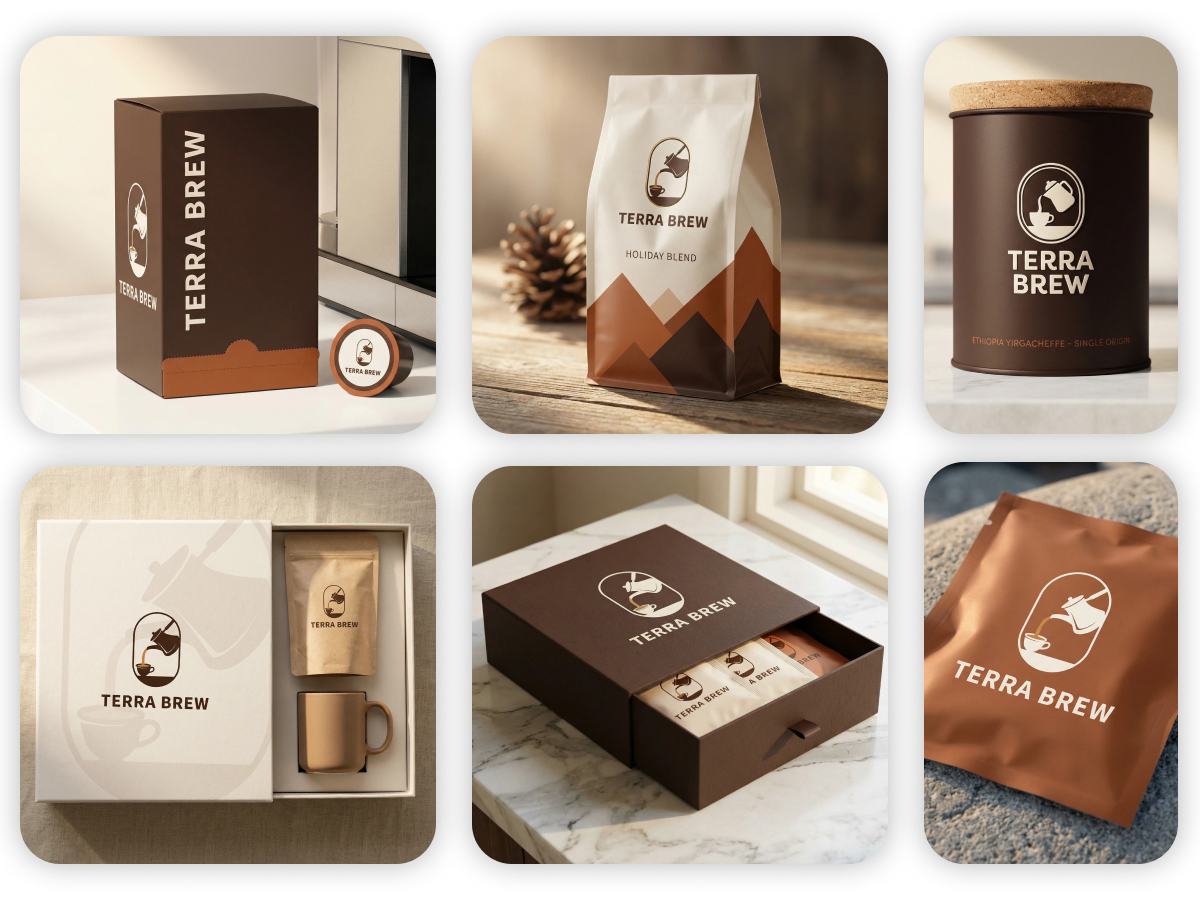
AI makes it possible to generate high-quality product visuals without cameras, studios, or models. With an AI agent for marketing, brands can turn basic product inputs into studio-like images ready for ecommerce use. This helps reduce production costs, speed up launches, and maintain a steady flow of visuals without traditional photoshoots.
Generating Ad Creatives for Meta, Google, and TikTok
Instead of designing separate ads for every channel, AI can instantly produce platform-ready variations for Meta, Google, and TikTok. AI agents in marketing help test multiple creative styles at scale, improving performance while reducing manual design work and speeding up campaign optimization.
For example, one product photo can be expanded into a 1:1 Meta feed ad, a 9:16 TikTok cover, and a 16:9 YouTube thumbnail in a single pass — instead of briefing a designer three times.
Producing Lifestyle Photos Without Models or Sets
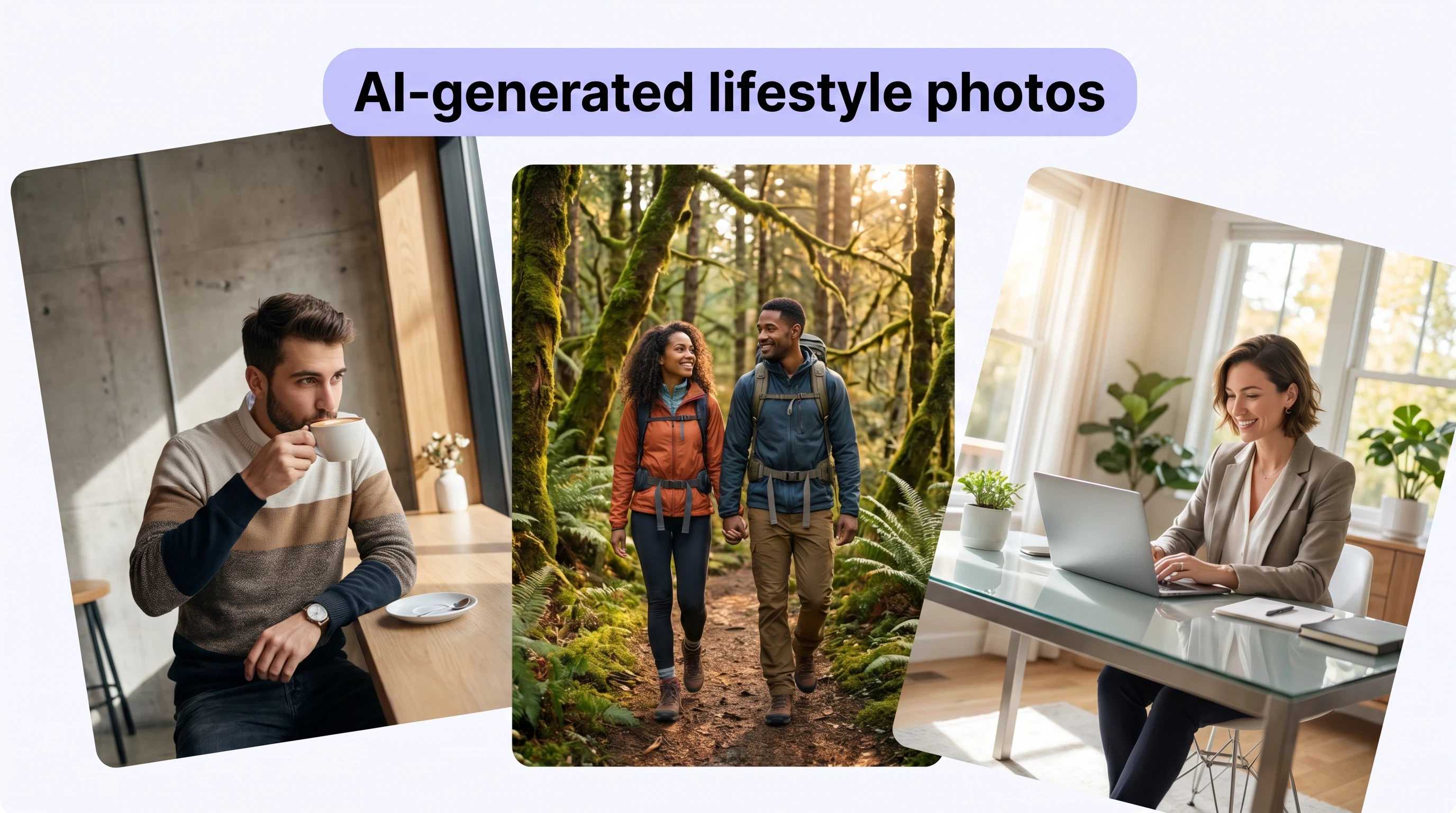
AI allows brands to create realistic lifestyle visuals without hiring models or renting locations. Using an agentic AI in a marketing approach, products can be placed in natural environments, helping customers better understand usage and context while keeping production fast, flexible, and cost-efficient.
Optimizing Product Listing Images
Product pages perform better when visuals clearly communicate value. An AI marketing agent can generate optimized listing images that highlight features, improve clarity, and increase trust, helping e-commerce stores improve conversions in competitive marketplaces.

Scaling Content Across Large Catalogs
For stores managing large inventories, manual content creation is not practical. AI agents for digital marketing help automate visual and content generation across entire catalogs, ensuring consistent quality, faster output, and scalable marketing operations without increasing workload.
For e-commerce sellers looking to implement all of the above without a large team or complex setup, tools like Designkit provide a purpose-built solution. It helps streamline workflows, reduce manual effort, and speed up content creation from start to finish.
How Designkit Works as an AI Marketing Agent for E-commerce
Designkit functions as an AI marketing agent built specifically for e-commerce businesses, helping sellers move from product assets to ready-to-use marketing content with minimal effort. Instead of acting only as a workflow assistant or analytics tool, Designkit actively creates product images, promotional creatives, lifestyle visuals, and ad-ready content designed for selling environments.
Built for platforms like Shopify and Amazon, it supports bulk product workflows, faster campaign launches, and consistent visual quality across listings. As an AI marketing agent for e-commerce, Designkit helps sellers scale content production, reduce creative costs, and generate conversion-focused assets without relying on complex editing processes or large production teams. This allows brands to create and launch marketing content faster while improving overall sales performance.

Key Designkit Features for AI Marketing Content
Generate studio-quality product and lifestyle images from a plain white-background photo, no photoshoot, no models needed.
Script to Visual Engine for Fast Content Creation
This feature converts simple scripts into complete marketing videos by automatically generating scenes, visuals, and flow based on the message. Designkit removes the need for manual editing or searching for assets, allowing marketers to quickly turn ideas into structured video content that is ready for ads, product storytelling, and social media campaigns at scale.
Multi-Model AI for Different Creative Styles
Different campaigns require different storytelling approaches, from clean product demos to emotional ads or UGC-style videos. Designkit uses multiple AI models like GPT Image 2 High, Nano Banana AI, Kling 3.0, and Seedance 2.0, so users can instantly generate and test different creative styles for the same product, improving speed, variation, and conversion performance.
Bulk Content Creation for Large Product Catalogs
Managing large product catalogs requires high-volume content output, which is difficult with manual production. Designkit enables bulk video creation, so multiple marketing videos can be generated at once. This helps e-commerce brands scale campaigns faster, maintain consistent visual quality, and reduce the time and effort needed for repetitive content production tasks.
Unified Marketing Asset Generator for Complete Outputs
Instead of creating separate videos, captions, and visuals individually, Designkit produces complete marketing asset packages in one workflow. This ensures consistent messaging across campaigns and saves time by delivering ready-to-use content for ads, social media, and e-commerce listings, making marketing execution faster and more organized for teams.
Marketplace Optimized Content for E-commerce Platforms
Content generated through Designkit is optimized for e-commerce platforms like Shopify and Amazon, where clarity and trust directly impact sales. It ensures visuals are structured to highlight product details effectively, improve customer understanding, and increase conversion rates by aligning with marketplace expectations and buyer behavior patterns.
How to Create Marketing Content with Designkit in 3 Simple Steps
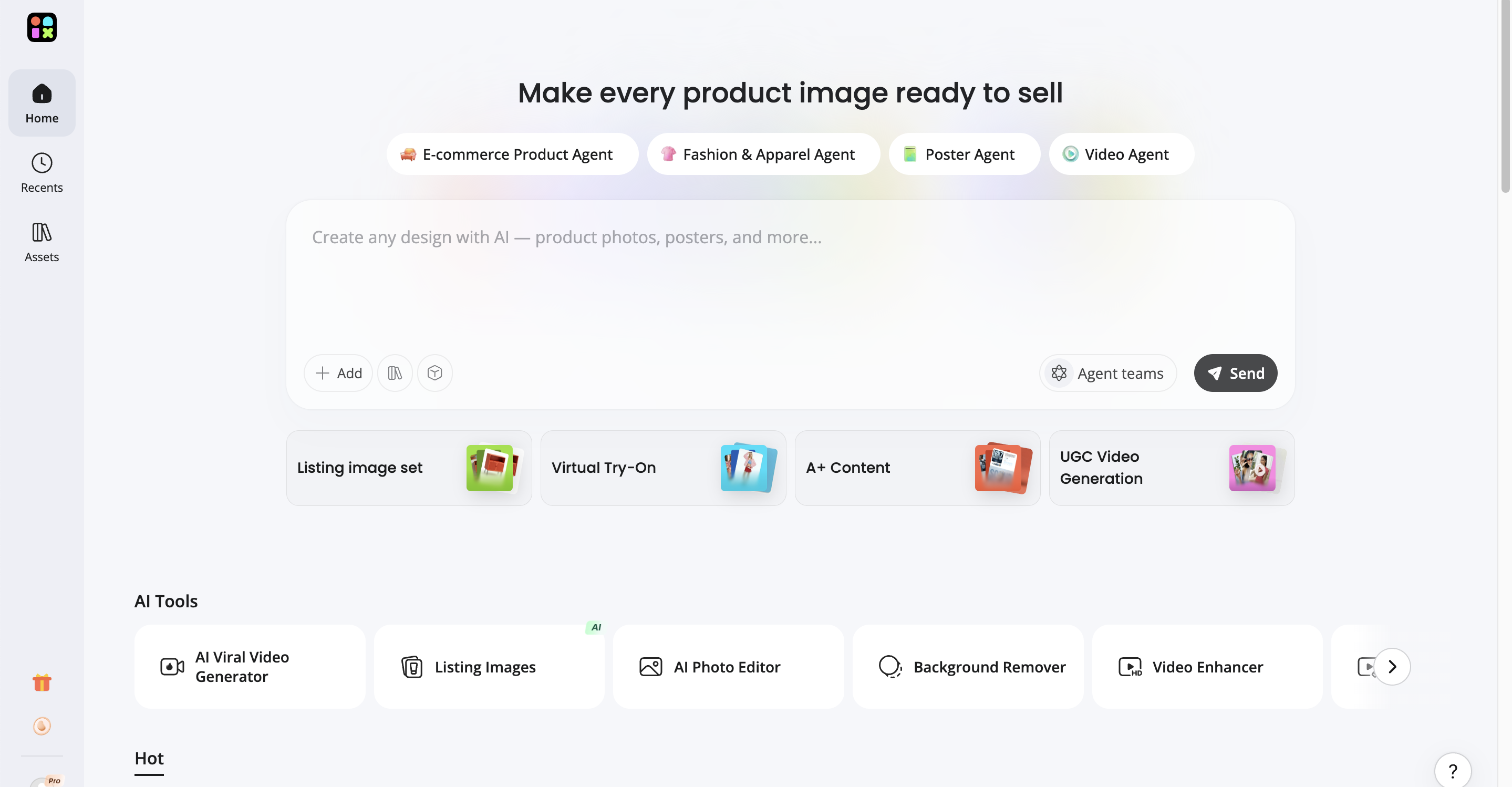
Step 1: Upload your product and set the marketing goal
Upload a clear product image (white-background or multi-angle works best) and add a short prompt plus key selling points. Tell Designkit the intended use — ad, social post, or listing — so it aligns the output from the start.
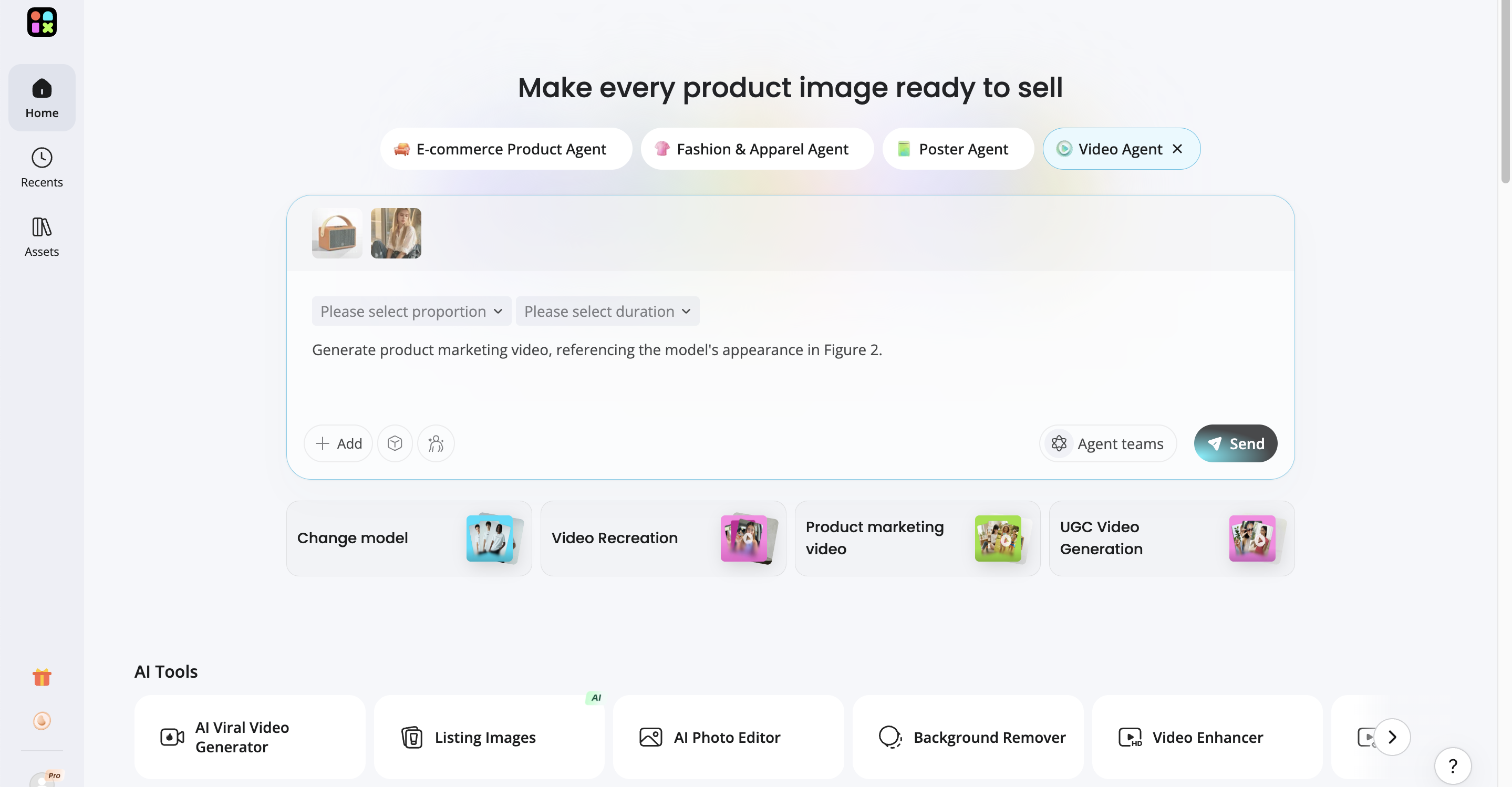
Step 2: Let the AI agent generate and optimize the video
Based on the input, the AI agent automatically builds a video by selecting visuals, structuring the flow, and adding marketing-focused sequencing. It adapts the content for attention, engagement, and platform behavior like TikTok, Instagram Reels, or YouTube Shorts.
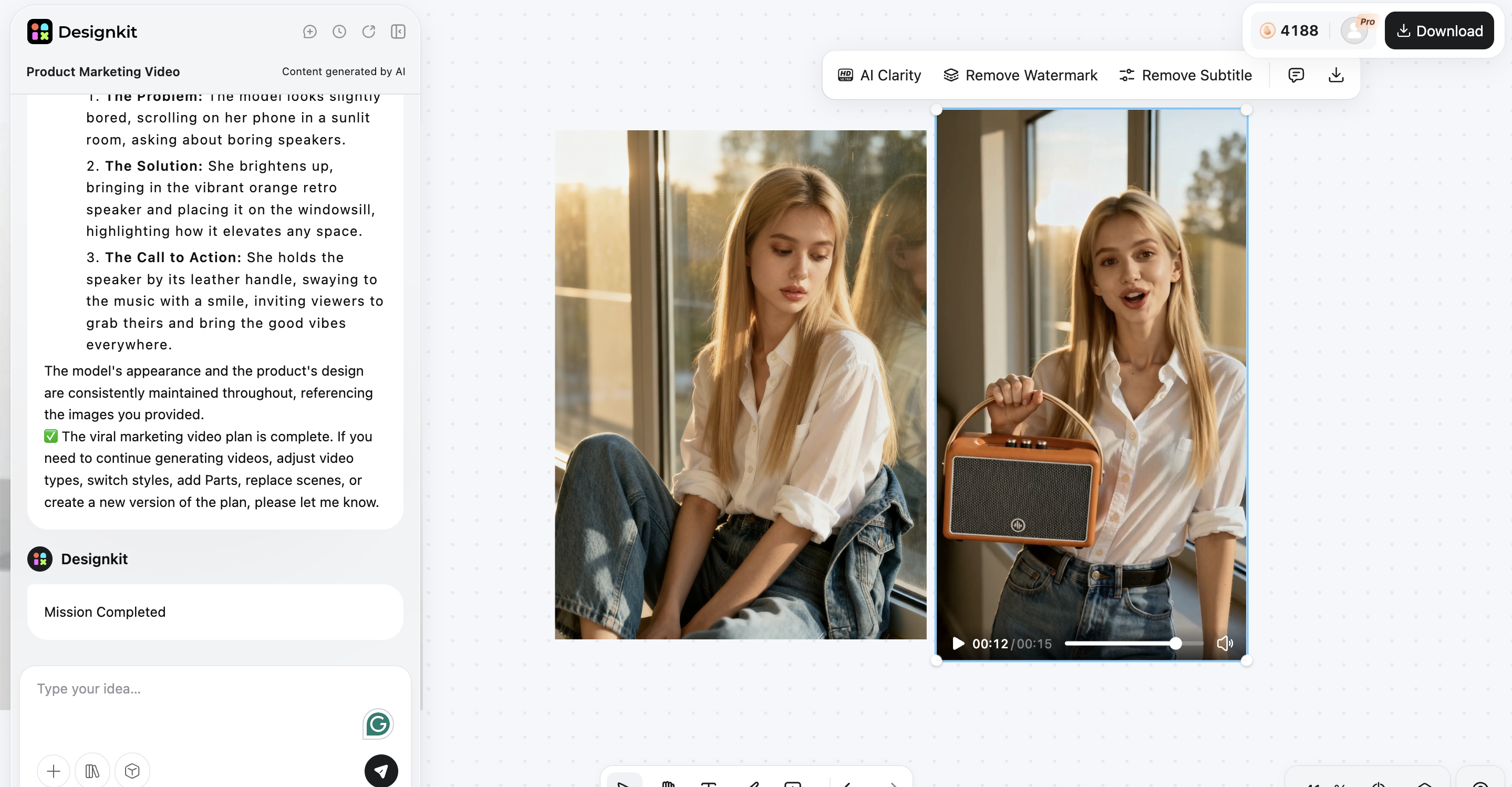
Step 3: Review and export your marketing video
Preview the result, make minor edits, then export in the right format for each channel — 9:16 for TikTok and Reels, 1:1 for Meta feed, or listing-ready sizes for Amazon and Shopify.
Common Mistakes When Using AI Marketing Agents
Using generic product inputs instead of detailed product information
When brands provide vague or incomplete product details, the output often lacks accuracy and impact. AI systems need clear inputs like features, audience type, and context to generate strong results. Without this, visuals and messaging can feel generic and less persuasive, reducing overall performance in marketing campaigns and product listings.
Reusing the same content across platforms instead of adapting for each channel
Each platform has different user behavior and content expectations. A video that performs well on social media may not be converted to product pages. Failing to adapt content leads to weaker engagement. Effective use requires tailoring visuals and messaging for each channel to match how users consume content in that specific environment.
Depending on one content style instead of testing multiple creative formats
Relying on a single creative direction limits performance potential and audience reach. Different users respond to different styles, such as product-focused, lifestyle-driven, or storytelling formats. Testing multiple variations helps identify what resonates best, improving engagement rates and helping brands scale winning content more effectively over time.
Publishing AI-generated assets without reviewing content quality
Automated content creation is fast, but skipping quality checks can lead to errors in visuals, incorrect product details, or weak messaging. Every output should be reviewed before publishing to ensure accuracy, consistency, and brand alignment. This step helps maintain trust and prevents low-quality content from affecting brand perception.
Creating content without brand guidelines instead of maintaining consistency
Without clear brand rules, content can become visually inconsistent across campaigns, weakening brand identity. Elements like tone, color style, and visual structure should remain aligned in all outputs. Maintaining consistency ensures stronger recognition, builds trust with audiences, and creates a more professional and cohesive brand presence across all marketing channels.
Conlusion
AI marketing agents let e-commerce brands shift from manual production to automated, scalable content workflows — faster launches, lower costs, and more creative to test. The brands that adopt them now will out-execute competitors still stuck briefing designers one asset at a time. Tools like Designkit make that shift practical, turning raw product inputs into ready-to-publish images and videos in minutes.
Frequently Asked Questions
What is an AI marketing agent and how does it improve ecommerce efficiency?
How are AI agents for marketing used to increase sales performance?
AI agents increase sales by improving how products are presented through optimized visuals and ad creatives. Better presentation builds trust and attracts more clicks, which leads to higher conversions. Designkit helps by generating high-quality product images and videos that clearly showcase features, making listings more persuasive and improving overall sales performance.
What is Agentic AI in marketing and how does it enhance automation?
Agentic AI refers to systems that can independently execute marketing workflows like creating, structuring, and optimizing content based on goals. It enhances automation by reducing manual decision-making and repetitive tasks. Designkit applies this approach by automatically generating structured marketing visuals and videos tailored for ecommerce needs at scale.
How do AI agents in marketing help businesses scale faster?
AI agents help businesses scale by producing large volumes of marketing content quickly without increasing team size or production cost. This allows continuous testing and faster campaign launches. Designkit enables ecommerce brands to generate multiple creatives at once, helping them scale product listings, ads, and social content efficiently and consistently.
What types of marketing content can AI agents create for eCommerce stores?
AI agents can create product images, promotional videos, ad creatives, and lifestyle visuals tailored for online selling. This reduces reliance on traditional photoshoots and editing teams. Designkit supports all these outputs from simple product inputs, allowing ecommerce stores to generate complete, conversion-focused marketing content for different platforms.
How do AI marketing agents help reduce content production costs?
They reduce costs by eliminating the need for photographers, models, studios, and large creative teams. Most content is generated digitally, cutting production expenses significantly. Designkit lowers costs further by producing professional-quality visuals and videos directly from product assets, removing expensive manual production workflows.
Can AI marketing agents replace traditional content or creative team?
They can automate repetitive production tasks like image creation and video editing, but they don't replace strategy or brand direction. Humans still guide messaging and creative decisions. Designkit handles execution by generating marketing assets quickly, reducing workload while allowing teams to focus on planning and brand growth.
How do I get started with an AI marketing agent for my online store?
To get started, you simply upload product details, choose the type of content you need, and generate marketing assets instantly. The process is simple and fast. Designkit streamlines this workflow by converting product inputs into ready-to-use visuals and videos, helping ecommerce sellers launch campaigns quickly without technical skills or complex setup.
You May Also Like

Local Business Marketing: Ideas, Priorities and Ways to Get Local Customers
Social Media Audit: How to Review Performance and Find What Works
Social Media Content Planner: Plan & Schedule Posts

How to Build a Personal Brand: A Strategic Guide
How to Create a YouTube Channel for Your Business in 2026
Amazon Individual vs Professional Selling Plan

How to Create an Amazon Seller Account: Requirements and Steps
Amazon Product Video Requirements: Specs & Upload
Amazon Brand Registry Requirements: Trademark, Account & Cost

Amazon Global Selling: How to Open Multiple Marketplaces

How to Make an Event on Facebook: Complete Setup Guide (2026)
Amazon Sponsored Brands: What They Are and When to Use Them
Amazon Sponsored Products: How to Launch Your First Campaign
Amazon Vine Program for Sellers: Get Early Product Reviews

Amazon A+ Content Dimensions: Module Image Sizes
Print-On-Demand Designs: Create, Prepare, and Preview Your Work

Amazon A+ Content: What It Is and What to Build First
Is Print on Demand Profitable in 2026? Products and Niches
Amazon Brand Registry Application: How to Submit and Pass Review
How to Ship to Amazon FBA: Your First Shipment
What Is Amazon FBA? Should Beginners Use It in 2026

How to Get Ungated on Amazon: Restricted Category Approval Steps
Amazon Backend Keywords: Title, Bullets & Search Terms
What Is A/B Testing? A Practical Guide to Running Better Experiments

Best Time to Post on Instagram in 2026: Data & Tips

How to Get Verified on Instagram: Complete Guide
TikTok Monetization in 2026: Requirements & Ways to Earn

Instagram Desktop Posting Guide: Upload Posts, Stories & Reels

YouTube Shorts Monetization Requirements & Rules 2026

How Much Does YouTube Pay Per View? 1K, 100K & 1M Views

How to Make Money on Snapchat: 7 Ways to Earn

How to Get More Followers on Instagram in 2026

Best Time to Post on TikTok in 2026 for More Views

How to Repost on Instagram in 2026: A Simple Guide
Multichannel Marketing Guide: Strategy, Tools & Examples
How to Create Digital Products That Sell in 2026

Cyber Monday Marketing Ideas & Strategies (2026 Guide)
Black Friday Marketing Ideas for Ecommerce Brands (2026)
Instagram Marketing Guide: Strategies, Tips & AI Tools in 2026
Influencer Marketing Guide: Strategy, Campaigns & Creator Tips

15 Best Things to Sell on Etsy in 2026 (Listing Tips Included)
WooCommerce vs Shopify 2026: Pricing, Features & Which Is Better
How to Sell on Facebook Marketplace: Beginner Guide (2026)
How to Use Pinterest for Business: Strategy, Tips & Growth Guide

How to Sell on Etsy in 2026: Setup, Listings & Growth Tips
What Is a Target Audience? Types, Examples & How to Find Yours

TikTok Marketing Guide 2026: Strategies, Ideas & AI Tools
Vibe Marketing Explained: Strategy, Examples & AI Tools
How to Sell on Depop: Beginner Guide to Getting Your First Sale
Online Advertising Guide: Types, Costs & Examples (2026)
Facebook Advertising Guide: Costs, Strategy & Tools 2026

What Are E-commerce Ads? Examples, Strategy & Tools (2026)
Where to Sell Handmade Items Online (2026): Etsy, Amazon, or Shopify?
Shopify vs Amazon (2026): Brand Store or Marketplace FBA?
Amazon Handmade vs Etsy (2026): Which Is Better for Makers?
Etsy vs eBay (2026): Handmade, Vintage, or Secondhand?
Selling on Amazon vs eBay (2026): Fees, Profit & Where to Sell
What Is Brand Awareness? Examples, Strategies & Tools 2026

10 Best Online Selling Platforms (2026): Pick by What You Sell
Shopify vs Etsy (2026): Which Is Better for Handmade Sellers?
YouTube Automation Step-by-Step AI Guide for Beginners
What Is Brand Identity? Examples, Elements & Strategy
AI Marketing Agent: How It Works, Benefits & E-Commerce Examples
What Is Personalized Advertising? Examples & How It Works
How to Build a Shopify Store That Actually Converts Visitors
Amazon Marketing Guide 2026: Strategies, Tips & Tools
Local Advertising: Strategies, Examples & Tools (2026)
What Is Branded Content? Examples, Strategy & Tools 2026
What Is Performance Marketing? Strategies & Examples 2026
Inbound Marketing: Strategies, Examples & Tools (2026)
Ready to Build Marketing Content Faster with AI?
AI marketing agents help eCommerce brands automate content creation, ads, and product visuals. They reduce manual work, speed up campaigns, and improve conversions by scaling marketing efficiently with AI systems.